



Bell-Tipped Butterfly Sensory Clip Pair
August 14, 2026
Wingpow BD03-14 Palm Mini Vibrator: Five Colors
August 14, 2026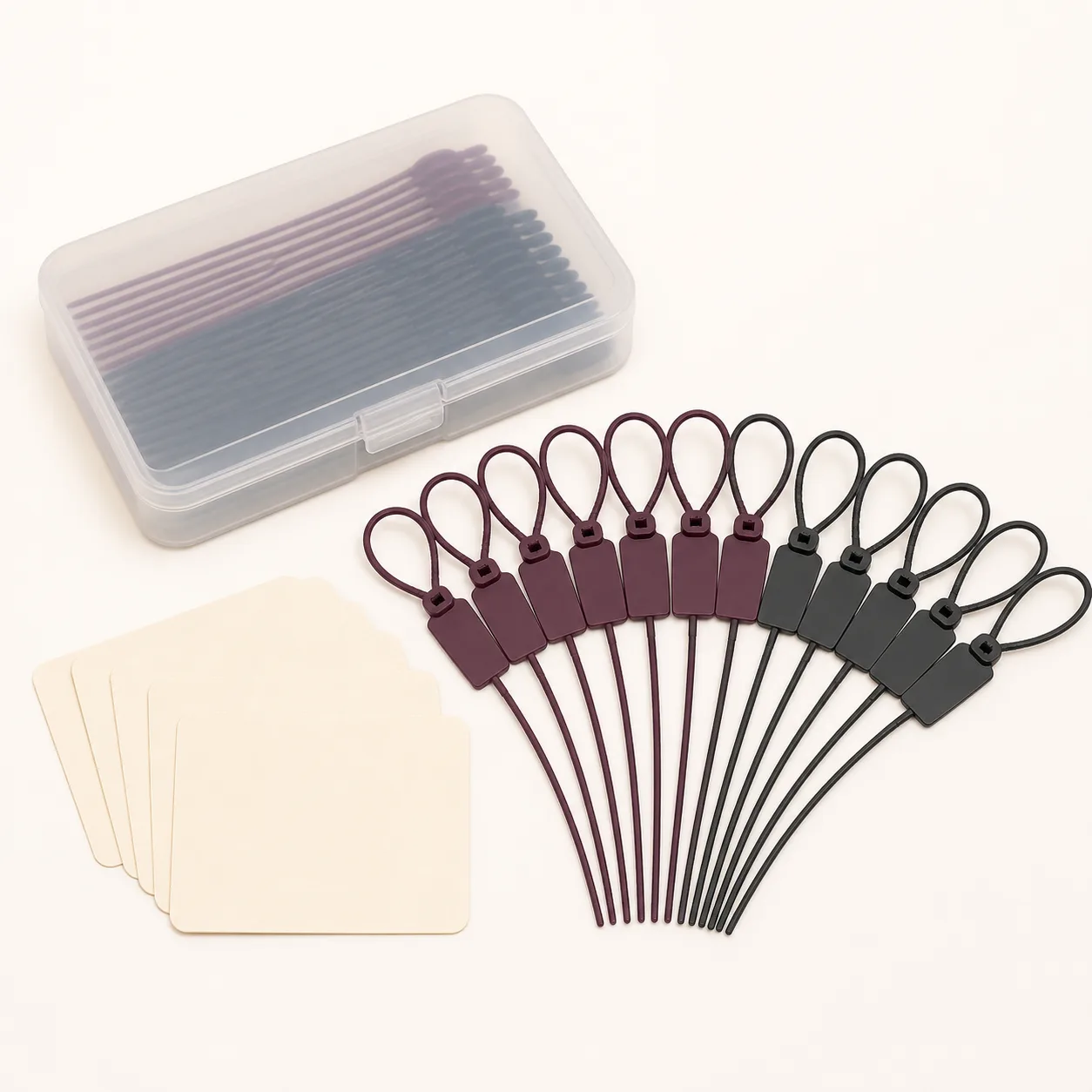
Pull-Tight Privacy Seal Kit with Record Cards
A compact indicative-seal kit concept with pull-tight loops, blank ID flags, private record cards and a frosted organizer for storage checks.
9,99 $
200 in stock
A privacy seal records a condition; it does not create a lock
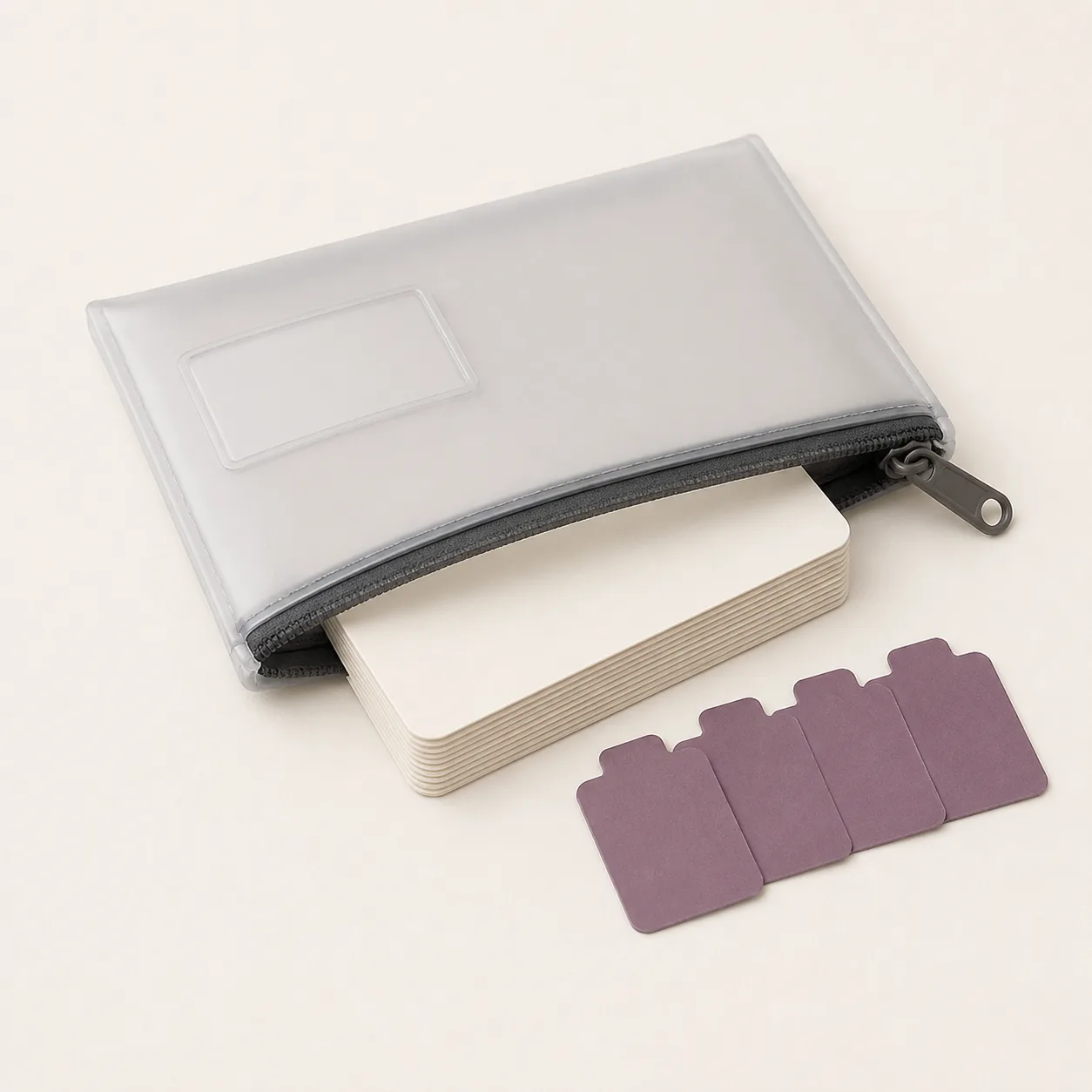
The pull tight privacy seal kit concept combines slim loop seals, blank identification flags, record cards and a frosted organizer. A seal can give an owner a simple visual cue that a case zipper pair or storage-bin eyelet has changed since the last recorded setup.

It is an indicative record tool, not a theft barrier or proof of who opened a container.
Use only a purpose-built attachment point
Thread a seal through paired zipper pull holes, case eyelets or another opening the storage maker permits. The point must be smooth, stationary and large enough for the tail without scraping its edge.
Never loop a seal around a toy, cable, charging lead, body part, handle under load or emergency-access item.
Create a baseline before tightening the first seal
Empty the case of exposed personal details, close it normally and note the date, container name, seal color and flag identifier on a private record card. Photograph the closed loop only if the image can be stored securely.
A record made after a discrepancy cannot establish the earlier condition.
Unique numbering remains a procurement requirement
The candidate source advertises numbered plastic seals, but sequence uniqueness, print permanence, contrast and duplication controls must be confirmed for the final lot. Blank flags shown in the concept avoid promising a numbering system before validation.
Discard any production set with repeated, blurred or incomplete identifiers.
Thread the tail through the correct face of the head
Identify the entry channel in the supplier instructions, feed the narrow tail without twisting and pull only until the loop is small enough to show separation of the zipper pulls. Leave room to cut the seal without touching the case fabric.
Do not force a tail backwards through an unverified locking head.
Snug is enough for an indicative loop
A tight loop can deform zipper hardware, cut soft trim or place constant load on a small eyelet. Stop tightening when slack is controlled and the attachment points remain in their normal position.
Usable loop range, pull force and safe break behavior remain pending.
Record what can actually be observed
Write the identifier, color, date and general container code rather than listing intimate contents. If a photo is used, frame only the attachment point and keep device location data disabled where practical.
The record card is a memory aid and should not contain passwords, addresses or identity documents.
Inspect visually without pulling on the seal
Compare the flag, tail position, head shape and attachment points with the baseline. Look for cuts, stretching, whitening, heat marks, rethreading or a mismatched identifier.
Tugging during inspection can create the very change the seal is meant to indicate.
A discrepancy calls for a calm inventory check
If the seal is missing, cut or different, move the container to a private area and document the observation before opening it. Check the case, inventory and access history without assuming a particular person caused the change.
Contact appropriate help if there is evidence of theft, coercion or immediate safety risk.
Cut the loop away from the case and contents
Use a suitable small cutter only after placing a rigid guard between the seal and storage fabric. Point the tool away from hands, eyes, cables and the container interior, then collect both cut pieces.
Never tear a high-resistance seal by hand or use teeth.
Treat every installed seal as single-use stock
Once tightened or cut, move the flag and tail pieces to disposal according to local rules. Reusing a stretched locking head breaks the link between the record and the observed loop.
The final single-use designation and disposal guidance require supplier confirmation.
Keep unused seals sorted inside the organizer
Separate colors or identifier ranges with dividers and count unused pieces after each setup. Close the case to protect tails from kinks, dust and accidental locking.
Case polymer, latch durability, divider inclusion and final kit count remain pending.
Protect the records as carefully as the storage
Keep completed cards in a different secure place so the seal inventory and access notes are not together. Use neutral container codes that make sense to the owner without naming the contents.
Destroy obsolete cards in a way that makes personal notes unreadable.
Incoming inspection must challenge the locking pattern
Measure length, tail diameter, flag area and usable loop range, then confirm sequence order across a statistically meaningful sample. Test normal tightening, controlled cutting, print rub resistance and visible changes after attempted reverse movement.
Quarantine sharp flash, brittle tails, weak heads, duplicate IDs, color transfer, strong odor or locks that can be reopened without a visible mark.
The source listing is for logistics-style plastic seals
An Alibaba listing from CNYosea (Jinan) Packaging Materials Co., Ltd. displays numbered pull-tight plastic seals at USD 0.02-0.04 with MOQ 50 pieces. Polymer, numbering controls, dimensions, pull behavior and all kit additions remain pending.
The procurement reference supports sample inquiry only. The EUR 9.99 plan allows for China-origin freight, sequence inspection, record cards, organizer and packaging; packed mass, freight, duty, tax, insurance, payment fees and destination terms remain pending.
Frequently asked questions
Does this seal stop someone opening a case?
No. It is a visual condition marker that can be cut with an appropriate tool.
Can I use it directly on a toy?
No. Attach it only to a smooth storage feature approved for a seal loop.
Are sequential numbers guaranteed?
No. Sequence uniqueness and print durability remain pending until the production lot is verified.
How tight should the loop be?
Use only enough tension to control slack without bending zipper pulls or loading the eyelets.
Can an installed seal be reused?
No. Treat a tightened or cut piece as single-use stock.
What belongs on the record card?
Use a neutral container code, identifier, color, date and brief observation without listing intimate contents.
Reviews
There are no reviews yet.