


Frosted A6 Care-Log Pouch with Index Card Set
August 14, 2026
ALWUP CD29 App-Controlled Thrusting Rotation Vibrator
August 14, 2026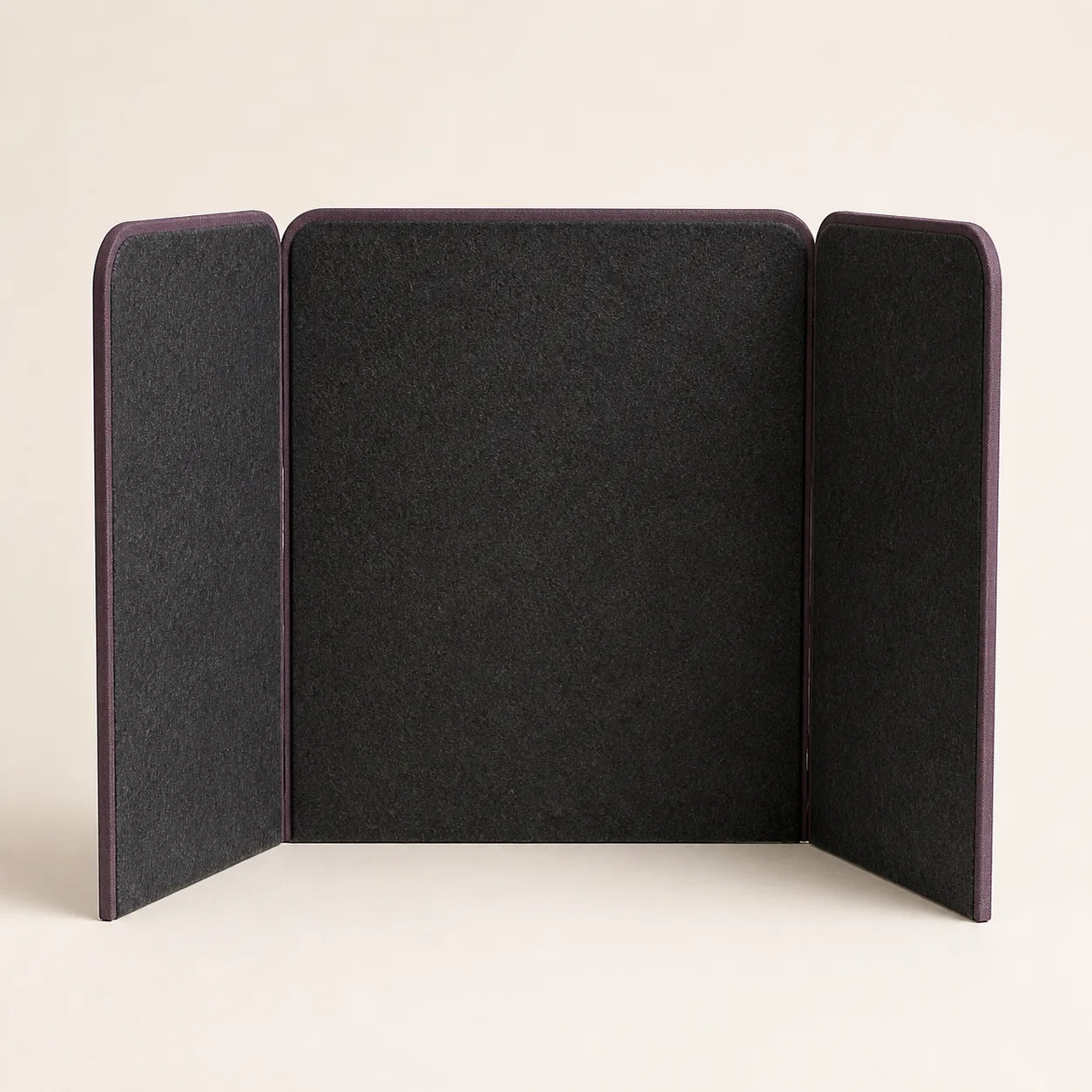
Tri-Fold Tabletop Care-Workspace Privacy Screen
A compact freestanding three-panel desktop screen for reducing casual sightlines around a dry adult product-care workspace.
29,99 $
200 in stock
A three-sided screen can reduce casual sightlines
The tabletop privacy screen concept surrounds the back and sides of a small adult product-care workspace. A wider center panel blocks the main line of view, while two folding wings create a shallow freestanding U shape and plum binding makes the panel edges easier to inspect.

The screen supports visual discretion; it does not secure the room or conceal activity from every angle.
Visual privacy is different from sound control
No acoustic absorption, sound isolation or speech-privacy claim is made. Hinges, gaps, reflections and nearby surfaces can allow sound to travel even when the work area is hidden from a direct view.
Use appropriate room access, timing and communication practices when sound or interruption matters.
Begin with an adult-controlled room and clear exit path
Close the door when appropriate, manage access and make sure the screen does not block a walkway, latch, alarm, socket or route to the sink. Keep children, pets and unauthorized people out of the entire room.
A desktop barrier must never substitute for locked storage or responsible supervision.
Inspect panels, binding and folds before opening
Look for bent corners, delamination, loose fibers, open stitching, stains, strong odor, cracked hinge lines or binding that has pulled away. Open each wing slowly and check that it holds a smooth angle without snapping flat.
Do not use pins, tape, staples or adhesive to repair a damaged edge near the care surface.
Choose a table larger than the complete footprint
Measure the center panel, both angled wings and the working area they surround. Every lower edge must remain fully on a level rigid table with clearance from its perimeter.
A narrow bedside surface, flexible tray, sloped desk or cloth-covered table may allow the screen to tip or slide.
Set a shallow stable U before adding any care items
Place the center panel upright and move both wings forward by equal angles until the structure stands without rocking. Press lightly near each upper corner to confirm that normal table vibration will not collapse a fold.
Do not create a tight triangle that reduces the usable care zone or pushes the wings toward the product.
Keep the screen outside the contained work zone
Position the dry care tray, tools and disconnected product in front of the center panel with a clear gap on every side. The screen must not touch cleaner bottles, cables, drying items or any product surface.
Mark the screen footprint on a reusable external setup guide rather than writing on the panels.
Preserve ventilation and task lighting
Do not place the screen around charging electronics, heated tools or products that require open airflow. Aim approved task lighting from above without resting a lamp on the panel or creating a hot spot.
Opaque panels can cast shadows, so verify that the user can still see spills, parts and product instructions clearly.
Check sightlines from the actual room entrances
Before unpacking anything private, view the empty setup from doorways, mirrors, windows and the normal standing height of another person. Adjust the wing angles only while the workspace is empty.
Open space above the screen, floor reflections and side approaches can still reveal the area.
Do not hang objects or documents from the panels
Clips, hooks, magnets and pockets can shift the center of gravity, puncture fibers or pull a wing inward. Keep product manuals on a separate dry stand where they remain readable and cannot fall into cleaner.
The screen is a visual plane, not a shelf, noticeboard or equipment support.
Keep liquid, heat and flame at a distance
Felt-like fibers and edge bindings may absorb cleaner, stain, deform or ignite. Use secondary containment for all wet care and keep candles, heaters, hot styling tools and charging batteries outside the screen area.
No flame-retardant, water-resistant or chemical-resistant property is claimed.
Pause and clear the workspace before moving a wing
If the sightline changes during care, close every bottle, set tools down safely and remove the product to its approved stable location. Adjust the empty screen, confirm its balance and rebuild the care zone.
Never reach behind an occupied wing or drag the lower edge around active care items.
Clean the panel by its confirmed low-moisture method
Remove the screen from the care table and inspect the selected material instructions. Vacuuming, brushing, blotting or a specialist textile method may be appropriate only after fiber, dye and binding tests.
Do not spray, soak, steam or fold a damp panel; trapped moisture can cause odor, staining and distortion.
Fold dry panels without crushing the bound edges
Bring one wing against the center panel, then close the other according to the final hinge direction. Keep the package upright or flat as specified and protect it from heavy objects that can crease the panel faces.
Store in a dry private cabinet away from floor dust, direct sun, ozone and open chemicals.
The sourcing category must be adapted and tested
An Alibaba portable desk-divider listing from Hebei Ganyoung International Trade shows USD 3.30-9.00 per piece with MOQ 50 pieces. Exact size, fibers, opacity, binding, hinge life, free-standing angle and care compatibility require written confirmation.
The procurement reference supports sample inquiry only. The EUR 29.99 plan allows for China-origin freight, opacity and stability checks, edge inspection and discreet protective packing; packed mass, freight, duty, tax, insurance, payment fees and destination terms remain pending.
Frequently asked questions
Does the screen block sound?
No. It is planned only as a visual sightline aid, with no acoustic claim.
Can it replace a locked door?
No. Room access control and secure product storage remain separate requirements.
May a lamp clip onto a panel?
No. Keep lighting on a stable compatible support outside the screen footprint.
Is the material flame resistant?
No flame-performance claim is made until the exact construction is documented and tested.
Can cleaner spray be wiped from the felt?
Prevent contact; any contaminated panel needs the validated material-specific cleaning or disposal route.
When should the screen be removed from service?
Stop after a warped panel, unstable fold, loose binding, torn fiber, persistent odor, staining, heat exposure or failed stability check.
Reviews
There are no reviews yet.