



Fold-Flat 12-Clip Care-Cloth Airing Hanger
August 14, 2026
Disposable Absorbent Care Work Pads, 10-Pack
August 14, 2026
Open-Sleeve Ripple Manual Stroker with Squeeze-Control Grip
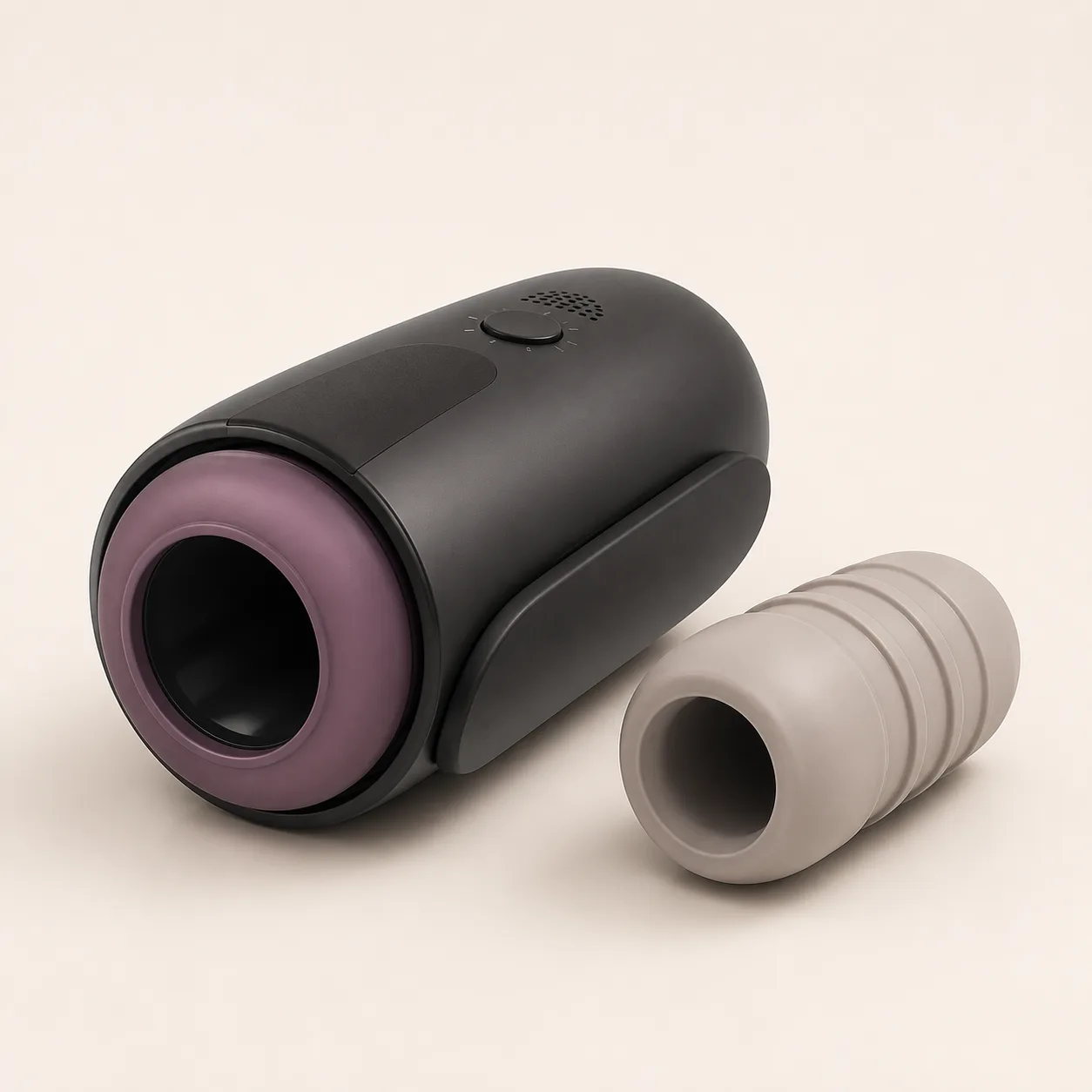
A compact non-powered, open-ended manual stroker concept with abstract ripple channel and broad outer ribs for gradual hand-controlled compression.
24,99 $
200 in stock
An open sleeve keeps pressure and airflow in the user’s hand
This open sleeve manual stroker concept uses an abstract straight-through channel, three flexible outer grip ribs and no motor. The planned control comes from stroke speed, lubricant amount, hand position and gentle compression rather than programmed modes.

The rendered channel is intentionally non-anatomical. It does not establish production texture, stretch, fit or cleaning performance.
Measure the straight-through channel before judging fit
Confirm total length, entry and exit diameters, internal diameter at several checkpoints, wall thickness and the usable stretch range. Compare those figures with current fit experience and a conservative no-force plan.
An opening that looks generous in a photograph may narrow under grip compression or differ from the production sample.
The source material claim needs documentation
The supplier page uses a TPE term, but the exact formulation, hardness, additives, pigments, porosity, odor controls and restricted-substance evidence remain unverified. Body-contact suitability cannot be inferred from the category name.
Approve the production formulation, batch sample and compatible cleaner and lubricant list before sale.
Inspect the rims, grip ribs and full inner channel
Under bright light, check both rounded openings, every outer rib and as much of the channel as can be seen without overstretching. Feel for tears, thin spots, tack, sharp molding, embedded debris, color transfer or persistent odor.
Withdraw the sleeve from service after any split, peeling, permanent deformation or surface change.
Keep both openings unobstructed during setup
Identify the preferred entry end from the approved instructions and confirm that the opposite exit remains clear. Arrange hands and bedding so the far opening cannot be folded shut accidentally.
The open path helps moderate trapped pressure only while it stays open.
Patch-test the selected lubricant on a sample
Apply the confirmed lubricant to a small inconspicuous area for the documented contact time. Check for swelling, haze, tack, softening, pigment transfer, residue or changed odor after cleaning and drying.
Use only the compatible lubricant and enough to reduce drag through the complete channel.
Warm with hands rather than uncontrolled heat
If a warmer feel is preferred, hold the clean sleeve in warm hands or follow a supplier-approved water method with a measured temperature. Dry the exterior and channel before adding lubricant.
Do not use a microwave, oven, radiator, boiling water or an unverified heating device.
Begin with no squeeze and a short slow stroke
Guide the lubricated opening without stretching the rim beyond its verified limit. Start with the hand resting lightly on the outer ribs and use a shallow motion to check fit, friction and the open airflow path.
Increase only one variable at a time. More grip force is not a substitute for adequate lubricant or compatible sizing.
Add compression gradually across the broad grip ribs
Spread pressure over the padded rib zones rather than pinching one point. Release the hand fully between trials and confirm that the sleeve recovers its original shape and airflow.
Never clamp the sleeve with a tool, strap, furniture edge or body weight.
Use the exit opening as an active pressure check
Keep a finger away from the exit during ordinary use and notice any change in resistance or suction. If the path becomes blocked, stop movement, release all compression and remove the sleeve slowly.
Do not intentionally seal the exit until safe pressure limits have been established by the manufacturer and sample testing.
Stop for numbness, discoloration, pain or swelling
These are immediate stop signals. Release the grip, withdraw without force and seek appropriate medical advice for persistent pain, altered sensation, swelling, discoloration or injury.
This page provides product-handling information and does not make a performance, training or medical claim.
Rinse through the full open channel after use
Follow the confirmed cleaner, water temperature, contact time and rinsing method. Direct flow through both ends while gently opening the grip ribs, paying attention to rim folds and any ripple recesses.
Do not rely on a surface wipe when lubricant or residue may remain inside the channel.
Invert only if the production specification permits it
Some flexible sleeves can be turned partly or fully for cleaning, while others can tear or deform at the rim. Obtain a model-specific inversion method and stretch limit before attempting it.
Never force a dry inversion or use sharp tools to pull the inner surface outward.
Dry the channel in an open low-stress position
Support the sleeve so air reaches both openings, the complete channel, rim folds and spaces between outer ribs. Inspect after drying for moisture, tack, odor, residue, cracks or a channel that remains collapsed.
Store it without compression, heat, direct sunlight or contact with unverified materials and pigments.
Sourcing must confirm squeeze recovery and cleanability
Dongguan Howells Tech Co., Limited lists an open-sleeve ripple stroker at USD 3.04-3.19 with MOQ 10. The exact model, dimensions, material formulation, texture, compression range and performance statements remain pending.
The procurement reference supports inquiry only. The EUR 24.99 plan allows for China-origin freight, formulation review, exact-sample measurement, stretch and tear checks, compression-force and recovery mapping, open-path airflow trials, cleaner and lubricant tests, drying validation, protective packing and discreet fulfillment; packed size, mass, freight, duty, tax, insurance, payment fees and destination terms remain pending.
Frequently asked questions
Does the open end prevent all suction?
No. Folding, grip pressure or contact can still obstruct the exit, so airflow must be monitored.
Can the sleeve be squeezed as hard as possible?
No. Compression must stay within the verified force and recovery range and stop immediately after discomfort.
Is the inner channel reversible for cleaning?
Only if the exact production specification provides an approved inversion method.
Can household oil be used as lubricant?
Use only a lubricant confirmed compatible with the documented production material.
May the sleeve be shared?
Not without a verified barrier, between-user cleaning method and inspection protocol for the exact material.
When should the sleeve be withdrawn from service?
After a tear, thin spot, tack, peeling, permanent collapse, failed shape recovery, color transfer, persistent odor or unremovable residue.
Reviews
There are no reviews yet.