


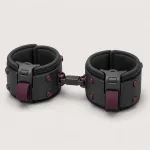
Four-Sector Load-Balancing Ankle Cuffs with Captive Swivel Link
August 14, 2026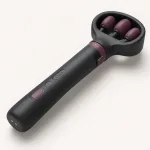
Three-Paddle Differential-Swing Wand Massager with Guarded Yoke Head
August 14, 2026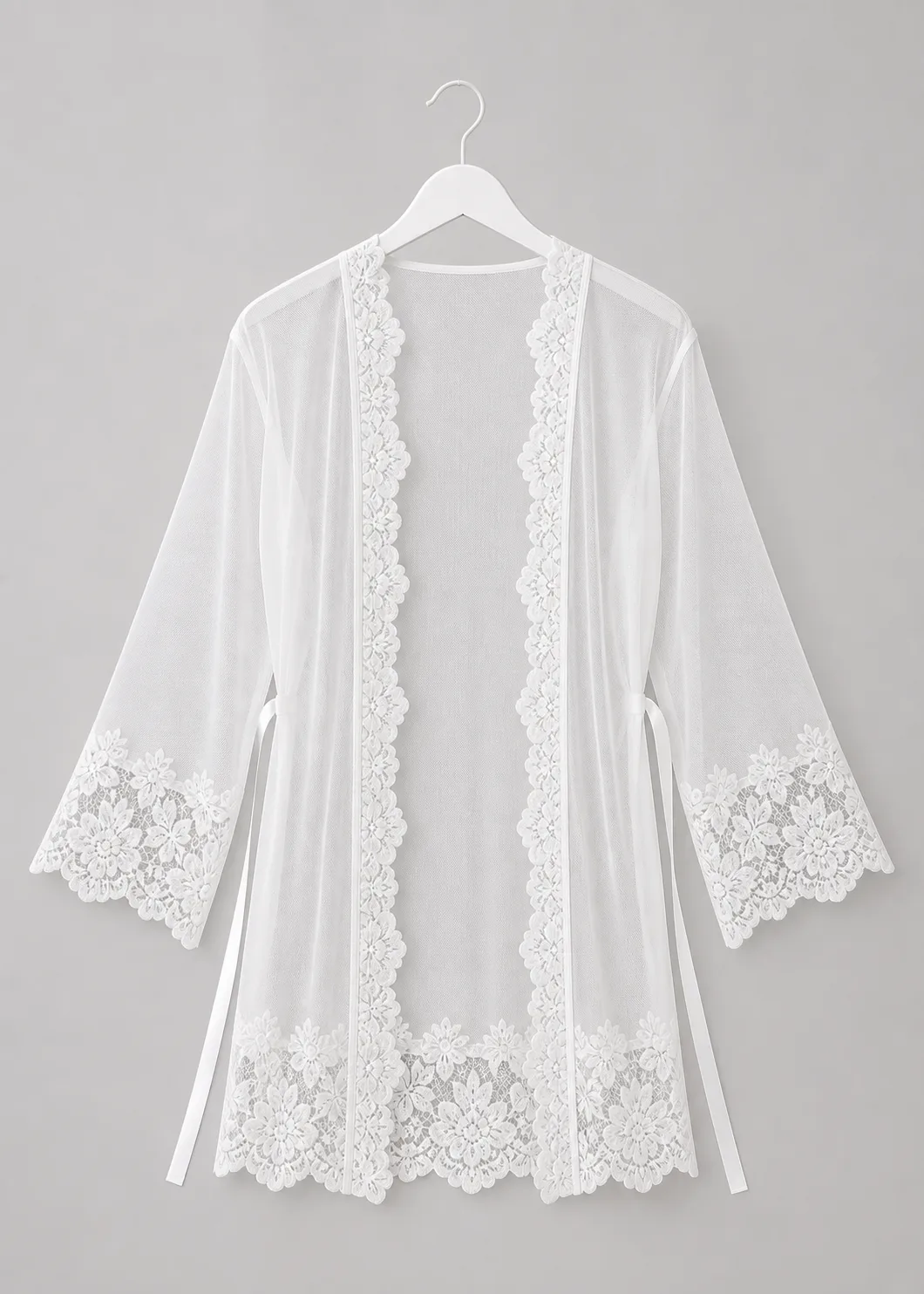
White Sheer-Mesh Kimono Robe with Scalloped Floral Lace Trim
A source-matched short white kimono robe with sheer mesh, long sleeves, scalloped floral lace at the cuffs, front edges and hem, and narrow waist ties.
Choose the exact supplier-labelled FF2059 size: S, M, L, XL, 2XL or 3XL. Finished garment measurements and EU, UK and US equivalence remain pending supplier confirmation.
29,99 $
Trace this white kimono robe to model FF2059
This white sheer-mesh kimono robe is tied to one live Alibaba offer from Yiwu Haigu Trading Co., Ltd., listing ID 1600996128006. The source page names model FF2059 and displays white, black, red, purple and pink options.

The public image is not the supplier photograph. It keeps the garment fingerprint while removing the model, marketplace styling and any implied fabric claims.
Use the lace map as the procurement fingerprint
The selected robe places scalloped floral lace in three connected visual zones: both sleeve cuffs, both open front edges and the complete short hem. The main body and sleeves are transparent white mesh, while two narrow ties extend from the side seams.
A robe with satin panels, a wide obi belt, a shawl collar or plain cuffs is not treated as the same SKU even if the listing title sounds similar.
Define the sellable unit as one robe
The planned retail unit contains the FF2059 robe only. A bra, brief, thong, slip, hanger, gift box and storage pouch are not included unless a current sealed sample and packing list explicitly add them.
Variant labels should distinguish the white robe from the other four listed colours and prevent mixed-colour carton allocation.
Measure body length from shoulder to lace edge
Record centre-back length, front length, shoulder width, chest sweep and hem sweep for every offered size. The lace scallops should be included in finished length but documented separately from the mesh panel.
No finished garment measurements are published until samples from S through 3XL are compared with the supplier chart and agreed tolerance.
Check sleeve shape cuff width and arm mobility
Measure sleeve length, upper-arm width, cuff opening and the depth of the floral-lace border. Movement trials should note whether the loose sleeve twists the front edge or pulls the shoulder seam.
The source calls the piece long-sleeved; exact grading and the relationship between sleeve length and wearer height remain pending.
Inspect how the scalloped front edges are attached
Follow both floral trims from neckline to hem and inspect stitch density, seam allowance, symmetry, curling and skipped sections. The two edges should hang evenly when the robe is open and when lightly tied.
Machine embroidery appears in the supplier attributes, but lace manufacture and attachment method need direct factory confirmation.
Test the narrow waist ties as closures not decoration
Record tie length, width, attachment point and seam reinforcement. A gentle repeated-pull test should check slippage and distortion without assuming the ties provide shaping or support.
The source photos show long narrow ties rather than a separate wide sash. Bulk samples should preserve that construction.
Verify fibre content instead of repeating marketplace labels
The listing displays acrylic in one material field and mesh in another, which does not establish the complete fibre composition of body, lace, thread and ties. Request a component-level declaration and care-label artwork.
Polyester, nylon, elastane and acrylic percentages remain pending, as do restricted-substance and colourfastness reports.
Evaluate transparency and colour consistency in daylight
Compare white samples over standard grey cards under daylight and warm indoor lighting. Check optical brightness, yellow or blue cast, panel-to-trim mismatch and visibility of seam allowances.
White opacity depends on mesh density and layering; the robe should not be described as opaque or lined without evidence.
Grade the robe without promising firm control
The supplier category fields contain shapewear terminology, yet the visible FF2059 construction is a loose open-front robe. Fit review should focus on shoulder placement, sleeve mobility, overlap and tie position.
No compression, waist reduction or support claim is used. Size suitability must come from verified finished measurements rather than generic S-to-3XL labels.
Set care instructions after wash and trim tests
Test colour transfer, shrinkage, mesh distortion, lace fraying and tie twisting using the proposed wash method. Re-measure the robe and photograph front-edge alignment after each cycle.
Hand wash, machine wash, water temperature, detergent, drying and ironing instructions stay pending until the exact materials and construction pass care trials.
Audit seams against transparent fabric visibility
Because the mesh reveals internal finishing, inspect shoulder seams, sleeve insertion, side seams, tie anchors and lace joins from both sides. Loose threads, bulky overlaps and mismatched white thread are more visible on this colour.
Approved workmanship limits should cover seam puckering, lace placement, trim gaps, stains, snags and shade differences.
Confirm packaging before using the listed freight data
The live page lists an individual package at 30 by 25 by 4 centimetres and 0.12 kilograms in an OPP bag. Verify folded dimensions, bag warning text, size sticker, colour code, barcode position and protection of lace edges.
Carton count, outer-carton dimensions, volumetric weight and freight quotation remain pending.
Plan EUR 29.99 from the observed supplier tiers
On 10 August 2026 the listing displayed EUR 1.17 for 50–199 pieces, EUR 1.12 for 200–999, EUR 1.10 for 1,000–4,999 and EUR 1.05 from 5,000 pieces. It also displayed a EUR 8.66 sample price.
EUR 29.99 is a planning retail price allowing for China-origin freight, size and shade sampling, fibre and colourfastness review, seam and lace inspection, discreet fulfilment and expected apparel quality loss. Duty, tax, confirmed packed weight, payment terms, final quotation and landed cost remain pending.
Approve a white pre-production sample before stock allocation
The approval sample should carry the exact model, colour, size, material declaration, care label, packaging and purchase-order revision. Photograph the front, back, lace joins, cuffs, hem, ties and internal seams beside a measurement sheet.
Inventory 200 is a launch-planning value, not proof that physical units have passed receiving inspection.
Frequently asked questions about the white lace robe
Does the listing include underwear?
No underwear is included in the planned retail unit. The offer is treated as one robe unless the current packing list states otherwise.
Is the robe fully opaque?
No. The source design uses transparent mesh with denser floral lace at the cuffs, front edges and hem.
Which sizes are offered?
The page displays S, M, L, XL, 2XL and 3XL. Finished measurements and grading tolerances still need sample verification.
Is the fabric acrylic?
One field says acrylic, while another says mesh. Complete component percentages are pending a supplier declaration.
Can the ties close the front completely?
Coverage depends on chest and hip sweep, tie position and size grading. It should be evaluated against verified measurements.
Can supplier model photos be used?
The site owner reports permission, but written scope and model-release evidence are still pending; therefore the public page uses an original product-only image.
| Size | S, M, L, XL, 2XL, 3XL |
|---|
Reviews
There are no reviews yet.