



Shufuyuan SFY3739 Three-Colour Long-Sleeve Lace Bodysuit
August 14, 2026
Adjustable Padded Suspension Positioning Sling
August 14, 2026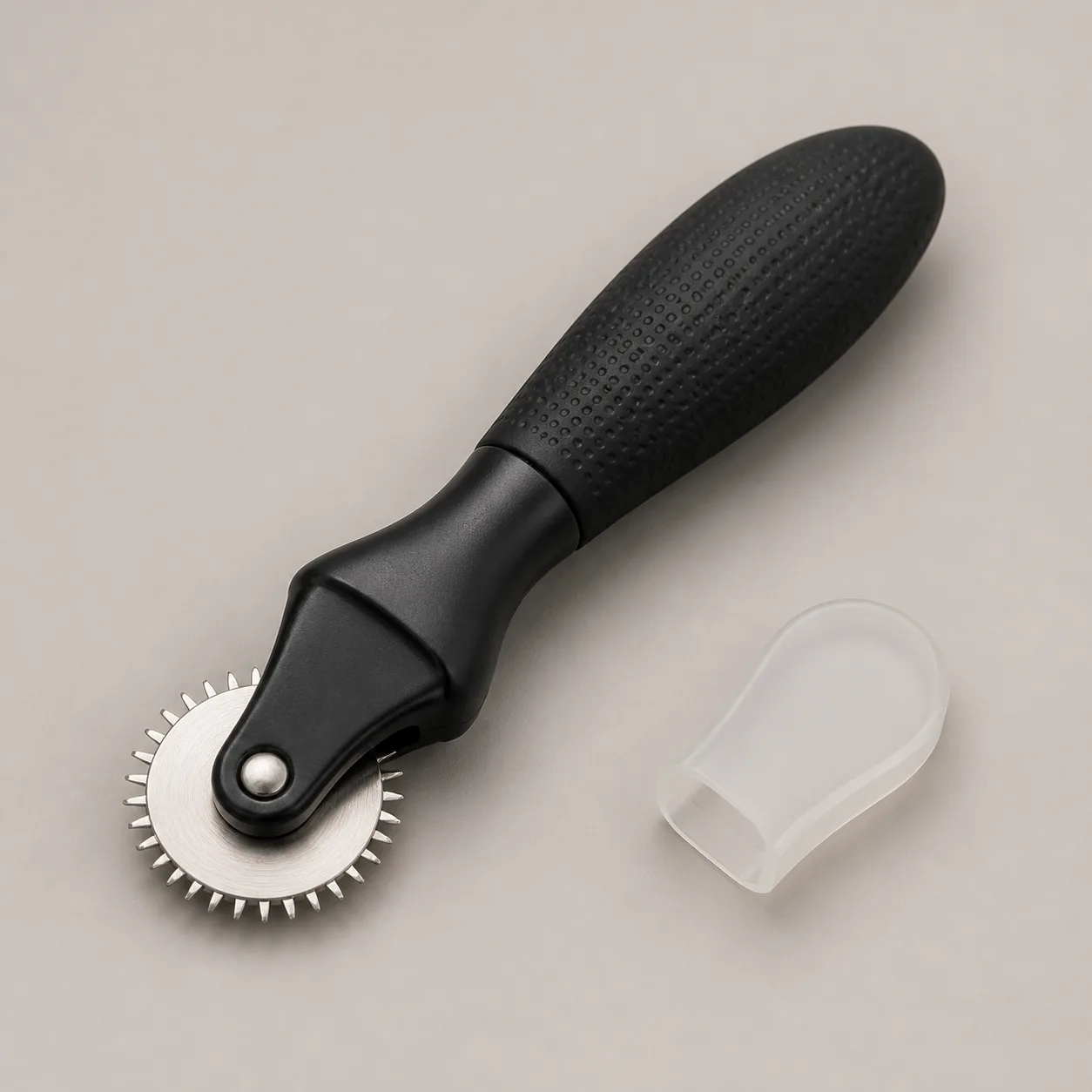
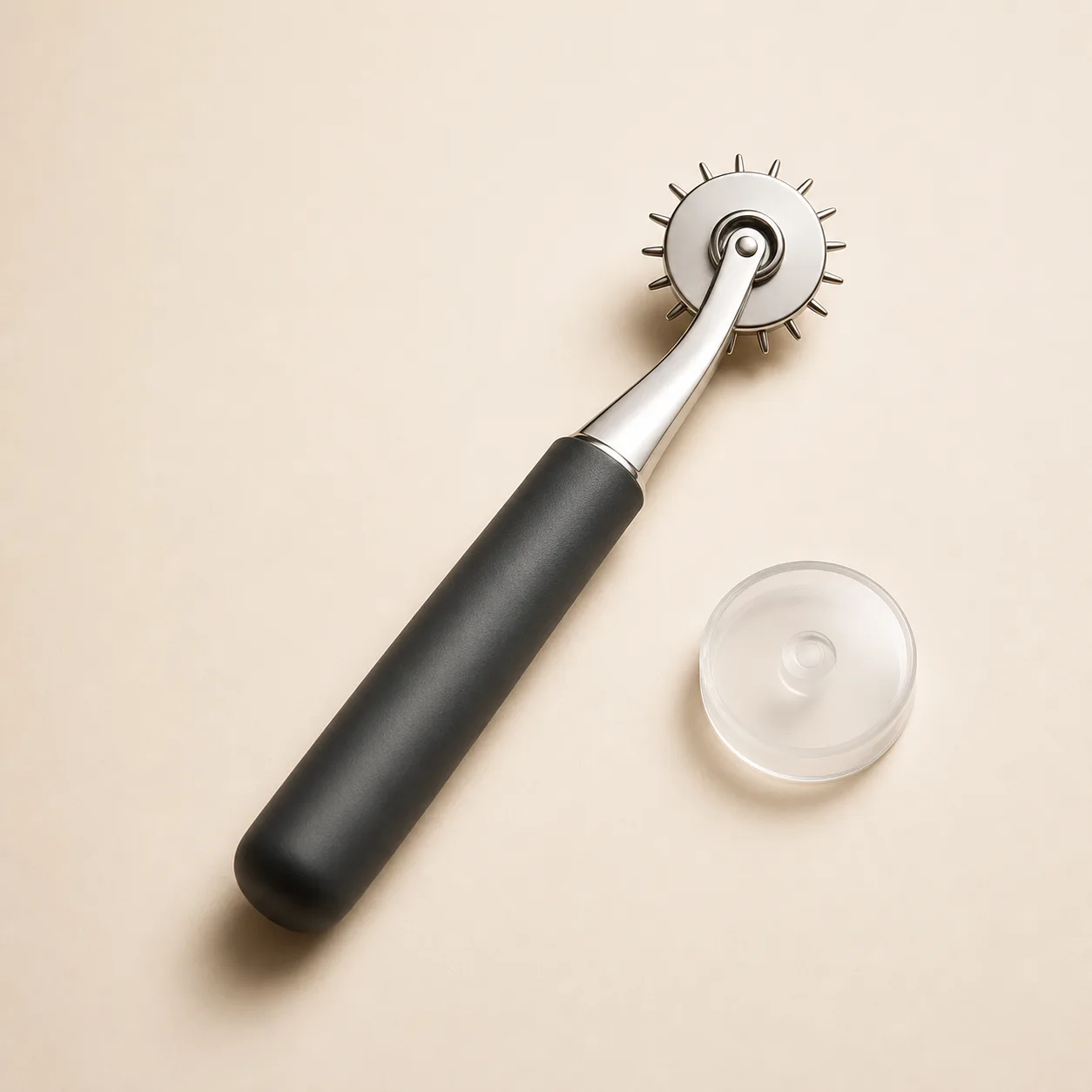
Rounded-Tooth Sensory Pinwheel with Guard Cap
A single-row sensory wheel designed around feather-light rolling, intact-skin boundaries, axle inspection and protected storage.
14,99 $
200 in stock
A sensory wheel should roll, not puncture
This single-row pinwheel is intended to create a light, moving point pattern over intact external skin. The wheel must rotate freely so each short tooth passes across the surface rather than dragging. Pressure sufficient to mark deeply, scratch or break skin is outside the product concept.
The rounded-tooth appearance in the original image is a design target, not proof of the production geometry. Procurement must measure tip radius, tooth height, spacing and wheel runout on the exact sample.

Inspect the complete circumference before every session
Turn the wheel slowly under bright light and examine every tooth from both sides. All tips should have the same rounded profile, with no bent points, hooks, burrs, chips or residue. A single damaged tooth changes the contact pattern and requires quarantine.
Check the axle screw, fork, handle joint and cap. The wheel should not wobble sideways, scrape the fork or stop at one position. The cap must cover the entire wheel without touching and bending the teeth.
Map a low-sensitivity practice area first
Begin on the user’s own outer forearm with the wheel barely touching the skin. Roll one short straight path, lift the tool and wait before repeating. This creates a reference for pressure, delayed redness and individual sensitivity.
Only broad, intact external skin such as arms, shoulders or thighs belongs in the basic map. Avoid the face, eyes, ears, front and sides of the neck, spine, joints, genitals, nipples, mucous membranes, varicose veins, bruises, rashes, scars that remain sensitive and any area with reduced sensation.
Speed changes the sensation as much as pressure
Use slow, visible passes with the handle nearly perpendicular enough for the wheel to roll cleanly. Fast flicking can increase impact and makes a rough tooth harder to detect. Repeatedly tracing the same line can accumulate irritation even when each pass feels light.
Do not press the side of the wheel into the body, saw back and forth or use the tool as a scratcher. Lift between paths, vary the location and check the skin frequently.
Consent includes the route, not just the tool
Agree in advance on permitted body areas, pressure ceiling, pace, session length and an immediate stop signal. The receiving person should see and test the pinwheel before any blindfold or restraint is considered. Surprise placement is excluded.
The person holding the tool must stop for silence, freezing, flinching, pulling away or any agreed signal. Intoxication, drowsiness, impaired communication or inability to move away makes safe feedback unreliable and excludes use.
Skin checks continue after the wheel is lifted
Stop immediately for sharp pain, burning, numbness, unusual coldness, swelling, broken skin, pinpoint bleeding, welts or redness that intensifies rather than fading. Do not roll over an irritated path again to compare sensation.
Clean any accidental skin break using appropriate first-aid guidance and seek medical help for persistent bleeding, severe pain, spreading redness, warmth, swelling or signs of infection. The pinwheel is then treated as contaminated and removed from shared use.
A rotating wheel is difficult to barrier reliably
Loose film or a glove can bunch in the axle, hide a damaged tooth and stop the wheel from rotating. This catalog therefore treats the tool as a single-person item rather than relying on an improvised barrier for sharing.
Never move from one person to another or across broken skin. Professional reprocessing claims require validated disassembly, cleaning and sterilization instructions for the exact model; none are assumed here.
Cleaning begins without submerging the handle
Use the verified care method for the production materials. Wipe the wheel carefully while rotating it away from the fingers, then clean both fork faces and the axle area with a soft tool approved by the manufacturer. Keep fingers out of the tooth path.
Boiling, bleach, strong solvents, ultrasonic cleaning, dishwashers and prolonged soaking are not assumed safe. Liquid trapped around an unsealed axle can cause corrosion or residue. Dry the wheel completely before fitting the cap.
Metal identity affects corrosion and skin contact
The indexed listing uses stainless-steel language, but the catalog needs an exact alloy and finish for the wheel, axle and fork. Obtain nickel-release data where relevant, corrosion evidence, restricted-substance documentation and the handle formulation.
Inspect samples after controlled cleaning and artificial-sweat exposure. Discolouration, rust spots, flaking plating, green or black residue, pitting and a roughened edge are rejection signals.
The cap is part of the safety system
Fit the clean dry cap whenever the tool is not in use. It should resist normal handling without falling off, yet remove without fingers sliding toward the wheel. A cracked, loose or distorted cap no longer protects the teeth or nearby stored items.
Store the capped pinwheel in an individual rigid or padded pouch, separate from magnets, liquids, abrasive metal tools and pressure that could bend the fork. Count and inspect all teeth after travel.
Marketplace medical language does not make it diagnostic
Wartenberg-style wheels also appear in medical listings, but this retail concept is an adult sensory accessory. It is not sterile, not supplied for neurological examination and not intended to diagnose nerve function, pain disorders or any health condition.
Changes in sensation, persistent numbness or unexplained pain should be evaluated by a qualified healthcare professional, not compared using this product.
Questions specific to a single-row pinwheel
Should the teeth leave puncture marks?
No. Use only feather-light rolling over intact skin and stop before scratching or skin break.
Can it be used on genitals or nipples?
No. Those areas are outside this product’s conservative contact map.
Can two people share one pinwheel?
No. The rotating axle is difficult to barrier and reprocess reliably, so the item is assigned to one person.
Is the wheel medical-grade stainless steel?
Not confirmed. Alloy, finish, nickel release and corrosion evidence remain pending.
What if the wheel wobbles?
Quarantine the tool. Side-to-side movement can make the tooth path unpredictable and may indicate axle wear.
Why keep the cap?
It shields the full wheel during storage and helps prevent tooth damage and accidental contact.
Supplier reference and provisional EU display price
An indexed Alibaba China supplier page showed a Wartenberg-style sensory pinwheel from Dongguan Loyip Leather Products Co., Limited at USD 1.39–1.99 with a ten-unit minimum. The planned EUR 14.99 display price provisionally allows for China-origin freight planning, MOQ exposure, sample purchase, tooth-radius and wheel-runout measurement, axle and cap cycle testing, surface and burr inspection, controlled skin-contact assessment, corrosion and cleaning evaluation, material-document review, protective packaging, payment processing and destination delivery. Exact listing identity, material, certification, freight, duty, tax, insurance, lead time and all purchasing conditions remain pending written confirmation.
Approval freezes every moving and contact part
Record total length, handle dimensions, wheel diameter and thickness, tooth count, tooth height and radius, tooth spacing, runout, axle clearance, rotational resistance, fork alignment, mass and cap retention. Approve metal and handle materials, finish, corrosion and nickel-release evidence, cleaning limits, single-user labeling, traceability, warnings and protective packaging for the exact production sample.
Reviews
There are no reviews yet.