


Shell Air-Pulse External Massager with Soft Oval Nozzle
August 14, 2026
RY-254 Stainless-Steel Curved Anal Plug: S-L, Six Gem Colors
August 14, 2026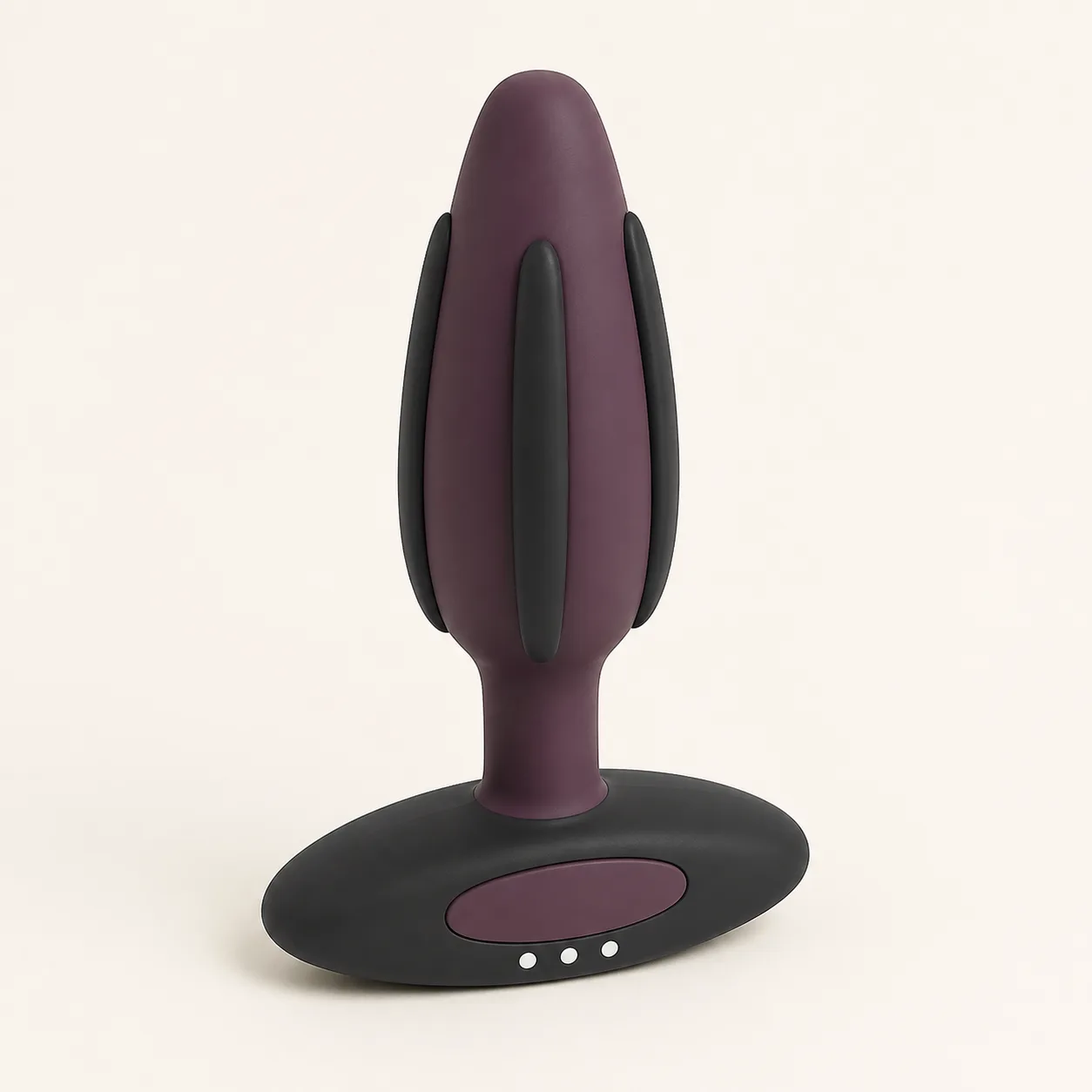
Three-Rail Cushion Anal Plug
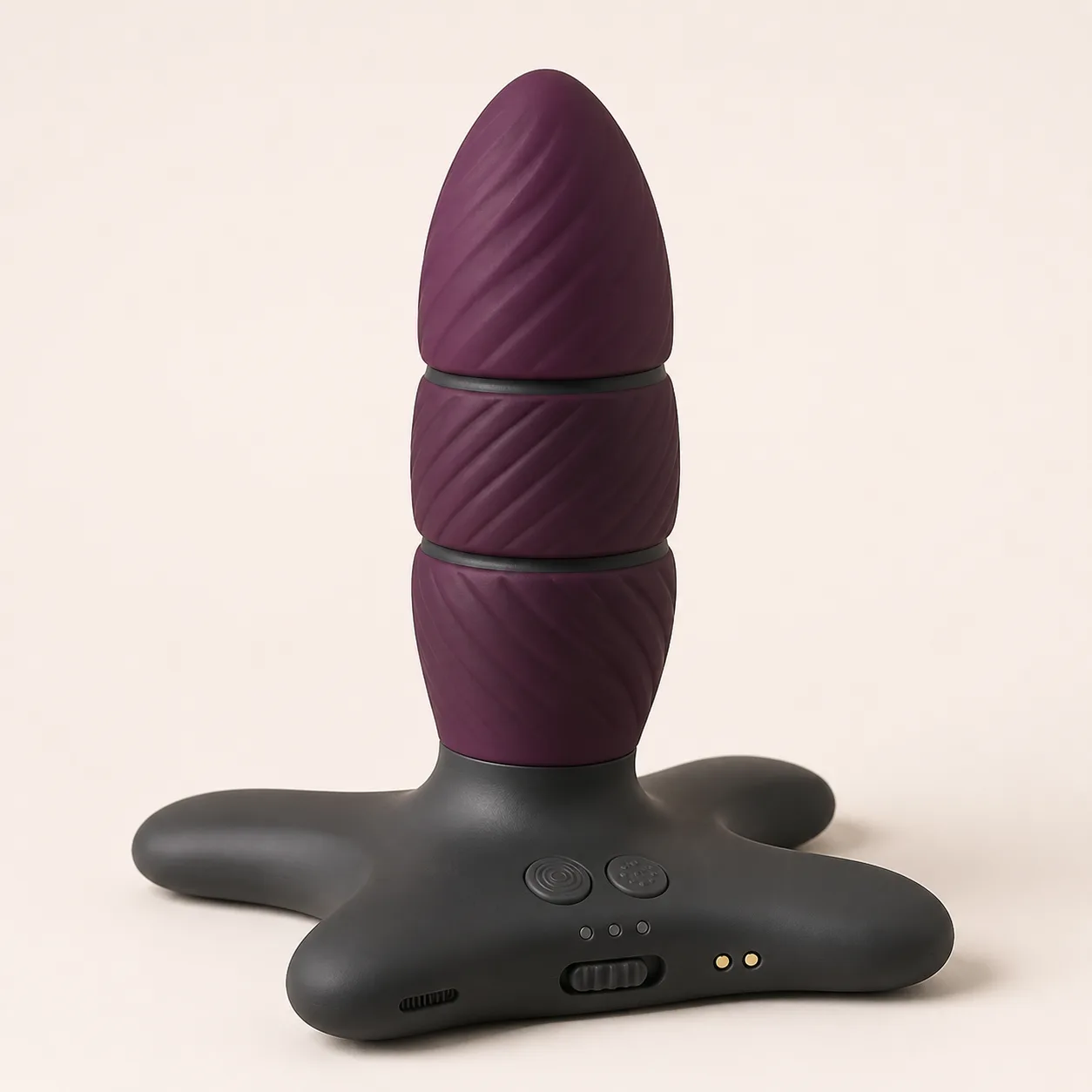
A non-powered tapered anal-plug concept with three longitudinal cushion rails, a narrow neck and an oversized oval T-shaped flared safety base.
36,99 $
200 in stock
Compare three longitudinal rails on one tapered plug
This three-rail cushion anal plug concept uses one smoky-plum tapered body with exactly three raised charcoal longitudinal cushion rails, one narrow neck, one oversized oval T-shaped flared base, one recessed plum grip inset and three small white index dots.

The rendering establishes visible geometry only. It does not confirm size, insertable boundary, materials, rail softness, neck strength, base retention, pressure, cleaning limits or production readiness.
Confirm a single continuous safety assembly
The planned product is one non-powered plug with body, three rails, neck and base retained as a single assembly. There is no detachable jewel, tail, ring, motor, remote, charger or replaceable end piece.
Request section drawings that show any concealed core, bonding layer, pigment transition and reinforcement from tip through base.
Measure the body from tip to neck datum
Record overall height, intended insertable length, maximum diameter, tip radius, taper progression, rail projection, neck length and diameter, base span, base thickness, mass and centre of gravity.
Every production size needs tolerances and an explicit insertable boundary; the image is not a measuring reference.
Label the three cushion rails independently
Assign R1 to the front rail and R2-R3 to the two side rails. Measure length, width, height, edge radius, start and end position, local hardness and attachment continuity for each rail.
Reject flash, lifted edges, thin spots, hard inclusions, exposed core, asymmetric spacing or a rail that can peel under bounded shear.
Inspect valleys and rail-body transitions
Map the three longitudinal valleys and the transition at both ends of every rail. Check whether grooves concentrate pressure, hold residue, interrupt drying or develop seam steps after flexing and cleaning.
Rail definition must remain smooth enough to avoid sharp local edges under the approved compressive load.
Verify neck strength and bending behaviour
Measure neck section, flex direction, stiffness, permanent set and the transition radii into body and base. Apply bounded axial, bending and torsional loads while observing cracks, whitening, delamination and core movement.
A narrow neck is not sufficient evidence of safe retrieval; it must remain attached to the complete flared base under verified loads.
Evaluate the oversized oval T-base
Record lateral span, front-to-back depth, edge radius, thickness, flex and multi-axis retention on graded instrumented fixtures. Compare the full base dimensions with the maximum body diameter and expected compressive deformation.
Any sellable unit requires an externally accessible base that cannot pass through the validated retention fixture under intended conditions.
Define the grip inset and three index dots
Measure the recessed plum oval for depth, edge blend and cleanability. Confirm whether the three dots are size markers, orientation cues or decorative elements and ensure their meaning is consistent across packaging and instructions.
The dots do not establish three modes because this concept contains no powered control.
Confirm every material and pigment layer
Request traceable declarations for the plum body, three charcoal rails, base, hidden core, pigments, adhesives and processing aids. Review hardness, odour, tack, migration, restricted substances, cure consistency and lubricant compatibility.
Silicone, body-safe, hypoallergenic, seamless and waterproof terms remain pending exact documentation and independent review.
Map pressure and rail deflection on soft forms
Use graded compliant fixtures to record pressure at tip, body, R1-R3, neck and base during controlled placement, dwell and withdrawal paths. Measure rail deflection, rebound, edge loading, body rotation and base migration.
Stop the test if a rail folds, creates a pressure spike, exposes a seam, loses attachment or blocks a direct withdrawal path.
Use gradual placement with the base accessible
Inspect the tip, all three rails, neck and complete base before use. Apply generous verified-compatible lubricant, begin slowly and keep the entire base externally accessible without sitting or placing body weight on it.
Stop at pain, numbness, bleeding, unexpected resistance, loss of base access or visible product change. Persistent symptoms require appropriate medical advice.
Validate lubricant and barrier compatibility
Test candidate lubricants against the exact production materials for swelling, tack, colour transfer, hardness change, rail lift and cleaning difficulty. Review any barrier guidance for dimensions, surface friction and secure coverage.
Do not infer compatibility from a generic material name or the rendered finish.
Clean every rail edge and longitudinal valley
Follow validated cleaner, water, temperature and contact-time limits. Wash the tip, all three rails, each valley, neck, base faces, grip inset and dot recesses while keeping every surface visible.
Boiling, bleach, machine washing, abrasive tools and prolonged soaking are excluded unless exact material evidence supports them.
Dry flat and inspect for structural change
Dry the three valleys, rail transitions, neck-to-base junction, grip inset and dot recesses completely. Store the plug without bending the neck, compressing the rails or placing weight on the base.
Tack, swelling, cracks, rail separation, neck thinning, base distortion, persistent odour or residue removes the unit from service.
Build landed price from an anal-plug benchmark
An Alibaba butt-plug category page displayed one large-size silicone-category example at USD 0.85 to 1.50 with MOQ 5. It is a broad benchmark only and does not identify this three-rail geometry or an approved supplier.
The public procurement benchmark supports an EUR 36.99 planning price after provisional allowance for China-origin freight, exact-sample measurement, rail attachment, neck strength, base retention, pressure, material, lubricant and cleaning validation, discreet fulfilment and expected intimate-product handling loss. Exact supplier, quote, MOQ, specifications, packed weight, freight, duty, tax, certification, payment terms and lead time remain pending.
Frequently asked questions
How many raised rails are on the body?
The concept has exactly three separate charcoal longitudinal cushion rails.
Does the plug contain a motor?
No. It is a single non-powered concept with no battery, remote or charging system.
Is the base flared?
Yes, the concept shows one oversized oval T-shaped base, but exact retention dimensions require testing.
What do the three dots mean?
Their final function remains unconfirmed; they may serve as size or orientation markers only after documentation.
Which lubricant is compatible?
Use only a lubricant validated against the documented production materials through supplier guidance and patch testing.
How should the rail valleys be dried?
Keep every valley visible, remove all moisture and inspect the rail edges before clean protective storage.
Reviews
There are no reviews yet.