



Rechargeable Electric Vacuum Pump with Pressure Display
August 14, 2026
Bendable-Neck Mini Wand – External Massage Concept
August 14, 2026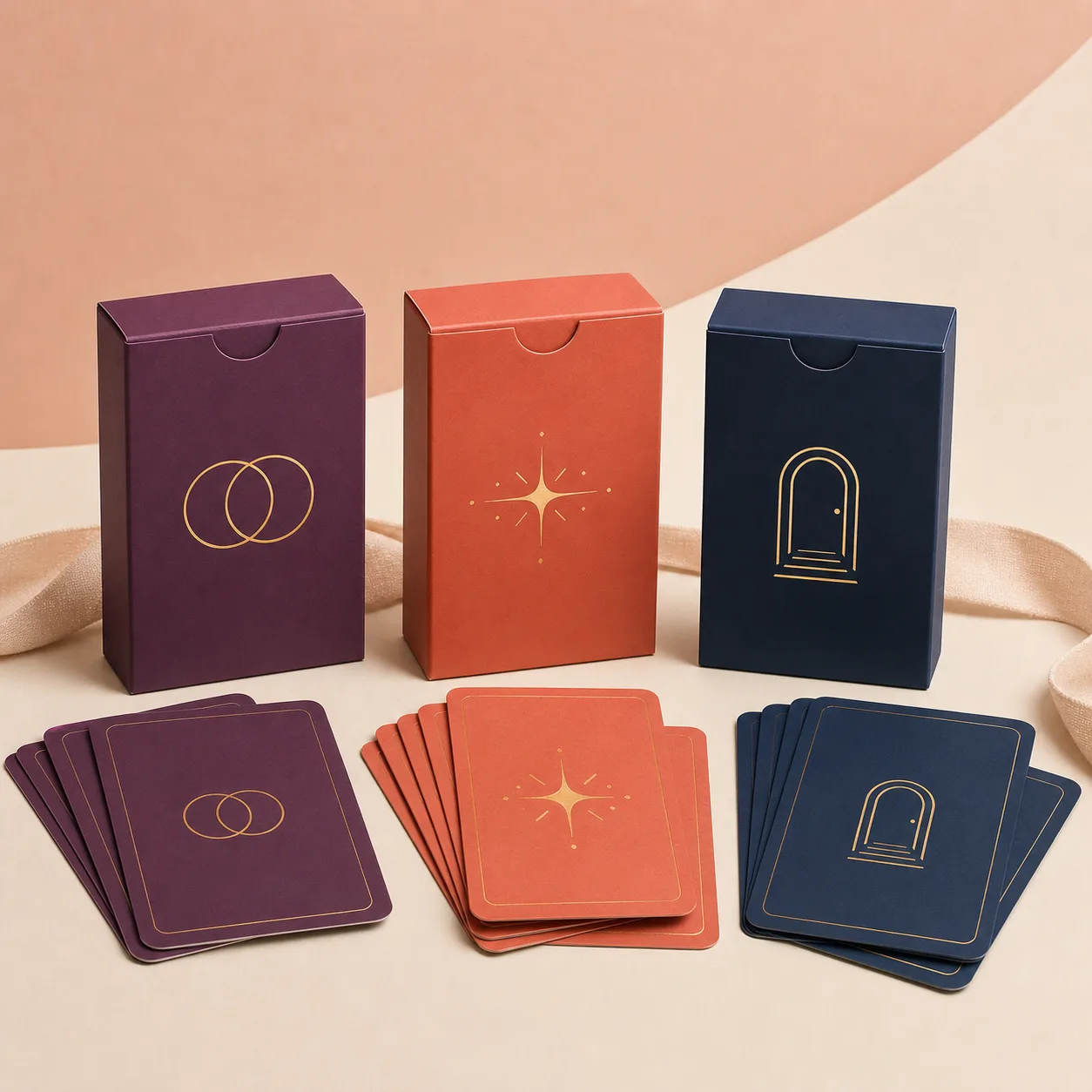
Connect, Spark & Explore – Three-Deck Couples Card Game
An original three-deck couples conversation game concept with visible pause, skip and stop choices. Final prompts, card count, translations, print materials and packaging remain pending editorial and production proofing.
14,99 $
200 in stock
A date-night game where “pass” is part of the design
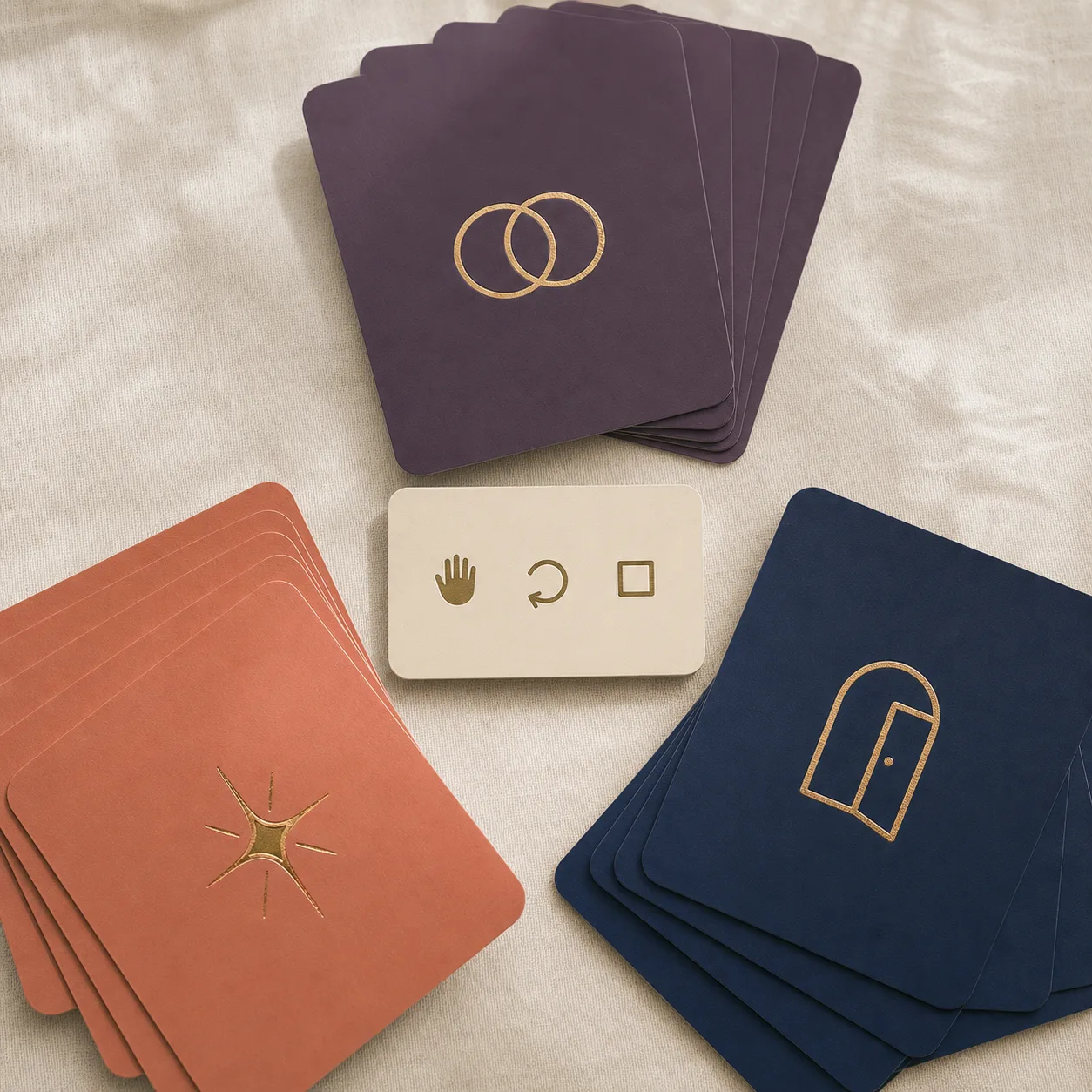
This original three-deck concept is built for two consenting adults who want conversation without turning intimacy into a test. The plum deck invites connection, the coral deck introduces light playful energy, and the midnight deck opens space for mutually chosen exploration. Players decide which deck is in play before drawing; no deck automatically unlocks the next one.
The source listing is used only as a manufacturing and cost reference for a three-deck paper product. Its prompts, title, box copy, photography and visual identity are not licensed for copying. The ATP edition requires independently written cards, original instructions, original artwork and a printer agreement that permits commercial use.

How the three spaces differ
Connection: learn without interrogating
Prompts focus on preferences, memories, comfort, appreciation and everyday support. They must avoid demanding trauma disclosure, passwords, financial records, private messages or comparisons with former partners. Either player can answer briefly, reframe the question or skip it.
Spark: playful, not performative
These cards suggest compliments, shared music, affectionate gestures or imaginative date ideas. Nothing requires public posting, recording, spending money, drinking alcohol, removing clothing or touching a specific body area.
Explore: only within boundaries already agreed
The third deck can propose private adult topics or low-pressure choices, but it never treats a card as consent. Before drawing, both players list hard limits, health constraints, contraception/barrier decisions, words that mean stop and activities that are out of scope. A drawn card is merely an invitation that still requires an enthusiastic yes.
A ten-minute setup that protects the evening
- Confirm that every participant is an adult, sober enough to decide and free to leave the game.
- Choose one deck together. Put the others away unless both people later choose to change.
- Agree that “pass,” “pause” and “stop” are complete sentences with no penalty or persuasion.
- Decide whether answers stay private and put phones away if recording or sharing is not expressly agreed.
- Draw in turns. The person who draws may read silently first, then choose to share, modify or skip.
- End with one debrief card: what felt easy, what should not repeat, and what might be welcome another day.
What this deck deliberately excludes
No original ATP prompt will require pain, humiliation, breath restriction, intoxication, illegal conduct, unsafe household objects, financial stakes, involving another person, public exposure, secret recording, removal of a barrier, disclosure of protected data or continuing after hesitation. Accessibility alternatives must be available for movement, speech, hearing, vision and sensory needs.
This is entertainment, not couples therapy, sex therapy, medical advice or a diagnostic tool. If a prompt triggers fear, coercion, trauma or conflict, stop the game and choose appropriate personal or professional support rather than forcing a resolution at the table.
Language and print quality before sale
English and Chinese editions must be separate selectable products or language versions, not mixed line-by-line on one card. Translation requires cultural review and back-translation so consent language remains clear. Final card count, cardstock, ink, coating, corner radius, box fit, colorfastness, odor and readability all require a production proof.
Keep cards dry and away from candles, drinks and lubricant. Wipe only as the final printer permits; paper decks are not washable or suitable for contact with bodily fluids. Replace cards that are torn, sticky, stained or difficult to read.
Questions before adding it to the basket
Are the pictured prompts included?
No prompts are pictured. The photographs show an original visual system, not final printed inventory. Every commercial prompt must pass originality, consent and translation review.
How many cards are in each deck?
Not confirmed. The supplier page makes generated card-count claims, but the ATP edition’s count depends on the original editorial and proofing process.
Can it be played at a party?
The planned product is designed for two adults in private. Group use creates different privacy and consent risks and is not included in the current rules.
Does drawing a card mean agreeing to it?
No. Drawing, reading or discussing a card is never consent to an activity. Consent must be specific, current and reversible.
Manufacturing reference and provisional price
The Alibaba listing showed US$4.29 for 3-19 sets, US$3.80 for 20-99, US$3.15 for 100-499 and US$2.50 from 500 sets. Those figures do not include confirmed tax, China freight, export documentation, international freight, duties, destination tax, payment fees, original editorial work, translation, licensing review, proofs, compliant packaging or returns.
Low-cost marketplace decks were observed around US$5.18-8.00, while a 2026 catalogue listed a more developed 160-prompt relationship game at US$23.99 / EUR24.99. The planned US$14.99 price is provisional for an original three-deck edition and is not a guaranteed margin.


Reviews
There are no reviews yet.