


Compact Privacy Sound Machine with Timer Controls
August 14, 2026
Angled-Tip Rechargeable Lipstick Vibrator
August 14, 2026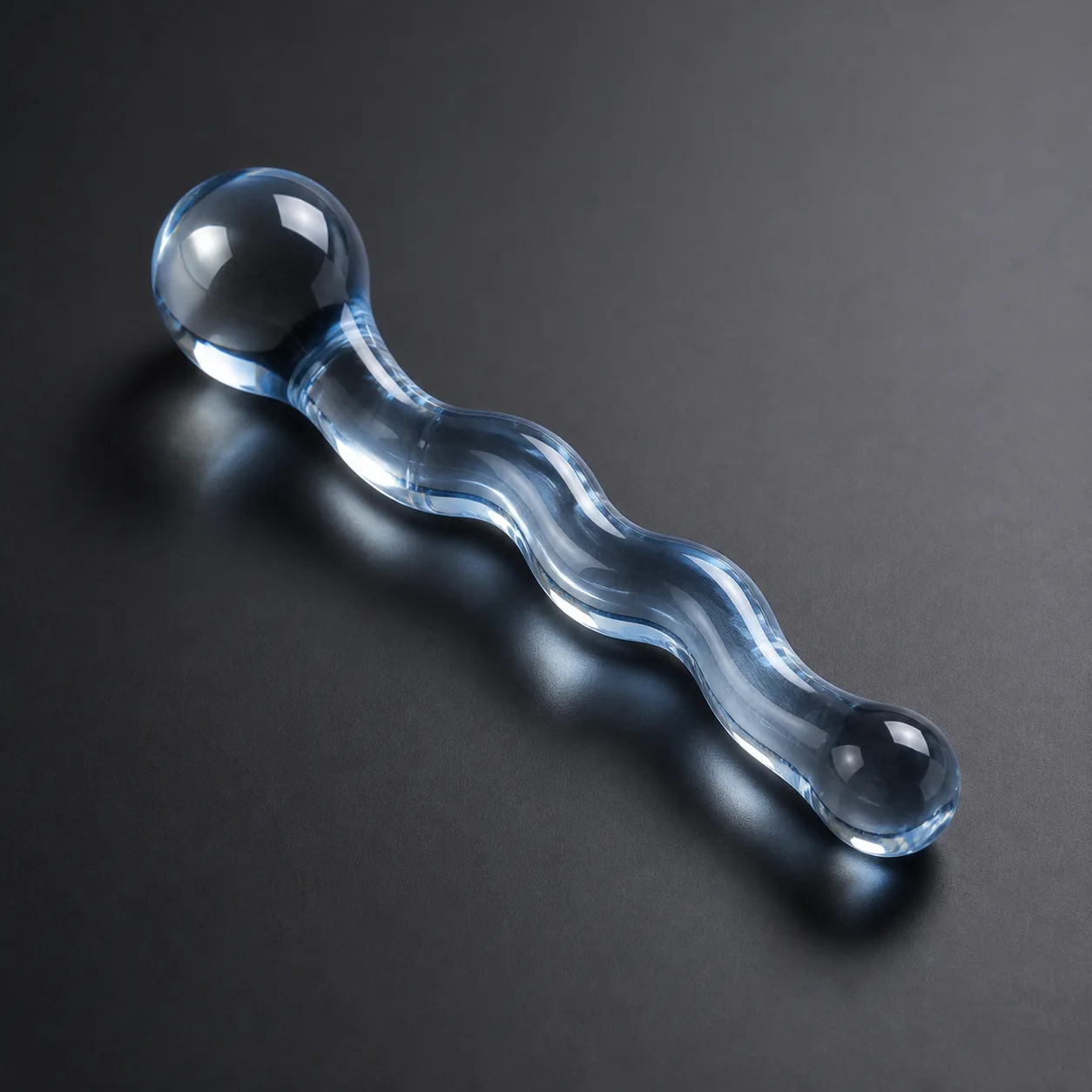
Serpentine Double-Ended Borosilicate Glass Wand
A non-anatomical clear glass wand concept with an icy-blue tint, flowing S-curve, two differently sized rounded ends and shallow central grip waves.
39,99 $
200 in stock
The curve is the feature and the measurement challenge
A serpentine borosilicate glass wand uses a flowing S-profile to present two rounded ends at different angles. Unlike a straight rod, its usable reach and pressure direction depend on the curve, so overall length alone cannot describe fit.
The concept below stays non-anatomical and uses shallow central waves as a visible handhold. Exact dimensions remain pending.

Read the silhouette before handling the glass
Set the wand on a padded light surface and view it from both sides. The curve should be smooth and continuous, without a flat spot, twist or sudden change in diameter.
Compare multiple samples against a simple outline gauge. Handcrafted appearance does not excuse unstable geometry or a sharp transition.
Each rounded end needs its own diameter record
Measure the widest point, tip radius and distance from each end to the center grip. One side may suit external pressure while the other offers a different contact area, but neither purpose should be assumed from photographs.
Publish dimensions only after several units show a controlled manufacturing tolerance.
The center waves must support a dry grip
Hold the middle with clean dry hands and gently change direction over a padded surface. The shallow waves should improve orientation without creating thin glass sections or uncomfortable ridges.
If the piece rotates easily in the hand, a wet or lubricated grip will be less secure. Stop rather than adding an improvised loop or handle.
Optical inspection reveals more than a fingertip
Use strong diffuse light to look for bubbles, internal lines, haze, chips, scratches, inclusions and distortion around both ends. Rotate the wand slowly and inspect the full circumference.
Any crack, sharp speck, rough patch or suspicious internal stress line disqualifies the sample. Polishing cannot repair a structural flaw.
Borosilicate is a claim until composition is documented
The supplier page uses borosilicate language, but the final purchasing file needs material identification, annealing information and model-matched test evidence. Clear appearance alone does not identify glass chemistry.
Do not advertise laboratory-grade or impact-proof performance without relevant documents and testing.
Hard glass rewards low-pressure technique
Begin externally and use small, controlled movements. Rigid glass does not compress like silicone, so body movement and the wand’s curve determine pressure quickly.
Stop for sharp pain, numbness, pinching, bleeding or persistent discomfort. Never force against resistance or use the product when sensation is reduced.
This shape has no anal-retention base
The concept does not show a wide flared base or other positive retention feature. It is therefore not approved for anal insertion.
A curved end, central wave or larger tip is not a substitute for a base designed to remain outside the body.
Temperature play belongs in a water bath
Place the intact clean wand in comfortably warm or cool water, then dry it and verify surface temperature before skin contact. Make changes gradually.
Do not use a microwave, oven, open flame, boiling water, freezer or direct ice contact. Rapid or extreme temperature change can damage glass and skin.
Move from a padded surface, not a hard sink
Prepare a folded towel before cleaning or use. Keep the wand away from ceramic, stone, metal taps and glass shelves where a small slip can cause an impact.
Handle only one rigid glass item at a time; contact between two pieces can chip an edge without an obvious drop.
Lubricant improves glide but reduces grip
Select a body-compatible lubricant and apply it away from the center handhold when possible. Recheck control before changing angle or pressure.
If the center becomes slippery, place the wand on the padded towel, wash and dry the grip, then reassess rather than continuing with reduced control.
Cleaning is simple only when the surface is perfect
Wash the intact wand with warm water and a compatible mild cleanser, paying attention to the shallow central curves. Rinse completely and dry with a soft lint-free cloth.
Inspect again after cleaning because water and reflections can hide a fine chip during washing.
Disinfection limits require manufacturer evidence
Do not assume the piece tolerates boiling, steam, chemical disinfectants or a dishwasher. Those processes depend on verified glass composition, annealing and temperature limits.
For shared use, use an appropriate barrier and change it between people while following conservative cleaning guidance.
A divided padded case is part of the product
Store the dry wand horizontally in a fitted soft compartment where it cannot roll or strike another object. The case should support the curves without point loading either end.
Keep it away from children, pets, shelf edges and locations subject to large temperature swings.
Fragile-goods freight changes the price plan
Alibaba displays USD 8.80 for 1–49 pieces, USD 8.50 for 50–99, USD 7.80 for 100–499 and USD 6.50 from 500 for the referenced snake-shaped glass wand. Supplier identity, material evidence and protective packaging remain pending.
The supplier reference supports sourcing research only. The EUR 39.99 preview plan includes provisional protective packing, inspection and fragile freight while breakage allowance, weight, duty, tax, insurance and delivery await confirmation.
Frequently asked questions
Is the glass definitely borosilicate?
The marketplace uses that term, but composition, annealing and model-matched evidence still require supplier documentation.
Can this wand be used anally?
No. The concept lacks a positive flared retention base designed to remain outside the body.
How can the wand be warmed?
Use comfortably warm water, dry the piece and verify the surface temperature before contact; avoid direct heat and extreme temperatures.
Does a small scratch matter?
Yes. Any chip, crack, sharp speck, rough patch or suspicious stress line is a reason to stop using the item.
Can it be cleaned in a dishwasher?
Not without exact manufacturer evidence covering the glass, annealing and temperature limits.
Why is protective packaging still pending?
The final case, separators, packed weight and breakage performance need sample testing and a written freight quote.
Reviews
There are no reviews yet.