



Four-Paddle Alternating-Axis Anal Bead Strand with Wide Cross Handle
August 14, 2026
Open-Sleeve Ripple Manual Stroker with Squeeze-Control Grip
August 14, 2026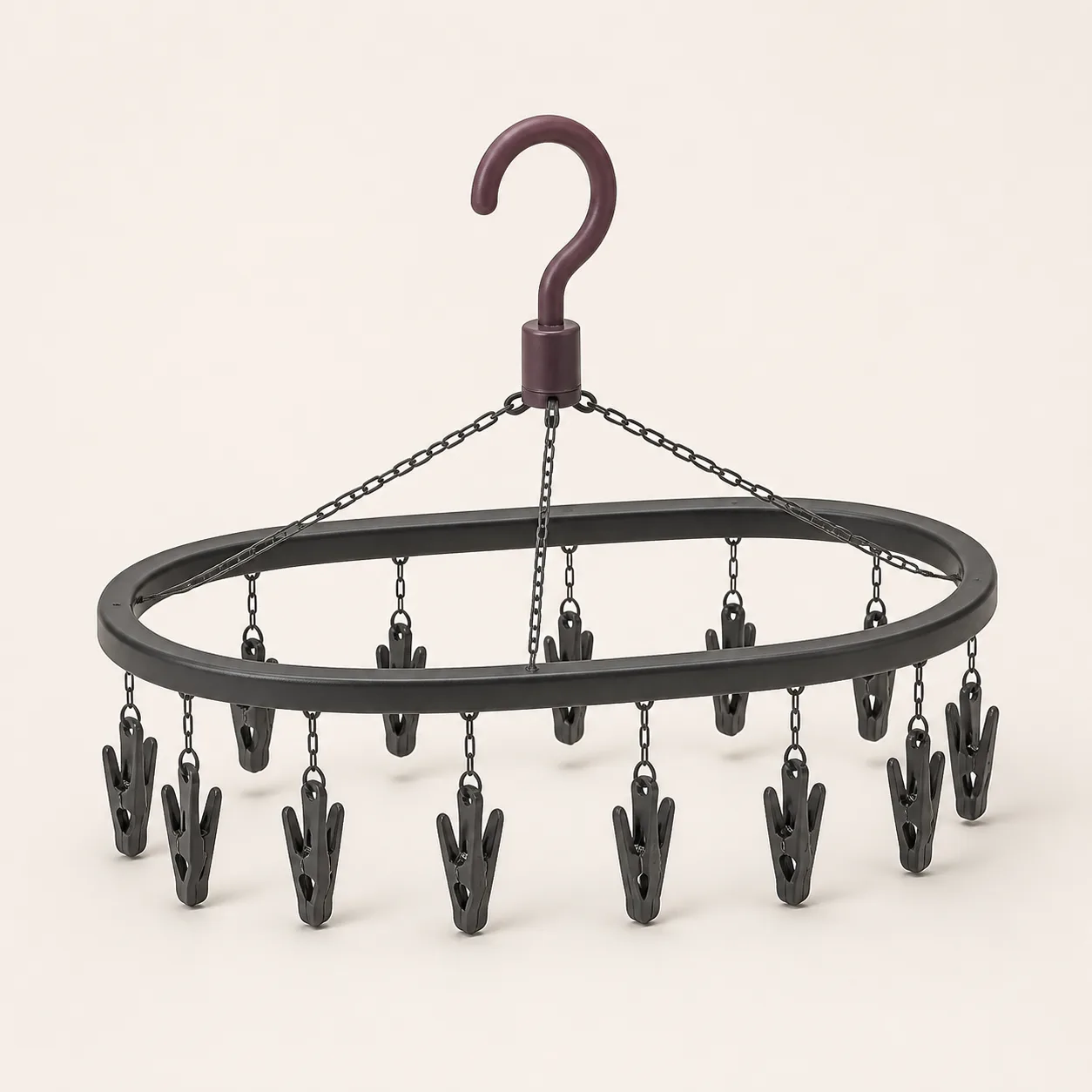
Fold-Flat 12-Clip Care-Cloth Airing Hanger
A compact twelve-clip hanging frame concept for spacing eligible rinsed care cloths during a confirmed indoor airing routine.
19,99 $
200 in stock
Twelve separate clips can organize a small cloth-airing batch
The care cloth airing hanger concept suspends rinsed, eligible low-risk textiles around one compact frame. Independent clips create spaces between small cloths while the swiveling top hook lets the empty frame be positioned at a verified indoor support.

The hanger supports spacing only; it does not validate cleaning or prove that a cloth is dry.
Air only textiles approved for reuse
Follow the cleaner label and textile care instructions before clipping anything up. The planned route is for small reusable care cloths that have completed their required rinse or wash step and carry no special contamination concern.
Do not use visual cleanliness as the only test for reuse.
Exclude hazardous, infectious and sharp residues
Cloths exposed to corrosive cleaner, solvent, battery leakage, mold, blood, broken glass or another potentially hazardous material need the prescribed containment and processing route. Do not place them above a household work area.
The hanger is not medical drying equipment or a chemical-resistant rack.
Inspect every moving and gripping point
Before loading, check the hook, swivel, suspension links, frame joints, clip springs and jaws for cracks, burrs, rust-like discoloration, loose connections or unusual odor. Open each clip once while the frame is supported at bench height.
Reject a unit that exposes a sharp edge or lets a clip detach under a gentle empty check.
Choose a support rated for the complete wet load
The hook must sit fully on a fixed indoor rail or bar whose shape, diameter and capacity are confirmed. Door tops, curtain rods, pipes, lamps, cables and temporary adhesive hooks are not assumed suitable.
Include the frame, links and wet textiles when assessing total load.
Keep the hanging zone away from people and equipment
Select a ventilated adult-controlled area beyond walkways, beds, food, children, pets and powered care devices. Leave enough clearance for the frame to rotate without touching a wall, shelf or another textile.
Place an approved drip surface below when residual water is possible.
Load opposite clips to maintain balance
Start with one light cloth, then add a similar item on the opposite side before filling other positions. Balanced loading reduces tilt and helps keep links from tangling around the frame.
Never concentrate heavy wet textiles on one quadrant.
Grip a reinforced cloth edge without folding it thickly
Open the clip with fingers clear of the hinge and position the jaw on a clean edge that the textile can support. Use the smallest fold necessary for secure contact so air can reach both faces.
Stop if the clip marks, cuts or stretches the material.
Leave unused clips hanging freely
Empty clips should not be locked together, wrapped around neighboring links or used to hold bottles and tools. Keep them separated so their springs do not pull the frame out of balance.
Do not add extra clips unless the manufacturer approves their weight and attachment.
Allow airflow between every textile
Arrange cloths so their wet surfaces do not overlap or press against the frame. More occupied clips are not always better; thick items may need adjacent positions left empty.
Humidity, room ventilation, textile thickness and fold pattern all affect drying time.
Check progress without spinning the hanger
Approach from the open side, stop the frame gently and inspect one textile at a time. Do not twist the hook, swing the load or pull a cloth while the frame is rotating.
Rebalance the load after removing any item.
Confirm dryness beyond the exposed surface
Check seams, folds and the area beneath each clip according to the textile instructions. A cool or dry outer face can hide moisture inside a thick edge.
Do not transfer a cloth to closed storage until the approved dryness check is satisfied.
Unload at a clean surface before folding
Remove cloths in opposite pairs and place them directly in their next approved location. Take the empty hanger down with two hands, then release the hook from the support.
Never attempt to fold the frame while it is suspended or still carrying textiles.
Clean and store the empty frame safely
Use only a cleaner confirmed for the final frame, coating, links and clip springs. Dry every joint before folding, then secure the unit by the approved mechanism so loose clips cannot pinch fingers or snag supplies.
Store it flat in an adult-controlled dry area away from flame, heat and chemicals.
The supplier reference requires cloth-specific testing
An Alibaba 12-clip foldable hanging rack listing from Shanghai DIY HOME shows USD 2.84-3.31 per piece with MOQ 50 pieces. Materials, clip pressure, hook range, folding mechanism, corrosion behavior and balanced load require written confirmation and tests.
The procurement reference supports sample inquiry only. The EUR 19.99 plan allows for China-origin freight, clip and hook checks, load trials, protective packing and discreet fulfillment; packed size, mass, freight, duty, tax, insurance, payment fees and destination terms remain pending.
Frequently asked questions
Can it hang from a shower rail?
Only after the rail, hook fit and full wet load have been verified; no universal support compatibility is claimed.
Must all twelve clips be filled?
No. Leave space for balance and airflow, especially with thicker textiles.
Can contaminated cloths be aired here?
No. Follow the prescribed containment and processing route for the specific hazard.
Is the frame suitable outdoors?
Outdoor, wind, UV and corrosion performance remain pending.
How do I know a cloth is dry?
Use the textile’s approved check and inspect seams, folds and the clipped edge, not only the exposed face.
When should the hanger be removed from service?
Stop after a cracked frame, sharp edge, weak hook, loose link, failed spring, staining, chemical damage or unstable folded mechanism.
Reviews
There are no reviews yet.