



Pressure-Responsive Flat-Head Wand with Segmented Grip Strip
August 14, 2026
GM-408 Dual-Motor Open-Clamshell Masturbator
August 14, 2026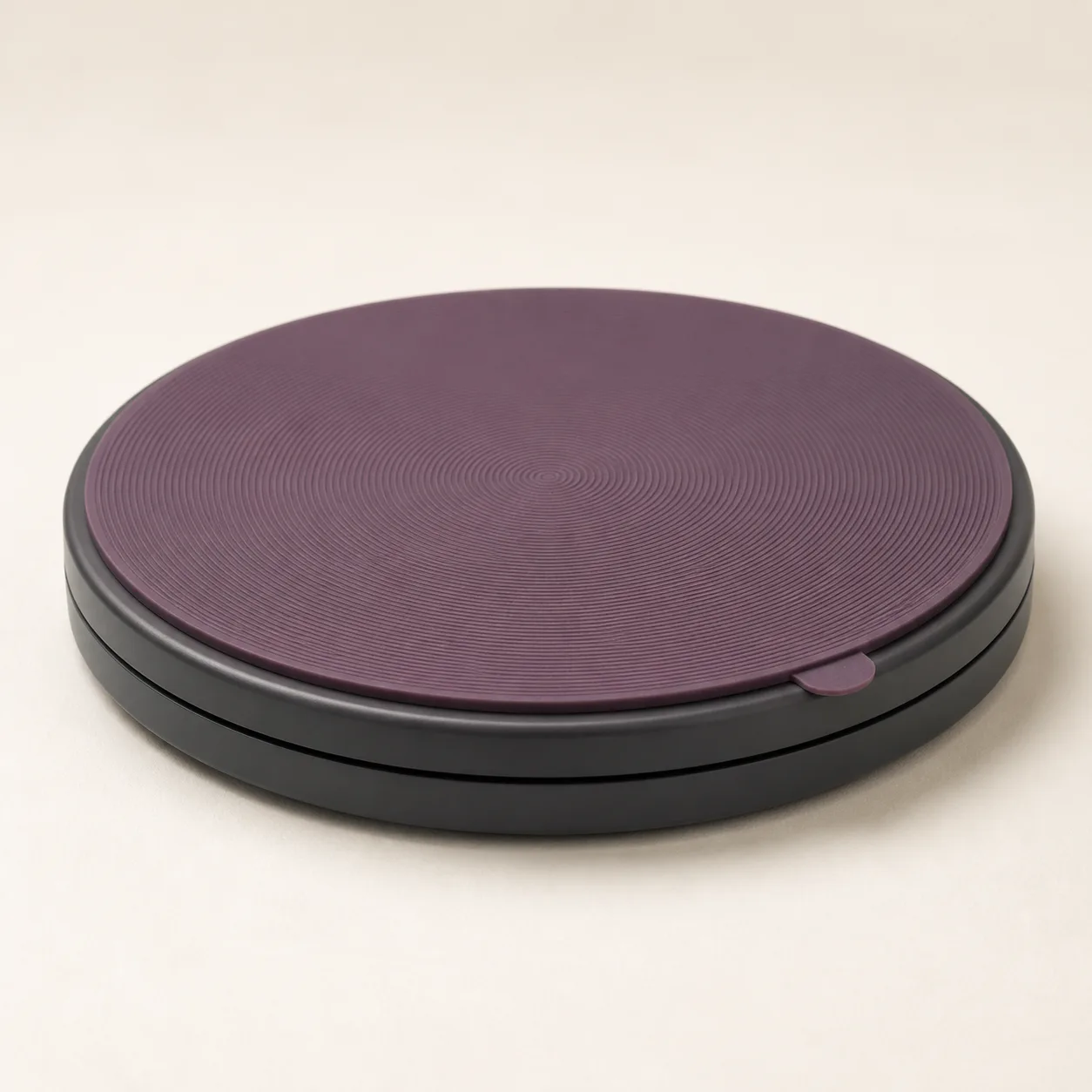
Low-Profile Manual Care Inspection Turntable with Grip Mat
A low-profile hand-rotated inspection platform with a removable textured mat for viewing dry, stable product exteriors from multiple angles.
22,99 $
200 in stock
A manual platform can bring each exterior side into view
The care inspection turntable concept supports a dry product while the user rotates the platform edge by hand. A low charcoal base keeps the working height modest, and a fitted textured mat creates a replaceable contact layer between the platform and an approved product surface.

The turntable changes the viewing angle; it does not test, clean or repair the item.
Limit use to dry external visual inspection
Place only a switched-off, disconnected product whose maker allows it to rest on the selected mat material. Do not operate, charge, wash, spray or test the product while it sits on the platform.
The turntable is not a display motor, repair jig, drying device or stand for active intimate use.
Confirm that the product has a stable resting face
Inspect the model instructions and choose a broad exterior area that can support the item without loading a button, port, flexible tip, cable, seam or removable cover. A curved or top-heavy shape may need a different maker-approved support.
Do not use straps, adhesive, pins or improvised blocks to force an unstable product onto the platform.
Examine the mat and rotating base before every session
Lift the removable mat by its tab and check both faces for grit, cuts, tackiness, staining, odor, swelling or embedded particles. Rotate the empty platform once to detect scraping, wobble, binding, looseness or an uneven gap.
Reject a unit with a sharp edge, cracked base, exposed bearing material or a platform that continues spinning unexpectedly.
Start on a level rigid nonporous worktop
Set the empty turntable well inside the table edge and outside any wet-care tray. Press gently at several points around the base to confirm it does not rock, slide or bridge a raised seam in the worktop.
Keep cables, cleaner bottles, mirrors and small parts beyond the platform’s full swept area.
Center the product while the platform stays still
Hold the turntable edge with one hand and lower the approved resting face onto the center of the clean dry mat. Verify that no part extends into a hazard, touches the worktop or pushes against the mat’s lift tab.
If the product obscures the platform edge needed for control, select a larger qualified surface.
Load capacity and balance require measured limits
Product mass, footprint and center of gravity all affect stability. No weight rating is made until the selected platform, bearings, base and mat have passed static, off-center and rotation tests with documented safety margins.
Never stack products or place a second item on the same platform.
Turn the platform edge rather than twisting the product
Use one fingertip on the exposed rim to move the platform a small angle, then stop it completely before looking closely. This keeps rotational force away from the product surface and reduces the chance of lifting or tipping it.
Do not flick the edge, spin through momentum or reach across the item while the platform moves.
Inspect in a consistent sequence around the exterior
Choose a visible reference feature and move in short equal stages. At each stop, check the illuminated side for dust, discoloration, cracks, lifting seams, residue or other conditions named in the maker’s guidance.
Record observations separately; never write on the mat or attach labels to the product during rotation.
Stop at the first sign of drift or contact change
Pause immediately if the product creeps across the mat, leans, rocks, squeaks, leaves color, catches the lift tab or changes shape at the resting face. Stabilize the platform before lifting the product with both hands.
Do not increase mat tack or add cleaner to solve movement.
Keep all liquid away from the bearing gap
The narrow gap between platform and base can trap moisture or carry cleaner into an unverified bearing. Complete any wet care in a separate contained zone and dry the product according to its instructions before inspection.
No rust resistance, sealed bearing or liquid containment claim is made.
Mat texture must be qualified for each surface family
Friction, pigments, polymer additives and compression can affect silicone, elastomers, coatings and polished housings differently. Test representative samples for imprinting, dye transfer, tack, plasticizer migration, abrasion and odor before approving a contact surface.
A texture that feels soft by hand is not automatically safe for every finish.
Clean the removable mat separately from the mechanism
Lift the empty mat by its tab and use only its validated cleaning method. Wipe the rigid platform and base without flooding the perimeter gap, then dry all pieces fully before the mat is refitted.
Do not immerse, steam, oil or place the turntable in a dishwasher.
Store flat with nothing pressing on the platform
Keep the clean dry turntable in a private cabinet on a level shelf, protected from grit, direct sun, heat, ozone and chemical vapor. Store the mat flat so its edge does not curl and its surface remains easy to inspect.
Do not use the platform as permanent product storage until long-duration compression and material tests are complete.
The source listing provides a hardware starting point
An Alibaba manual metal turntable listing from Foshan Run Rises Hardware shows USD 1.99-2.39 per piece with MOQ 20 pieces. Platform finish, bearing construction, diameter, load, rotation resistance and the custom grip mat require written confirmation and samples.
The procurement reference supports evaluation only. The EUR 22.99 plan allows for China-origin freight, mat sourcing, runout and load screening, edge inspection and discreet packing; packed mass, freight, duty, tax, insurance, payment fees and destination terms remain pending.
Frequently asked questions
Is the platform powered?
No. The concept rotates only by a slow controlled push on the platform edge.
Can a wet product dry on it?
No. Keep moisture away from the mat and bearing gap; use the maker-approved drying method elsewhere.
How much weight can it support?
Load capacity remains pending and must include centered, off-center and rotation testing.
Will the mat suit every product material?
No. Contact compatibility must be qualified for each relevant surface family.
May the product stay on the turntable for storage?
No long-duration storage use is planned until compression and migration tests are complete.
When should rotation stop immediately?
Stop after drift, wobble, binding, scraping, product tilt, mat curling, color transfer, abnormal noise or liquid near the base.
Reviews
There are no reviews yet.