


Hand-Pump Adjustable-Girth Vibrator
August 14, 2026
Squirrel-Tail Air-Pulse Palm Vibrator
August 14, 2026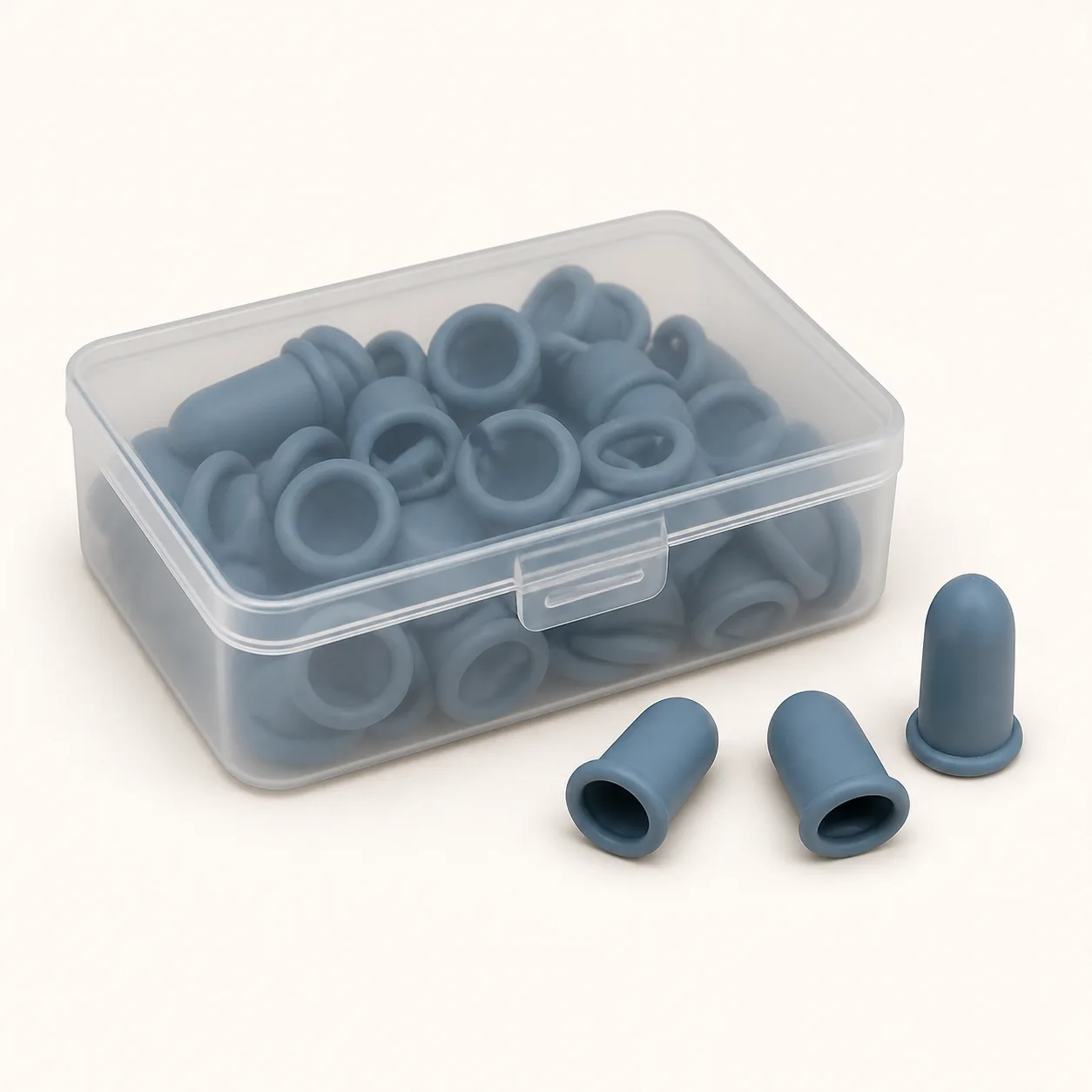
Rolled-Edge Finger Cot Kit with Frosted Storage Case
A compact care-station kit concept with rolled-edge fingertip covers and a frosted snap-lid case, supported by fit, task-separation and storage guidance.
8,99 $
200 in stock
Why a fingertip cover can be useful at a care station
The rolled edge finger cot kit is planned as a compact set of short fingertip covers inside a frosted snap-lid case. A correctly sized cover may reduce direct finger contact while handling an approved care formula, lifting loose residue from an accessible surface or separating a clean task from a dirty one.

It adds a small workflow option; it does not make an unsuitable cleaning method safe.
This is not a glove or a protection claim
A finger cot covers only part of one finger. It is not personal protective equipment, a medical device, a contraceptive, an infection barrier or a substitute for a glove specified by a chemical safety document.
Do not wear it for intimate contact or place the covered finger inside the body.
Start with the written cleaning method
Check the toy maker’s instructions before touching cleaner, lubricant residue or a textured seam. Confirm which products are allowed, whether wiping is sufficient and which openings must stay dry.
If the instructions require gloves, ventilation or another control, follow that requirement instead of relying on a fingertip cover.
Candidate material claims need sample proof
The source guide describes blue rolled-edge nitrile finger cots, but polymer identity, natural-rubber-latex absence and powder-free status must be documented and tested for the final lot. No sterile, food-contact or medical-grade claim is made.
People with known sensitivities should avoid use until the complete composition and additives are confirmed.
Fit is determined by the finger, not the box
A cover should sit smoothly without whitening the skin, creating numbness or sliding off during light work. Remove it immediately if there is tingling, pressure, color change or discomfort.
The approved size range and circumference tolerances remain pending, so the final kit must identify sizes clearly.
Dry hands help the cuff stay in place
Wash and dry the hand according to the task, then inspect the finger for cuts, irritation and jewelry that could snag thin material. Select one cover with dry fingers and keep unused pieces inside the closed case.
Do not apply hand cream or oil before fitting unless compatibility has been verified.
Roll the cover on instead of pulling the tip
Place the closed end over the fingertip and unroll the cuff toward the first joint without overstretching. Smooth trapped air gently and confirm that the cuff is not folded into a tight band.
Discard pieces with tears, tackiness, brittle edges, fused layers or an uneven cuff.
Keep one cover within one defined task
Use a fresh piece when moving from a used surface to a cleaned surface, from one product to another or from one care formula to a different formula. A cover that looks clean can still carry residue.
Never place a worn piece back among unused stock.
Oils and solvents can change elastomer behavior
Oil-based products, alcohol, fragrance concentrates and strong cleaners may swell, soften or weaken some elastomers. Supplier compatibility data and representative soak tests are required before the kit is paired with any formula.
Stop if the cover becomes loose, sticky, discolored or easy to tear.
Remove it without touching the used outside
Pinch the cuff at the side, peel the cover away from the finger and contain it according to local waste rules. Avoid snapping the cuff, which can spread droplets or residue.
Wash and dry hands after disposal even when the cover remained intact.
The frosted case needs its own hygiene routine
Handle the lid with clean, dry hands and avoid setting the open case beside wet tools. If residue reaches the case interior, isolate the remaining pieces until the stock and container can be assessed.
The case polymer, hinge life, latch strength and cleaning method remain pending.
Store sealed stock away from heat and ozone
Keep the case in a cool, dry, dark cabinet away from radiators, motors, direct sun and volatile chemicals. Heat and ozone can age many elastomers before visible damage appears.
Lot code, manufacture date, storage range and shelf life should appear on the approved packaging.
Set boundaries around children and pets
Small fingertip covers can present a choking or ingestion hazard. Keep the closed case in controlled adult storage and account for loose pieces during setup and disposal.
The kit is not a toy, balloon or reusable play accessory.
Inspect a production lot by size, not appearance alone
Sample each declared size and record cuff diameter, overall length, thickness, mass, odor and visual defects. Conduct controlled stretch, leak and compatibility checks using the intended care products.
Quarantine lots with pinholes, fused pieces, inconsistent cuffs, excessive powder, strong odor, color transfer or incomplete traceability.
Supplier economics are provisional
An Alibaba supplier guide lists blue rolled-edge nitrile finger cots from Shanghai Haokuo Apparel Co., Ltd. at USD 3.00-4.50 per 500 pieces with a displayed MOQ of 100 pieces. Pack count, sizes, material claims and all commercial terms remain pending.
The procurement reference is for sample inquiry only. The EUR 8.99 plan allows for China-origin freight, incoming inspection, size sorting and frosted-case assembly; packed mass, freight, duty, tax, insurance, payment fees and destination terms remain pending.
Frequently asked questions
Can one cover replace a cleaning glove?
No. Use the hand protection named by the cleaner or product instructions.
Is the final kit confirmed as nitrile and powder-free?
No. Those candidate source claims require supplier documents and lot testing before sale.
Can a finger cot be reused?
The planned workflow treats each piece as single-task stock; final single-use labeling remains pending.
Which size should I choose?
Use the smallest approved size that sits smoothly without pressure, numbness or slipping.
Can it be worn during intimate contact?
No. This concept is limited to external product-care tasks and carries no body-contact protection claim.
What defects mean a piece should be discarded?
Remove any piece with a pinhole, tear, fused layer, brittle cuff, tackiness, strong odor or visible contamination.

Reviews
There are no reviews yet.