


Blue Rabbit BR-YL-01 Purple or Red Rose-Cup 10-Mode Vibrator Pair
August 14, 2026
Four-Roller Compression-Ring Manual Stroker with Split-Clean Sleeve
August 14, 2026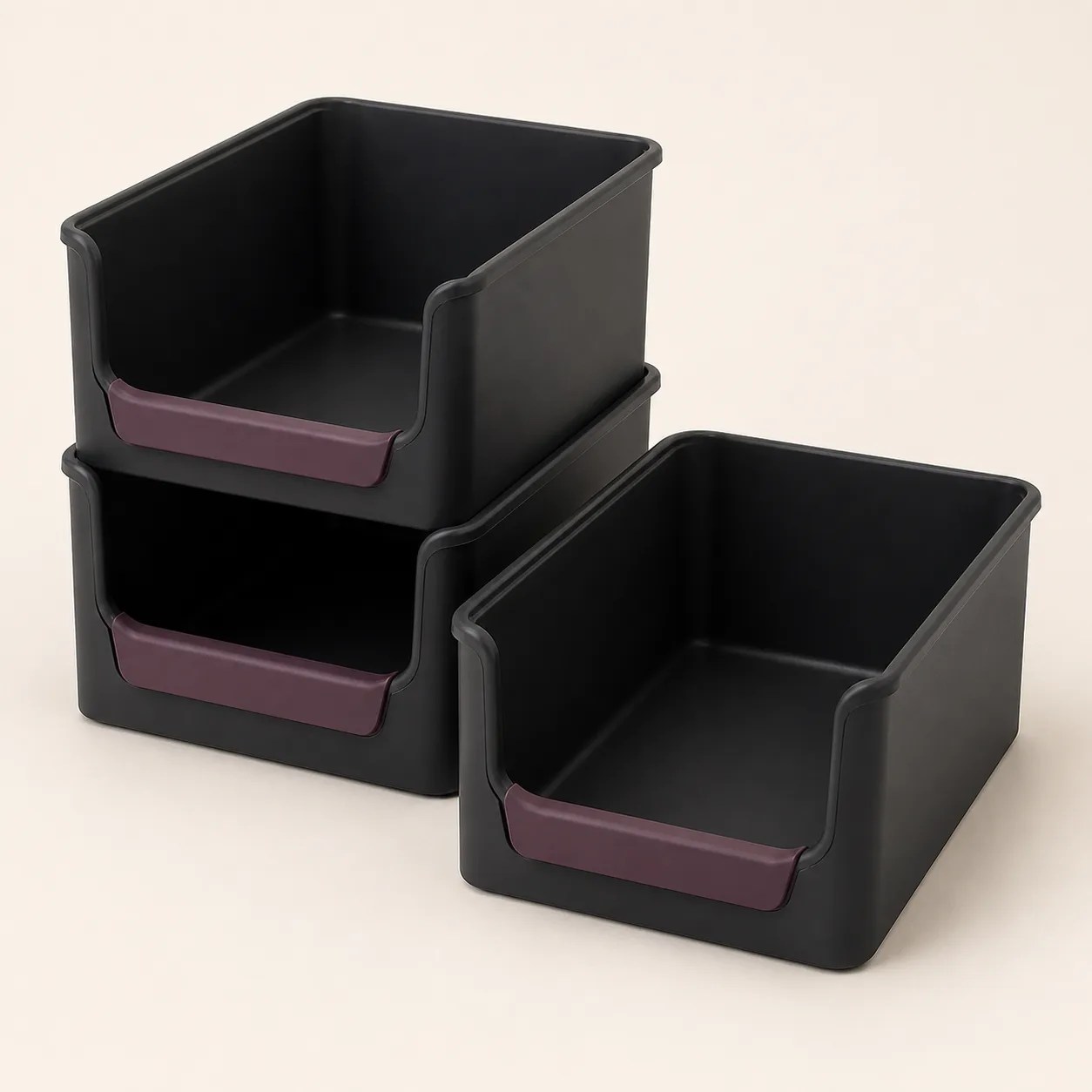
Stackable Open-Front Care-Supply Shelf Bins, 3-Pack
A planned three-pack of open-front shelf bins for sorting closed dry adult-care supplies, with sample-based stacking and loading controls.
24,99 $
200 in stock
Open-front bins can shorten retrieval from a fixed shelf
These stackable care supply bins are planned as a three-piece set for sorting closed, dry adult-care supplies by task stage. High back and side walls define each bay while the lowered front allows access without removing a lid.

They are not sealed, locked, child-resistant, liquid-tight or suitable for unattended sensitive storage.
Decide whether open visibility fits the room
The front opening makes stored contents easier to see and reach. Use only where that visibility matches the household privacy plan, or place each closed supply inside an approved opaque pouch before it enters the bin.
Do not describe an open-front bin as concealed storage.
The image does not confirm plastic, load or pack count
The charcoal body and plum lip are visual design choices. They do not establish resin type, wall thickness, recycled content, chemical resistance, supported mass, stack height or the exact quantity supplied by a production order.
Confirm the three-piece retail configuration and physical limits in writing.
Measure shelf depth and front clearance first
Record usable shelf width, depth, vertical space, edge profile and distance to doors or curtains. The entire bin base and stacking interface should remain supported without front or side overhang.
Include hand clearance for reaching the lowest compartment without striking the shelf above.
Inspect each rim, base and front grip lip
Compare all three empty bins for cracks, bowing, sharp molding, uneven feet, rough seams and distorted stacking rails. Press the grip lip and side walls only through the supplier-approved sample check.
Do not stack a bin with a damaged rim or base.
Trial the empty stack on the exact shelf
Set the lower bin squarely on the clean dry shelf, engage the next interface and check from every side for gaps or rocking. Repeat only up to the supplier-confirmed configuration while a second person guards the stack.
A stable display on a studio floor does not establish stability on furniture.
Assign one supply family to each level
Keep closed preparation items, sealed reserve items and approved empty accessories in separate documented bins. Avoid mixed piles that require reaching behind unrelated objects.
Use a private inventory record outside the customer-facing opening if labels would reveal sensitive information.
Load the lowest bin before upper levels
Place the heaviest approved closed packages low and centered, then add lighter supplies above within confirmed per-bin and total stacked limits. Keep every item below the side walls and behind the front lip.
Uneven or top-heavy loading can reduce stack stability even when individual bins are not full.
Set a sample-based maximum stack count
Document the exact bin model, shelf and approved number of levels after a controlled load and lateral-stability trial. Do not extend the stack because another empty bin appears to engage.
Keep stacked bins below shoulder height and outside fall paths unless the site assessment specifies a lower limit.
Retrieve supplies without pulling on the lip
Face the shelf, keep both feet stable and remove one closed item using a clear grip. The colored lip identifies the opening but is not a handle for dragging a loaded stack toward the operator.
If an item cannot be reached without twisting or shifting another bin, unload and reorganize from a safe height.
Keep loose parts and liquids in other systems
Do not store open cleaners, leaking packages, charging devices, sharp tools or small loose components that can pass through the opening. Use containers designed for those hazards and access requirements.
The raised front lip provides no proven spill containment.
Recount inventory before moving a bin
Unload the selected bin onto a fixed preparation surface, confirm it is empty and then lift with two hands at the approved side points. Never move several stacked bins while supplies remain inside.
Check the shelf and floor for anything displaced during the transfer.
Clean bins separately rather than as a stack
Remove every supply, separate the levels and apply only the verified cleaner, cloth and contact time. Wipe the interior base, front lip, corners, underside and stacking rails so no protected junction is skipped.
Do not immerse, machine-wash or heat the bins unless the production specification permits it.
Dry all stacking interfaces before reassembly
Support each empty bin so air reaches the interior, underside, lip and rim. Inspect for moisture, residue, swelling, stress whitening, cracks, color transfer or persistent odor before placing one bin on another.
Withdraw any bin that rocks, binds, slides or no longer engages consistently.
Sourcing requires a three-piece packing and stack test
A Shenzhen Leadloong Plastic Product Co., Ltd. front-opening stackable-bin listing shows USD 0.38-3.00 per piece with MOQ 2. That reference does not confirm this planned three-pack, exact dimensions, materials, front-lip design, shelf compatibility, load or approved stack count.
The procurement reference supports inquiry only. The EUR 24.99 plan allows for China-origin volumetric freight, three-piece color matching, rim and molding inspection, shelf-fit and staged-load trials, stack-stability checks, cleaning tests, protective packing and discreet fulfillment; packed size, mass, freight, duty, tax, insurance, payment fees and destination terms remain pending.
Frequently asked questions
Are the bins private or lockable?
No. The fronts are open, and no lock or child-resistant access control is claimed.
How many bins can be stacked?
No universal count is stated; the exact model, load, shelf and supplier limit require a controlled trial.
Can a loaded stack be carried?
No. Unload each bin and move it individually with two hands through the approved route.
May liquids be stored inside?
No. The planned workflow is for closed dry supplies, and spill containment remains unverified.
Can a bin overhang the shelf?
No. Plan for full base and stacking-interface support within confirmed shelf dimensions.
When should a bin be withdrawn?
Withdraw it after cracks, sharpness, bowing, rim damage, stress whitening, sliding, rocking, color transfer or persistent odor.
Reviews
There are no reviews yet.