


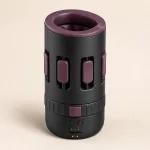
Four-Tappet Radial-Pulse Automatic Stroker with Liner-Lock Collar
August 14, 2026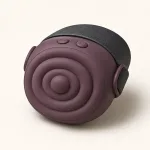
Three-Ring Concentric Palm Vibrator with Adjustable Hand Strap
August 14, 2026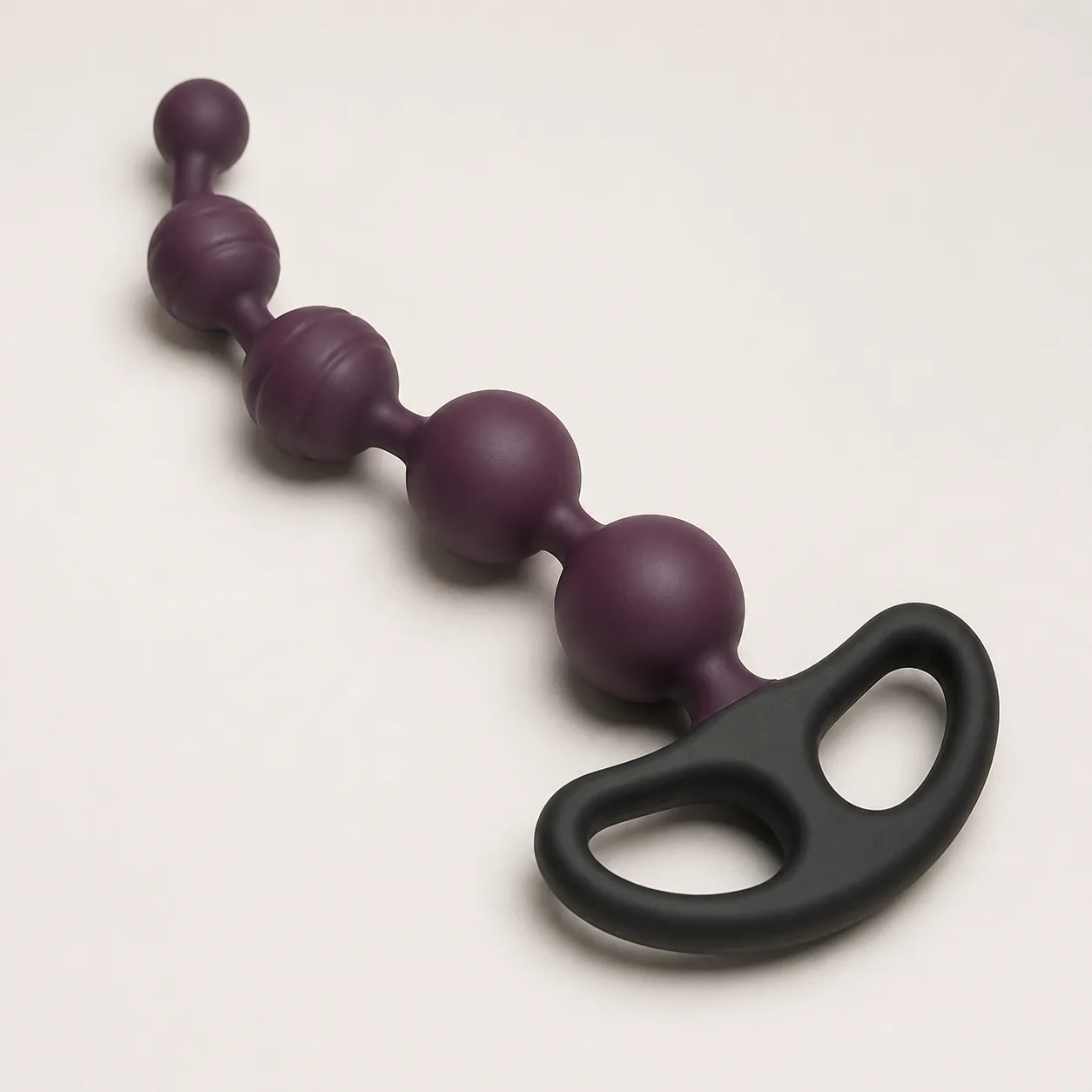
Five-Bead Twin-Ridge Mid-Section Anal Strand with Crescent Safety Handle
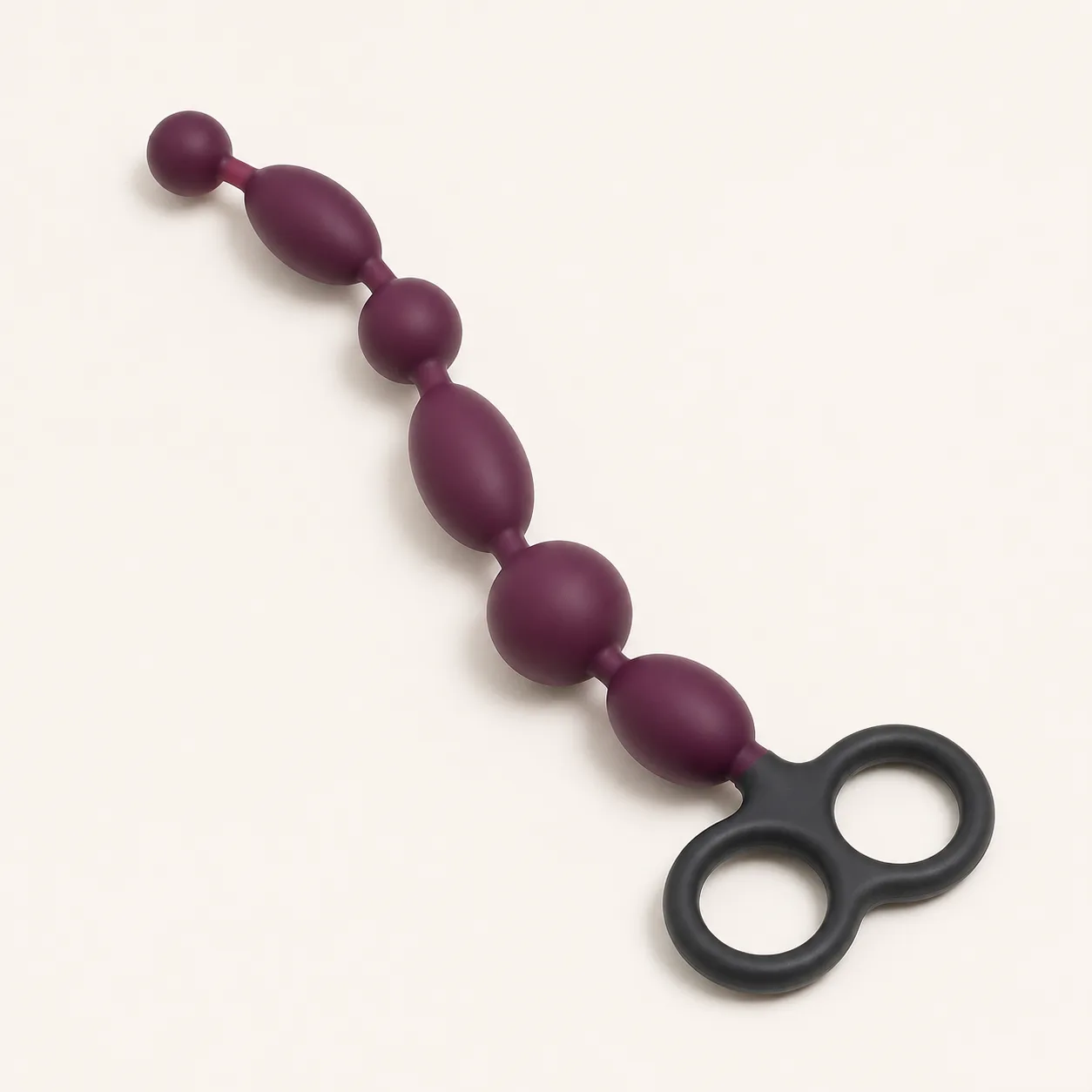
A non-powered smoky-plum anal strand concept with exactly five graduated rounded beads, shallow ridge contours on the two adjacent middle beads and one wide two-opening charcoal crescent safety handle.
32,99 $
200 in stock
Place two ridged beads inside a five-step progression
This five-bead twin-ridge mid-section anal strand with crescent safety handle concept contains exactly one non-powered flexible strand. It presents five graduated smoky-plum rounded beads, with shallow ridge contours on the two adjacent middle beads and smooth surfaces on the remaining three, followed by one wide charcoal external handle.

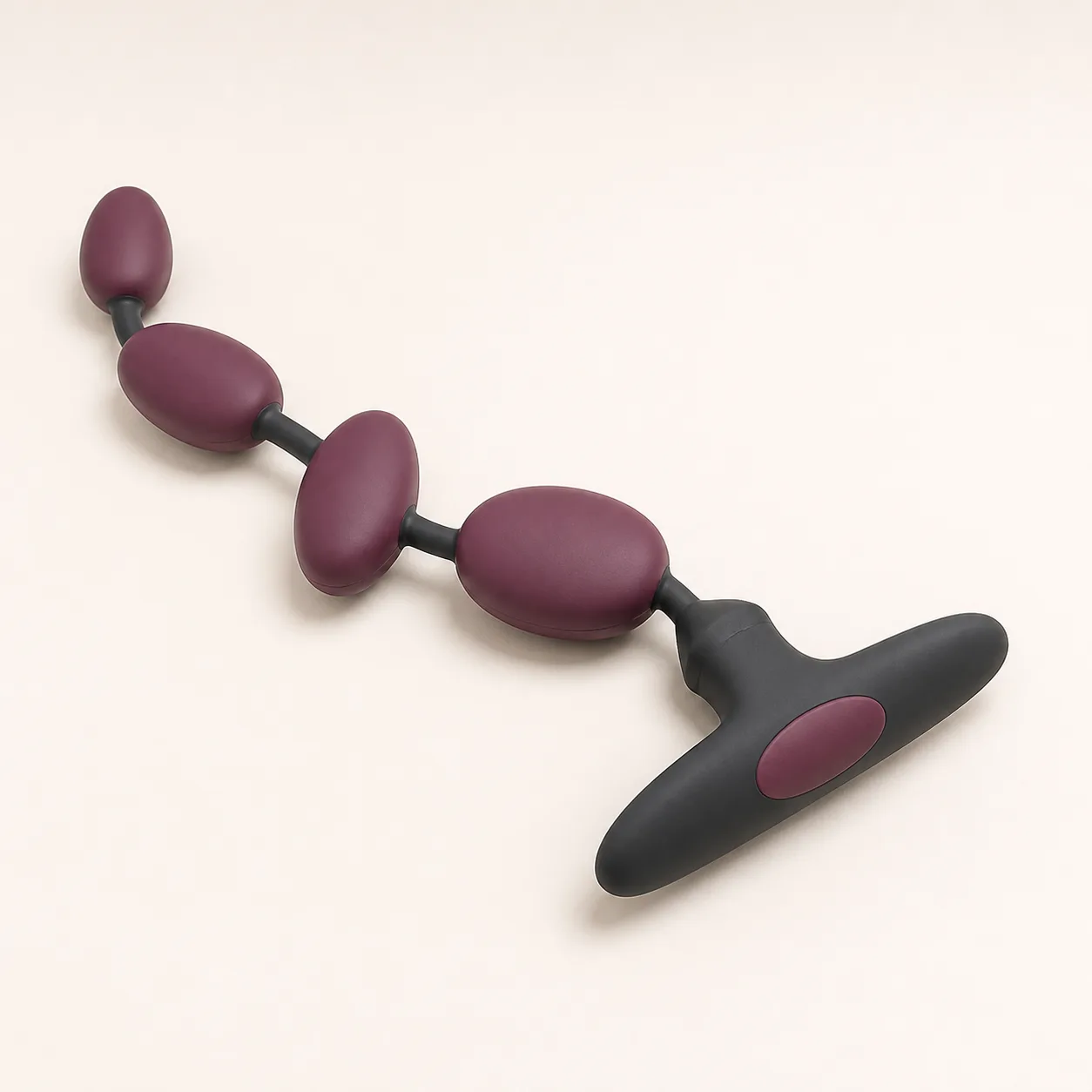
The image establishes visible geometry only. It does not confirm dimensions, insertable length, ridge count, flexibility, materials, safety performance, cleaning or production readiness.
Audit one continuous non-powered assembly
The planned inventory is one bead strand with one integrated external handle. Motor, remote, cable, charger, suction cup, separate pull ring, storage bag and other accessories are excluded.
Inspect the strand from tip to handle as a continuous moulded or bonded assembly according to the approved process. Record colour lot, surface finish and traceable production batch.
Number all five beads from tip to base
Label the beads B1 through B5, beginning with the smallest tip bead. Confirm that the sequence increases toward the handle and that no additional node is mistaken for a sixth bead.
Record the diameter, axial length, centre position and mass contribution of B1, B2, B3, B4 and B5 under one stated measurement method.
Measure the graduated diameter steps
Calculate the diameter increase from B1 to B2, B2 to B3, B3 to B4 and B4 to B5. Compare the proposed progression with approved tolerances rather than relying on visual scale.
Beginner, advanced, gradual and progressive labels remain pending the final dimensions, flexibility and risk review. Larger visible size does not establish suitability for any individual.
Map the twin-ridge middle section
The concept shows shallow circumferential texture on adjacent middle beads B2 and B3. Measure each visible contour depth, width, edge radius and spacing, then inspect the valleys for mould flash and cleaning traps.
The exact ridge count and texture intensity remain pending the approved production drawing; the sales page does not infer stimulation performance from the render.
Inspect the three smooth beads
Check B1, B4 and B5 for an uninterrupted rounded surface, even finish and consistent transition into the flexible stem. Record tip radius on B1 and the largest exposed diameter on B5.
Reject pits, tears, bubbles, sharp seams, tacky contamination, embedded particles and abrupt necks at any smooth-bead junction.
Measure spacing and flexible stem sections
Record clear distance and neck diameter between every adjacent bead. Bend each inter-bead section through a bounded fixture and measure force, angle and residual set without overloading the material.
Flexibility, softness and controlled movement claims remain pending sample testing. Do not kink, twist sharply or stretch the strand beyond the documented limit.
Inspect every bead-to-stem transition
Use magnification to inspect the tip neck, four inter-bead necks and the final junction beside the handle. Map any parting line, bonded interface, thickness change or stress concentration.
Reject cracking, whitening, delamination, exposed insert material or surface separation after the validated bend and pull protocol.
Keep the crescent handle wider than the final bead
Measure total handle width, height, thickness, edge radius and both finger openings. Confirm with the approved production drawing that the external span remains wider than B5 and cannot follow the bead path under the intended load.
The handle must remain outside the body, visible and reachable at all times. Never use a strand with a torn, softened, deformed or undersized handle.
Confirm handle stiffness and grip openings
Measure deflection of the crescent bridge under a stated bench load and cycle both openings for edge damage. Check that fingers can enter and leave without contacting sharp seams.
The two openings support controlled handling, not suspension, tying, anchoring, attachment to machinery or body-weight loading.
Identify the complete material construction
Obtain traceable declarations for the five beads, inter-bead stem, handle, colourants, bonding agents and any internal reinforcement. Record surface hardness and lot-to-lot variation at defined points.
Silicone, body-safe, non-porous, hypoallergenic, phthalate-free and certification claims remain pending exact composition and applicable laboratory evidence.
Control dimensional and surface tolerances
Define acceptable diameter, spacing, handle-width, ridge-profile, seam-height, total-length and mass tolerances. Sample each production lot using calibrated gauges and a written inspection plan.
Quarantine units with wrong bead count, misplaced ridges, diameter reversal, handle distortion, visible contamination, hard inclusions or damaged surfaces.
Set cleaning and drying from material evidence
Before first use and after each session, clean with the validated mild method for the approved material. Work carefully through the two ridged bead surfaces, four inter-bead necks and both handle openings.
Rinse only if permitted and dry every contour completely with a lint-free method. Boiling, dishwashers, bleach, solvents, abrasives and high heat remain excluded unless the final care study permits them.
Use slow progression and preserve retrieval access
Use only abundant material-compatible lubricant and advance one bead at a time without force. Keep the crescent handle outside, visible and reachable; never insert past the handle or use the product if retrieval access is compromised.
Stop immediately for sharp pain, bleeding, numbness, unexpected resistance, a torn surface or loss of handle control. Do not share unless a validated barrier and cleaning protocol specifically covers the approved material and geometry.
Build landed price from graduated-bead benchmarks
An Alibaba anal-beads category page displayed a gradual-size pull-ring strand at USD 3.33 to 4.39 with MOQ 1 and a six-ball anal chain at USD 2.99 to 4.10 with MOQ 10. These are broad procurement references, not this exact five-bead twin-ridge construction or an approved supplier.
The public procurement benchmark supports an EUR 32.99 planning price after provisional allowance for China-origin freight, mould validation, five-step measurement, ridge and junction inspection, handle safety review, discreet fulfilment and handling loss. Exact supplier, quote, MOQ, dimensions, materials, packed weight, freight, duty, tax, certification, payment terms and lead time remain pending.
Frequently asked questions
How many beads are on the strand?
Exactly five graduated rounded beads are planned.
Which beads have raised texture?
The concept places shallow ridge contours on the two adjacent middle beads; the exact production ridge profile remains pending.
Does the product vibrate?
No motor, battery, remote or vibrating function is included in the planned non-powered assembly.
How large are the beads?
Every diameter, spacing and insertable length remains pending approved sample measurements.
What is the product made from?
The exact bead, stem, handle, colourant and bonding materials remain pending supplier declarations and testing.
Why is the handle wide?
It is proposed as an external retrieval and safety feature and must remain outside, visible and reachable.
Reviews
There are no reviews yet.