


Three-Disc Counter-Rotating Pocket Vibrator with Phase Dial
August 14, 2026
Five-Bead Twin-Ridge Mid-Section Anal Strand with Crescent Safety Handle
August 14, 2026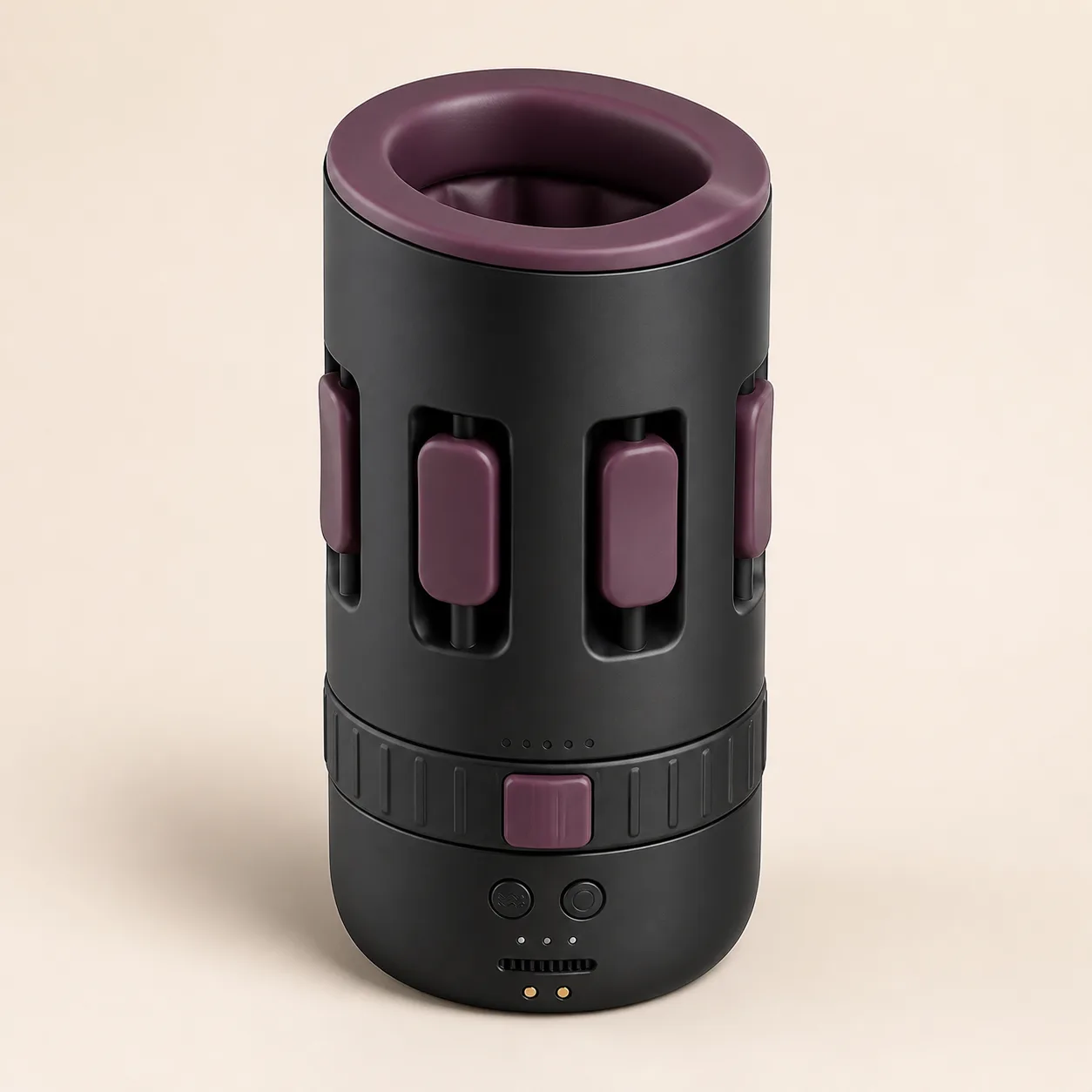
Four-Tappet Radial-Pulse Automatic Stroker with Liner-Lock Collar
A rechargeable automatic stroker concept with four broad radial pressure paddles around one through-liner and a quarter-turn liner-lock collar.
59,99 $
200 in stock
Pulse inward through four radial pressure paddles
This radial pulse automatic stroker concept surrounds one through-liner with four broad paddles carried on short inward-facing stems. The mechanism is intended to create measurable radial movement rather than axial thrust, roller drag, belt travel or an iris opening.

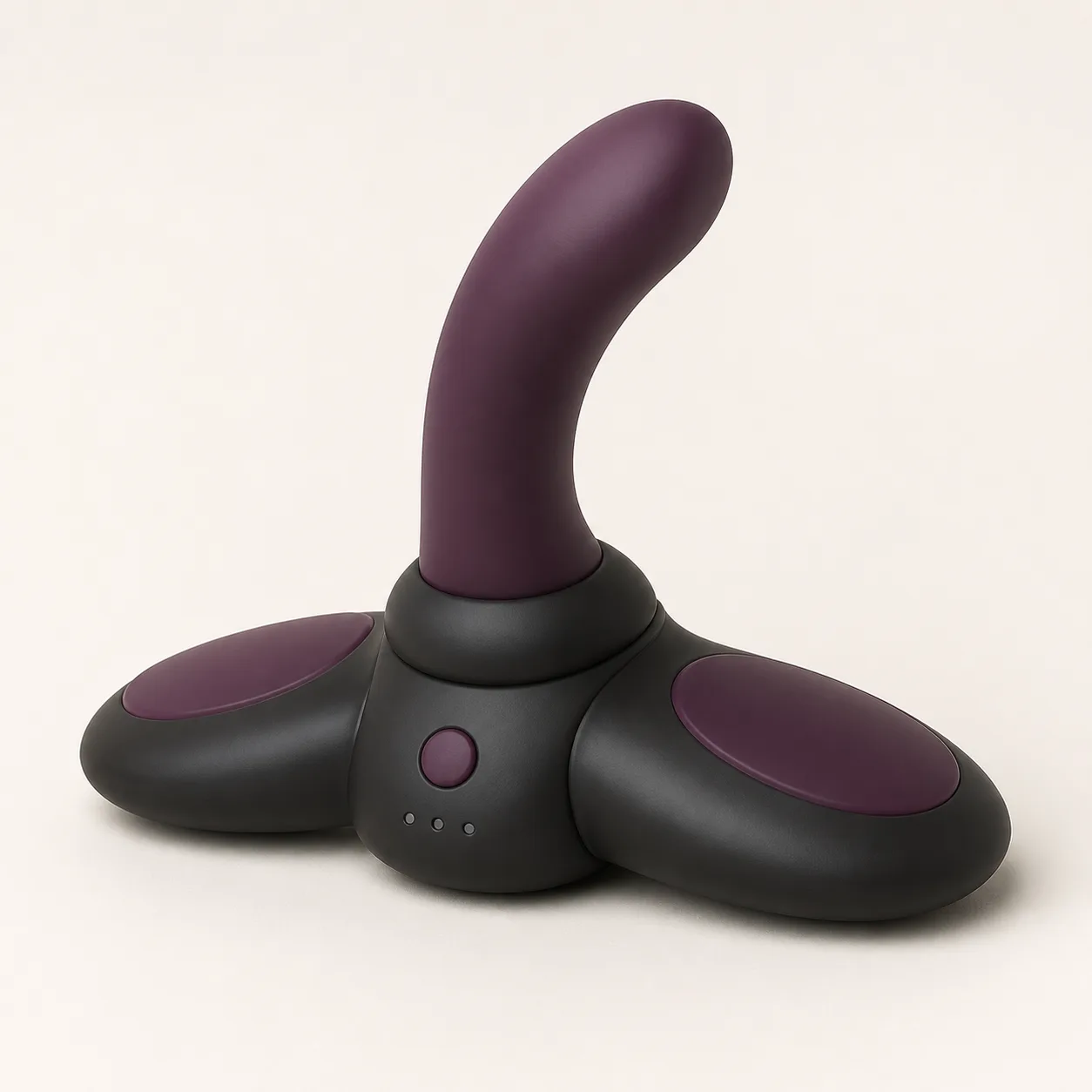
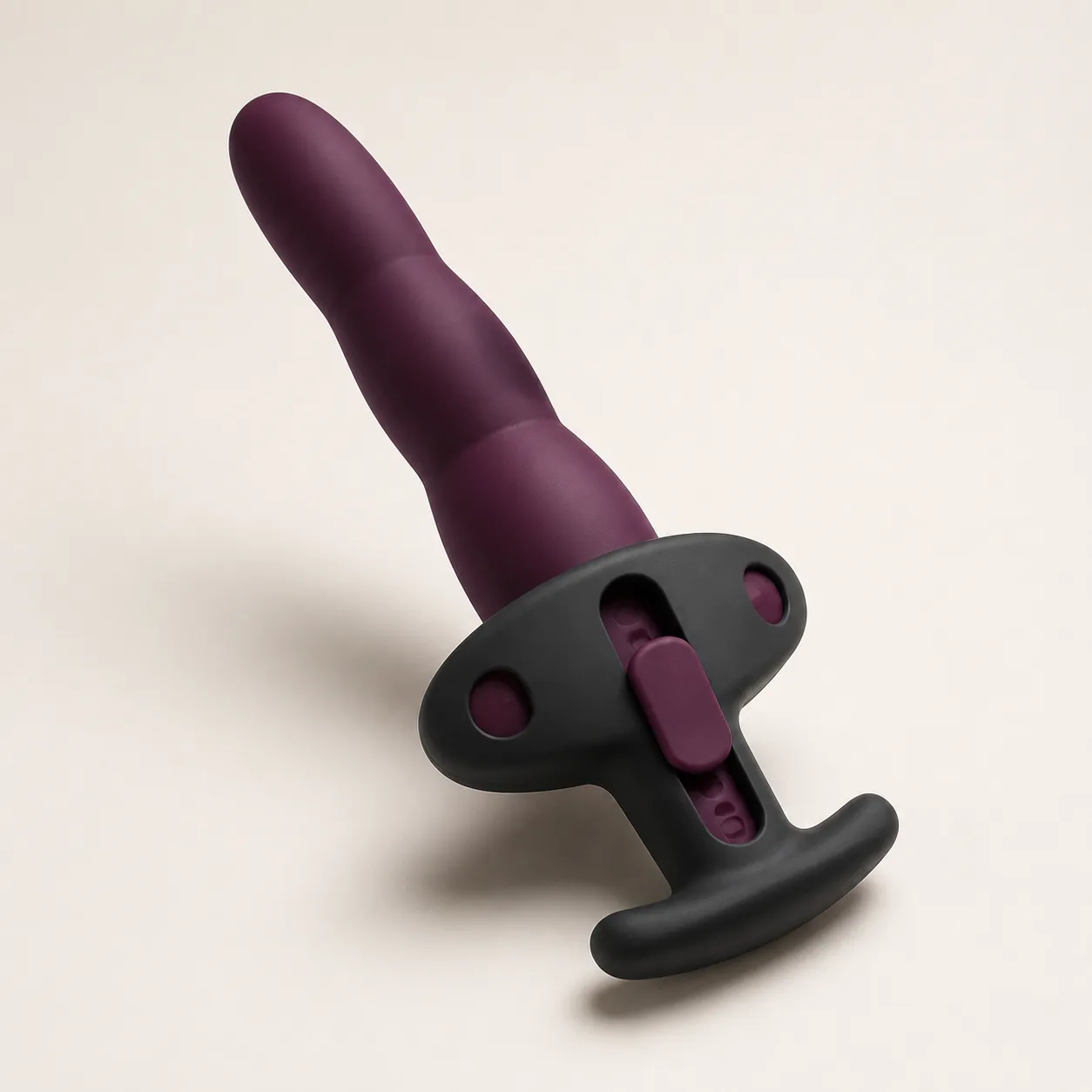
The image does not prove paddle travel, pulse sequence, pressure, liner dimensions, motor count, suction, ingress protection, runtime, materials or supplier approval.
Inventory every radial actuator path
Request an exploded drawing and bill of materials for the rim, through-liner, liner collar, shell, four paddles, paddle skins, stems, guides, bushings, followers, cams or actuators, position sensors, frame, control board, buttons, indicators, vent, cell, charging contacts, conductors, pigments, seals, lubricants and adhesives.
Trace each load and electrical path from drive element to paddle face and identify any shared linkage between opposing or adjacent stations.
Measure shell, liner and internal clearance
Record total height, shell diameter, rim opening, liner bore, internal length, wall thickness, liner-to-paddle clearance, paddle-window size, collar width, vent area and mass. Scan the internal profile with all paddles at verified neutral positions.
Repeat after the liner has been removed, conditioned and correctly seated so packing deformation is not mistaken for mechanism geometry.
Map all four paddles independently
Label each station against the control side and measure face length, width, edge radius, surface profile, stem alignment, neutral height, lateral play and window clearance. Compare opposing axes.
A visually even set can still differ in stem angle, guide friction or exposed edge height behind the liner.
Characterize radial travel and force
Measure startup position, inward travel, speed, acceleration, dwell, outward recovery, force and repeatability for each paddle unloaded and against compliant fixtures. Record current and sound simultaneously.
Stop for stem binding, guide lift, window contact, delayed recovery, overshoot, excessive force or permanent liner indentation.
Resolve pulse sequence and timing
Use synchronized position sensors to document order, overlap, phase, pause and reversal across every verified program. Check adjacent, opposing and all-at-once events without assuming a sequence from button labels.
Repeat across charge states and compliant loads to identify skipped pulses, drift, desynchronization or a paddle that parks inward.
Map circumferential pressure through the liner
Place pressure film or a sensor sleeve around a compliant gauge and record contact beneath every paddle, between stations and near paddle edges. Compare centered and offset loading.
Track pressure changes during single, overlapping and synchronized pulses and define conservative limits from the highest local value.
Verify the quarter-turn liner-lock collar
Measure collar rotation, engagement depth, torque, detent force, stop position, axial play and accidental movement resistance. Confirm liner orientation and collar seating at each assembly step.
Use witness marks to detect collar creep during operation and verify a partially engaged collar cannot appear fully locked.
Measure movement resistance separately
Move the complete device along a standardized compliant fixture at controlled speed and travel while programs are paused and active. Record entry, sustained and extraction force, stick-slip, liner migration, paddle contact, collar movement and shell grip pressure.
Do not infer easy removal from entry behavior; test the exact shutdown and neutral-parking sequence.
Document controls and immediate stop
Record startup hold, program order, speed or force controls, memory, indicators, lockout, pause, immediate stop and paddle parking after power loss. Verify the buttons remain distinguishable without viewing them.
Confirm a user-accessible stop does not depend on an app, remote or connected service.
Validate battery, charging and thermal limits
Confirm cell chemistry, rated capacity, charger input, contact polarity, charge time, runtime method, low-voltage protection, transport paperwork and whether operation is blocked during charging.
Log current and temperature at all paddle guides, liner wall, shell quadrants, control area, vent and cell during long programs and repeated high compliant loads.
Test obstruction, shutdown and recovery
Introduce controlled compliant obstructions to one station at a time and to opposing pairs while monitoring force, current, temperature, sound and controller response. Never use rigid body parts for this test.
Document detection time, neutral release, cool-down, reset and restart. Do not repeatedly energize a stalled, hot or inward-parked mechanism.
Cycle paddles, collar and liner together
Run repeated liner seating, collar locking, compliant loading, programmed radial motion, movement, stop, extraction, charging, cleaning and reassembly cycles. At checkpoints measure travel, force, timing, guide play, pressure, liner fit, collar torque, sound, heat and battery behavior.
Retire a sample after paddle drift, stem play, guide damage, window contact, liner tear, collar creep, faulty stop, exposed conductor, seal failure or abnormal heat.
Validate cleaning around paddle windows
Obtain exact material and cleaner compatibility data before testing. Remove the liner only by the approved path and clean the rim, liner faces, collar seat, paddle surfaces, window edges, stem recesses, shell seams, controls, vent and charging contacts.
Measure drying by mass and inspect guide, window, collar and vent cavities for retained moisture or residue before reassembly, charging or closed storage.
Price after radial pressure is proven
An Alibaba automatic stroker listing currently shows USD 9.90-11.90 with an MOQ of one. It is a category benchmark only and does not confirm this four-tappet mechanism, radial pulse control, liner-lock collar or approved supplier.
The procurement reference supports an EUR 59.99 planning price after allowing for China-origin freight, complete teardown, shell and liner metrology, four-station alignment, travel and timing analysis, circumferential pressure maps, collar retention, movement resistance, obstruction, control, battery and thermal review, full cycling, material evidence, cleaning validation, protective packing and discreet fulfillment. Exact quotation, packed dimensions, weight, freight, duty, tax, insurance, payment fees and delivery terms remain pending.
Frequently asked questions
Do the paddles move in a circle?
No rotary path is assumed; exact radial travel and program timing require instrumented measurement.
Are all four stations independently driven?
The actuator count and linkage are unconfirmed until teardown and synchronized testing.
Does the collar adjust pressure?
The collar is presented as a liner lock, not a verified pressure control.
Can the liner be removed?
The safe removal path, orientation, retention and replacement availability require exact instructions.
Can the shell be immersed?
Only after exact ingress evidence and a compatible cleaning method are supplied.
Which faults require immediate retirement?
A torn liner, drifting paddle, loose stem, damaged guide, creeping collar, failed stop, exposed conductor, obstructed vent, broken seal or abnormal heat.
Reviews
There are no reviews yet.