


Lipstick Mini Massager – Discreet Pocket Design
August 14, 2026
Palm-Control Rechargeable Wand with Removable Head Cap
August 14, 2026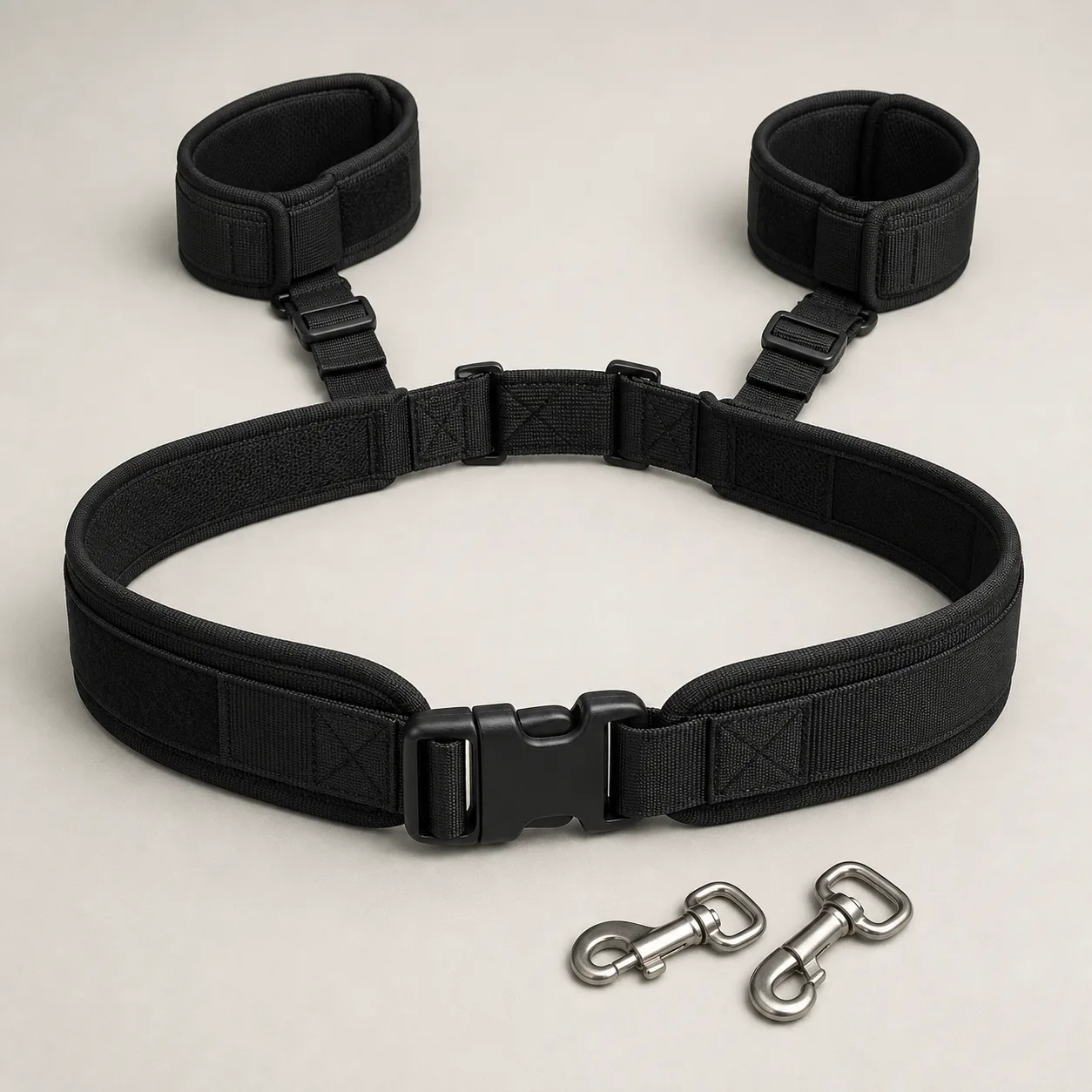
Waist-Anchored Arm Positioning Harness
A padded waist belt coordinates two independently adjustable arm cuffs through visible rear leads and removable swivel hooks for supervised adult positioning.
29,99 $
200 in stock
The waist belt is the visible control point
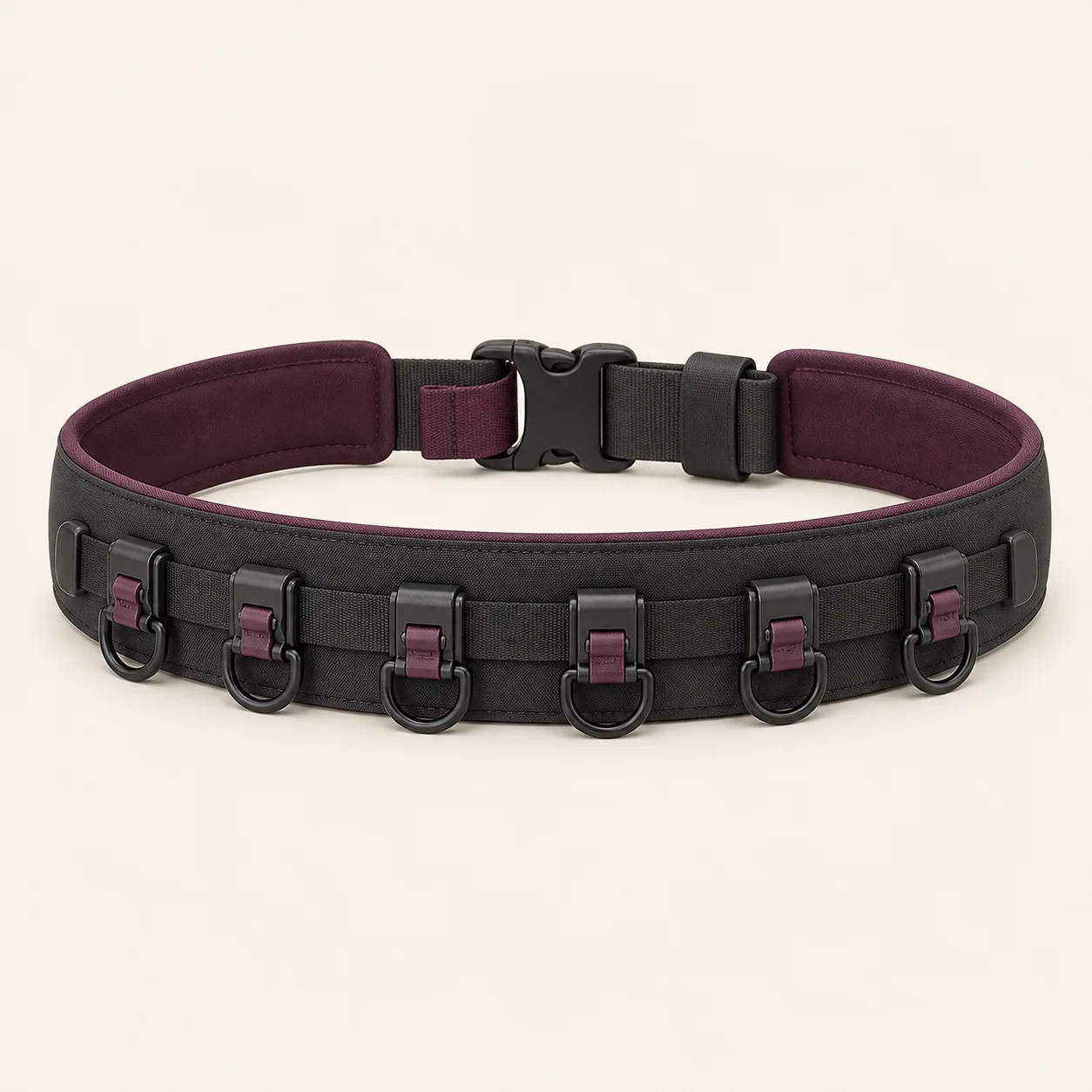
The waist-anchored arm positioning harness concept combines a broad padded belt, front side-release buckle, two independently adjustable rear leads, two arm cuffs and removable swivel hooks. The open product layout keeps each part visible before fitting.

The harness is intended only for light, supervised adult positioning; it is not a medical support, security device or immobilization system.
Measure the waist before setting the main belt
Confirm the approved circumference range, belt width, overlap requirement and buckle travel on the production sample. Fit over stable clothing if that is the validated use, keeping the belt on the muscular waist rather than the ribs, hips or abdomen.
The wearer must breathe, speak and move the torso comfortably before either arm lead is attached.
The front buckle must stay reachable
Position the side-release buckle where the supervising adult can see and open it without rolling or lifting the wearer. Test both release tabs, webbing feed and accidental-side-load resistance on an empty belt.
Do not cover the buckle with clothing, another harness or body weight.
Each arm cuff needs its own measured fit
Verify cuff width, minimum circumference, maximum circumference and closure overlap. Apply around a fleshy portion only if the sampled instructions approve that location, avoiding joints, nerve channels and any damaged skin.
Stop for pinching, burning, tingling, numbness, weakness, temperature change or altered color.
Rear lead length should be set before connection
Adjust both straps while the harness lies flat, leaving ample slack for the first fit. Shorten in small increments only after the wearer confirms a neutral shoulder position and can still shift weight safely.
Do not pull the arms together with the adjusters or use them to overcome resistance.
Shoulder range is the limiting dimension
Behind-the-body positioning can stress the shoulder capsule before the waist or cuffs feel tight. Keep the elbows and shoulders inside the wearer’s easy active range, with no forced internal rotation or elevation.
Anyone with prior shoulder, elbow, wrist, nerve or mobility problems should obtain appropriate professional guidance before restrictive role play.
Choose a stable posture with an unobstructed airway
Begin standing or seated only when balance support and an immediate exit are available. Avoid prone pressure, unstable kneeling, overhead attachment, chest compression and any arrangement that could make a fall difficult to arrest.
No strap belongs around the neck, and the waist belt must never migrate upward toward the ribs.
Communication must work without arm movement
Agree on a safeword plus a clear nonverbal signal that does not depend on the wearer reaching, pointing or manipulating equipment. The supervising adult should check understanding after each connection.
Silence, hesitation or loss of clear response is a reason to open the harness immediately.
Circulation and nerve checks happen on a short cycle
Compare both hands for warmth, color, sensation, grip and comfortable finger movement before connection and at frequent intervals. Loosen or end the setup at the earliest abnormal change rather than waiting for pain.
Never combine the harness with cold exposure, intoxication, sleep or reduced awareness.
Practice the release order on an empty layout
Open the arm hooks first, then the cuffs, then the waist buckle, verifying that every step works with one hand. Keep each gate and buckle clear of fabric and maintain suitable safety shears for textile emergencies.
A countdown, role-play rule or partner request never delays immediate release.
Self-use and unattended use are excluded
A sober supervising adult must remain within reach of every connection. Do not attach the harness to furniture, doors, rails, vehicles, ceiling points or any external anchor.
The device must not carry body weight, restrain a fall, support lifting or prevent emergency evacuation.
Hooks, rings and stitching need a pre-use inspection
Check hook gates, swivel barrels, D-rings, buckle tabs, bar tacks, edge binding and webbing for deformation, cuts, pulled thread or corrosion. Verify that detached hooks cannot be loaded across an open gate.
Retire the item if any component sticks, frays, cracks or no longer lies flat under light hand tension.
Every material claim remains model-specific
Request the outer textile, lining, foam, webbing fiber, thread, hook-and-loop grade, buckle resin, ring alloy, hook alloy and plating. Visual similarity does not prove genuine leather, neoprene, stainless steel or skin-contact suitability.
Restricted-substance and colorfastness documents must reference the exact ordered variant.
Care should preserve padding and release mechanisms
Detach removable metal parts, close hook-and-loop fields and wipe using a method approved for the confirmed materials. Keep moisture out of layered foam and rinse residue from any surface intended for clothing contact.
Air-dry open and flat; store unbuckled in a ventilated place away from heat, sunlight and sharp hardware.
The procurement lead needs a complete sample audit
An Alibaba showroom lists USD 3.60-4.50 with MOQ 1 for an adjustable behind-the-body arm harness. Supplier identity, exact dimensions, materials, closure construction, load limits, documentation, freight, duty, tax and commercial terms remain pending.
The procurement reference is a sourcing lead only. The EUR 29.99 plan includes China-origin freight allowance, fit mapping, buckle cycling, hook checks, stitch inspection, material reconciliation, cleaning trials and packaging review before approval.
Frequently asked questions
Can the harness be used without a supervisor?
No. An attentive sober adult must remain able to open every cuff, hook and buckle immediately.
Does the belt support body weight?
No lifting, suspension, fall-restraint or external-anchor use is approved.
How far behind the body can the arms move?
Only within the wearer’s comfortable active shoulder range; exact lead adjustment limits await sample measurement.
Is the harness made from leather?
No material identity is approved until the outer layer, lining, foam, webbing and hardware are documented.
Can it be worn around the chest?
No. The belt is not intended for the ribs, chest, neck or any area where it could interfere with breathing.
Are the two silver hooks included?
They appear in the product concept, but exact pack contents and hardware specifications remain pending.
Reviews
There are no reviews yet.