


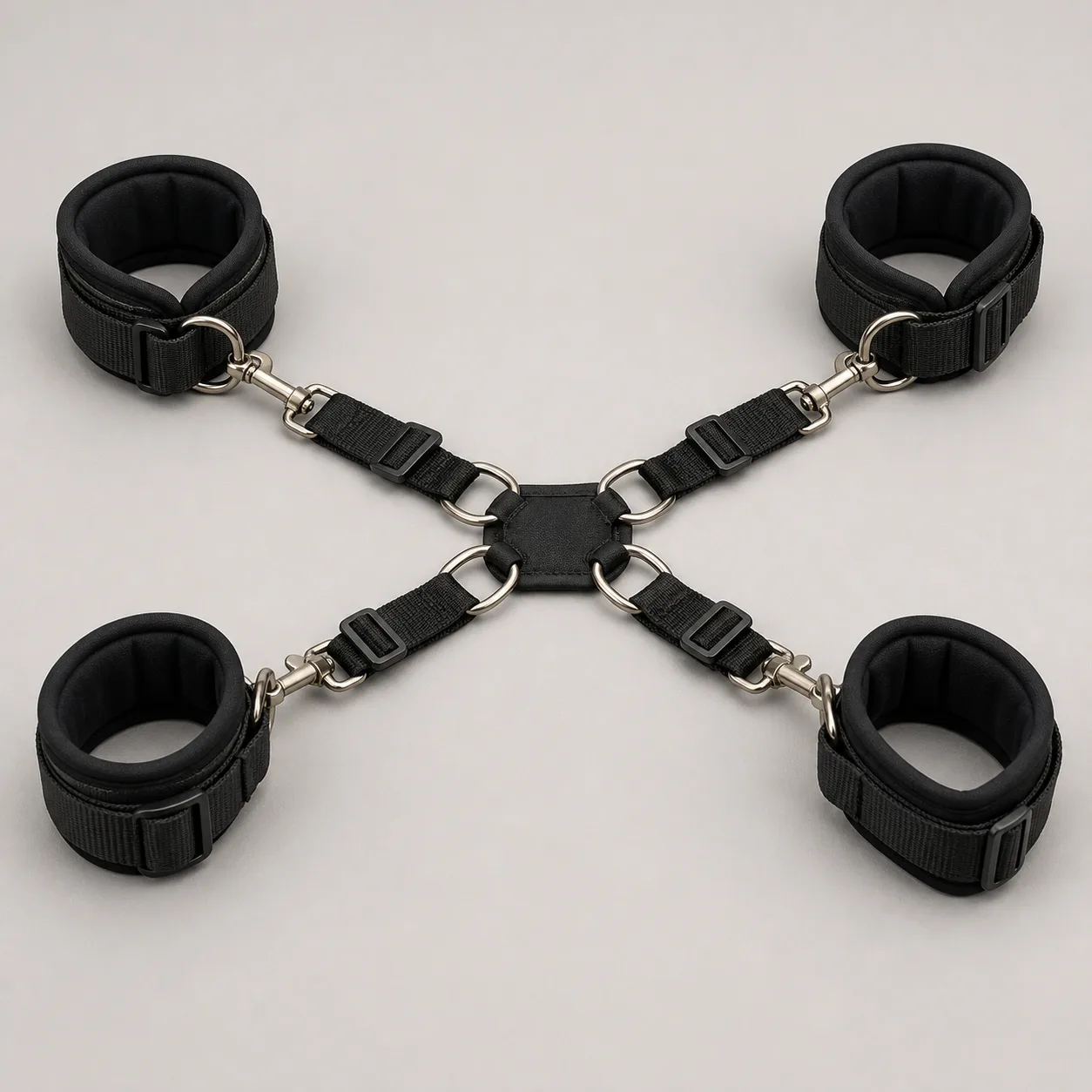
Four-Point Padded Cross Connector Set
August 14, 2026
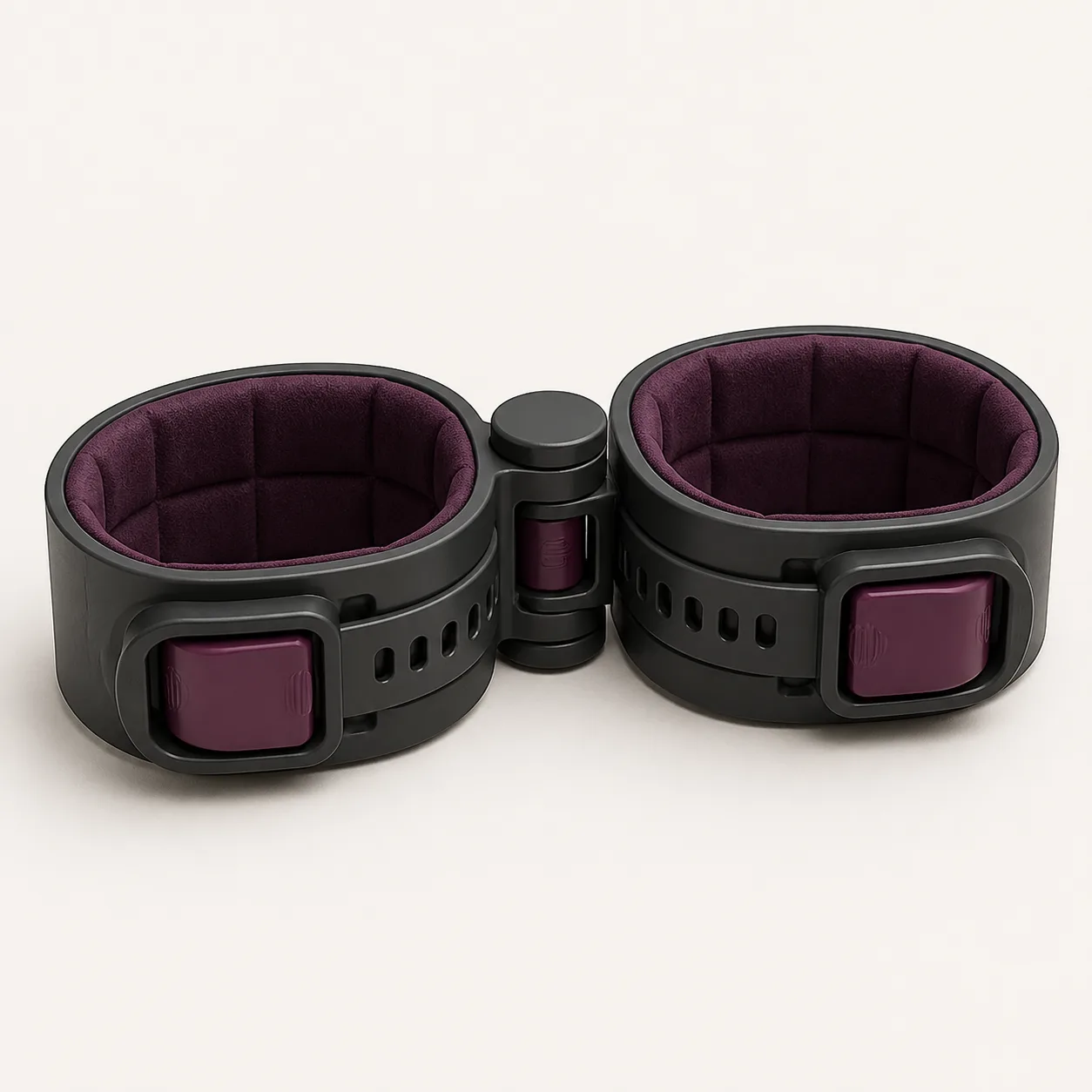
Twin-Hinge Figure-Eight Padded Wrist Restraint with Guarded Releases
August 14, 2026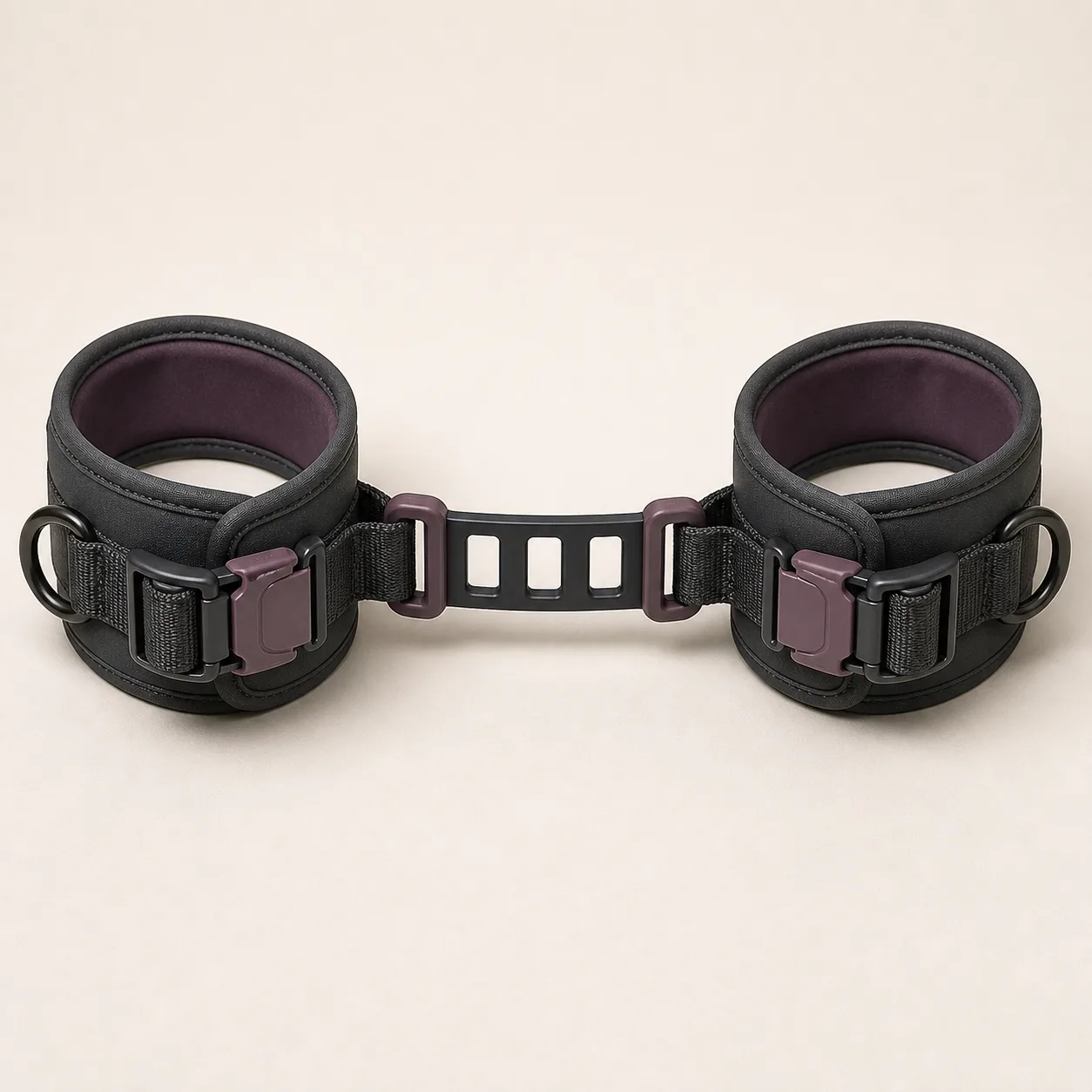
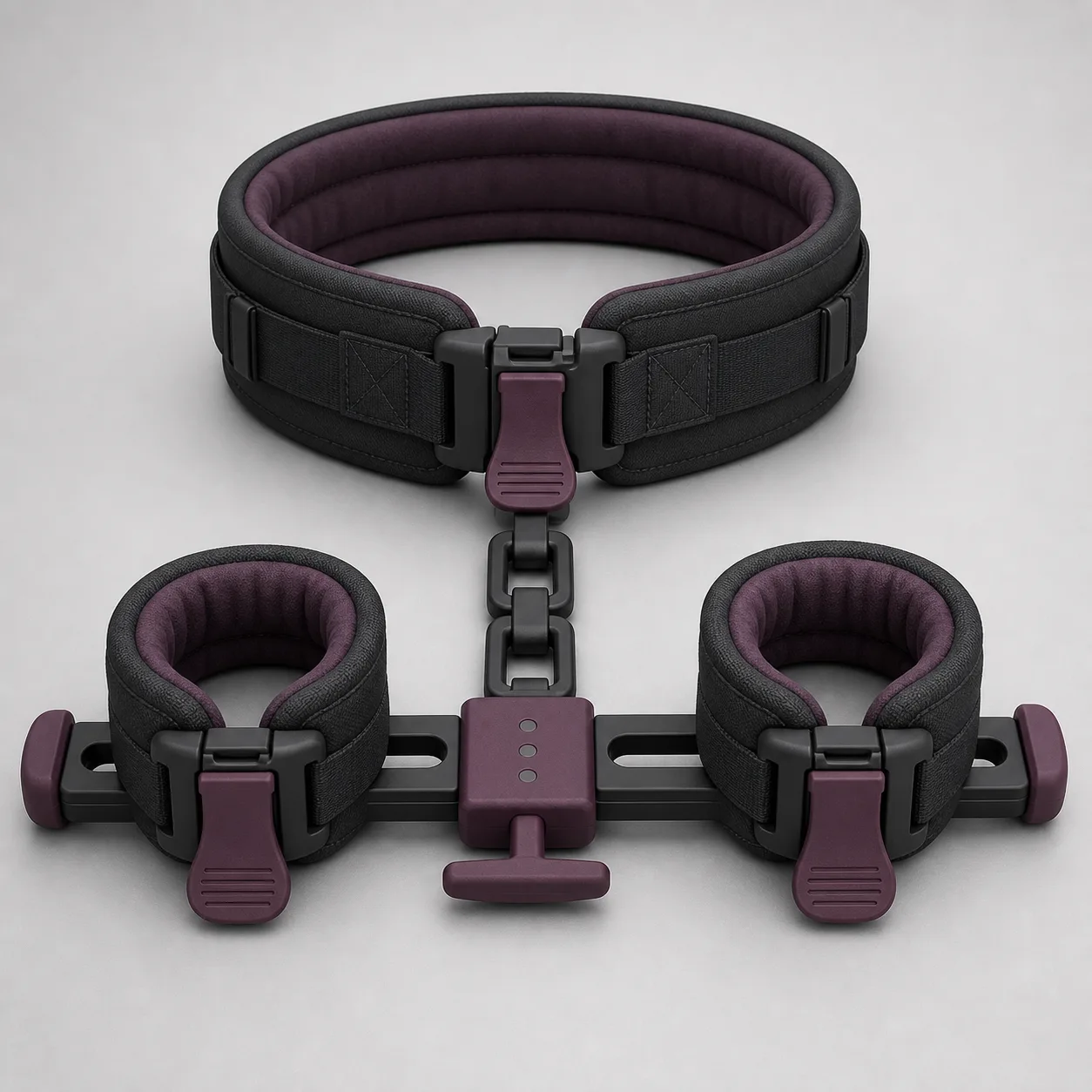
Twin-Cam Padded Thigh Cuff Pair with Three-Slot Floating Bridge
A connected non-powered thigh restraint concept with two independently adjusted padded cuffs and a short three-slot bridge for separately testable fit, spacing and release behavior.
32,99 $
200 in stock
Connect two padded cuffs through a finite-position bridge
This padded thigh restraint cuff concept pairs two independently adjusted cuffs with a short central bridge. Three open slots provide visible spacing references, while a captive latch at each end is intended to keep the bridge attached during adjustment.

The image does not prove fit, load capacity, pressure distribution, latch retention, escape resistance, material, care method or supplier approval.
Audit every load-bearing and skin-facing component
Request an exploded drawing and bill of materials for each cuff shell, lining, padding layer, binding, webbing path, thread, buckle frame, cam, hinge, spring, release tab, D-ring, reinforcement patch, bridge plate, slot edge, end latch, pin, coating, pigment and adhesive.
Record whether the two cuffs share identical parts or merely look alike. A mirrored assembly can hide different stitch direction, buckle orientation or release reach.
Establish two independent fit envelopes
Measure the usable circumference, cuff width, padding thickness, overlap, loose tail length and release-tab reach on both sides. Use rigid gauges followed by compliant forms at several confirmed sizes.
Define a fit window that avoids edge digging, webbing folds and buckle contact. Visual symmetry is not evidence that both cuffs distribute force equally.
Verify cam buckle threading and grip
Document the webbing route through each cam with close photographs. Measure lever force, tooth engagement, tail pull, slip, rebound and release force under several low controlled loads and pull angles.
Check for false seating, trapped lining and teeth that cut fibers. Mark a safe tail reserve only after repeated sample measurements.
Measure the three-slot bridge geometry
Record plate length, width, thickness, slot pitch, slot opening, edge radius, clearance to each cuff and the center-to-center spacing created by every permitted latch position.
Use go and no-go gauges to detect burrs, undersized slots or a bridge that twists before either cuff moves. The three openings are references, not assumed load settings.
Test both captive sliding latches
Operate the left and right latches separately and together. Measure opening force, travel, engagement depth, side play, accidental activation resistance and the force needed to disengage them under a small confirmed load.
Inspect pins and retainers after every cycle block. A latch that appears closed but has not fully seated must be treated as open.
Map cuff pressure on calibrated forms
Place pressure film or a sensor array beneath each cuff on cylindrical forms across the verified fit window. Record peak pressure, average pressure, edge loading, buckle imprint, lining wrinkles and change after a short settling period.
Repeat with the bridge centered and slightly offset. A connector can pull one cuff edge inward even when total tension is low.
Evaluate rotation and bridge alignment
Apply small axial, lateral and twisting inputs on an instrumented fixture while observing cuff rotation, webbing migration, bridge yaw, latch angle and D-ring movement. Test balanced and one-sided conditions.
Stop if padding rolls, a buckle contacts the form, the bridge lifts sharply or a latch approaches an open position.
Set circulation and sensation check intervals
Any wearable restraint can concentrate pressure or reduce circulation. Establish frequent visual and verbal checks before use, and keep every closure looser than the verified limit for the specific wearer.
Remove the set immediately for numbness, tingling, discoloration, cold skin, swelling, increasing pressure, pain or loss of communication. This product concept has no medical or therapeutic purpose.
Run low-speed movement scenarios
On a guarded fixture, evaluate only slow low-force changes in spacing and angle. Record bridge position, cuff rotation, webbing slip, latch seating and release access before and after each movement.
Do not use the assembly for walking, dragging, suspension, fall arrest, body-weight support, overhead attachment or any activity where loss of balance can cause injury.
Keep both releases accessible
Confirm that each large tab can be found by touch and opened with either hand across all approved orientations. Time normal opening and a simulated urgent opening under a small verified load.
Maintain a second person, clear communication and an appropriate webbing cutter within immediate reach. Decorative rings must not cover a buckle or release path.
Define D-ring limits and prohibited uses
Measure ring stock, weld or joint quality, coating, rotation, root reinforcement and deformation under low controlled test loads. Inspect surrounding stitches and webbing after off-axis pulls.
Unless exact-model documentation states otherwise, treat the rings as accessory connection points only. They are not proof of a suspension, lifting, escape-resistant or body-weight rating.
Cycle closure and bridge adjustments
Run repeated cuff opening, fit adjustment, cam loading, tab release, bridge repositioning, latch engagement, low-load alignment and cleaning cycles. At planned checkpoints measure force, slip, slot wear, latch play, padding recovery, stitch movement and coating damage.
Retire a sample from testing after cracked hardware, torn webbing, exposed padding, loose stitches, bent rings, unreliable cam grip, incomplete latch seating or a release that cannot be reached promptly.
Validate cleaning across absorbent layers
Obtain the exact cleaning method for every textile, foam, metal, coating and adhesive. Apply measured cleaner to representative soil, then inspect the lining, binding folds, buckle path, reinforcement patches, slot edges and latch cavities.
Measure drying time by mass rather than touch alone. Store both cuffs open and fully dry so concealed moisture does not remain beneath padding or hardware.
Build price from the complete mechanism
An Alibaba premium bed-restraint listing currently shows USD 4.46-5.37 with an MOQ of one. It is a broad restraint-system benchmark only and does not confirm this thigh-cuff pair, slotted bridge, captive latches or a legal supplier.
The procurement reference supports an EUR 32.99 planning price after allowing for China-origin freight, pair matching, complete part inspection, two fit maps, buckle grip and release tests, three-slot spacing measurements, latch verification, pressure mapping, rotation checks, controlled movement review, cycle life, material evidence, cleaning validation, protective packing and discreet fulfillment. Exact quotation, MOQ, packed dimensions, weight, freight, duty, tax, insurance, payment fees and delivery terms remain pending.
Frequently asked questions
Are the three bridge slots load settings?
No. They are visible position references until sample testing defines permitted spacing and forces.
Can the cuffs be sized independently?
The concept includes separate cams, but usable ranges and pressure balance must be measured on production samples.
Are the outer rings suspension rated?
No such rating is confirmed; treat them only as accessory points within documented low-load limits.
Can the set be used while walking?
No. The connector can affect balance, so evaluation should remain stationary, supervised and low force.
How should the padding be cleaned?
Use only the exact-model method after material compatibility and full drying time are verified.
Which faults require immediate retirement?
Stop using the set after webbing cuts, loose stitches, split padding, bent hardware, cam slip, incomplete latch seating, sharp slot edges or blocked releases.
Reviews
There are no reviews yet.