


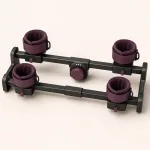
Four-Cuff Twin-Rail Indexed Spreader Restraint
August 14, 2026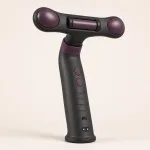
T-Bar Twin-Dome and Center-Roller Wand with Hinged Crosshead and Three-Stop Angle Collar
August 14, 2026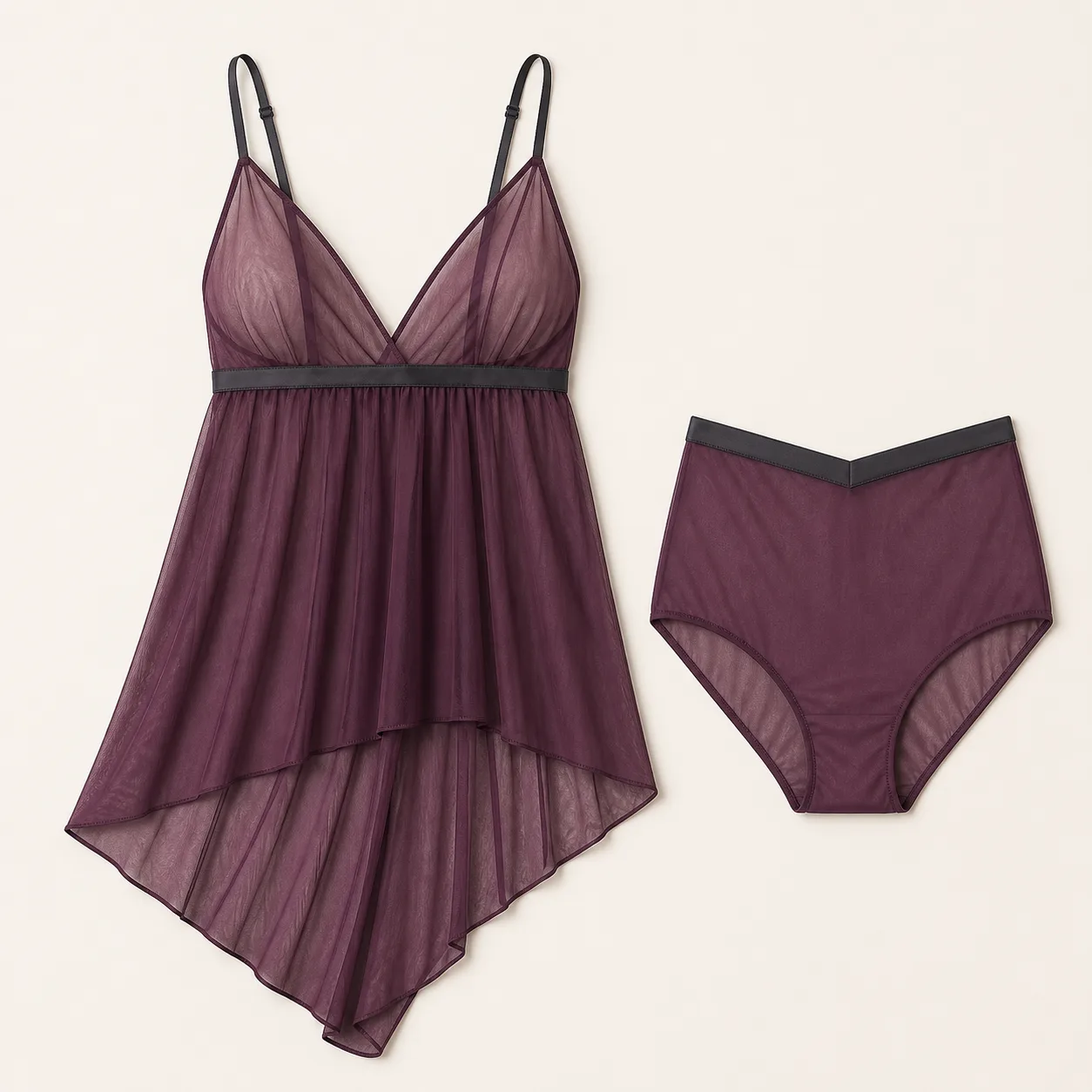
Double-Layer Asymmetric-Hem Mesh Babydoll and High-Waist Brief Set
A smoky-plum two-piece mesh lingerie concept with overlapping V-front panels, adjustable straps, a double-layer high-low hem and matching high-waist brief.
39,99 $
200 in stock
Separate this double-layer silhouette from a standard chemise
This double-layer asymmetric-hem mesh babydoll set is a two-piece smoky-plum lingerie concept: one adjustable-strap babydoll and one matching high-waist brief. The upper garment combines overlapping V-front panels, a charcoal under-bust band and a short curved outer hem above a longer diagonal inner layer.

The image defines the proposed visual direction, not a finished sourcing specification. Dimensions, fibres, transparency, colour accuracy and sellable sizes remain pending.
Audit the two-piece pack before accepting a sample
The proposed pack contains exactly one babydoll and one closed-front brief. A purchase order should list the garments separately, state their shared colour reference and identify any care label or hygiene liner supplied with each piece.
No hanger, robe, hosiery, jewellery, storage pouch or decorative accessory is included. Factory pack lists and sealed samples must confirm the final contents.
Grade both shoulder straps through their usable range
Measure the left and right straps at minimum and maximum settings, then record slider travel, anchor width and elastic extension under a repeatable low-load method. The two sides should adjust smoothly without twisting the neckline or pulling the under-bust band off level.
Slider material, coating, edge finish, corrosion resistance and holding force require supplier disclosure and sample testing.
Map the overlapping V-front panels
The front should be specified as two intersecting mesh panels rather than a printed V shape. Record overlap depth, centre-front position, neckline binding width and panel symmetry on every graded size so the crossover does not drift during assembly.
Coverage and transparency change with fabric tension and lighting; the rendering cannot establish either attribute for production.
Inspect the charcoal under-bust band as a load path
Document relaxed circumference, extension, recovery, seam allowance and attachment method. The band should sit evenly between the bodice and gathered skirt without hard ridges, exposed elastic ends or abrupt thickness changes at the side seams.
Band composition and intended compression are unconfirmed. Fit approval should use graded garments rather than a universal support claim.
Distinguish the inner and outer mesh layers
Assign separate component codes to the short outer layer and longer inner layer. For each, capture fabric mass, aperture, stretch direction, recovery, shade and edge finish, because two visually similar meshes may behave differently when gathered or washed.
The outer curved edge should remain visibly shorter while the inner layer carries the extended diagonal fall. Layer order and attachment points must be checked from an inside-out sample.
Quantify the asymmetric high-low hem
Measure centre-front, left side, right side and centre-back lengths from the under-bust seam, then add the height difference between the short and long layers. Define tolerances for the diagonal transition so production does not collapse into an unintended uneven hem.
Photograph the garment relaxed, suspended and laid flat after conditioning. Final length and drape remain pending graded patterns and fabric approval.
Review side balance and rear drape
A back-view sample should reveal whether the longer mesh panel is continuous, split or joined at centre back. Inspect side seams for matching layer heights, controlled gathering and enough allowance to avoid stress at the under-bust junction.
Rear neckline shape, closure method and full back coverage are not visible in the concept image and must be confirmed before product photography.
Fit the high-waist brief as an independent garment
Record waist, high hip, low hip, front rise, back rise, side depth and leg opening for every proposed size. The charcoal V-waist binding should be centred and should recover without rolling after repeated extension.
Brief coverage, lining, elastic pressure and grading cannot be inferred from the matching colour alone. They need their own inspection sheet and apparel fit review.
Confirm gusset construction and internal finishing
Inspect gusset length, width, layer count, fibre declaration, seam placement and any removable hygiene liner. Check that the inner surface is free from loose thread, exposed elastic and abrasive seam ends.
No antibacterial, moisture-management or health claim is made. Any such claim would require traceable evidence and market-specific review.
Verify fibre, stretch and opacity with test pieces
Request a bill of materials and labelled fabric swatches for both mesh layers, binding, strap elastic, band and brief. Test extension and recovery in both directions, record light transmission over standardized backgrounds and repeat measurements after the proposed care cycle.
Exact composition, breathability, softness and durability are pending. Visual resemblance to nylon, polyester or elastane is not reliable evidence.
Inspect seams, edges and snag resistance
Check stitch density, skipped stitches, seam puckering, thread trimming and binding continuity at the neckline, straps, band, layer joins, hem and brief openings. A controlled snag test should include the exposed long hem points and gathered mesh beneath the band.
Set numeric acceptance limits before production approval and retain one signed sample for batch comparison.
Validate plum colour and care instructions together
Use one controlled colour reference for the bodice, both skirt layers, brief and thread, while documenting the charcoal trim separately. Run dry and damp rub tests, wash checks and a perspiration-simulant assessment for shade transfer, shrinkage, mesh distortion and hardware discolouration.
Wash temperature, detergent, drying method, ironing limits and colourfastness wording must follow verified results; all care instructions are currently pending.
Build a size chart from garments, not letter labels
Supplier labels such as S, M or L need corresponding finished-garment measurements, body guidance and permitted tolerances. Review the babydoll and brief together for strap position, crossover alignment, band stability, waist placement and hem clearance across the proposed range.
Final sizes remain pending graded samples and consenting-adult apparel trials. Individual fit varies, so the page does not promise a single result for every body.
Plan landed pricing from a cautious market reference
An Alibaba China set-babydoll category page displayed a camisole-and-shorts example at USD 1.55 to 1.82 with a one-piece minimum. This is a broad category benchmark only; it is not a quotation for this layered design and does not identify an approved supplier.
The public procurement benchmark supports an EUR 39.99 planning price after provisional allowance for China-origin freight, graded sampling, layer and seam review, fibre, stretch, opacity, colourfastness and wash testing, discreet packaging and expected apparel handling loss. Exact supplier, unit cost, MOQ, size range, colour, materials, packed weight, freight, duty, tax, certification, payment terms and lead time remain pending.
Frequently asked questions
How many garments are proposed?
Exactly two: one double-layer mesh babydoll and one matching high-waist brief.
What makes the hem asymmetric?
A short curved outer layer sits above a longer inner layer with diagonal side and rear length. Production measurements are still pending.
Are the shoulder straps adjustable?
The concept shows two sliders, but the final adjustment range and holding force require approved samples.
Is the brief high waisted?
The visual proposal uses a high-rise silhouette with a charcoal V-waist binding; graded rise measurements remain unconfirmed.
What is the mesh made from?
No fibre composition is claimed until supplier declarations, labels and fabric tests agree.
Which sizes and colours can be ordered?
The sellable size range, grading, plum shade and any additional colours are pending supplier confirmation.
Reviews
There are no reviews yet.