



Red Satin-Look Black Lace Long Kimono Robe
August 14, 2026
Breathable Padded Fist Restraint Mitt Pair with Quick-Release Tabs
August 14, 2026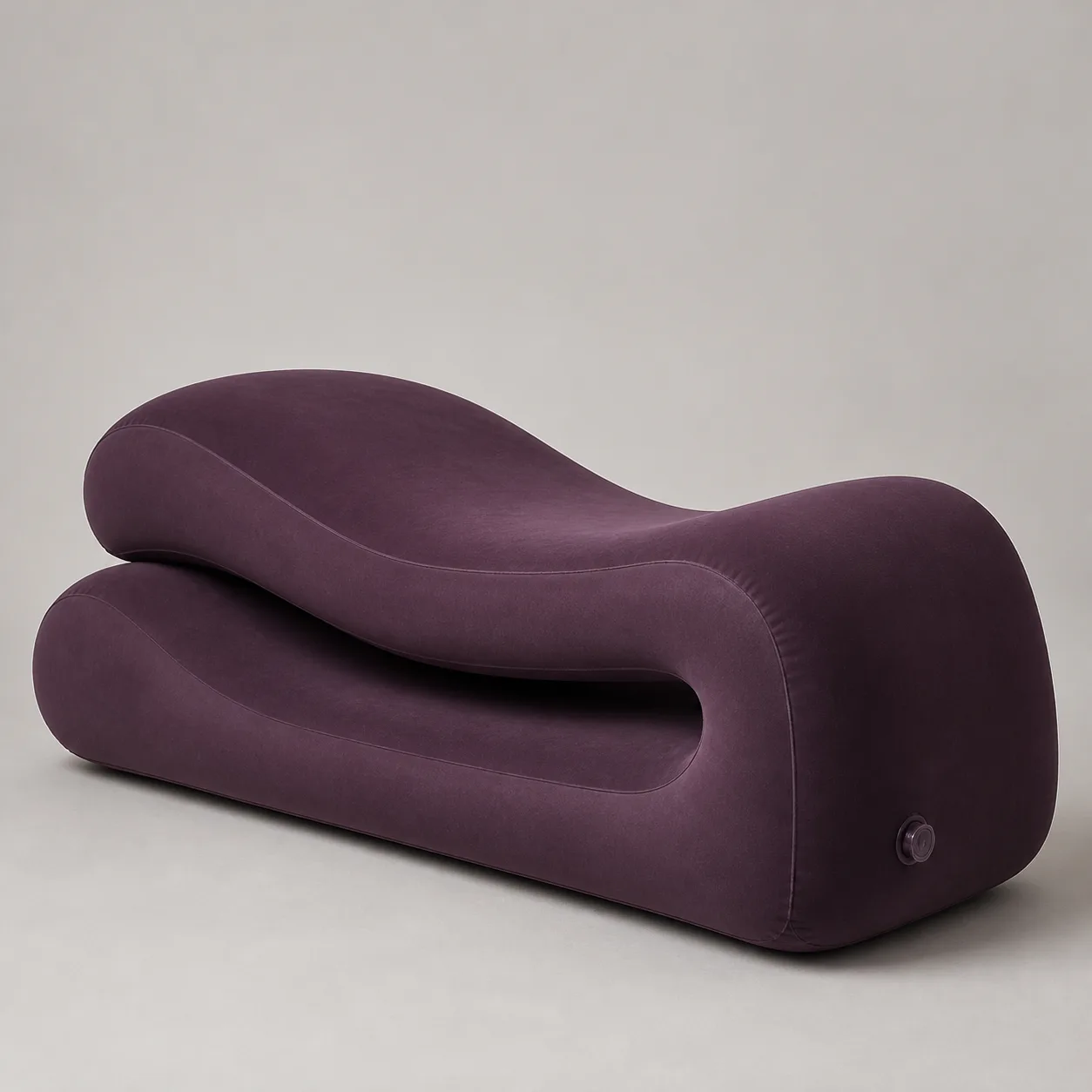
Inflatable Dual-Level Positioning Lounger
A deep-plum inflatable lounger with a curved upper deck, broad base and low dual-level profile designed for gradual, floor-level adult positioning.
129,99 $
200 in stock
A curved upper deck sits above a broad base
The inflatable dual-level positioning lounger concept uses a deep-plum sculpted upper surface, an elongated lower chamber and a supportive open recess between levels. Rounded profiles avoid rigid corners while the broad footprint is intended to keep the furniture low.

This is recreational adult furniture, not a medical device, flotation aid, step, bed or fall-protection product.
Room planning starts with the inflated footprint
Confirm overall length, width, height, deck clearance and the space required to approach both sides. Allow a clear perimeter away from walls, radiators, stairs, glass, sharp corners and other furniture.
Measure the intended room before purchase; packed size does not predict the usable inflated envelope.
Every support dimension needs a reference point
Record deck height at both ends, the lowest curve, recess opening, base width and surface arc. These measurements determine whether a chosen posture can be entered and exited without climbing or dropping weight onto the lounger.
Do not use a body measurement or marketing photo as a substitute for the verified furniture drawing.
Inflation pressure controls both shape and seam stress
Request the approved pressure range and inflation method for each chamber. Underinflation can create unstable folding, while overinflation can overload seams, distort the valve and reduce the surface’s ability to distribute weight.
Use a compatible low-pressure inflator with a gauge if specified; compressed-air lines and high-pressure pumps are unsuitable.
The valve should be accessible without bearing a load
Locate the capped inlet before positioning the furniture and confirm the plug seats flush. Test inflation, top-up and controlled deflation on an empty lounger, watching for a loose cap or damaged seal.
Never open the valve while anyone is supported by the product.
Seams reveal the earliest signs of structural trouble
Inspect welded lines, curved transitions, valve bonding and flocked edges under full inflation. Look for whitening, stretching, lifted coating, bubbles, soft spots, hiss or progressive loss of shape.
Deflate and isolate the lounger if a seam changes; do not continue by repeatedly adding air.
The working-load limit must come from fixture testing
Ask for a static distributed-load limit, dynamic-use exclusion and test method tied to the exact chamber design. User count alone does not establish safe loading because knees, elbows and sudden movement concentrate force.
Do not stand, jump, bounce, drop onto the deck or place rigid furniture on top.
A level nonslip floor is part of the system
Set the lounger on a clean, dry, flat surface that will not abrade the base. Test for sliding and rocking before use, and keep the long axis away from stair edges, balconies, pools and open doors.
Never place it on a bed, platform, table or other elevated surface.
Weight should be transferred gradually
Enter from the lowest stable side while keeping feet supported by the floor. Add weight slowly so the chambers can settle, avoiding sharp elbows, concentrated knee pressure and rapid shifts across the curved deck.
An assisting adult should keep an unobstructed exit route rather than using straps or anchors to hold a posture.
Temperature changes the feel and internal pressure
Cold storage can stiffen the shell, while heat can expand trapped air and increase seam stress. Let the deflated product reach room temperature before inflation and recheck firmness if the room warms.
Keep away from heaters, direct sun, hot water, electric blankets and open flame.
Surface chemistry needs exact documentation
Identify the inflatable film, flock coating, pigments, adhesives, valve material and seam process. Descriptions such as PVC, TPU, velour or skin-friendly require records linked to the exact production lot.
Request restricted-substance, odor, color-transfer and coating-adhesion evidence before retail approval.
Setup should include a timed leak observation
Inflate in stages, close the valve, then leave the empty lounger for the supplier’s specified settling period. Measure shape and firmness at the start and end rather than judging only by touch.
A repair patch may be suitable for a small approved surface puncture, but never for a separating structural seam or damaged valve bond.
Cleaning must avoid trapped liquid and coating damage
Disconnect the inflator and close the valve before wiping with a cleaner approved for the confirmed surface. Use a damp cloth rather than flooding seams, the recess or the valve.
Remove residue, air-dry completely and verify that the flock remains bonded before folding.
Deflation and storage protect the next setup
Release air gradually without kneeling on the product or forcing it through a narrow valve. Fold loosely along documented lines only after the shell is dry, placing the cap, adapter and repair items in a separate smooth pouch.
Store indoors away from pests, heavy boxes, solvents, sunlight and freezing temperatures.
Bulky freight is central to the price plan
An Alibaba showroom lists USD 41.86-43.95 with MOQ 1 for a portable inflatable adult sofa. Supplier identity, exact dimensions, packed volume, weight, chamber layout, pump, materials, load test, repair kit and commercial terms remain pending.
The procurement reference supports a sample request only. The EUR 129.99 plan includes an allowance for China-origin dimensional freight, inflation trials, leak observation, load documentation review, seam inspection, cleaning tests and packaging validation; freight, duty and tax require confirmation.
Frequently asked questions
Can the lounger be used as a step?
No. Standing, climbing, jumping and use on elevated surfaces are excluded.
What is the maximum supported weight?
No load figure is approved until the exact model and its distributed-load test report are verified.
Is an electric inflator included?
Pump inclusion, adapter type, pressure range and power specifications remain pending.
Can it be used in a pool?
No. It is not a flotation product and should be kept away from pools, baths and open water.
What is the surface made from?
The film, flock, pigments, adhesives and valve materials require model-linked confirmation.
Can a puncture be repaired?
Only a small surface puncture may be eligible for an approved patch; seam or valve-bond damage requires the product to be withdrawn from use.
Reviews
There are no reviews yet.