


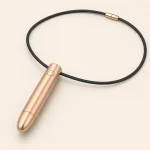
Rose-Gold Pendant Bullet Vibrator
August 14, 2026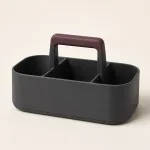
Three-Compartment Handled Care-Supply Caddy
August 14, 2026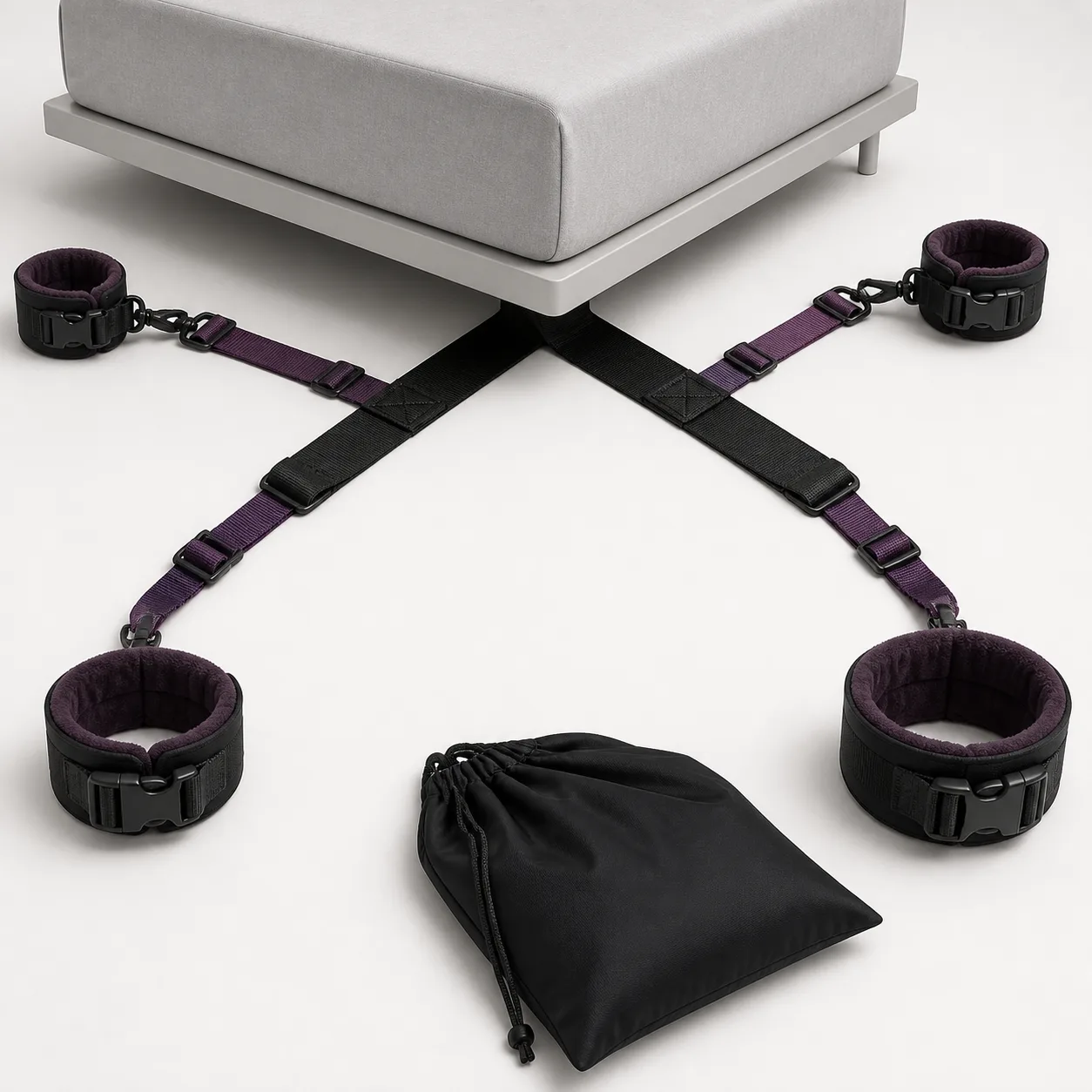
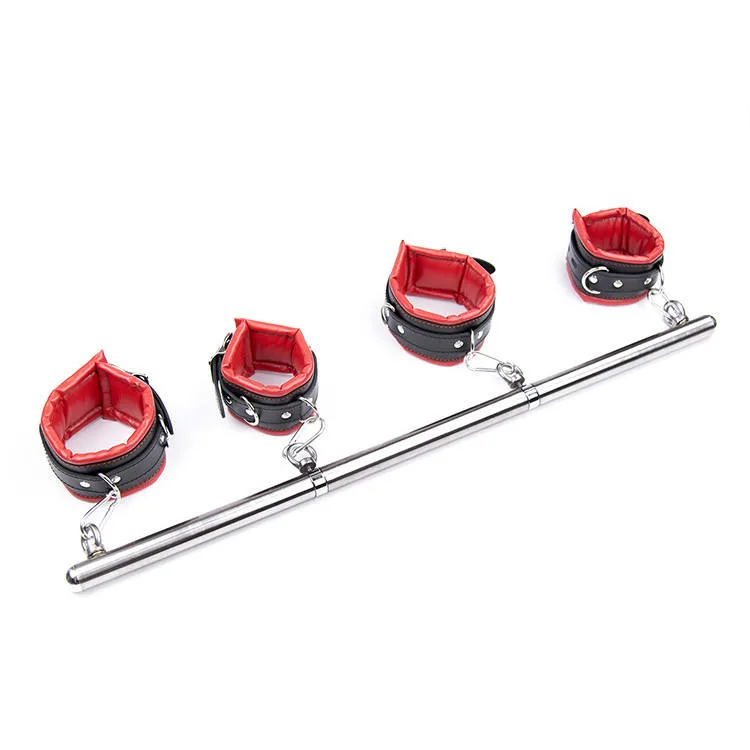
Adjustable Under-Bed Restraint System with Four Padded Cuffs
A portable crossed-strap under-bed restraint concept with four adjustable padded cuffs, focused on routing, balanced tension and immediate buckle access.
49,99 $
200 in stock
The mattress supplies friction, not a structural rating
An under-bed restraint system gains stability by routing wide straps beneath a mattress and spreading force across the opposite side. That does not turn the mattress, slats or frame into certified anchor hardware. Before setup, inspect the bed for sharp brackets, split slats, moving platforms, exposed mechanisms and gaps that could cut webbing or trap an adjuster.

Map the strap path with the mattress lifted
Lay the two support straps flat without twists, crossings against sharp frame edges or hardware underneath a hinge. The central crossing should remain broad and stable, not tied into a knot. Feed all four extensions outward before lowering the mattress, then verify that each slide adjuster remains visible and away from the bed edge.
Electric adjustable beds, sofa beds, waterbeds, air mattresses and frames with moving storage compartments introduce different hazards. Compatibility is not assumed. Never route a strap through a mechanism or near a cable, motor, heater or closing joint.
Equal-looking leads may carry unequal tension
One short extension can take nearly all the force while another remains slack. Start with the four leads at generous lengths, connect cuffs while the wearer is already supported, and shorten each lead gradually. The arrangement should permit relaxed joints and a comfortable range of movement rather than pulling every limb to its maximum reach.
Recheck the opposite side whenever one lead is adjusted. If the mattress lifts, a strap shifts underneath, an adjuster creeps or a connector presses into the bed edge, release tension and reroute the system.
Fit cuffs before attaching them to the bed
Wrist and ankle cuffs need separate circumference ranges and padding widths. Inspect lining, webbing, buckle, stitching and the connector loop while each cuff is loose. Fit it with enough space for circulation checks and place hard hardware away from prominent bones.
Test each quick-release buckle with one hand and confirm that the connector can be detached without lifting the limb. Pain, numbness, tingling, coldness, swelling, color change or a cuff sliding toward a hand or foot are reasons to release it immediately.
Conversation remains the primary release system
All participants should agree on the limits, stop word or signal, and who keeps direct access to every buckle before connection. The wearer should never be left alone, asleep, intoxicated or unable to communicate. Keep appropriate safety shears in reach for webbing emergencies, while treating buckles and clips as the normal release path.
Do not add padlocks, knots, cable ties or furniture connections that slow removal. The system is intended for supported horizontal positioning, not suspension, lifting, standing restraint or body-weight loading.
Test adjuster creep without a person attached
- Install the clean system on the intended stationary bed and photograph the strap path for reference.
- Mark the extension positions with removable tape.
- Apply a gentle hand load in each direction for several short cycles.
- Measure whether webbing slips through any slide adjuster or buckle.
- Remove the system and inspect the underside for abrasion before the first fit test.
A smooth-looking strap can still lose strength after rubbing against a rough frame edge. Fraying, glazing, cut fibers, pulled stitches, cracked buckles or a bent connector are failed inspection findings.
Washable does not mean dry while assembled
Confirm the fiber, padding and hardware cleaning limits for the production set. Detach cuffs and extensions where the instructions permit, close hook-and-loop surfaces if present, and protect buckles from impacts during washing. Do not soak metal parts or unknown foam simply because the outer webbing tolerates water.
Dry straps fully extended so folds and padded layers release moisture. Store the system loosely coiled in its pouch only after every component is dry; tight knots and sharp folds can set creases that later feed unevenly through adjusters.
Questions to resolve before listing final specifications
Which mattress sizes does it fit?
Cross-strap and extension lengths are pending, so no bed-size compatibility range is published.
Can it attach to a door?
The source title mixes two product concepts. This page describes only an under-mattress routing system; any door accessory requires separate hardware and instructions.
How much force can the webbing hold?
Fiber, width, stitch strength, adjuster slip and tested working limits remain unconfirmed. No body-weight use is allowed.
Are the four cuffs identical?
The planned concept has two wrist and two wider ankle cuffs, but production cuff count, sizing and padding require sample measurement.
Will it work on an adjustable bed?
Compatibility is not assumed. Moving platforms and mechanisms can cut, trap or tighten straps unpredictably.
Can someone be left connected overnight?
No. This product concept requires continuous supervision, communication and immediate buckle access.
Supplier reference and provisional display price
The selected Alibaba showroom result displayed US$2.30–7.70 with a five-piece minimum from Shenzhen Chunhui Technology Co., Ltd. The planned EUR 49.99 EU display price provisionally allows for China-origin freight, full routing and length measurement, webbing abrasion and adjuster-creep tests, cuff sizing, buckle and connector checks, neutral packaging, payment processing and destination delivery. Freight, duty, tax and every purchasing condition remain pending confirmation.
Procurement needs a complete installed-system test
Exact model and detail URL, cross-strap lengths and width, compatible mattress geometry, extension range, webbing fiber and breaking data, stitch pattern, adjuster slippage, connector construction, cuff circumference and padding, buckle release, storage pouch, cleaning limits, prohibited loading, materials, reports, labels, packaging, lead time, quantity tiers, freight, duty, tax and contract terms all remain unconfirmed. Sample approval requires installation, abrasion, creep and one-handed release records on a stationary test platform.
Reviews
There are no reviews yet.