



Hand-Pump Expandable Vibrating Wand
August 14, 2026
Dual-Window Slim Textured Vibrator
August 14, 2026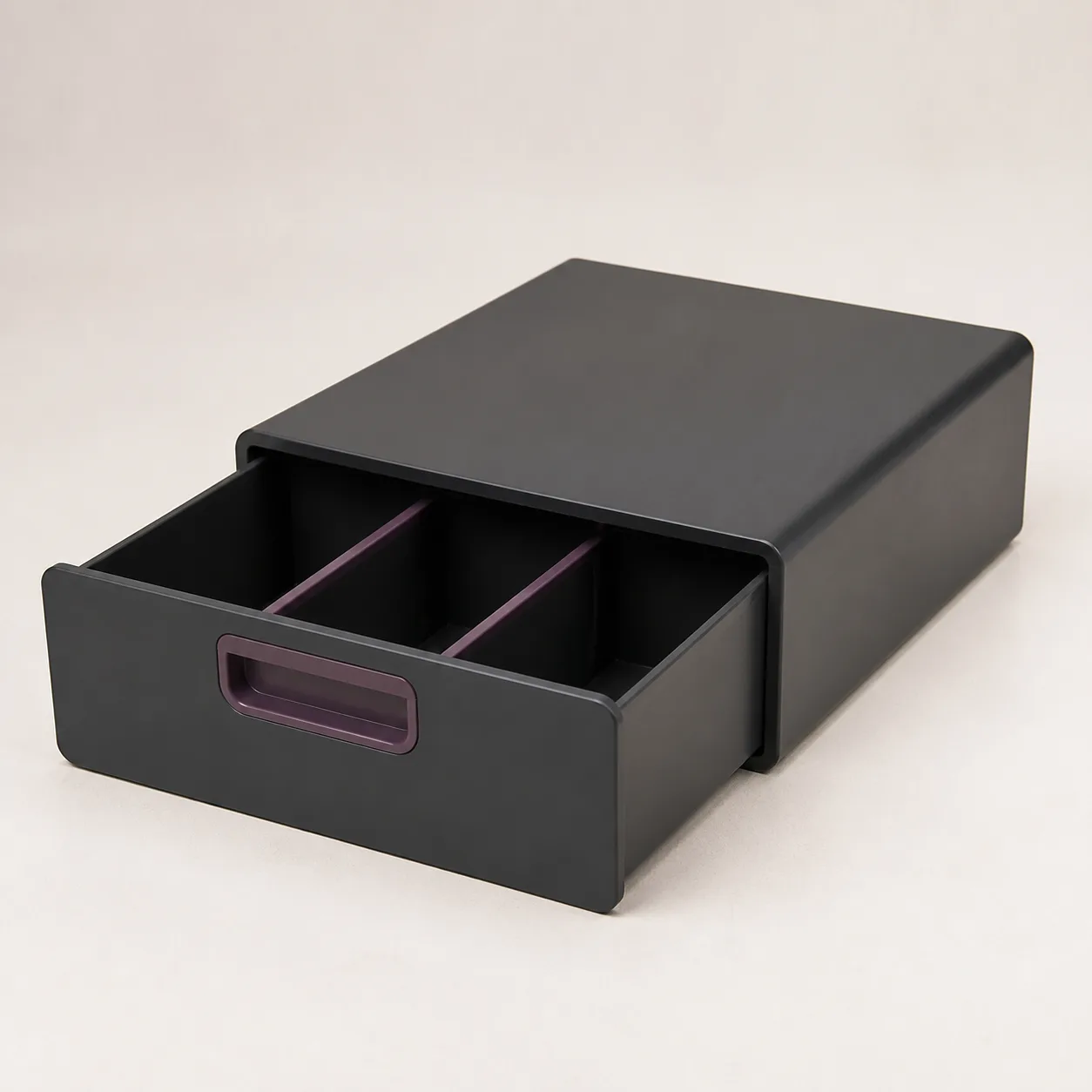
Opaque Divided Desktop Care-Supply Drawer Box
An opaque single-drawer organizer concept with three internal zones for selected lightweight closed care supplies in an adult-controlled storage location.
19,99 $
200 in stock
A divided drawer can turn a small surface into a controlled inventory point
This opaque divided care supply drawer concept separates selected lightweight, closed care supplies into three internal zones. The single pull-out format supports quick counting without leaving packages exposed across a tabletop.

An opaque front reduces casual visibility but does not lock, seal or control access.
Choose a stable adult-controlled surface
Place the box inside a private cabinet, wardrobe or supervised room on a level surface that supports the complete loaded footprint. Keep it away from floor edges, sinks, heaters, windows and routes used by children or pets.
The drawer must have unobstructed space to open without crossing a walkway.
Measure the full travel, not only the closed shell
Record width, depth and height for the planned location, then add the drawer extension and hand clearance. Check overhead shelves, cabinet doors, wall trim and neighboring containers through the entire opening path.
Final external dimensions and travel distance require production-sample measurement.
Understand what the rendering does and does not show
The image communicates a charcoal exterior, plum recessed pull and three empty zones. It does not establish the resin, wall thickness, divider removability, internal dimensions, supplied feet, drawer stop, stackability or final color.
Only an accepted sample and signed specification should define the manufactured unit.
Inspect runners, stops and dividers before loading
Remove the empty drawer according to the confirmed instructions and examine corners, rails, stop tabs, divider channels, handle recess and base. Look for cracks, flash, sharp edges, warping, residue, odor or parts that flex unevenly.
Do not force a drawer or divider that binds during the dry inspection.
Run a tip and slide check with the unit empty
Set the shell on the intended surface, open the drawer in small increments and apply only normal hand pressure to the recessed pull. Watch the rear feet, front edge and cabinet shelf for movement.
Add a verified non-slip solution only if the product instructions allow it and the surface finish is compatible.
Map each compartment to one approved category
Assign separate zones to clean dry cloths, closed lightweight supplies and non-powered accessories only after size and material checks. Keep labels readable and leave finger clearance around every item.
Do not mix medicines, food, batteries, loose chemicals or used items with the planned care inventory.
Keep the center of mass low and near the rear
Load the lowest tested weight first and distribute items so a single front compartment cannot pull the unit forward. Open and close after each change while observing shell movement and divider bowing.
No drawer, divider, stop, top or total load is assumed.
Store liquids outside the drawer system
A closed bottle can leak into runners, divider channels and the supporting furniture before it is noticed. Use a separate stable secondary tray unless the final materials and exact container pass defined retention and compatibility tests.
No waterproof, spill-proof or chemical-resistant performance is claimed.
Open with one hand on the handle and fingers clear
Grip the recessed area rather than the drawer edge, pull slowly and stop before the confirmed travel limit. Keep the other hand away from gaps between the front, shell and dividers.
Do not use the open drawer as a tray, step, handle or support surface.
Close the drawer after every inventory action
Check that all packages sit below the internal clearance and that no label, cable or cloth crosses a runner. Slide the drawer gently until the front reaches its normal resting position.
Repeated impact against an unverified stop can damage the mechanism.
Treat stacking as unavailable until it is qualified
A flat-looking top does not prove that another box can be placed above it. Do not stack units unless supplier drawings, top-load evidence, locating features and loaded stability tests approve the exact configuration.
Never place a heavy object or powered device on the shell.
Move the organizer empty and supported from below
Transfer every item to a clean controlled surface, close the drawer and lift the shell with two hands beneath the base. Avoid carrying it by the pull, open drawer or divider.
Repeat the surface and travel checks at the new location.
Clean corners without flooding the runners
Remove loose debris with a dry soft cloth and follow the verified cleaner concentration for the finished resin. Apply liquid to the cloth rather than into the shell, and clean drawer, dividers and runners as separate parts if the instructions allow disassembly.
Dry channels and stop recesses completely before reassembly.
Audit function before appearance. On a fixed schedule, verify smooth travel, stop engagement, divider shape, base stability, odor, residue, scratches and the approved inventory map. A cosmetic surface may still conceal a damaged rail or stressed stop.
Withdraw the box after cracking, permanent warping, sharp damage, unstable movement, failed stops or residue that cannot be removed safely.
The price plan depends on an opaque divided sample
An Alibaba plastic drawer storage box with dividers listing from Dongguan Zhengdong Storage Equipment Co., Ltd. shows USD 2.80 per piece with MOQ 12. The referenced listing describes a white stackable organizer, while the planned charcoal opaque version, divider layout, dimensions, materials, drawer stops and loads require written confirmation and sampling.
The procurement reference is an inquiry lead only. The EUR 19.99 plan allows for China-origin volumetric freight, opacity and fit checks, tip and travel trials, load testing, protective packing and discreet fulfillment; packed size, mass, freight, duty, tax, insurance, payment fees and destination terms remain pending.
Frequently asked questions
Are the dividers removable?
Divider count, positions and removability must be confirmed in the production specification and sample.
Can several boxes be stacked?
Not unless the exact units pass documented top-load, locating and loaded-stability tests.
Does the drawer lock?
No lock is shown or assumed; use it only inside an adult-controlled storage plan.
How much weight can the drawer hold?
Drawer, divider, stop, top and total load limits remain pending supplier evidence and physical testing.
Can bottles be stored inside?
Use separate secondary containment unless the final box and exact closed container pass compatibility and retention tests.
What damage requires removal?
Cracks, sharp flash, warped rails, failed stops, divider collapse, tipping, persistent odor or uncleanable residue end use.

Reviews
There are no reviews yet.