



Wave-Edge Rechargeable Palm Vibrator
August 14, 2026
Remote Vibrating Kegel Ball with Retrieval Loop
August 14, 2026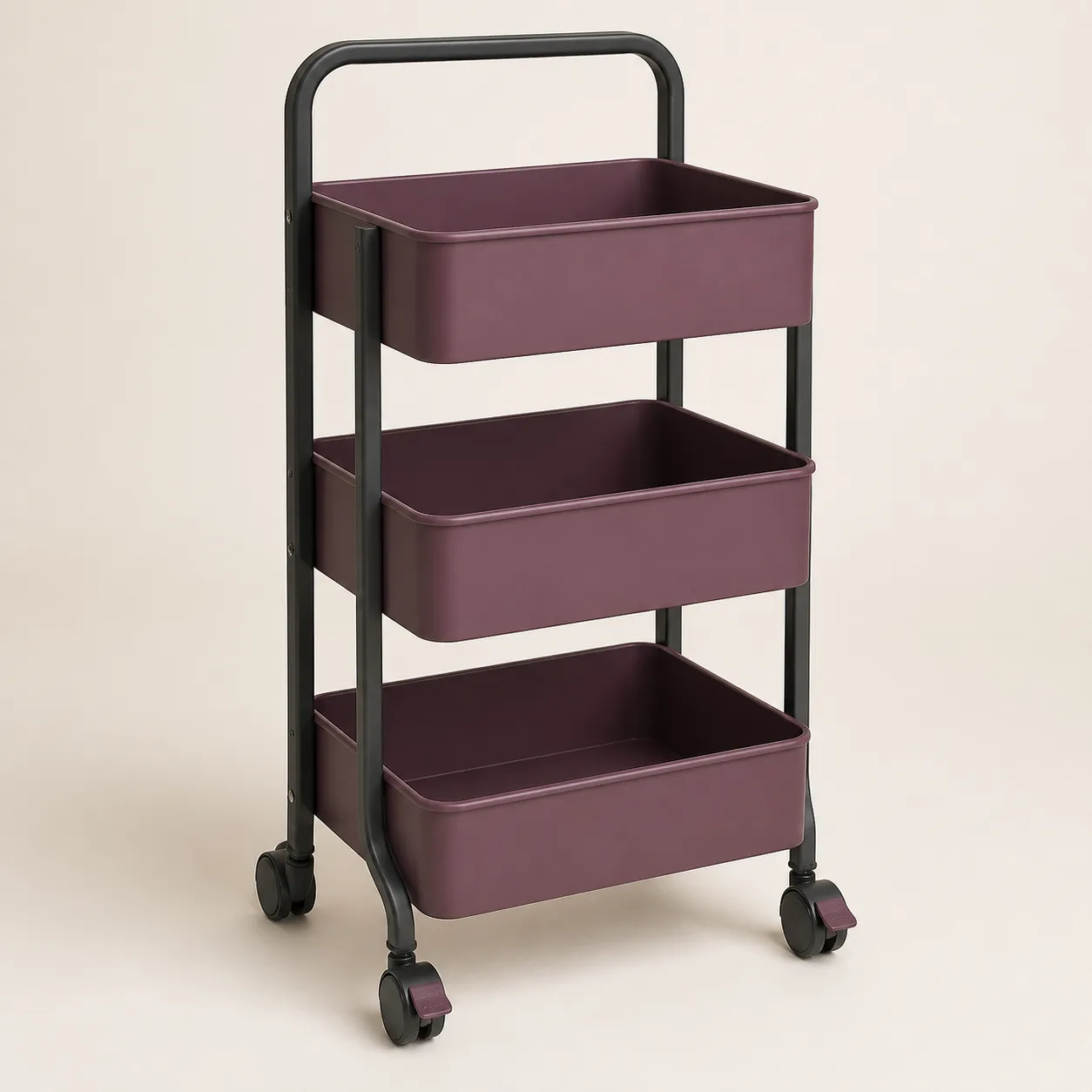
Slim Three-Tier Care-Supply Rolling Cart with Opaque Trays
A slim three-tier rolling-cart concept for organizing closed dry adult-care supplies by task stage, with opaque trays and a controlled parking workflow.
49,99 $
200 in stock
A mobile station can separate sealed supplies by stage
This care supply rolling cart concept uses three deep opaque trays to create visible working levels without displaying stored contents from the side. It is planned for closed, dry adult-care supplies that need to move between a storage point and a prepared room position.

It is not a transport seat, walking aid, body support, step, climbing frame or unattended access-control system.
Begin with the route rather than the tray count
Measure the narrowest doorway, turning point, floor transition and parking bay along the intended route. Include skirting boards, furniture feet, loose rugs, cables and the space needed for the operator to stay behind the handle.
Do not approve the footprint until an assembled sample clears the whole route without forcing a sideways pull.
The visualization does not establish metal, plastic or capacity
The image depicts a charcoal frame, plum trays and small casters only. It does not confirm frame alloy, tray resin, coating, fasteners, wheel tread, load rating, brake count, corrosion resistance or chemical compatibility.
Obtain a component schedule and physical sample before defining any operational limit.
Inspect the frame, tray corners and caster stems in sequence
Start at the handle and follow each upright to the base, checking joints, fasteners, burrs, cracks, distortion, coating loss and uneven tray seating. Then lift each wheel clear of the floor and examine its stem, axle, tread and brake tab.
Withdraw the cart if any tray shifts, a caster binds, hardware loosens or an edge can snag clothing.
Test the empty cart on the exact floor
Push the assembled sample slowly in both directions across every approved surface. Record steering effort, wheel flutter, noise, frame twist and the response at seams or thresholds.
A smooth result on one floor does not establish suitability for carpet, tile, timber or resilient flooring elsewhere.
Verify caster brakes without treating them as anchors
Apply every supplied brake in the planned parking position and use a controlled low-force check from several directions. Document movement, wheel rotation and swivel change, then release and recheck each mechanism.
Brakes reduce unintended rolling only within verified conditions; they do not make a cart safe on a slope or protect it from impact.
Give each tray one clearly documented purpose
Use the upper tray for the next closed dry items, the middle tray for sealed reserve supplies and the lower tray for heavier unopened stock. Keep unrelated household objects and personal documents in separate storage.
A written inventory map reduces searching and helps the operator notice missing or misplaced items before the cart moves.
Place mass low and preserve the handle path
Load the lowest tray first, keep weight centered and stay below the confirmed per-tray and total limits. Leave space around the handle and do not hang bags, cords or accessories from the frame.
Top-heavy or externally suspended loads can alter steering and tip behavior even when the stated total mass is not exceeded.
Move only through a cleared, level path
Close packaging, check that nothing projects above a rim and confirm the route is free of people, pets and floor obstacles. Push from the designated handle at walking pace with both hands available for control.
Do not tow the cart, ride it, move it on stairs or send it across a threshold without a completed sample trial.
Park outside body reach and transfer to a fixed surface
Stop in the marked bay, apply the verified brakes and confirm wheel position before selecting an item. Move the chosen closed supply to a stable preparation surface rather than working directly over the rolling cart.
Keep the cart away from chair-transfer paths, bed edges and any position where a person might grasp it for balance.
Keep liquids, charging and washing at separate stations
Do not place open cleaners, rinse water, leaking packages, powered devices or charging cables in the trays. A deep rim can contain loose objects visually, but it does not establish leak control or electrical separation.
Route washing and charging tasks to their independently qualified areas.
Clean from the upper tray downward
Empty one level at a time, remove loose debris and apply only the cleaner, cloth and contact time verified for that component. Protect lower trays and caster mechanisms from runoff while wiping the frame and rims.
Do not flood the trays, spray wheel hubs or allow residue to collect around fasteners and joints.
Dry wheel hubs and frame junctions before reloading
Leave every tray empty with airflow around its corners, underside, uprights and base. Rotate the wheels by hand only when the cart is safely supported and inspect for retained moisture, residue, swelling, rust, odor or changed rolling resistance.
Reload only after the approved dryness check is complete.
Store the cart as a controlled station, not spare furniture
Use a level marked bay that keeps the handle accessible and does not block doors, ventilation or emergency routes. Apply the verified brakes and maintain the documented tray map after every stock check.
Remove the cart from service after frame distortion, cracked trays, sharpness, loose fasteners, wheel damage, brake inconsistency, persistent odor, color transfer or unstable steering.
Sourcing needs packed-volume and replacement-caster review
A Dongguan Hongde Household Products Co., Ltd. three-tier organization cart listing shows USD 10.99-12.99 per set with MOQ 1. That listing does not confirm this planned opaque-tray configuration, exact dimensions, materials, brakes, load, wheel quality or floor compatibility.
The procurement reference is an inquiry starting point only. The EUR 49.99 plan accounts for China-origin volumetric freight, assembly and edge inspection, staged-load and tip trials, caster and brake checks, floor testing, protective packing and discreet fulfillment; packed size, mass, freight, duty, tax, insurance, payment fees and destination terms remain pending.
Frequently asked questions
Can the cart hold open liquids?
No. The planned workflow is limited to closed dry supplies, and liquid containment remains unverified.
May someone lean on the handle?
No. The cart is not a balance aid or body support, and handle loading has not been established.
Do the caster brakes make it safe on a slope?
No. Use only on a verified level surface and treat the brakes as one tested control rather than an anchor.
Which tray should carry the heaviest items?
The lowest tray is the planned location, subject to confirmed per-tray, total-load and distribution limits.
Can it roll across a doorway threshold?
Only after the exact assembled sample completes a controlled trial on that specific transition.
When should the cart be withdrawn?
Withdraw it after cracks, sharp edges, distortion, loose hardware, tray movement, caster binding, brake inconsistency, unstable steering, color transfer or persistent odor.

Reviews
There are no reviews yet.