



Squirrel-Tail Air-Pulse Palm Vibrator
August 14, 2026
Suxie CB6000S Inverted Silicone Chastity Cage
August 14, 2026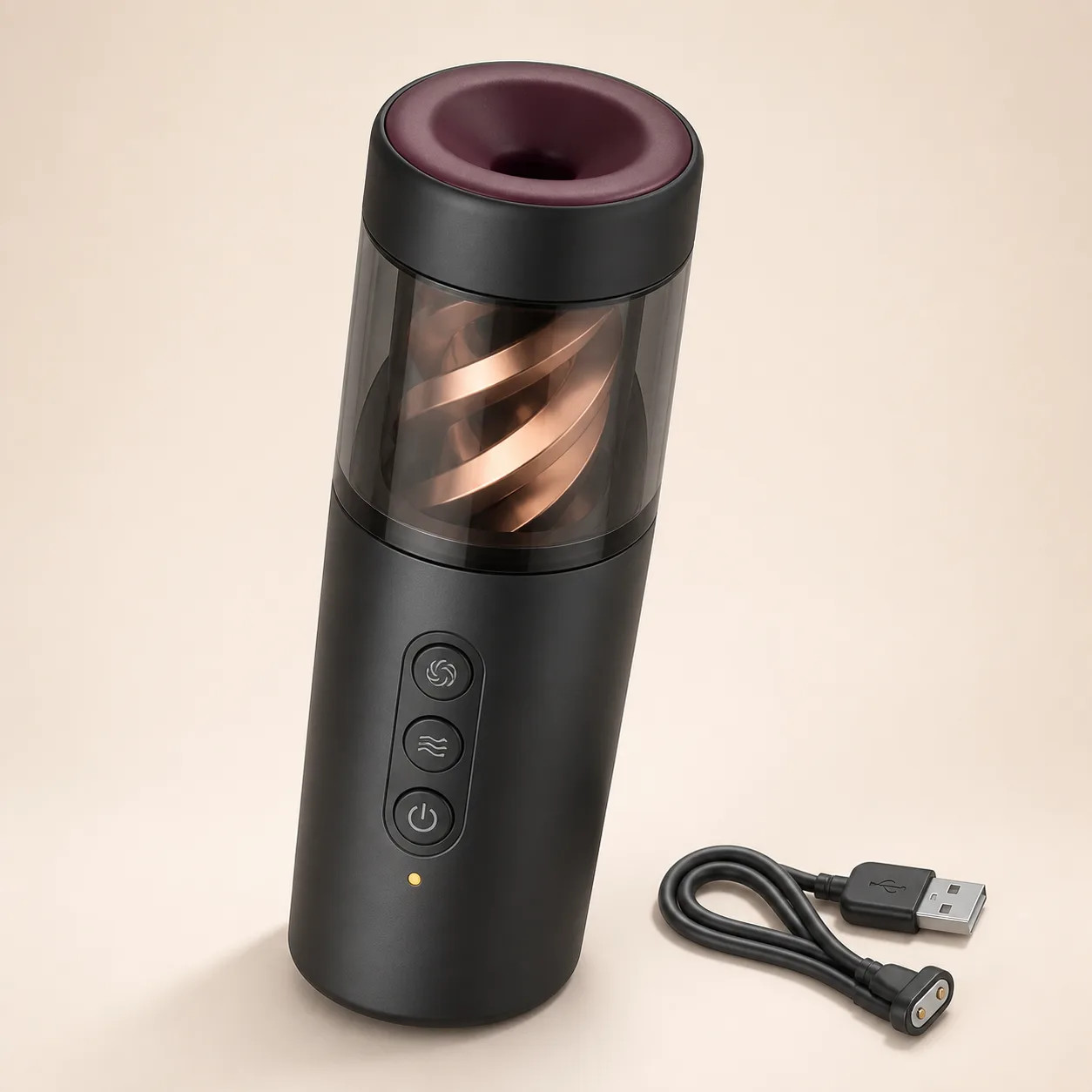
Sealed Rotation and Air-Pulse Automatic Stroker
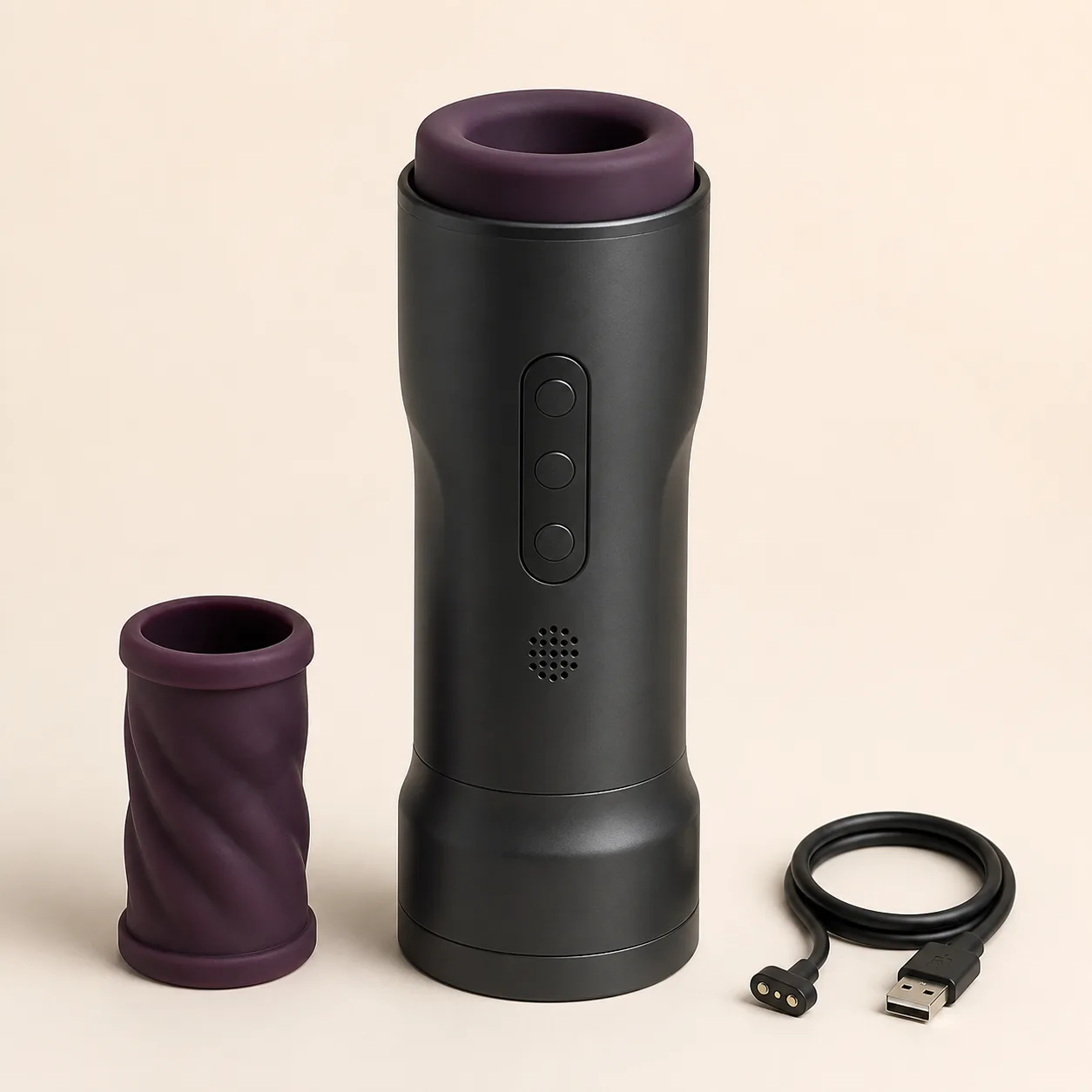
A dual-action automatic stroker concept with a visible spiral rotor, three air-pulse settings and a verification plan focused on pressure release, seams and cleaning.
69,99 $
200 in stock
Rotation and air pulses create two separate workloads
This rotation air pulse automatic stroker concept pairs a powered spiral mechanism with changing internal air pressure. Those functions affect the sleeve in different ways, so their speed, force, heat and sound must be measured separately before any combination is approved.

The visible copper spiral is a design cue, not proof of the marketplace mechanism.
The smoked window turns inspection into a buying criterion
A transparent collar can reveal movement, residue or moisture, but it also adds bonded seams and a rigid surface. Inspect its full circumference for gaps, sharp steps, cracks, stress whitening and looseness while the motor starts, stops and reverses.
Reject a window that hides contamination behind an inaccessible wall.
The opening must match the approved sleeve, not a render
Measure relaxed opening diameter, stretch range, entry flare, channel depth and closed-end thickness on conditioned samples. Confirm whether the sleeve can be removed without pulling on a motor seal or pressure tube.
Generous compatible lubricant and a low initial setting reduce friction; stop for pain, numbness, swelling, skin damage or unusual resistance.
Seven rotation settings need a real motion map
The sourcing page advertises seven rotating modes, but does not show speed, direction, sequence or torque. Log each control state under no load and a repeatable compliant load, noting reversal timing, stall behavior and restart state.
A higher mode count is not useful when adjacent settings cannot be distinguished.
Three air settings should be measured as pressure curves
Record peak negative pressure, pulse frequency, rise time, release time and leakage for every air mode. A pressure sensor and sealed test fixture are more informative than subjective labels such as soft or strong.
The design must vent promptly when stopped or removed from power.
Combined operation needs its own endurance cycle
Run rotation and air pulses together at each permitted pairing. Track housing temperature, current draw, noise, window movement, sleeve migration and any change in pressure after repeated cycles.
Include blocked-rotor and restricted-air tests to verify protective shutdown without overheating.
Three controls should never hide the stop action
Build a state table for short presses, long presses and mode changes. The rotation, air and power symbols should remain readable in low light, and one accessible gesture must stop all motion and release pressure.
Confirm whether settings resume after charging or always begin at a conservative default.
The soft-touch rim deserves separate material records
The accessible source uses broad ABS and silicone wording without identifying the plum rim, internal sleeve, clear collar, coatings, colorants or adhesives. Request compound and migration documentation tied to the purchased color and factory revision.
Check for odor, tack, oil bleed, dye transfer, swelling, hardening and coating rub after aging and cleaning trials.
Cleaning depends on a documented fluid path
Before writing care instructions, map every place liquid can travel: the sleeve channel, air port, rotor interface, window seams and lower housing joint. Determine which parts detach and whether trapped liquid can drain without reaching bearings, sensors or the cell.
Power off, remove only confirmed washable components, use mild compatible cleanser and allow every cavity to dry completely.
A waterproof headline is not enough for a motorized cavity
The page describes the item as fully waterproof, but no model-specific report or boundary drawing is available. Until ingress evidence covers the opening, air path, window, buttons, housing joints and charging contacts, avoid immersion and running water on the powered assembly.
Never charge with moisture in the cavity or on the magnetic contacts.
Battery claims must include the highest combined load
Record cell chemistry, rated capacity, charging input, full charge time, low-battery behavior and runtime for rotation, air pulses and the highest approved combination. Monitor temperature near the cell, motor and driver board.
Inspect for swelling, odor, erratic indicators or a sharp runtime decline before use.
Noise needs frequency data as well as decibels
Measure sound at a fixed distance in rotation-only, air-only and combined modes. Note tonal whine, clicking, pump pulses and vibration transferred through a tabletop, because two devices with the same average level can sound very different.
Retest after endurance cycling to catch bearing or seal wear.
Incoming inspection should challenge every seam
Sample finished units for geometry, opening finish, sleeve fit, window bonding, control map, rotation speed, pressure curves, emergency release, noise, thermal rise, charging and runtime. Repeat flex, cleaning and combined-load cycles before final visual inspection.
Reject sharp rims, cracked collars, loose sleeves, blocked vents, unstable pressure, stalled rotors, exposed contacts or damaged cells.
The proposed price reserves room for mechanism testing
The Alibaba lead displays USD 26.69 for 1 to 50 pieces, USD 23.49 for 51 to 200, USD 21.89 for 201 to 499 and USD 19.91 from 500. The accessible page does not establish supplier identity, an exact approved variant or current contract terms.
The procurement reference is a sourcing lead only. The EUR 69.99 plan allows for China-origin freight, a sample, sleeve and dimensional review, rotation and pressure measurement, stall and thermal testing and electrical inspection; freight, duty, tax, insurance, packaging, payment fees and destination terms remain pending.
Who this concept suits after verification
It is aimed at adults comparing two independently adjustable powered sensations in a handheld format and willing to follow a more involved drying routine. Buyers who prefer a simple manual sleeve or a fully open cleaning path may find a lower-complexity design easier to maintain.
Final fit, intensity, sound and care guidance depend on the approved sample rather than category assumptions.
Frequently asked questions
Are seven rotation modes confirmed?
The marketplace lists seven, but their speed, direction and sequence require mapping on the exact unit.
What does the air-pulse function do?
It changes pressure inside the sleeve; peak pressure, pulse timing and release behavior remain pending measurement.
Can the two functions run independently?
Independent controls are part of the concept, but the final state table must be verified on a production sample.
Is the whole device submersible?
No immersion guidance is approved without model-specific ingress evidence for the cavity, air route, window, buttons and charging contacts.
Is the internal sleeve removable?
The approved disassembly method and replacement-part availability remain pending supplier confirmation.
What should be checked before use?
Inspect the rim, sleeve, window, seams, controls and charging area, then test low rotation, low air pressure and the full-stop action away from the body.
Reviews
There are no reviews yet.