


Dual-Swing Triple-Channel Rabbit Vibrator
August 14, 2026
Alternating Twin-Pad Curved Vibrator with Guarded Linear Tracks
August 14, 2026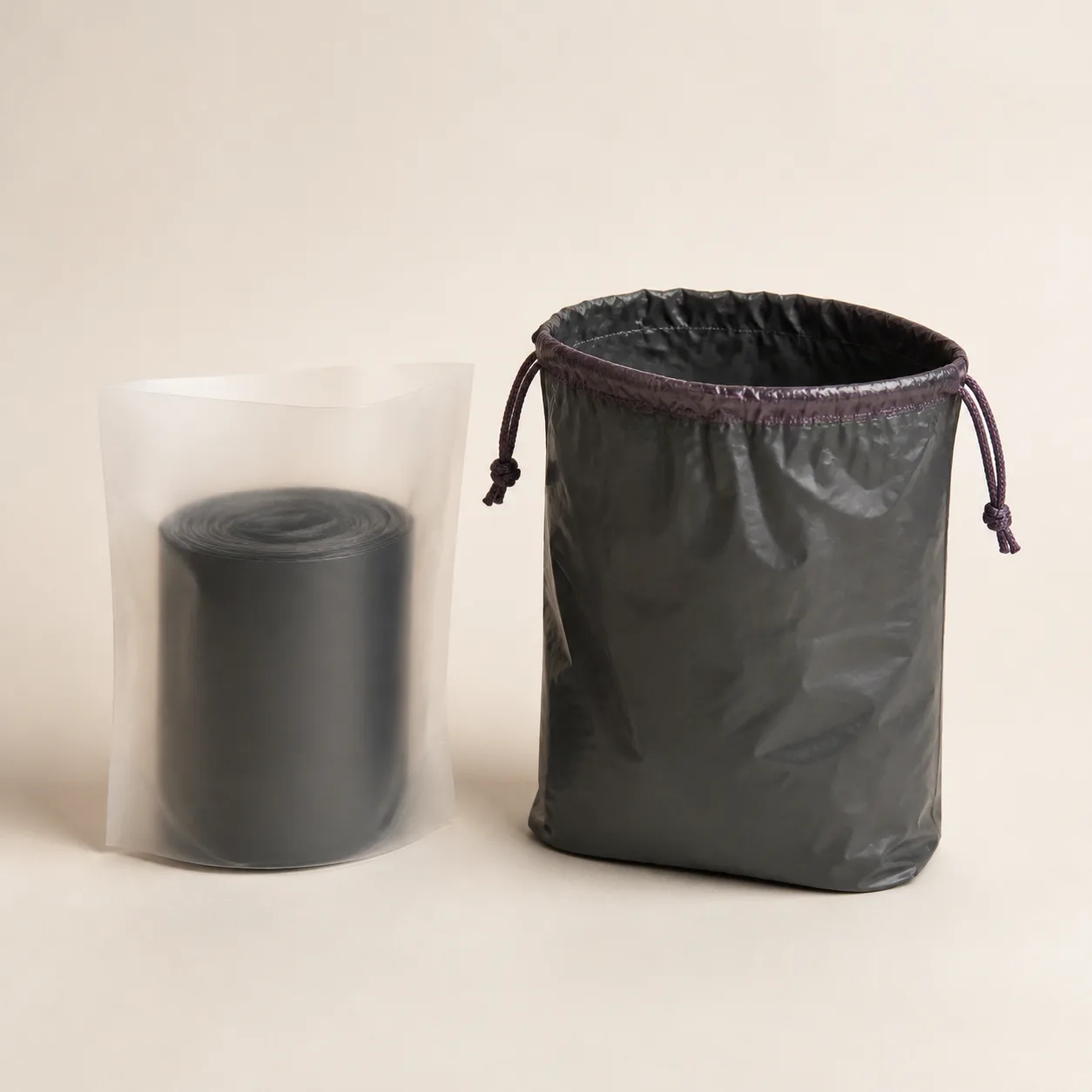
Opaque Drawstring Care-Waste Liners, 20-Pack
A 20-pack concept of opaque drawstring liners for compatible small bins and locally permitted ordinary dry product-care waste.
8,99 $
200 in stock
A dedicated liner can make routine cleanup easier to read
The opaque drawstring waste liners concept provides a defined inner layer for a compatible small care-waste bin. One liner can receive locally permitted ordinary dry cleanup items, then gather at the top before the bin itself is inspected and cleaned.

The dark surface offers visual discretion, but opacity does not alter the legal classification or safe handling route of anything placed inside.
Confirm the pack and the chosen bin together
The planned retail quantity is 20 liners. Before sale, the count, flat width, height, gusset, expanded capacity and usable opening must be checked against the selected bin and its lid mechanism.
A bag that appears close in nominal size can still pull tight at the rim or leave too much loose film near a pedal linkage.
Reserve the liner for permitted ordinary dry care waste
Use it only for cool non-sharp items that local rules and product labels allow in an ordinary household-style waste stream. Examples may include dry wipes or empty care pads when they have no hazardous residue and no special collection requirement.
Decide the route before care begins instead of judging an item only by appearance after use.
Exclude batteries, sharps and reactive materials
Never place batteries, electronics, needles, blades, broken glass, pressurized containers, hot objects, pooled liquid, solvent residue, flammable material or unknown chemicals in this liner. Thin flexible film is not a compliant puncture-resistant or hazardous-waste container.
Keep the correct approved collection option nearby for every excluded item.
Biological contamination needs its own procedure
Blood, uncontrolled bodily fluid, mold and other potentially infectious material can require special containment and disposal. Follow local health guidance and the prescribed protective measures rather than relying on a dark bag for concealment.
No medical-waste, biohazard or infection-control suitability is claimed.
Inspect each liner before opening it over the bin
Under good light, check the film, bottom seam, top channel and cord path for holes, fused areas, cuts, debris, unusual odor or a detached drawstring. Discard an unused defective liner through the appropriate material route.
Do not test strength by stretching the film against fingers, jewelry or a sharp bench edge.
Fit the liner without forcing the opening
Open it gently, lower the sealed end fully into the empty bin and smooth the walls without trapping air. The top should fold over the rim with modest slack, not tension that thins the film or pulls at the seam.
Stop if the liner cannot seat without stretching; use a verified compatible size instead.
Keep loose film clear of hinges and pedals
Arrange the overhang inside the bin profile so it cannot trail into a walkway or wrap around a foot control. Confirm that the lid opens and closes through its normal travel before waste is added.
Never tuck excess film into a moving hinge, spring or linkage to hold it in place.
Control fill level before the bag becomes crowded
Set a practical limit below the rim and drawstring channel. Rigid corners, compressed wipes and accumulated weight can concentrate stress even when the liner still appears to have open volume.
Do not push contents down with a hand, tool or another waste item.
The drawstring gathers the mouth but does not seal it
When the permitted contents are ready for disposal, bring the two sides of the channel together slowly and evenly. The cord may help close the top for handling, but gaps, film folds and seam paths can still allow air or liquid movement.
No airtight, leakproof or odor-blocking performance is stated.
Lift by the gathered film rather than one cord end
Support the closed neck with the method established during sample testing. Do not swing a filled liner, pull on only one cord, lift it by a punctured area or drag it across the pedal and floor.
If the film tears, set the bin aside and follow the correct spill or repacking procedure for the contents.
Carry it directly to the approved disposal point
Clear the route first and keep the liner upright, away from heat, sharp furniture and children. Place it in the locally approved waste receptacle without opening, sorting or compressing the contents.
A liner is a handling layer, not shipping packaging for loose waste.
Clean the bin after any escaped residue
If the liner leaks or splits, isolate the area and follow the label instructions for the material involved. Bin materials and pigments must be qualified for any cleaner used on them.
Do not pour disinfectant into a pedal mechanism or assume that a scented product solves contamination.
Store unused liners cool, dry and adult-controlled
Keep the roll or sleeve away from flame, radiators, direct sun, oils, sharp tools, children and pets. Close the storage area after removing one liner so dust and workshop debris cannot settle into the remaining bags.
Inspect stored stock again after prolonged heat, compression or visible film changes.
The supplier reference is a starting point for sampling
An Alibaba small-bin drawstring-bag listing from Wellform Packaging Group shows USD 0.02-0.03 per piece with MOQ 50 pieces. Final polymer, pigment, gauge, seams, cord, opacity, 20-count packing and intended waste compatibility require written confirmation and physical tests.
The procurement reference supports inquiry only. The EUR 8.99 plan allows for China-origin freight, count and seam checks, retail packing and discreet fulfillment; dimensions, mass, freight, duty, tax, insurance, payment fees and destination terms remain pending.
Frequently asked questions
Does the dark film make mixed waste acceptable?
No. Every item still follows its own local classification and disposal route.
Can a battery or blade go inside?
No. Use the approved dedicated collection container for batteries, electronics, sharps and glass.
Is the gathered top liquid-tight?
No leakproof, airtight or liquid-containment claim is made.
How much should the liner hold?
The safe fill volume and load limit are pending sample tests; stop well below the rim and before film is stressed.
Will it fit every compact pedal bin?
No universal fit is claimed. Verify the opening, height, overhang and moving clearances on the exact bin.
When should an unused liner be rejected?
Reject one with a hole, split seam, fused section, damaged channel, loose cord, debris, unusual odor or visible degradation.
Reviews
There are no reviews yet.