


Silicone-Lined Adjustable Steel Chastity Belt
August 14, 2026
Opaque Drawstring Care-Waste Liners, 20-Pack
August 14, 2026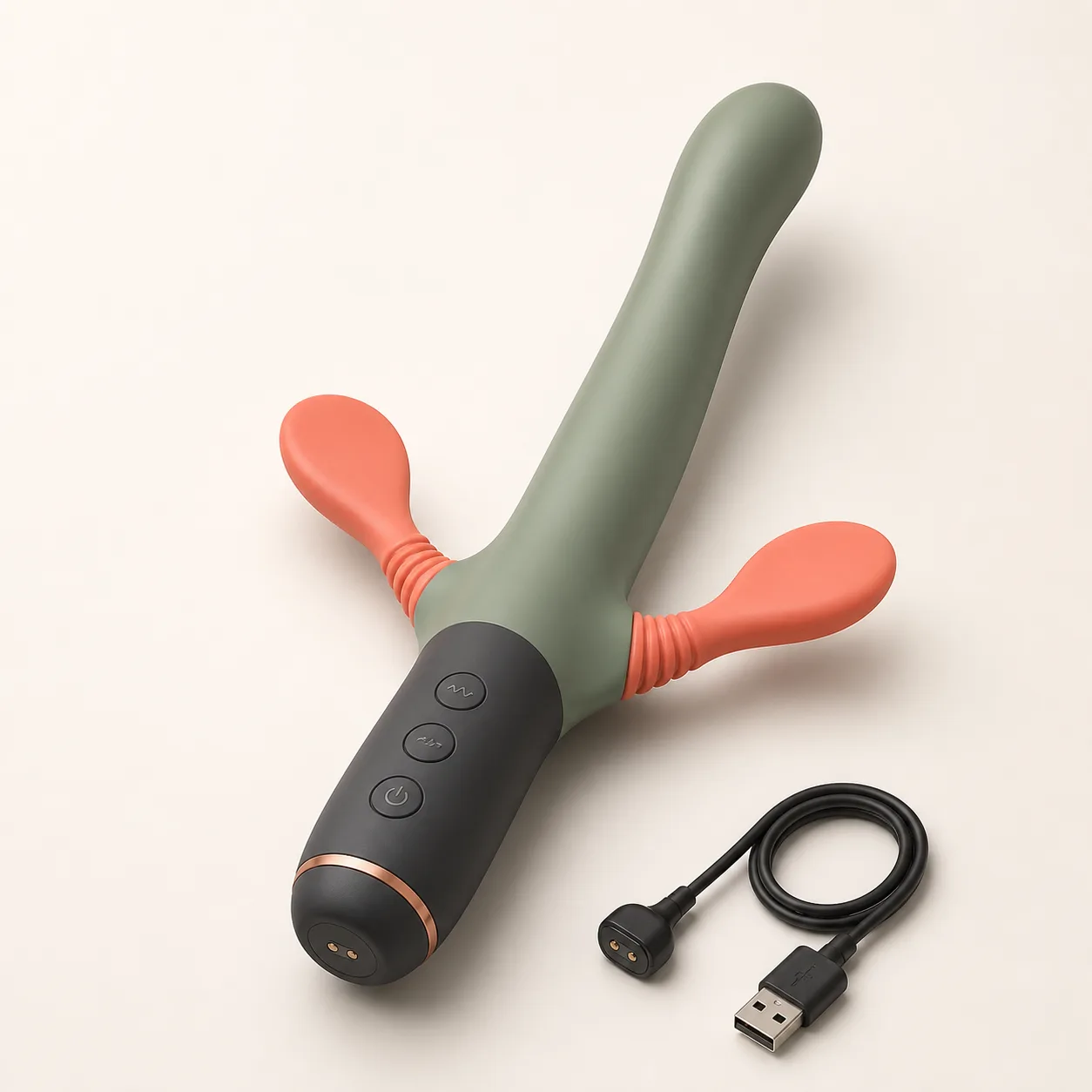
Dual-Swing Triple-Channel Rabbit Vibrator
A sage-green rabbit vibrator concept with a curved central wand, two coral spoon-shaped swinging heads, three tactile controls and magnetic charging.
69,99 $
200 in stock
One central wand and two moving heads create three separate questions
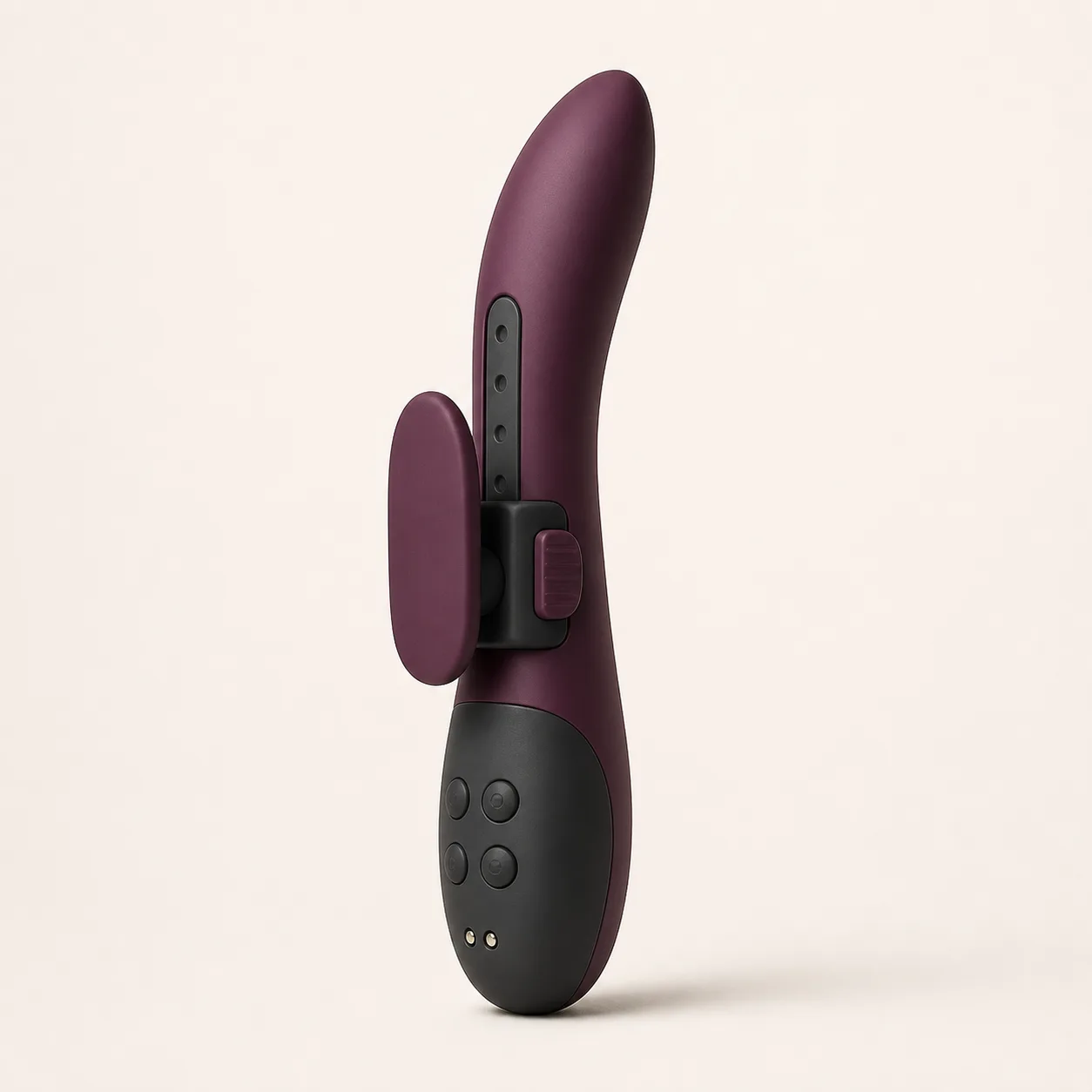
The dual-swing triple-channel rabbit vibrator concept uses a smooth sage-green curved wand, two coral spoon-shaped side heads and a graphite grip with three tactile buttons. Guarded flexible roots suggest side-to-side movement while the central channel provides its own vibration path.

The image explains the design intent but does not confirm fit, swing travel, motor count or control independence.
The central curve needs its own dimensional drawing
Record overall length, intended insertable length, maximum diameter, tip radius, curve offset and the transition into the grip. Mark the insertion boundary in the final instructions so neither coral head nor its moving root is mistaken for part of the center wand.
Use compatible lubricant, begin with the side heads stopped and never use body weight to force alignment.
Each coral head needs a contact and clearance map
Measure pad width, thickness, edge radius, root length and relaxed spacing from the center. The two heads should reach the intended external area without requiring the central wand to twist or the grip to carry a sharp side load.
If only one head makes comfortable contact, approval should not imply that every body can use both at once.
Swing arcs should be measured in three dimensions
Capture lateral travel, vertical lift, angular sweep and speed for the left and right head through every verified setting. Confirm whether the two sides move together, alternate, mirror one another or operate independently.
Near-duplicate paths should not be promoted as separate sensations without instrumented evidence.
Flexible roots can still create pinch and fatigue zones
Measure the smallest opening between each coral root, center body and grip through a complete swing cycle. Guarding must keep skin, hair and fabric outside the mechanism without rubbing the soft head against a hard shell edge.
Stall testing should trigger a safe stop without heating, torn overmold, gear damage or an automatic restart after the obstruction clears.
Three buttons need a channel-first control map
Document long and short presses, startup state, memory, swing speed, center vibration, side-head vibration and complete stop. Symbols cannot substitute for written instructions showing which motor or mechanism changes after every press.
One reachable command must stop all motion promptly, even if a secondary channel is being adjusted.
Output testing belongs at all three contact points
Measure vibration frequency and acceleration at the center tip and both spoon heads while also logging swing travel. The moving mechanism may transfer secondary vibration into the grip or make one side feel stronger because of assembly tolerance.
Begin at the lowest verified combination and stop for pain, numbness, cramping, bleeding, swelling or persistent irritation.
Sage and coral compounds require separate documentation
Obtain formulation, hardness, pigments, cure method and bonding data for the central skin, both head covers, flexible roots, button membranes and contact surround. Identify internal carriers and adhesives at the moving joints.
Condition complete samples with compatible lubricant and cleanser, then inspect odor, tack, dye transfer, swelling, cracking, loose skins and bond separation.
Fatigue testing should run asymmetric programs
Cycle both heads together, each side alone and alternating patterns while applying controlled soft loads. Inspect root creases, overmold thickness, wiring, center-to-grip seam and motor tone at planned intervals.
Reject whitening, permanent lean, surface splits, exposed reinforcement, intermittent output or a head that no longer parks in its specified position.
Cleaning begins with every moving head parked
Switch off and disconnect the dry charging lead before cleaning. The manufacturer must define a parked position that opens all approved wipe paths without manually forcing a gear or sharply bending the roots.
Clean the center, both spoon faces, root folds, control seams and contacts within the validated water boundary, then dry every recess completely.
Ingress evidence must include movement under light load
Test the complete assembled unit at the root seals, center transition, buttons and magnetic contact insert before and after swing fatigue, stall and drop conditioning. Static immersion language alone does not address pumping action at moving joints.
Until exact-model evidence is accepted, keep the device out of baths and showers and never charge near water.
Charging approval includes all channels disabled
Verify input rating, magnetic polarity protection, connector retention, full charge time, termination, runtime and low-battery behavior. The center motor and both side mechanisms should stay disabled while connected unless a dedicated electrical assessment approves another state.
Stop charging for unstable alignment, corrosion, unusual heat, odor, swelling or cable damage.
Heat and sound can identify a mismatched side mechanism
Log temperature at the center tip, each root, the grip, buttons and charging contacts during every combination. Record sound at a fixed distance and compare left-only, right-only, paired and post-fatigue samples.
Quarantine sharp tonal changes, rising rattle, local hot spots, uncommanded speed shifts or a widening difference between the two heads.
Incoming inspection needs paired motion markers
Use camera-visible reference dots on each side head to measure arc, phase and parking position without body contact. Combine the motion check with a center profile gauge, root-gap fixture, button map, prompt-stop test, runtime, charging and surface inspection.
Batch traceability, motion tolerance, load, cycle target, stall threshold, drop height and carton limits remain pending supplier agreement.
The listed cost does not include three-channel verification
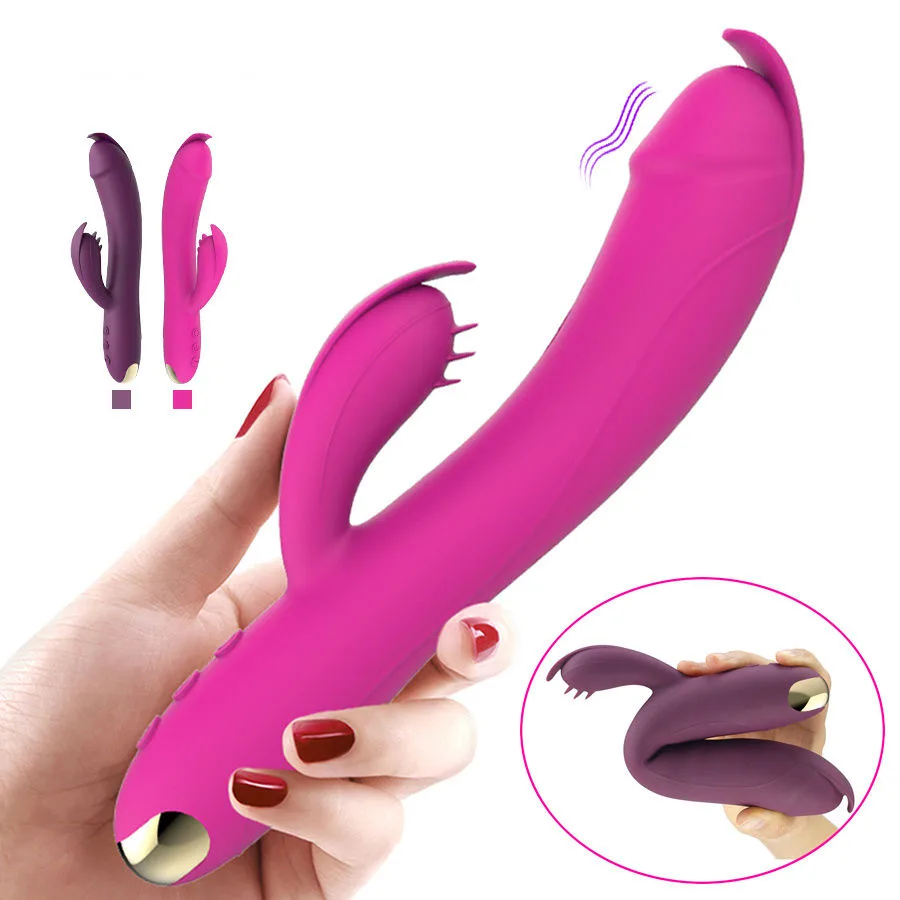
An Alibaba listing from Dongguan Style-Vibes Tech Co., Ltd. displays USD 13.13 for 50-99 pieces and a USD 20 sample for a dual-head swing vibrator. The page lists 220 x 70 x 40 mm and multi-function wording, but exact revision, swing and vibration channels, compounds, ingress protection, electronics and compliance evidence remain pending.
The procurement reference supports sample inquiry only. The EUR 69.99 plan includes a China-origin freight allowance plus geometry, swing, pinch-gap, stall, material, ingress, charging, thermal and endurance review; actual freight, duty, tax, insurance, payment fees and destination terms remain pending.
Frequently asked questions
Do both coral heads swing?
The source uses dual-head swing wording, but each side’s arc, speed, direction and independence require measurement.
Are there three separate motors?
No motor count or channel architecture is approved until the exact sample is operated and inspected.
Can either side head be bent by hand?
Only within the verified elastic range; forcing a geared or reinforced root can damage the overmold and internal mechanism.
Is the device suitable for anal use?
No. The illustrated shape has no broad external anal base and is not approved for that placement.
Can it be submerged for cleaning?
No immersion guidance is approved without complete-unit evidence for both moving roots, seams, buttons and contacts.
What should be inspected before use?
Check the center tip, both spoon heads, flexible roots, all gaps, the grip seam, buttons and contacts, then confirm low movement and complete stop away from the body.
Reviews
There are no reviews yet.