



Wineglass-Form Tongue and Suction Stimulator
August 14, 2026
Dual-Density Curved Suction-Cup Wand
August 14, 2026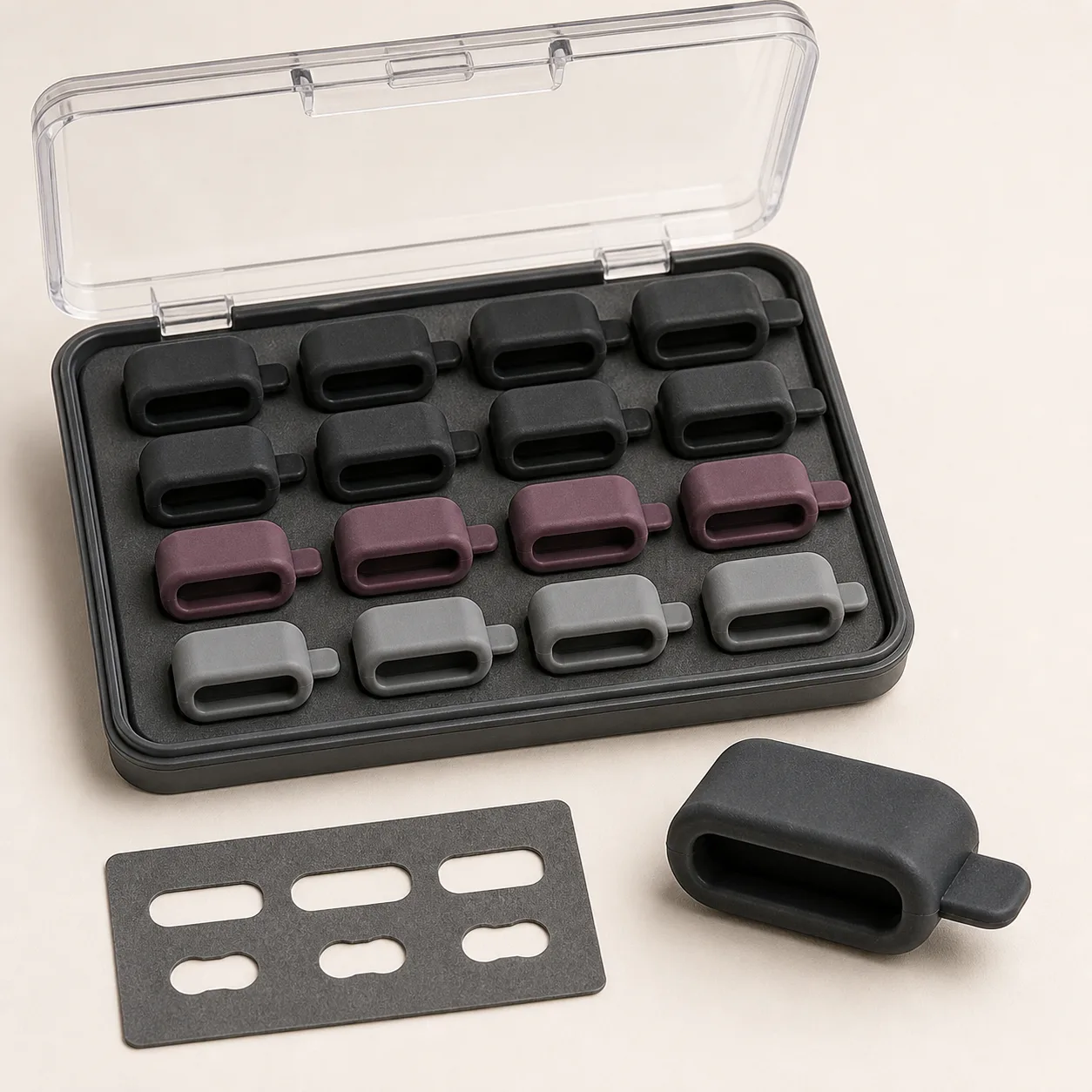
USB-C Charging Port Dust Cap Kit with Organizer Tray
A color-coded USB-C port cap kit concept with pull-tab plugs, a clear-lid organizer tray and neutral profile gauge for disconnected device storage.
11,99 $
200 in stock
A dust cap is a storage barrier, not a sealed enclosure
The USB-C charging port dust cap kit concept pairs small pull-tab plugs with a clear-lid organizer tray and a neutral fit gauge. Charcoal, muted-plum and warm-grey pieces create an easy visual sorting system for compatible electronics while they are disconnected and stored.

A cap may limit loose debris at the opening, but it does not make a device waterproof, washable or safe in a damp location.
Start by identifying the actual connector
USB-C, Micro-USB, magnetic contacts and proprietary charging ports can look similar in a quick glance. Compare the device manual, connector shape and approved accessories before selecting any cap.
Do not press a USB-C-shaped piece into a port whose geometry has not been confirmed.
Fit depends on dimensions, not the connector name alone
Shell width, corner radius, insertion depth, surrounding recess and nearby buttons all affect fit. Production samples need dimensional checks against a defined gauge and representative compatible devices.
A plug that fits one USB-C opening may sit proud, bind or fall out of another enclosure.
Insertion force should stay light and controlled
Align the cap squarely and stop if resistance rises before it reaches the intended seated position. Twisting, levering or using a tool can damage the cap, port tongue or enclosure edge.
No insertion-force limit is approved until measured sample data are available.
The pull tab must remain easy to grasp
A tab should project far enough for dry fingers without snagging on adjacent controls during storage. Test tear strength and grip after repeated cycles, because a weakened tab can leave the plug difficult to remove.
Never probe a stuck cap with a metal pin or blade.
Never cap a damp or dirty port
Disconnect power, follow the device maker’s cleaning instructions and allow the connector area to dry fully. A cap can trap moisture, cleaning residue or loosened debris against electrical contacts.
Corrosion, residue, bent contacts or unusual odor require inspection before the device is powered.
Every cap comes out before charging
Remove the piece completely and place it in the tray before connecting a cable or charging dock. Check that nothing remains in the opening and that the approved connector seats without force.
The cap is not an electrical adapter and must never sit between mating contacts.
The organizer tray controls tiny loose parts
Individual plugs are easy to misplace in a drawer, textile case or carpet. A compartmented tray keeps unused pieces visible, separates inspected caps from suspect ones and reduces contact with lint.
Tray inclusion, latch durability and final piece count remain pending.
Color can mark inspection status without claiming compatibility
A household may assign colors to clean, awaiting inspection or spare pieces. Keep that legend in a private inventory record rather than assuming color identifies a connector type or material grade.
Colorants and possible dye transfer need sample verification.
Tiny components demand controlled storage
These caps present a small-parts hazard and must stay away from children, pets and anyone likely to place them in the mouth. Count the pieces during issue and collection, then close the tray after each use.
The tray is not approved as child-resistant packaging.
Material descriptions need independent confirmation
The supplier page describes silicone USB caps, but exact polymer, additives, durometer, colorants and manufacturing residues have not been verified. Check odor, tack, bloom, deformation and extractables on production samples.
Do not assume skin-contact, food-contact or medical suitability from the word silicone.
Heat and electricity set important boundaries
Keep loose caps away from heaters, hot charging equipment and exposed conductors. Verify insulating behavior, heat deformation, flame response and maximum storage temperature before approving the final specification.
A small elastomer part is not a fuse, surge protector or thermal safeguard.
Clean the cap separately from the device
Use only the confirmed method for the final polymer, rinse away any approved cleaning agent and dry every recess completely. Inspect the plug under good light before it goes near a connector.
Discard pieces with tears, swelling, hardening, trapped grit or a sticky surface.
Incoming inspection should combine gauges and cycle tests
Measure profile, insertion depth and pull-tab thickness; then test insertion force, retention, removal cycles, tear strength and tray-latch operation. Examine molded edges for flash that could scrape the port surround.
Quarantine mixed profiles, sharp flash, persistent odor, unstable color, excessive force or pieces that detach too easily.
The source price covers a component, not a finished kit
An Alibaba entry from Shenzhen Xinhuaxu Rubber Product Co., Ltd. displays supplier-described USB silicone caps at USD 0.01-0.10 per piece with MOQ 100 pieces. Exact USB-C geometry, cap count, colors and organizer packaging remain pending.
The procurement reference supports sample inquiry only. The EUR 11.99 plan provisionally includes China-origin freight, sorting, gauge checks, cycle testing and tray packaging; packed mass, freight, duty, tax, insurance, payment fees and destination terms remain pending.
Frequently asked questions
Will these caps fit every USB-C device?
No. Recesses and enclosure geometry vary, so the production profile must be checked against each device.
Can a cap stay installed while charging?
No. Remove it fully, inspect the port and use only the device maker’s approved charging connection.
Does the cap protect a device from water?
No water-resistance claim is approved, and a capped device must still be kept within its documented environmental limits.
How should the caps be cleaned?
Use the verified method for the final material, then dry every surface and recess completely before storage.
Why include a fit gauge?
A defined profile check can catch mixed or deformed pieces before they are tried in a device, but the gauge design remains pending.
When should a cap be discarded?
Remove it from use after tearing, swelling, hardening, sticky residue, sharp flash, embedded grit or unreliable retention.

Reviews
There are no reviews yet.