


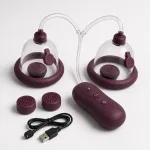
Dual Vacuum Nipple Cups with Vibration Controller
August 14, 2026
Manual Suction Cup Pair – Gentle Squeeze-and-Release Sensory Set
August 14, 2026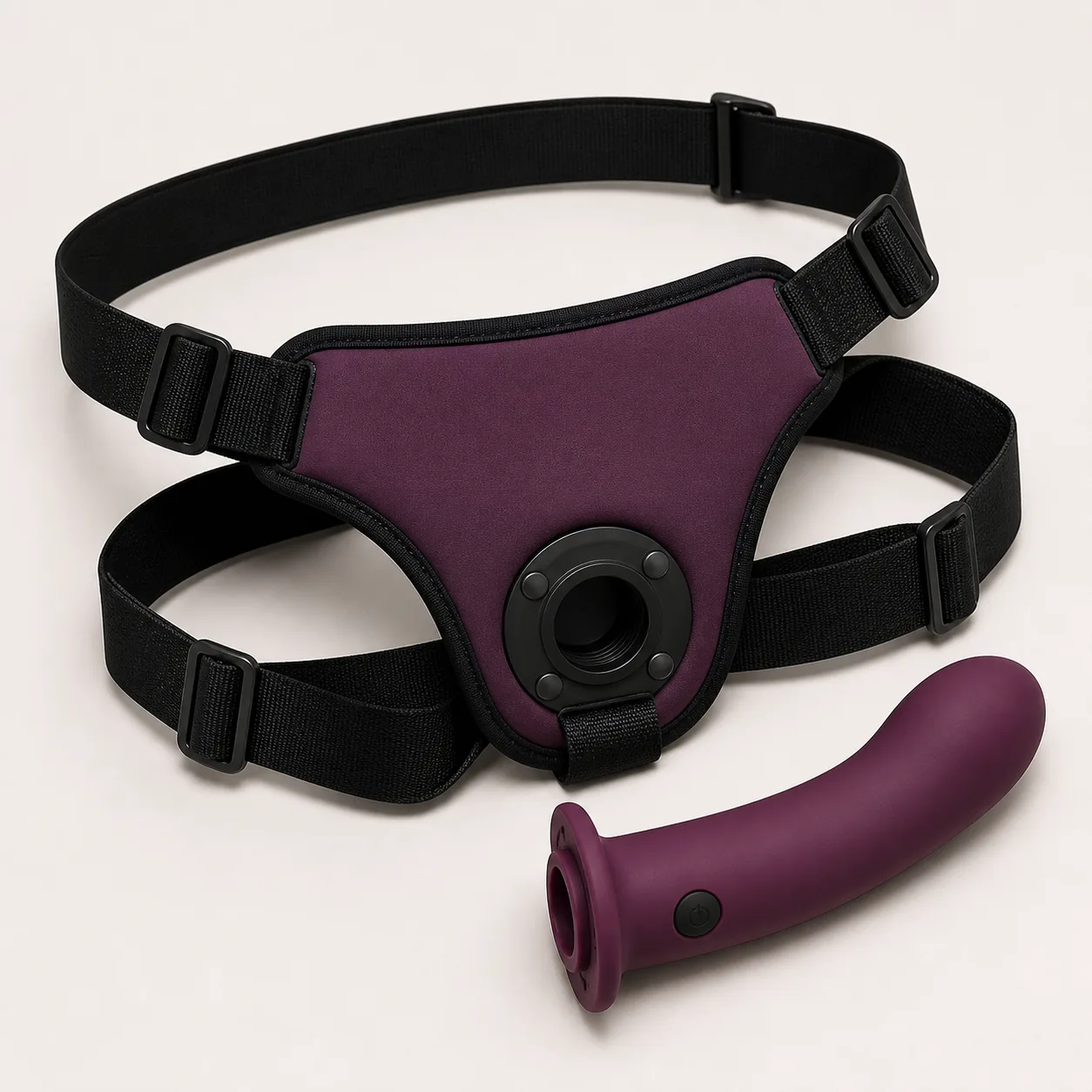
Adjustable Harness Rechargeable Vibrating Wand Kit
A padded multi-strap harness and detachable curved vibrator planned for balanced fit, verified mounting and shared movement control.
69,99 $
200 in stock
A wearable vibrator is only as stable as its harness
This adjustable harness kit pairs a padded mounting panel with a detachable curved rechargeable wand. The straps manage fit, the panel distributes load, the mount controls rotation and the powered attachment supplies vibration. Each element must work together without shifting, pinching or creating difficult-to-clean gaps.
The supplier page lists a harness-and-vibrator set and makes material, runtime and certification claims. Exact included parts, attachment geometry, strap range, materials, motor, battery and charging details remain pending production-sample verification.

Fit begins with an empty harness
Adjust the waist and leg straps before installing the wand. The panel should lie flat, buckles should remain reachable and webbing should not twist, roll or cross sensitive areas.
Sit, stand and walk briefly while the harness is empty. If it pinches, slides or restricts circulation, adding the attachment will amplify the problem.
Four adjustment points need a repeatable sequence
Loosen all sliders, center the panel, set the waist, then balance the leg straps one at a time. Final tension should hold position without leaving deep strap impressions or requiring maximum adjustment.
Record the usable range during sample fitting. A nominal strap length does not prove the harness fits a stated body range.
The mounting interface carries bending and twisting loads
Inspect the ring or socket, panel stitching and attachment flange before assembly. The wand should seat fully without forcing, wobble or exposing a hard edge.
Procurement should test axial pull, rotation and repeated mounting. A flange that slips through the opening or a panel that distorts under modest leverage is a rejection.
Test vibration before wearing the complete kit
Charge the attachment with the confirmed cable, then cycle through every mode in the hand. Learn the button sequence, including how to switch off quickly.
Listen for rattling and feel for hot spots. A mode change should not require pressing hard against the mounted wand.
Partners need a shared movement vocabulary
Agree on pace, angle, depth, vibration changes and stop signals before play. The wearer should describe harness pressure as well as the attachment sensation.
Pause whenever the panel shifts or a strap loosens. Consent applies to each change in motion and motor setting, not only to putting on the harness.
Support the base during alignment
Guide the mounted wand by the padded panel or approved base area rather than pulling the flexible body. Large sideways force can twist the mount and concentrate pressure at the panel edge.
Keep movements controlled and within the tested range. The harness is not a lifting, suspension or restraint device.
Strap tails should be secured without knots
Route excess webbing through keepers so it cannot catch on furniture, jewelry or fingers. Do not knot the straps, as knots can jam and prevent fast loosening.
Buckles must remain accessible to the wearer or partner. Practice releasing them before the attachment is installed.
Padding needs pressure and sweat testing
Inspect the panel for hard seams, exposed foam, rough binding and color transfer. Wear-test it over short intervals while checking heat, friction and moisture buildup.
Padding that stays wet or compresses unevenly can increase chafing. Final care instructions depend on the confirmed textile and foam construction.
The curved wand requires dimensional verification
Measure total length, usable length, maximum diameter, tip radius, curvature and flange dimensions on the exact attachment. Marketing photographs cannot establish fit.
The product page does not promise suitability for a particular body or activity. Start gradually, use compatible lubricant when appropriate and stop for pain, numbness or tissue irritation.
Material claims cover several different components
Procurement should obtain documents for the attachment polymer and pigment, mount, sliders, buckles, webbing, thread, padding and any adhesive. A general silicone-and-ABS claim cannot be applied to the entire kit.
Strong odor, tackiness, oily residue, rough hardware, dye transfer or unexplained surface change are rejection signs.
Battery claims need timed load tests
Measure charging time and runtime at several modes with the attachment mounted, noting temperature and vibration stability. The listing’s up-to-two-hour statement remains unverified.
Stop charging for swelling, damaged insulation, unusual odor or heat. Never charge while the attachment is worn, wet or connected to the harness.
Cleaning separates the powered part from the textile part
Remove the attachment before cleaning. Follow the confirmed method for its exterior and keep an unverified charging port away from water. Clean the harness according to validated textile instructions.
Pay attention to the mount, stitching, sliders and areas where lubricant or body products collect. Dry every component fully before reassembly.
Storage should protect shape and battery
Store the clean dry attachment separately from the harness so the flange does not stretch the mount. Lay webbing flat with buckles closed loosely and no heavy objects on the padded panel.
Follow validated battery storage guidance and inspect the charging point before the next use.
Common questions about a vibrating harness kit
Does an adjustable harness fit everyone?
No. Usable strap range, panel shape and mount position need real fit testing across the intended size range.
Can another attachment be installed?
Only if flange dimensions, material, weight and torque are explicitly validated for the mount.
Is the harness a restraint?
No. It is a positioning garment and must not be used for binding, lifting or suspension.
Is two-hour runtime confirmed?
No. Runtime and temperature remain pending timed production-sample tests.
Can the full kit be washed together?
No. The powered attachment and textile harness require separate validated care methods.
What ends service life?
Retire components for stretched mounting, torn stitching, slipping sliders, cracked buckles, surface damage, battery swelling, heat or unreliable controls.
Observed supplier terms and provisional store price
Alibaba listing 60752373493 displayed USD 15.99 for 10–99 pieces, USD 13.99 for 100–499, USD 12.99 for 500–999 and USD 10.99 from 1,000 pieces. It presented an adjustable harness, rechargeable vibrating attachment, silicone and ABS wording, up-to-two-hour runtime and CE/RoHS/EMC statements; all require current documentary and sample confirmation.
The planned EUR 69.99 display price provisionally allows for a China-origin sample, freight planning, fit-panel testing, strap and buckle cycles, mount pull and torque tests, attachment geometry and material review, motor, charging and runtime tests, cleaning validation, consent and safety labels, discreet packing, payment processing and destination delivery. Freight, duty, tax, insurance, certification, lead time and purchasing terms remain pending.
Approval locks the exact wearable system
The accepted specification must identify every strap, slider, buckle, textile, seam, panel, mount, flange, attachment, motor, battery, charger and package. Substituting one part begins a new compatibility review.
Until validation is complete, fit range, materials, stability, modes, runtime, water resistance, cleaning and included parts remain provisional.

Reviews
There are no reviews yet.