



Cat-Paw Wearable Mini Vibrator
August 14, 2026
Hand-Pump Expandable Vibrating Wand
August 14, 2026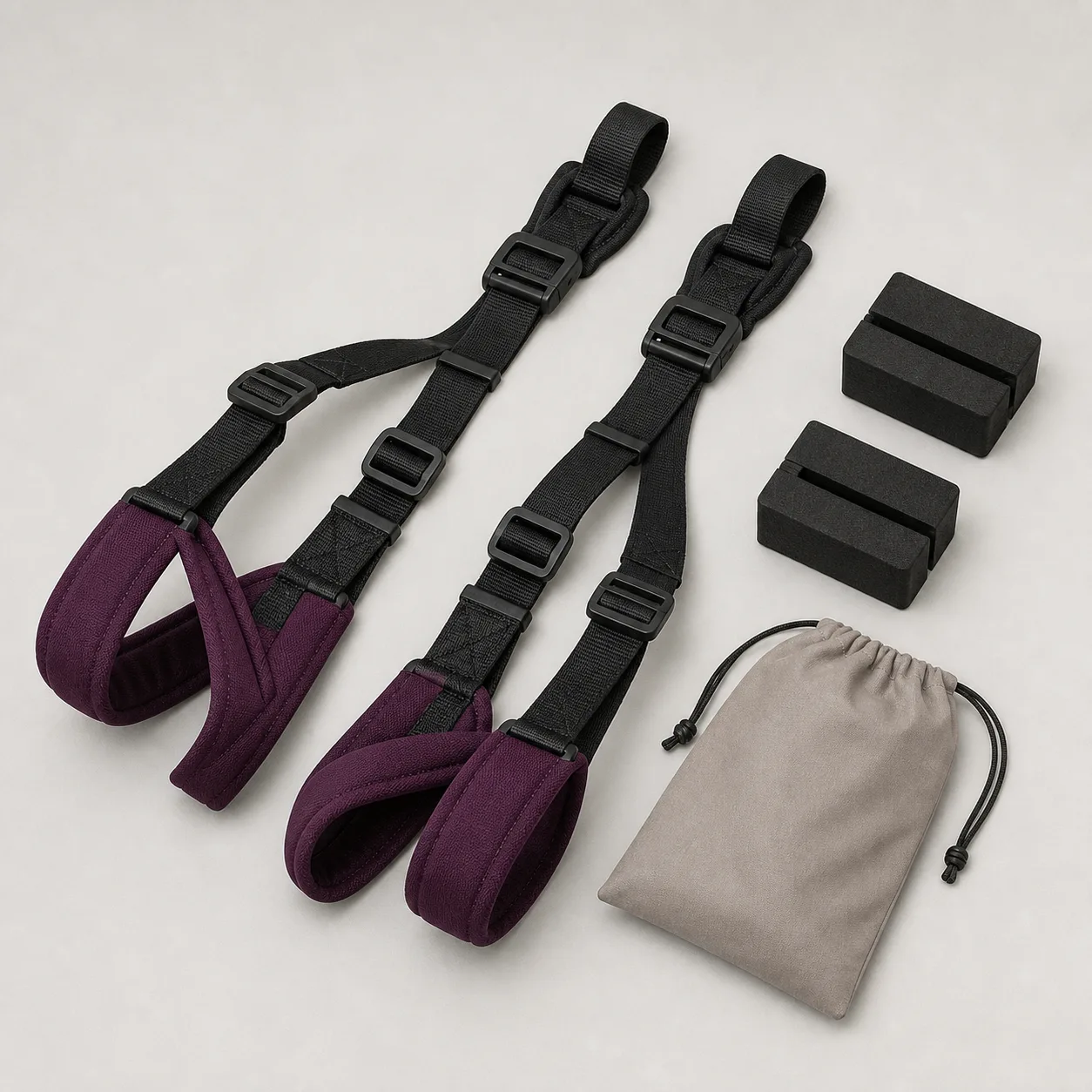
Dual-Anchor Over-Door Positioning Strap System
A paired over-door positioning system evaluated through door suitability, anchor geometry, buckle slip, stitch integrity and controlled partial-load testing.
29,99 $
200 in stock
The first component to inspect is the door, not the strap
An over-door system transfers force through the door leaf, hinges, frame and latch. A strong-looking strap cannot compensate for hollow, damaged or poorly fitted construction. Use is limited to a solid, well-maintained interior door whose structure and hardware have been approved for the intended direction of loading.
The door should close toward the user so applied force pulls it against the frame rather than away from the latch. Check the hinge screws, hinge leaves, frame joints, latch engagement, edge damage, glazing and clearances. Sliding, folding, pocket, double, glass, fire-rated and lightweight hollow doors need professional confirmation or must be excluded.

Two anchors must form two complete and equal load paths
Each side runs from a padded loop through adjusters and webbing to an anchor block. Lay both assemblies flat before installation and trace that route by hand. Twists, crossed straps or webbing fed through a buckle in opposite directions can create unequal lengths and unexpected slip.
Measure the left and right assemblies from the anchor face to the center of each support loop. Pair components only when adjustment range, padding and stitch layout match. A kit with one softer anchor, a different buckle or visibly shorter bartack should not be treated as a matched set.
Anchor blocks need clearance without damaging the frame
Place each block on the far side of the closed door with the webbing passing over a smooth upper edge. The block must be larger than the gap and must sit flat rather than wedge into trim. Close the door slowly by hand and confirm that the webbing does not prevent the latch from engaging fully.
Do not slam the door onto the straps. Check for crushing, sharp metal edges, exposed fasteners and paint transfer after an unloaded fitting. If the door binds, bows, will not latch, or leaves the webbing pinched into a narrow groove, remove the system and choose a different verified location.
A closed door still needs controlled access
Locking the door can prevent accidental entry, but it can also delay assistance. Keep the room accessible to a responsible adult and never block the only exit. Household members must know the door is temporarily unavailable, and children, pets and bystanders must remain outside the area.
Arrange the straps so a person can place weight back on the floor immediately. Scissors suitable for cutting webbing should be visible and reachable, while keys, phones and controls remain within easy reach. The system is not suitable for solo use when body weight, balance or circulation could become dependent on another person.
Progressive testing starts below waist height
After an unloaded fit, hang a broad test bag or padded fixture from both support loops close to the floor. Add weight gradually while watching the door edge, frame, anchors, webbing, stitches and adjusters. Hold each step long enough to reveal buckle creep and then remove the load before inspection.
Dynamic bouncing produces peaks far above a static reading and is outside this catalog concept. Do not jump, swing, spin, climb or suspend the entire body. At least one stable contact point with the floor or another verified support must remain available at all times.
Buckles must hold in the direction they will actually be used
Mark the webbing next to each adjuster with removable tape during sample testing. Apply the approved distributed load, release it and measure any movement. Repeat after several adjustment cycles and after the webbing has been cleaned and dried according to the proposed care method.
Leave enough tail beyond every buckle for secure routing, but keep loose ends away from feet and moving parts. A buckle that cracks, tilts, opens under side load or allows measurable creep should fail incoming inspection. Knots are not an acceptable correction for a slipping adjuster.
Padded loops support broad areas; they are not narrow restraints
Position the wide padded sections under areas that can tolerate distributed pressure. Do not route webbing around the neck, head, chest, abdomen or a joint, and do not use a loop in a way that tightens as weight increases. Bare webbing and buckle edges should remain away from skin.
Begin with minimal load and communicate continuously. Stop at once for pain, numbness, tingling, coldness, weakness, cramping, dizziness, breathing difficulty, panic, unusual swelling, marked colour change or loss of balance. No fitness, therapeutic or body-changing result is claimed.
Length changes affect balance before they affect comfort
Adjust both sides while unloaded. Make small, equal changes and check that the support loops stay at the same height. A deliberate asymmetrical setup requires its own stability assessment because it directs more force into one anchor and can rotate the body toward the door.
Keep the lowest useful height so a foot or knee can reach the floor quickly. Do not adjust a loaded buckle or reach behind the door while another person relies on the straps. End the session before fatigue makes a controlled dismount difficult.
Webbing damage often begins where it is hardest to see
Inspect both faces of the webbing at the door edge, inside every buckle and beneath each padded sleeve. Look for glazing, fuzzing, cuts, melted fibres, discoloration, pulled threads, flattened edges and stitch holes that are stretching. Bend anchor blocks to reveal cracks or compression that a flat view can hide.
Record an inspection date for the sample and compare high-wear areas under consistent light. Any component exposed to a sharp edge, door slam, chemical spill or abnormal load should be quarantined. Individual parts from different sets should not be mixed unless traceability and specifications match.
Cleaning should not hide wear or weaken the load path
The source does not establish a verified care method. Until testing is complete, wipe non-load-bearing surfaces with a damp cloth and a mild compatible cleaner, avoid soaking buckles and dense anchor blocks, and never use bleach, solvents, heat or a tumble dryer. Detergent residue can reduce grip or irritate skin.
Air-dry every layer fully with straps laid open. Inspect colour transfer, padding compression, buckle action and stitch tension afterward. A removable pad or sleeve needs a closure that cannot open under load and must be restored to its correct orientation before the system is used again.
Six questions to settle before anyone applies body weight
What kind of door is suitable?
The exact door specification remains pending. Solid construction, sound hinges and frame, full latch engagement and the correct closing direction are mandatory starting points.
What is the verified working load?
No capacity is published for this catalog concept. The listing claim is not accepted without testing of the exact assembly and door system with a safety margin.
Can it be used for full suspension?
No. This product is limited to partial positioning support with a stable floor contact available.
Can one anchor be used alone?
Not unless a separate configuration is designed, documented and tested. The catalog design uses a matched pair.
Should the door be locked?
Prevent accidental opening while preserving a clear assistance plan and exit. Never create a situation in which help cannot enter promptly.
How often should the straps be inspected?
Before every setup, after cleaning and after any unusual event. A formal retirement interval remains pending supplier data and cycle testing.
Supplier reference and provisional EU display price
The selected Alibaba listing, ID 1600338657105, showed Hefei Jiaang E-Commerce Co., Ltd., a USD 3.49–5.49 range and a one-piece minimum. The planned EUR 29.99 display price provisionally allows for China-origin freight, sample purchase, pair-matching review, webbing and bartack inspection, buckle-slip measurement, anchor compression testing, progressive distributed-load testing, door-contact protection assessment, colourfastness and cleaning review, protective packaging, neutral labeling, payment processing and destination delivery. Supplier status, freight, duty, tax, insurance, sample fees, production lead time and all purchasing conditions remain pending confirmation.
Procurement approval requires the product and the installation boundary
Lock one exact kit and record the number of assemblies, full length range, webbing width and fibre, stitch pattern and thread, buckle material and routing, padded-loop dimensions, anchor core and cover, unit weight and packaging. Define compatible door construction, closing direction, minimum frame and hardware condition, forbidden door types, partial-support-only warning, working load based on independent testing, inspection method, retirement criteria and emergency cut-down plan. Material reports, restricted-substance evidence, labels, freight, tax, duty and contract terms must be approved before unverified claims appear on the final sales specification.
Reviews
There are no reviews yet.