


App-Controlled Asymmetric Dual-Loop Vibrating Ring
August 14, 2026
Soft-Touch Finger-Trigger Mini Massager – 10 Modes
August 27, 2026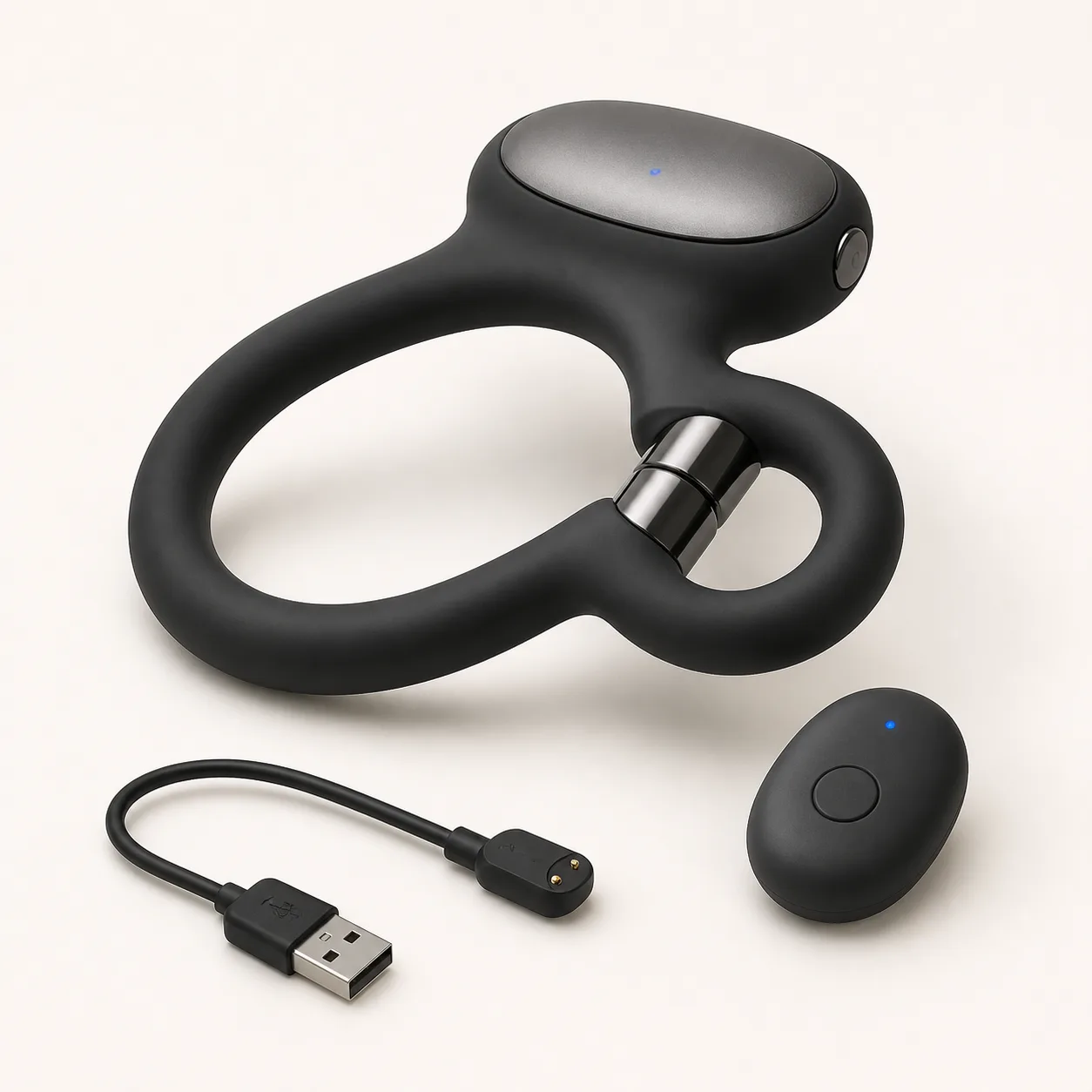
Magnetic-Latch Dual-Loop Remote Vibrating Ring
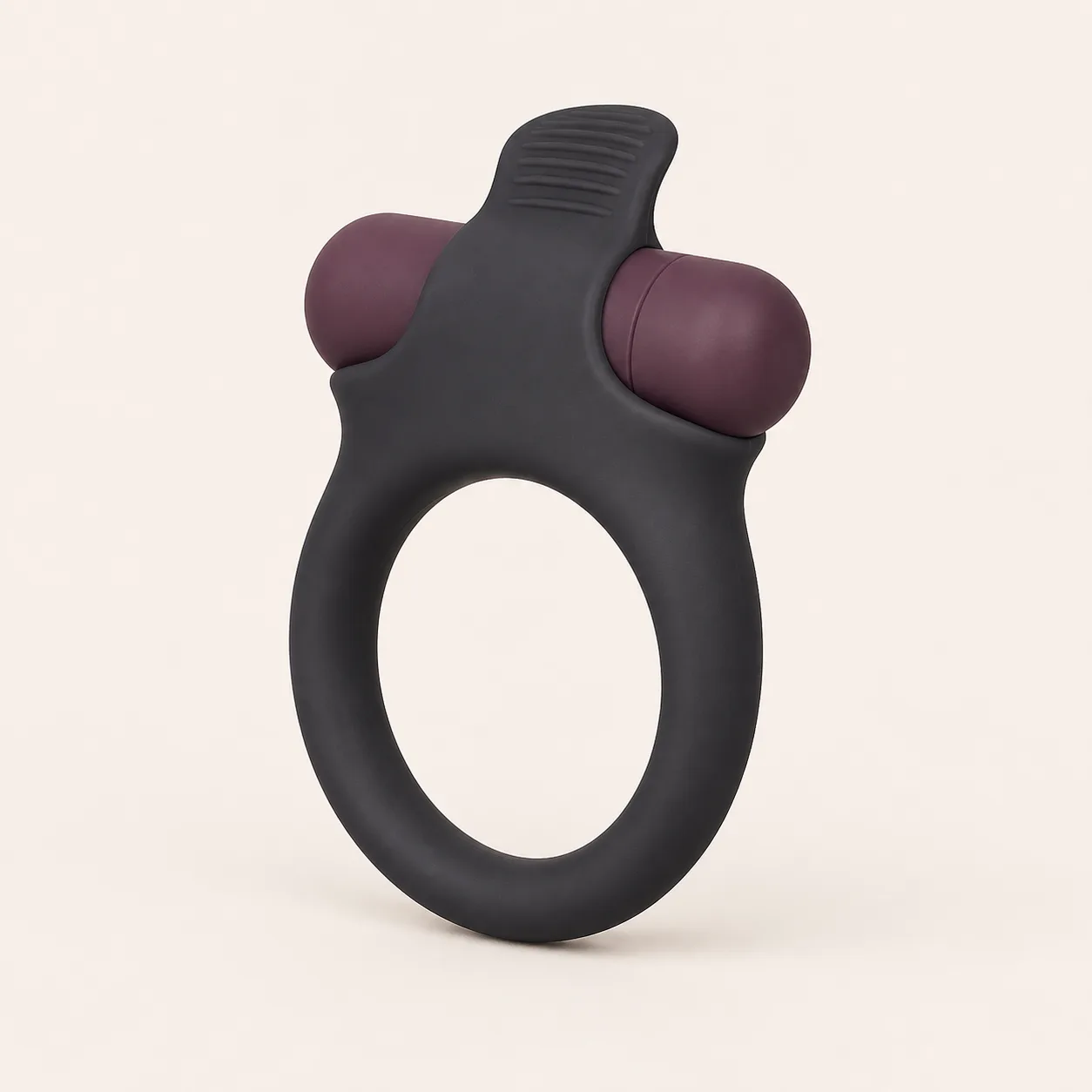
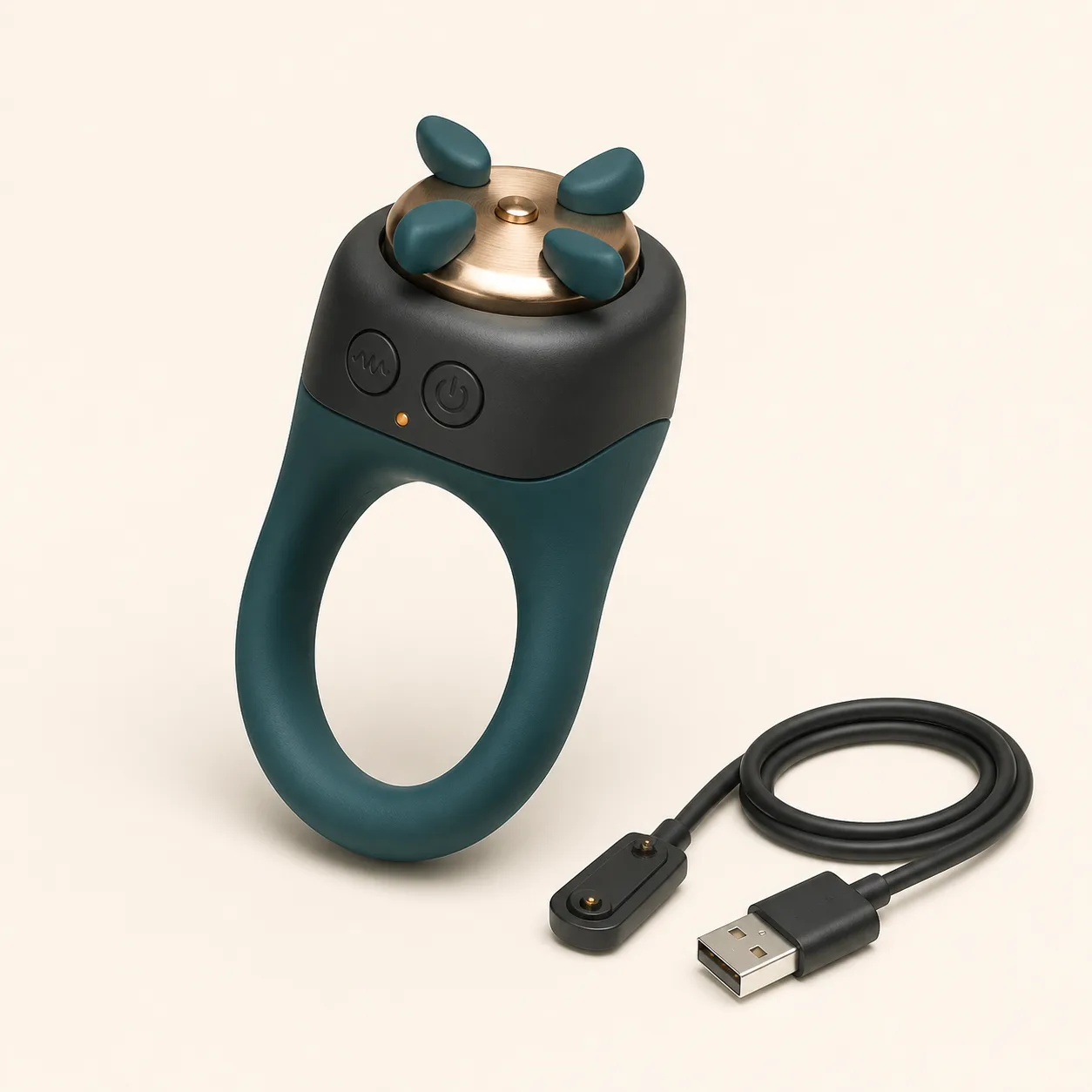
A charcoal dual-loop vibrating ring concept with polished magnetic side clasp, low-profile control pod, wireless pebble remote and magnetic USB charging.
39,99 $
200 in stock
A magnetic closure changes the entire fit checklist
The magnetic-latch dual-loop remote vibrating ring concept combines one broad flexible loop, a smaller support loop, a gunmetal side clasp and a low-profile graphite vibration pod. A separate pebble remote and magnetic USB lead keep control and charging physically distinct.

The image communicates architecture only; it does not establish size, fit, holding force, release force or body-contact materials.
The large and small loops need independent dimensions
Record relaxed internal width and height, cross-section, stretch range and maximum approved circumference for each opening. The bridge between the loops must also be measured because its thickness and angle determine whether load stays distributed or gathers at one edge.
Fit must never rely on guesswork. Start loose, keep the clasp reachable and remove the device immediately for pain, coldness, numbness, unusual discoloration or swelling.
The polished clasp must act as a predictable release
Measure closure force, opening force and separation behavior when the surfaces are dry, lightly lubricated, damp and exposed to lint. The two halves should align without trapping skin, and a deliberate hand movement should open them without tools.
A magnetic closure is not automatically an emergency release. The production sample needs a timed removal drill before any use guidance is approved.
Pinch-zone inspection starts at the bridge
Check the gap around the gunmetal cylinder, both flexible-to-rigid transitions and the narrow region between the loops. Compress and flex the assembly through its permitted range while observing whether a new slot appears that could catch skin or hair.
Do not use a sample with sharp flash, a stepped seam, exposed adhesive, a loose insert or a clasp that closes unevenly.
The vibration pod should stay above the load path
Document the pod footprint, contact face, motor axis and distance from both openings. The housing should not lever the magnetic bridge sideways or make one loop tighten when pressure is applied to the top surface.
Bench-test every verified mode for acceleration, frequency, temperature and unintended movement before assigning intensity names.
Remote control needs a local stop on the product
Map pairing, range, latency, command acknowledgement, sleep behavior and reconnection after signal loss. The device itself should provide an obvious power command so operation never depends solely on a small wireless controller.
Confirm that loss of signal, depleted remote battery and accidental button holds cannot trap the product in an active state.
One loop should never be tightened by twisting the other
The figure-eight body is designed to be handled as one assembly. Rotate or stretch only within the supplier-approved method, and never use the small loop as a lever to increase tension in the larger opening.
Pause vibration and open the magnetic junction before changing placement. A clasped product should not be dragged across skin.
Flexible surfaces and rigid inserts need separate records
Obtain lot-linked formulations, hardness, pigments, cure systems and bonding methods for the charcoal loops, bridge, pod surround, buttons, latch seats and charging contact insert. Generic rubber, silicone or body-safe wording is not enough to identify the production compound.
Condition samples with the intended cleanser and lubricant, then inspect tack, odor, dye transfer, swelling, cracking, oil bleed, corrosion and bond movement.
Magnet safety requires field and retention data
Record magnet grade, surface field, pull force, plating, encapsulation and retention after drop, twist and cleaning cycles. Users with implanted or body-worn medical devices need model-specific advice from the device manufacturer and a qualified clinician before proximity is considered.
Keep the clasp away from loose metal objects, magnetic cards and unverified electronic equipment during storage.
Cleaning must expose both faces of the clasp
Switch off, separate the closure and disconnect the dry charging lead. Clean the loops, bridge, pod perimeter and both magnetic faces only by the approved method, removing residue from the cylindrical edges without inserting tools into seams.
Dry the separated parts completely before closing the magnet or placing the device in its storage pouch.
Ingress claims must include the opening mechanism
Test the complete assembled product at the clasp seats, flexible-to-rigid bonds, pod seam, control, status-light window and charge contacts after repeated opening cycles. A washable outer surface does not prove that the motor housing or magnet pockets resist liquid.
Until model-matched evidence is accepted, keep it out of baths and showers and never attach the charger near water.
Charging validation should include clasped and open storage
Verify input rating, connector polarity, attachment strength, charge time, termination, runtime and low-battery shutdown. Confirm that the magnetic power lead cannot couple to the closure in a way that bypasses normal alignment or scratches its plating.
Stop charging for unstable contact, corrosion, unusual heat, odor, swelling or cable damage.
Heat and runtime need combined-load testing
Measure temperature at the pod face, bridge, latch, loop junctions and charging insert through the longest verified vibration program. Repeat after stretch and cleaning cycles because mechanical strain can change motor support and electrical resistance.
Quarantine samples with rattling, falling output, local hot spots, intermittent control or uncommanded activation.
Incoming inspection should include a timed opening drill
Use go/no-go gauges for both relaxed openings, a force gauge for stretch and latch separation, and a compliant fixture for vibration output. Sample remote pairing, local stop, charge termination, seams, surface finish, magnet retention and complete power-down.
Opening-force limits, emergency-release time, stretch-cycle count, drop height, remote protocol checks and carton tests remain pending supplier agreement.
The listing price is only the start of the landed plan
An Alibaba double-ring vibrator page lists a magnetic electric remote-control hollow ring from Shenzhen SAC Technology Co., Ltd. at USD 5.99-9.29 with MOQ 1 piece. Exact model, manufacturing role, dimensions, latch force, compounds, electronics and compliance evidence remain pending.
The procurement reference supports sample inquiry only. The EUR 39.99 plan includes a China-origin freight allowance plus fit, clasp, pinch-zone, material, magnet, remote, ingress, charging and thermal review; actual freight, duty, tax, insurance, payment fees and destination terms remain pending.
Frequently asked questions
Does the magnet make the product one-size-fits-all?
No. Both opening ranges, stretch limits and fit guidance require measurement on the approved production sample.
Will the clasp release automatically under pressure?
That behavior is not assumed. Closure and separation forces, contamination effects and timed manual opening must be tested.
Can it be controlled without the wireless remote?
The exact local controls require confirmation, but an accessible product-side power command is part of the acceptance plan.
Is the magnetic closure safe near a medical implant?
Compatibility cannot be generalized; obtain advice for the specific implanted or body-worn device before proximity.
Can the complete product be submerged?
No immersion guidance is approved without complete-unit evidence covering the clasp seats, pod seam, control and charge contacts.
What should be checked before each use?
Inspect both loops, the bridge, clasp faces, pod seam, control and contacts, then confirm low mode, local stop, remote stop and easy manual opening away from the body.
Reviews
There are no reviews yet.