


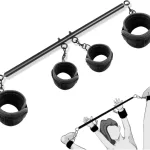
Black Wolf Telescopic Four-Cuff Spreader Bar Restraint Set
August 14, 2026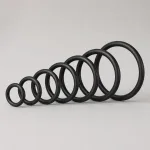
Seven-Size Flexible Ring Fit Set
August 14, 2026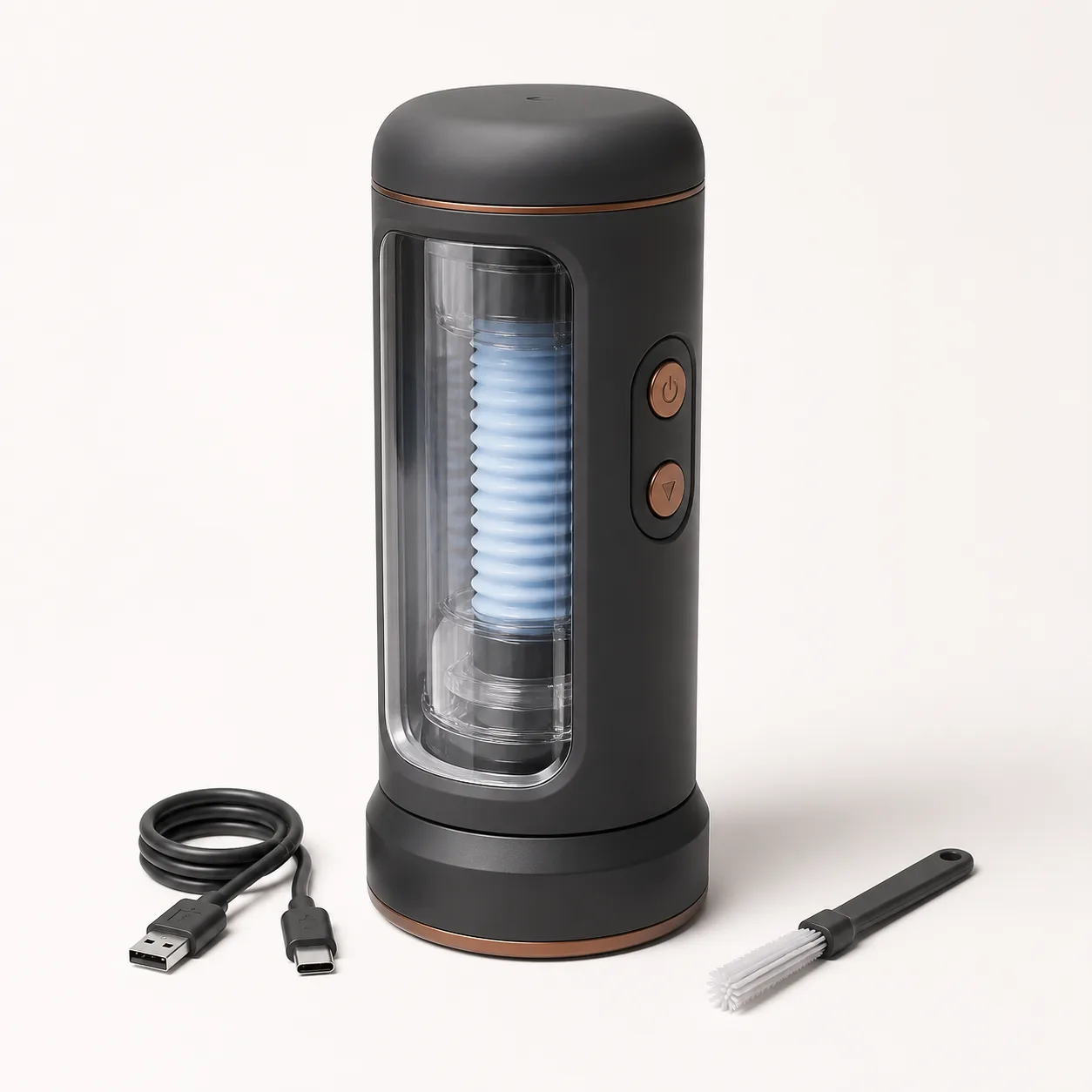
Observation-Window Dual-Motion Stroker
A compact graphite automatic stroker concept with clear observation window, ribbed removable liner, dual-motion controls and stable upright base.
89,99 $
200 in stock
The window must reveal the mechanism without weakening the shell
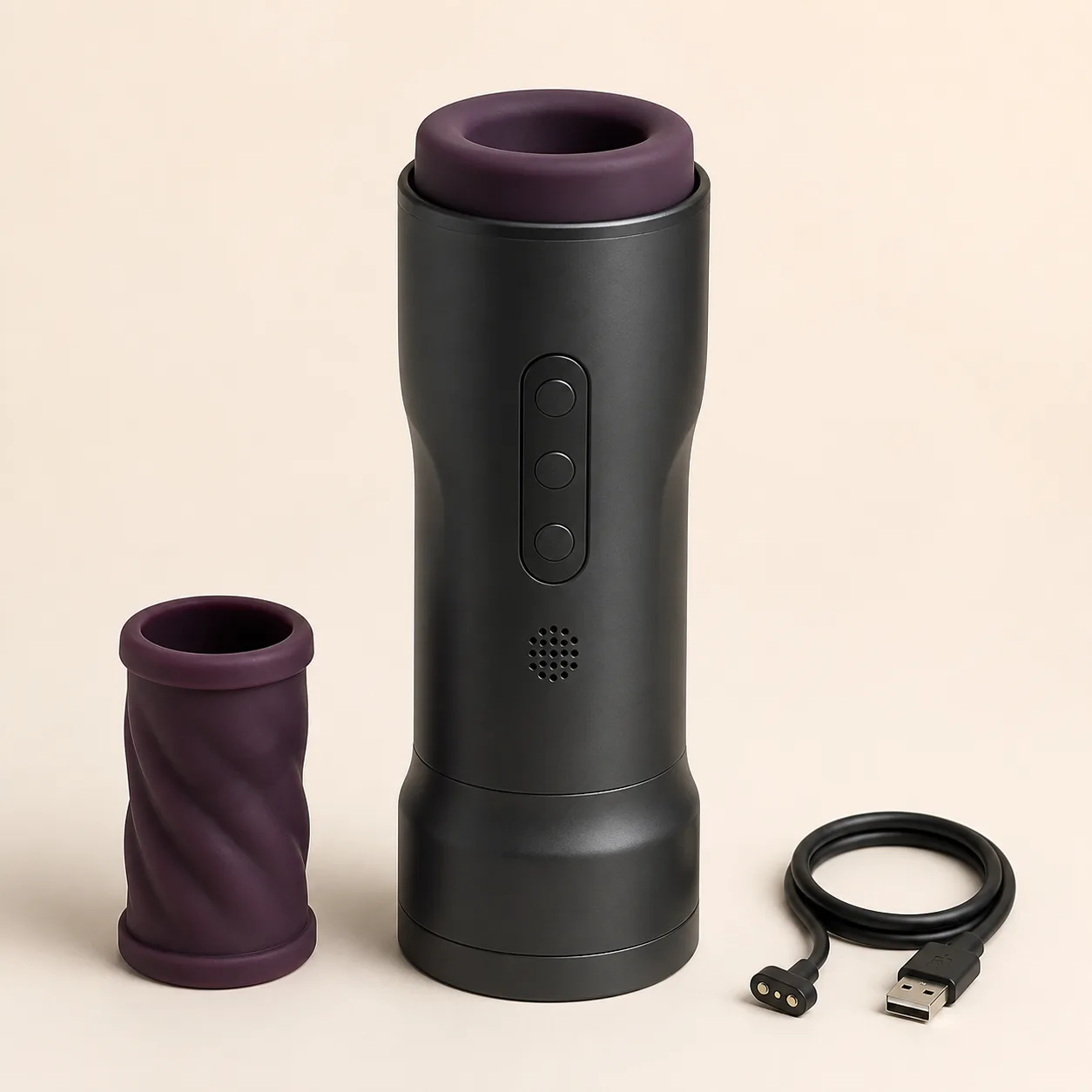
The observation-window dual-motion stroker concept places a pale-blue ribbed liner and carriage behind a tall clear side panel in a graphite cylindrical housing. Two physical buttons, a stable base, USB-C cable and cleaning brush complete the product-only visualization. The window is intended to support inspection and cleaning awareness, but its final material and structural role remain unconfirmed.

The image does not prove the mechanism, motion range, liner design or included accessories.
Clear-panel material needs optical and impact testing
Identify the window polymer, thickness, coating, fastening method and chemical resistance. Inspect haze, distortion and stress marks before and after repeated cleaning, light impact, temperature cycling and exposure to the approved lubricant. A cracked or lifting panel must be easy to identify before operation.
Decorative tint cannot conceal fasteners, fluid paths or damage around the panel edge.
The perimeter seal is a high-risk service boundary
Section samples through the full window perimeter to map gaskets, ultrasonic welds, adhesives and mechanical clips. Run leak and flex tests with the carriage operating at its extreme positions. Any route that can draw liquid behind the window or into the motor compartment requires redesign.
Ingress claims must cover the assembled windowed device, not the housing plastic alone.
Thrust travel should be reported as measured motion
Record carriage stroke length, cycles per minute, acceleration and available levels under no load and a defined test load. Check whether travel changes as the battery discharges and whether the liner remains centered throughout the cycle.
Marketing terms such as powerful or deep are not approved without a reproducible measurement method and appropriate limits.
Rotation must be distinguished from twisting or liner drag
Confirm whether the carriage rotates continuously, reverses direction, oscillates through a limited angle or merely transfers torque to the soft liner. Measure speed, angle, stall behavior and interaction with each thrust setting.
The instructions should show which button changes motion type and how combined programs can be stopped immediately.
Visible moving parts still need complete guarding
The window may make the carriage easy to see, but every pinch, shear and entanglement point must remain inaccessible during normal use, cleaning and liner installation. Probe guards, top opening, cap interface and service seams with the device in all positions.
Do not operate with a removed window, loose panel, missing liner retainer or exposed drive component.
Stop response must work at every point in the cycle
Measure the time and residual travel between a stop command and full motion cessation. Test a normal press, long press, control fault, stalled carriage, low battery and over-temperature event. Restart after interruption should require an intentional action rather than resuming unexpectedly.
A clearly documented emergency-stop sequence is required before sale.
The removable liner needs a keyed installation check
Confirm liner orientation, retainer geometry and whether incorrect assembly is physically prevented. The soft sleeve should not bunch, twist, pull into the carriage or contact a sharp housing edge. Installation marks must remain visible after cleaning and cannot rely on color alone.
Operate sample units through repeated insertion and removal cycles, then inspect locking tabs and liner lips for tearing.
Opening range and internal pressure require conservative limits
Measure relaxed opening diameter, usable internal length, wall thickness and compression under defined conditions. If suction or air displacement is created by the moving carriage, record pressure range, vent path and the effect of blocked vents.
No fit, vacuum or enlargement claim is approved without a defined protocol and a safe, rapid release method.
The upright base must remain stable during combined motion
Test tipping, walking and vibration transfer on a level dry surface with thrust, rotation and combined programs. Record base diameter, center of mass, foot material and slip resistance. Power and charging cables must not pull the unit toward an edge.
Hands-free wording remains pending until stability tests cover the complete operating envelope.
Two buttons require an unambiguous control language
Map short press, long press and multi-press behavior for power, thrust, rotation and program selection. The controls should provide distinct tactile feedback and a lockout for transport. Indicator lights, if present, must identify charge, mode, fault and low-battery states without confusing sequences.
Firmware version and button map should appear in the batch record and instructions.
Battery and charging data must match the installed cell
Verify cell chemistry, capacity, protected-circuit design, input rating, charge time, runtime by motion program and transport documents. Test the supplied cable, port retention and behavior when the charger is connected during a start command.
The device should not operate while charging unless an explicit electrical and use-risk review approves that mode.
Thermal checks belong at the motor, window and liner
Map surface and internal temperatures during prolonged thrust, prolonged rotation, combined operation, stall and charging. The clear panel can change heat flow and may show condensation before other surfaces do. Establish hardware cut-offs and a cooling interval supported by measured data.
Stop use for unexpected warmth, odor, discoloration, erratic speed or a cloudy window that does not clear after drying.
Cleaning must separate washable and electrical zones
Final instructions should show how to remove the liner without pulling the carriage, which parts may be rinsed and how the window perimeter is wiped. Do not immerse the housing, direct water into the mechanism or use the brush behind a guard unless complete-unit testing explicitly permits it.
Dry the liner separately and inspect the panel seam, retainer, vent and base before reassembly.
The supplier lead requires a window-specific sample protocol
An Alibaba showroom lists a visual-window electric stroker with thrusting and rotating modes at USD 14.69-17.49 and MOQ 1. Supplier identity, exact model, window construction, motion travel, rotational behavior, liner material, guards, pressure, controls, battery, ingress protection, cap, brush and compliance evidence remain pending.
The procurement reference supports sample inquiry only. The EUR 89.99 plan includes a China-origin freight allowance plus window-seal, drive-guard, stop-response, motion, liner, stability, thermal and electrical review; actual freight, duty and tax remain pending.
Frequently asked questions
Does the window open for cleaning?
No opening method is approved. The panel should remain a sealed structural part unless the final service design says otherwise.
Can thrust and rotation run separately?
The supplier lead mentions both motions, but their independent and combined control map requires sample confirmation.
Is the blue liner removable?
The concept proposes a removable ribbed liner; retention, material and cleaning instructions remain pending.
Can the housing be immersed?
Not without accepted complete-unit ingress testing that includes the window, controls, opening, base and charging port.
Is the cleaning brush included?
It is shown as a proposed accessory in the original visualization, while final box contents and brush material remain pending.
What should happen if the carriage stalls?
Power should be stopped immediately and the unit quarantined for inspection; verified fault detection and release behavior are required before sale.
Reviews
There are no reviews yet.