


Reusable Care-Room Privacy Door Hanger with Write-On Panel
August 14, 2026
Wide-Range Liquid pH Indicator Strip Kit
August 14, 2026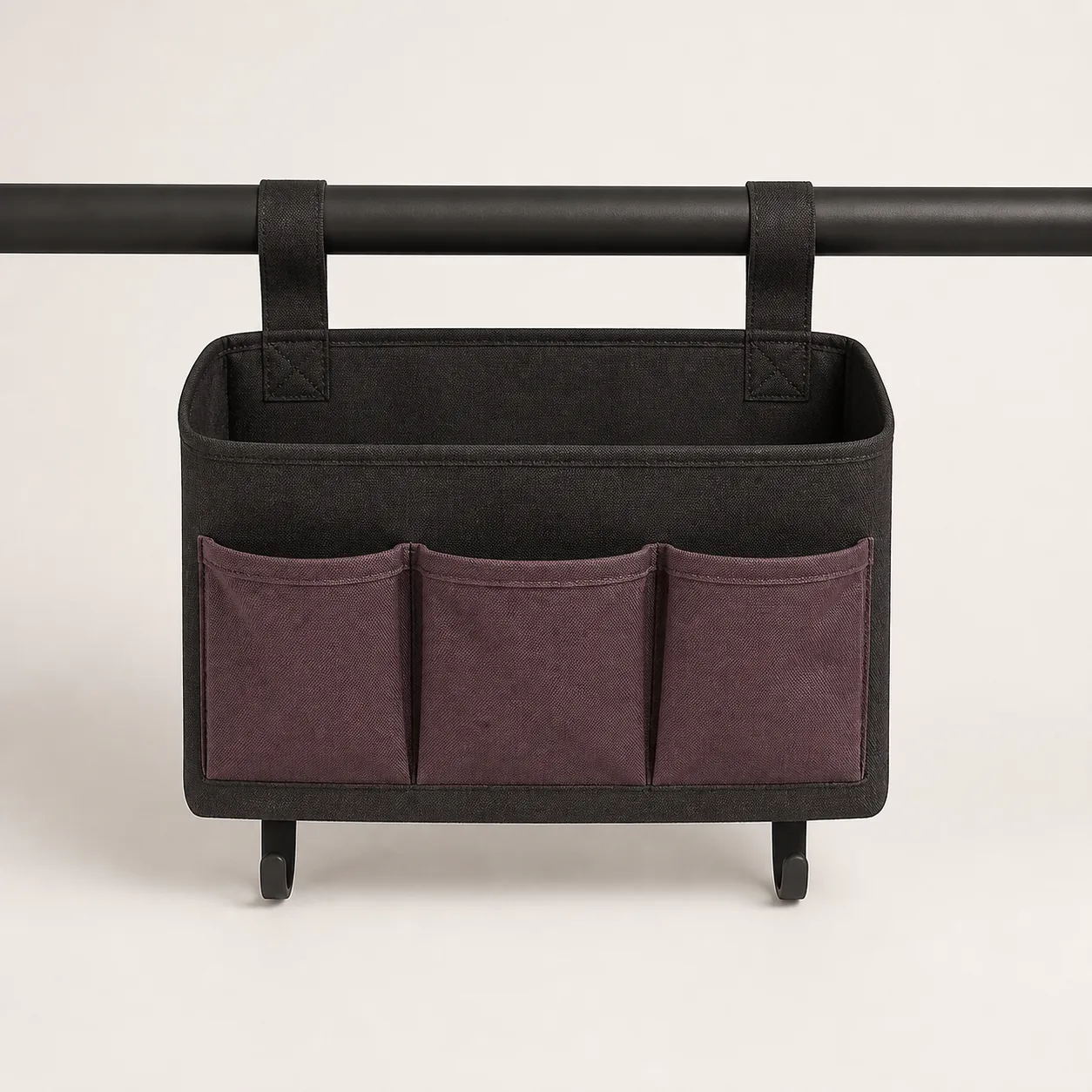
Opaque Multi-Pocket Bedside Care-Supply Caddy
An opaque multi-pocket bedside caddy concept for organizing selected lightweight closed care supplies on a compatible adult-controlled rail.
19,99 $
200 in stock
A bedside caddy can create a defined retrieval point
This bedside care supply caddy concept keeps selected lightweight, closed care items together near a compatible adult-controlled bed or furniture rail. One main compartment and smaller opaque pockets support deliberate zoning without placing loose items on the floor.

Opaque fabric is not a lock, child-resistant feature, spill barrier or guarantee of privacy.
Choose the installation point before choosing contents
Limit use to a stable rail or furniture edge inside an adult-controlled room. Exclude movable side guards, lifting mechanisms, emergency equipment, heated surfaces and any location used for patient transfer or fall protection.
The caddy must never alter the intended safety function of a bed, rail or frame.
Measure the rail and surrounding movement envelope
Record rail diameter or edge thickness, attachment spacing, floor clearance and the distance to bedding, drawers, walls and moving joints. Test the full path of adjustable frames before loading anything.
Compatible profiles and required clearances need supplier documentation and a production sample.
Treat the image as a layout concept
The visualization shows an empty main compartment and three front zones so buyers can assess access and color direction. It does not establish dimensions, construction, supplied hardware, capacity or final pocket count.
Approve the physical sample against a signed specification rather than relying on the rendering.
Inspect the empty sample under bright light
Check every edge, stitch line, reinforcement point, strap and hardware contact for cuts, loose thread, sharp parts, stains, uneven coating or persistent odor. Pull each pocket open gently and compare both suspension points for symmetry.
Do not use a sample that twists, sheds fibers or exposes a hard edge.
Assign pockets by access frequency and item shape
Reserve the largest zone for one approved lightweight category and map smaller pockets to compact closed supplies. Keep instructions and labels readable, separate clean items from used accessories, and leave enough room for a natural grip.
Do not mix care items with medicine, food, valuables or household chemicals.
Build the load from the lowest tested level
Begin with the caddy empty, then add one light test item at a time while watching attachment points, backing and pocket mouths. Stop at the first sign of sag, rotation, seam strain or contact with the floor or frame.
No pocket, seam, strap, hook or total load is assumed.
Keep liquids in a separate controlled system
A capped bottle can still leak when squeezed by other items or moved with the frame. Unless written compatibility and retention tests approve it, store liquids in a stable secondary tray away from the caddy.
No waterproof, absorbent or spill-containment performance is claimed.
Exclude powered equipment and charging cables
Do not place batteries, chargers, warming devices or energized accessories in a fabric pocket. Cables can snag on rails, moving mechanisms or hands and can concentrate heat where it is difficult to see.
Use manufacturer-approved charging locations with clear ventilation.
Use a calm one-hand retrieval routine at night
Switch on enough light to identify the correct pocket, steady the rail if appropriate and lift the selected item without pulling the caddy. Confirm that nothing has dropped into bedding or onto the floor before leaving the area.
Do not search blindly inside a pocket that may contain a damaged package.
Combine concealment with an actual access plan
Position the caddy on the private side of the room only when adults control entry. Move restricted supplies to a genuinely secured location whenever children, visitors, pets or unauthorized adults may enter.
Convenient placement should never override the access rules for an individual item.
Empty the caddy before furniture service or relocation
Remove and count every item before adjusting the frame, changing bedding, moving furniture or transferring the caddy. Detach it according to the confirmed hardware method and inspect the rail for marks.
Never lift furniture or a rail by the organizer or its attachment points.
Clean one material system at a time
Separate removable hardware if the final instructions permit it, close fasteners and use only the approved spot-clean, hand-wash or machine process. Test cleaners on a hidden area for color transfer, coating change and residual odor.
Do not combine concentrated disinfectant, bleach or heat with unverified fabric and hardware.
Dry fully and document every service check
Airflow must reach seams, pocket corners, backing and attachment channels before reinstallation. Log seam condition, hardware shape, odor, staining, rail marks, approved contents and the date of the next review.
Withdraw the caddy after permanent sag, torn reinforcement, corrosion, hard-to-clean residue or unstable hanging.
Sourcing economics depend on a fit-and-load sample
An Alibaba bedside caddy listing from Huizhou Seange Tools Co., Ltd. shows USD 3.80-9.00 per piece with MOQ 20. Its listing language includes material, volume and resistance statements that remain unverified for this planned product; dimensions, construction, attachment, loads and cleaning instructions require written confirmation.
The procurement reference is an inquiry lead only. The EUR 19.99 plan allows for China-origin volumetric freight, attachment trials, load checks, colorfastness checks, protective packing and discreet fulfillment; packed size, mass, freight, duty, tax, insurance, payment fees and destination terms remain pending.
Frequently asked questions
Will it fit every bed rail?
No. Rail profile, thickness, attachment spacing and moving clearances must be measured and sample-tested.
Are the pockets lockable?
No. Opaque pockets reduce casual visibility but do not restrict access.
What is the maximum safe load?
Pocket, seam, attachment and total load limits remain pending supplier evidence and physical testing.
Can it hold a charger?
Powered equipment and charging cables should stay in manufacturer-approved ventilated locations, not inside this caddy.
Is the fabric waterproof?
No resistance claim is approved until the production material and seams pass defined tests.
When should it be removed from service?
Remove it after sagging, torn seams, damaged attachments, corrosion, residue, persistent odor, rail marking or interference with furniture movement.
Reviews
There are no reviews yet.