


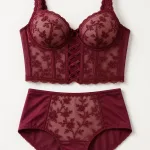
SMOOTH JM930 Wine-Red Embroidered Longline Bra and Brief Set: 0XL-5XL
August 14, 2026
DL2431 Royal Blue Four-Piece Garter Lingerie Set: S-L
August 14, 2026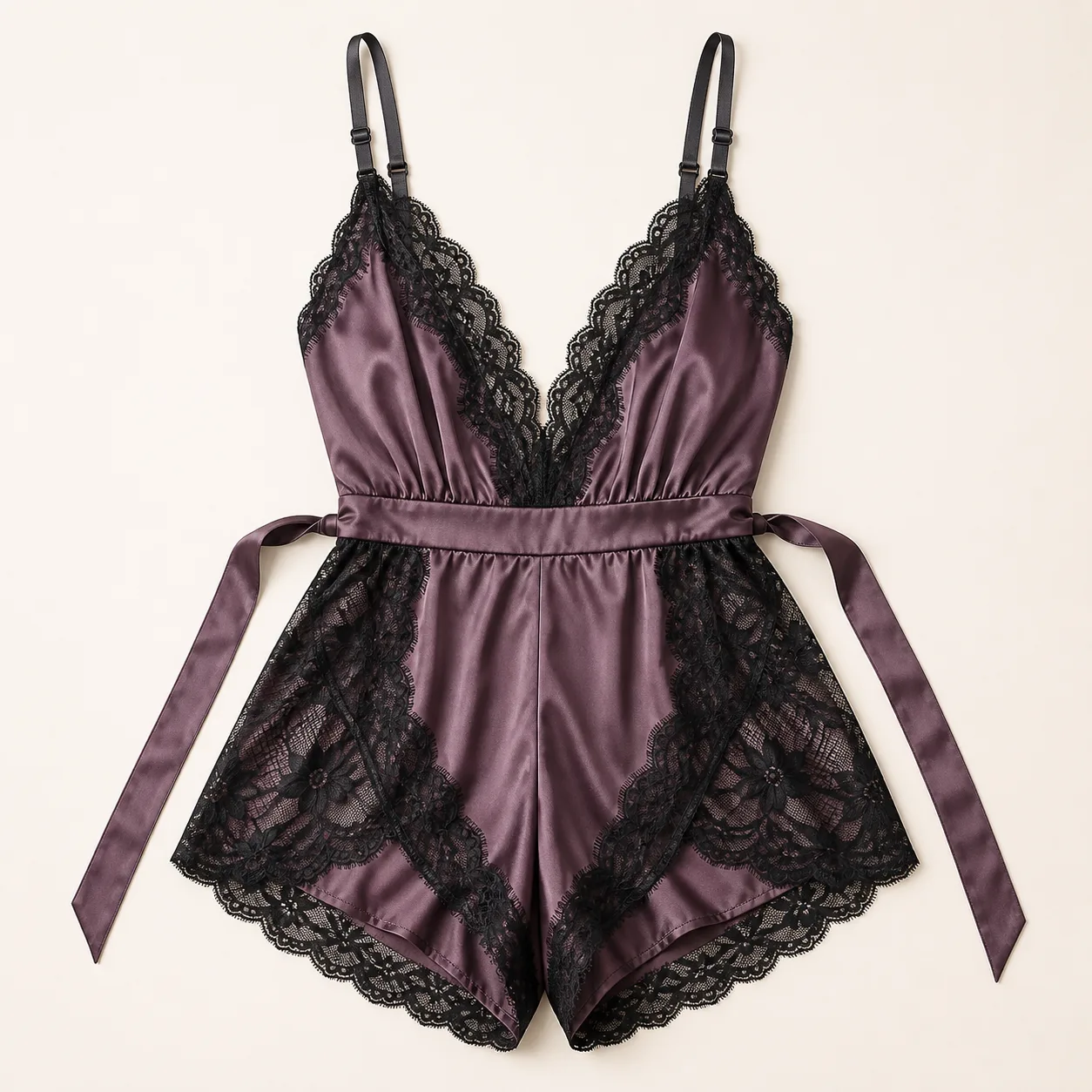
Plunge-Neck Satin-and-Lace Romper with Twin Waist Ties and Scalloped Flutter Shorts
A smoky-plum one-piece lingerie romper concept with a black lace-framed plunge neckline, two adjustable straps, twin satin waist ties and scalloped flutter shorts.
44,99 $
200 in stock
Join a lace-framed plunge neckline to flutter shorts
This plunge-neck satin-and-lace romper is exactly one smoky-plum garment. Two adjustable charcoal straps support a V-shaped front framed by black floral lace, a satin waist seam carries two long side ties, and overlapping flutter-short panels finish with wide scalloped lace edges.

The image records design intent only. Fibre content, weave, dimensions, transparency, stretch, graded fit, colour and production readiness remain pending.
Confirm the pack contains one complete romper
The proposed sellable unit is one connected short romper with bodice, waist, crotch and two leg openings. Labels, any hygiene liner and the two ties should be inspected as parts of that single garment rather than separate accessories.
No bra, brief, thong, robe, stockings, garters, belt, hanger or jewellery is included. Approved sealed samples must define the final pack.
Measure the plunge neckline by depth and edge length
Record centre-front depth, width between upper strap joins, total left and right lace-edge lengths and the width of the centre join. Check the V point for pulling, exposed seam allowance, loose motif ends and left-to-right imbalance.
Plunge describes the proposed geometry, not universal coverage. Final position varies with torso length, bust shape and strap setting.
Grade both adjustable straps as a synchronized pair
Measure each strap at minimum and maximum settings, including slider travel, elastic extension, anchor width and front-to-back attachment distance. Both sides should hold the chosen length without creeping, twisting or distorting the lace neckline.
Strap fibre, hardware material, coating, corrosion resistance and pull strength remain pending supplier documents and samples.
Map the satin bodice panels from neckline to waist
Mark grain direction and record panel width at the upper edge, bust level and waist seam, plus the length along centre front and both side seams. Condition samples before final length checks to distinguish drape from permanent growth.
Satin describes a visual surface proposal only. It does not establish silk content, weave or fibre blend.
Inspect the black lace framing as two mirrored zones
Measure motif scale, scallop depth, transparency, stretch direction and seam placement on the left and right neckline sections. Compare shade and flower orientation under controlled lighting while allowing only the variation written into the quality specification.
Lace composition, snag resistance and opacity require testing rather than visual assumption.
Stabilize the waist seam without creating a hard ridge
Record relaxed waist circumference, seam allowance, stitch density, gathering ratio and any elastic or tape inside the join. Inspect the full circumference for puckering, skipped stitches, bulk and abrasive overlaps.
Waist shaping and compression are not claimed. Fit pressure depends on verified measurements and individual bodies.
Measure the two satin waist ties independently
Label the left and right ties, then capture finished length, width, attachment footprint, seam reinforcement, end shape and pull resistance. Confirm both ties match in shade and can form the intended knot without slipping or fraying.
Keep loose ties away from flames and moving equipment. Attachment strength and care instructions require approved tests.
Define the overlap of the flutter-short panels
Record the overlap depth at waist, high hip and leg edge for each side, plus panel sweep and opening angle. Check the two layers during standardized movement so they do not invert, expose raw seams or pull the crotch off centre.
Coverage varies with size and movement; the flat image is not a fit guarantee.
Trace the scalloped lace around both leg openings
Measure total lace length, scallop repeat, motif placement and seam position around the left and right flutter edges. Inspect for clipped flowers, rough cut points, loose threads, seam wave and snagging.
Any acceptable motif difference between legs should be documented before production cutting.
Verify crotch width, rise and inner construction
Capture front rise, back rise, torso girth, crotch width, inseam and leg opening for every size. Inspect the inner seams, crotch intersection and any gusset for bulk, skipped stitches, slippage, exposed elastic and dye transfer.
A gusset layer or removable hygiene liner is not assumed; it must be specified and tested if included.
Build the size chart around torso girth
Supplier size letters must be supported by bust, waist, high hip, torso girth, bodice length, strap range, rise and leg-opening measurements with tolerances. Review neckline position, waist level, crotch comfort, tie placement and flutter overlap across every proposed size.
The sellable range remains pending graded patterns, samples and consenting-adult apparel fit trials. Individual proportions differ.
Test satin, lace, straps, ties and seams separately
Request fibre declarations, mass, stretch, recovery, shrinkage, snag and seam-slippage data for the plum satin, black floral lace, straps, waist construction, ties, thread and any gusset. Repeat key garment measurements after the proposed care cycle.
Exact softness, breathability, opacity, durability and service life are unconfirmed until verified on production materials.
Validate colourfastness and care for the weakest trim
Run dry and damp rub checks, wash trials and a perspiration-simulant assessment on every colour and component. Record plum dye transfer, black trim bleeding, shade change, water spotting, loss of sheen, shrinkage, lace distortion, tie twisting and hardware discolouration.
Washing temperature, detergent, drying and ironing instructions must follow verified results for the weakest component.
Set a landed-price plan from one-piece nightwear references
An Alibaba public category page displayed a one-piece satin lingerie reference at USD 3.73 to 3.85 with MOQ 1 and a satin jumpsuit reference at USD 6.20 to 6.45 with MOQ 2. A broader nightwear page displayed a lace-satin nightdress reference at USD 3.20 to 3.60 with MOQ 20. These are category benchmarks, not quotations for this twin-tie flutter romper or approved suppliers.
The public procurement benchmark supports an EUR 44.99 planning price after provisional allowance for China-origin freight, graded torso-girth samples, plunge, strap, twin-tie, waist, crotch and flutter-panel checks, colourfastness, wash validation, discreet fulfilment and expected apparel handling loss. Exact supplier, quote, MOQ, sizes, colours, fibres, packed weight, freight, duty, tax, certification, payment terms, lead time and production availability remain pending.
Frequently asked questions
How many garments are included?
Exactly one connected satin-and-lace short romper is proposed.
How many waist ties are attached?
Two satin ties are specified, one extending from each side of the waist.
Are both shoulder straps adjustable?
Yes in the concept, but final strap range and slider holding force require sample approval.
Is the satin made from silk?
No silk claim is made. Exact fibre and weave remain pending supplier documents and tests.
Which sizes will be offered?
The final range and measurement chart await graded torso-girth samples and fit approval.
Is a separate brief or robe included?
No. The proposed pack is limited to the one-piece romper shown.
Related products
-
BLACK LUXURY UNDERWEAR
229,00 $ -
CLASSIC LINGERIE BRA
119,00 $


Reviews
There are no reviews yet.