


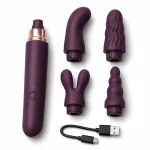
Four-Head Detachable Rotating Vibrator Kit
August 14, 2026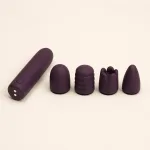
Four-Cap Interchangeable Texture Bullet Vibrator Kit
August 14, 2026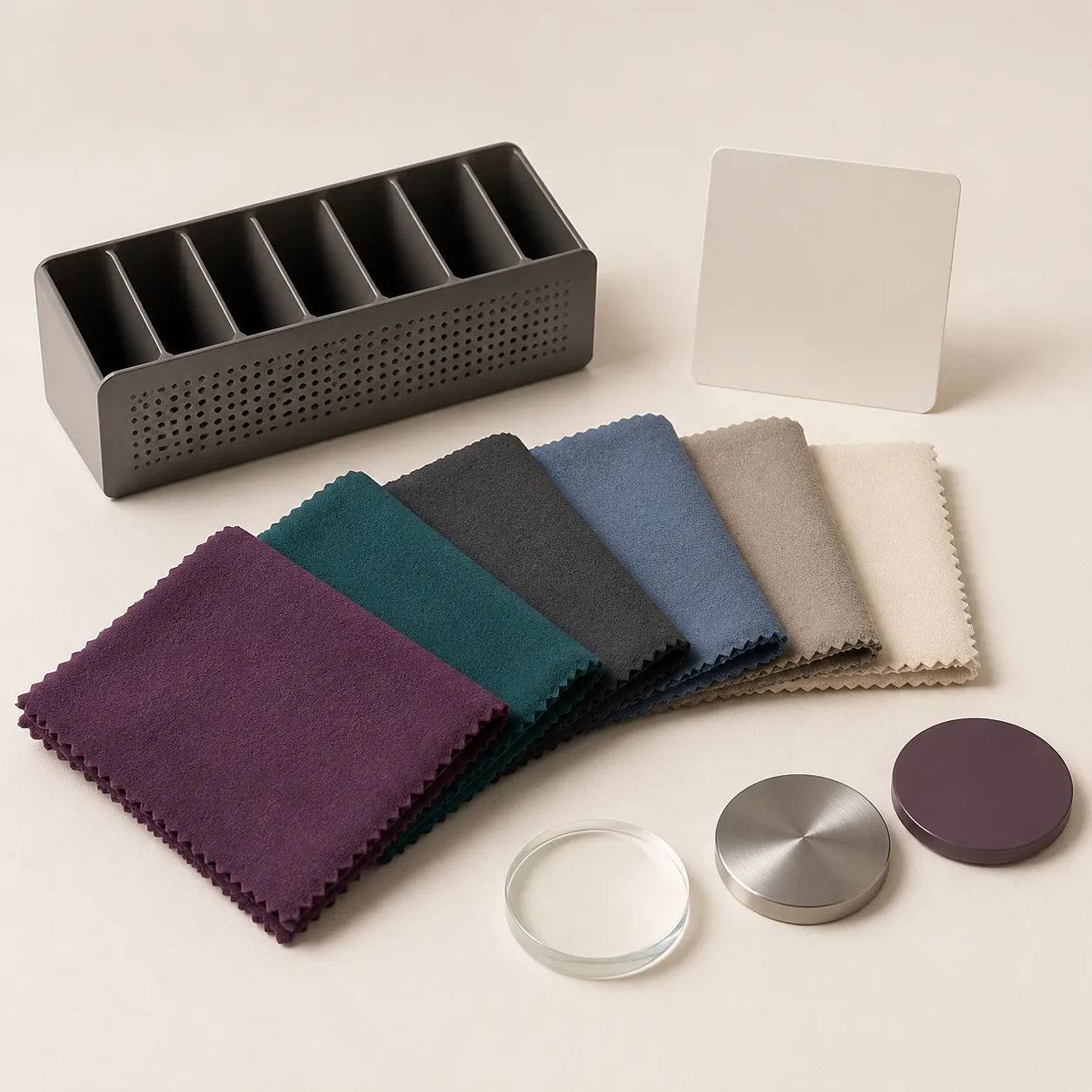
Six-Color Low-Lint Toy Care Cloth Set
A six-color low-lint care cloth concept with divided ventilated sleeve, blank care card and glass, metal and polymer test disks.
12,99 $
200 in stock
Six colors create a care system only when the roles stay clear
The low-lint toy care cloth set concept arranges plum, teal, charcoal, slate-blue, taupe and ivory cloths beside a ventilated six-divider sleeve. Glass, brushed-metal and plum polymer disks turn the product image into a reminder that wiping behavior must be checked on every intended finish.

Color coding can separate tasks; it cannot make a used cloth clean or prove that a textile will not scratch.
Count, dimensions and basis weight need physical confirmation
Verify that each sale unit contains six cloths, then measure length, width, mass and thickness after conditioning. Basis weight and usable area affect handling, absorbency and drying, so a visual sample cannot replace recorded tolerances.
Repeat measurements after the proposed wash program to quantify shrinkage and distortion.
Microfiber is a broad description, not a complete specification
Request fiber identities, blend percentages, filament size, knit construction, pile height and finishing chemistry. A polyester-polyamide blend can behave differently from a single-fiber cloth even when both are marketed with the same generic term.
Confirm any recycled-content or chemical-compliance statement against the exact production batch.
The cut edge needs its own shedding and snag test
Identify whether the pictured shaped edge is ultrasonically cut, heat sealed or mechanically trimmed. Flex, wash and rub the perimeter to detect loose filaments, hard melted points or edge curl.
A smooth face does not compensate for an abrasive or unstable border.
Low-lint performance must be measured after washing
Count visible fibers and particles on dark glass, polished metal and tack-sensitive polymer samples before and after repeated laundering. Record streaking and residue under angled light rather than relying on a lint-free listing phrase.
The customer-facing claim should match the worst validated production condition.
Assign each color to one job and document the map
A care plan might reserve one cloth for washed items, one for exterior device surfaces and another for drying the work area. The final map must fit the actual products and cleaning methods; colors alone carry no universal meaning.
Do not switch a used cloth into the clean-item role during the same session.
Use a one-direction wipe with a clean section leading
Fold the cloth into quarters, expose a fresh face and wipe without grinding visible debris across the surface. Rotate to a clean section as soil appears and stop when the cloth becomes saturated.
Pressure, cleaner dose and wiping direction should follow the item’s verified care instructions.
Glass reveals streaks but still needs edge protection
Test the cloth on the exact glass grade, coating, printing and decorative base. Remove abrasive particles first, avoid knocking edges against the counter and inspect under bright angled light for fibers or film.
A clear sample disk does not represent every finish or bonded decoration.
Polished metal can expose trapped-particle scratches
Challenge representative stainless and plated surfaces with production cloths that have completed several wash cycles. Check directional scratching, haze, dye transfer and cleaner residue at seams and engraved areas.
Discard any cloth that has picked up grit, metal fragments or hardened residue.
Soft polymers can react to dye, heat and detergent residue
Hold damp and dry cloth samples against each intended elastomer, coating and adhesive under defined time and temperature. Inspect staining, tack, gloss, swelling, imprinting and odor transfer.
Material names such as silicone or TPE are not precise enough to approve universal contact.
Launder care cloths separately from ordinary household loads
Keep them away from fabric that sheds lint, heavily soiled garments and products treated with oils or fragrance. Use a clean machine or controlled hand-wash method validated for the approved fiber blend.
Record cycle temperature, agitation, rinse count and load ratio so results can be reproduced.
Detergent choice can decide whether the cloth leaves a film
Validate a measured detergent dose and determine whether softener, bleach, fragrance, dryer sheets or solvent is prohibited. Excess detergent and conditioning agents can coat fine fibers and transfer residue to the next surface.
Add an extra rinse only if testing shows it improves cleanliness without damaging the textile.
Dry completely before using the divided sleeve
Spread cloths with airflow and confirm that folded centers and edges are dry. Do not place damp textiles into the narrow dividers, where moisture and odor can persist out of sight.
The sleeve itself needs a washable construction and must be dry before the cloths are separated for storage.
Inspection decides when one color leaves the rotation
Check each cloth for embedded debris, stains, hard spots, frayed edges, dye loss, odor and surface distortion. A dedicated color should be withdrawn if its condition makes the assigned task uncertain.
Replacement timing depends on measured wear and contamination, not a fixed number of uses.
The marketplace unit price excludes set assembly and validation
An Alibaba listing from Changshu Power Clean Co., Ltd. displays reusable microfiber cleaning cloths at USD 0.10-0.22 each with MOQ 500 pieces. Set count, dimensions, blend, basis weight, edge process, lint release and dye stability remain pending.
The procurement reference supports sample inquiry only. The EUR 12.99 plan includes a provisional China-origin freight allowance plus six-color sorting, sleeve, textile, lint, abrasion, laundering and colorfastness review; packed weight, freight, duty, tax, insurance, payment fees and destination terms remain pending.
Frequently asked questions
Are the cloths proven lint-free?
No. The source uses that wording, but production samples need particle and fiber-release testing before a stronger claim is approved.
Does each color have a fixed universal purpose?
No. The owner assigns roles that match the verified care methods for their own items and keeps those roles consistent.
Can the cloths be washed with towels?
That is not advised because lint and residues can transfer; the validated process should use a separate controlled load.
Are they suitable for every toy material?
No. Abrasion, dye and residue compatibility must be checked for each intended surface, coating and adhesive.
Can fabric softener be used?
No additive is approved until testing confirms that it does not coat the fibers or transfer film to cleaned surfaces.
When should a cloth be removed from use?
Stop using it for care tasks if it holds grit, develops hard spots or odor, sheds fibers, loses dye, or its edge begins to break down.
Reviews
There are no reviews yet.