


Six-Well Small-Parts Care Tray with Clear Snap Lid
August 14, 2026
Five-Stage Curved Vibrating Anal Bead Wand
August 14, 2026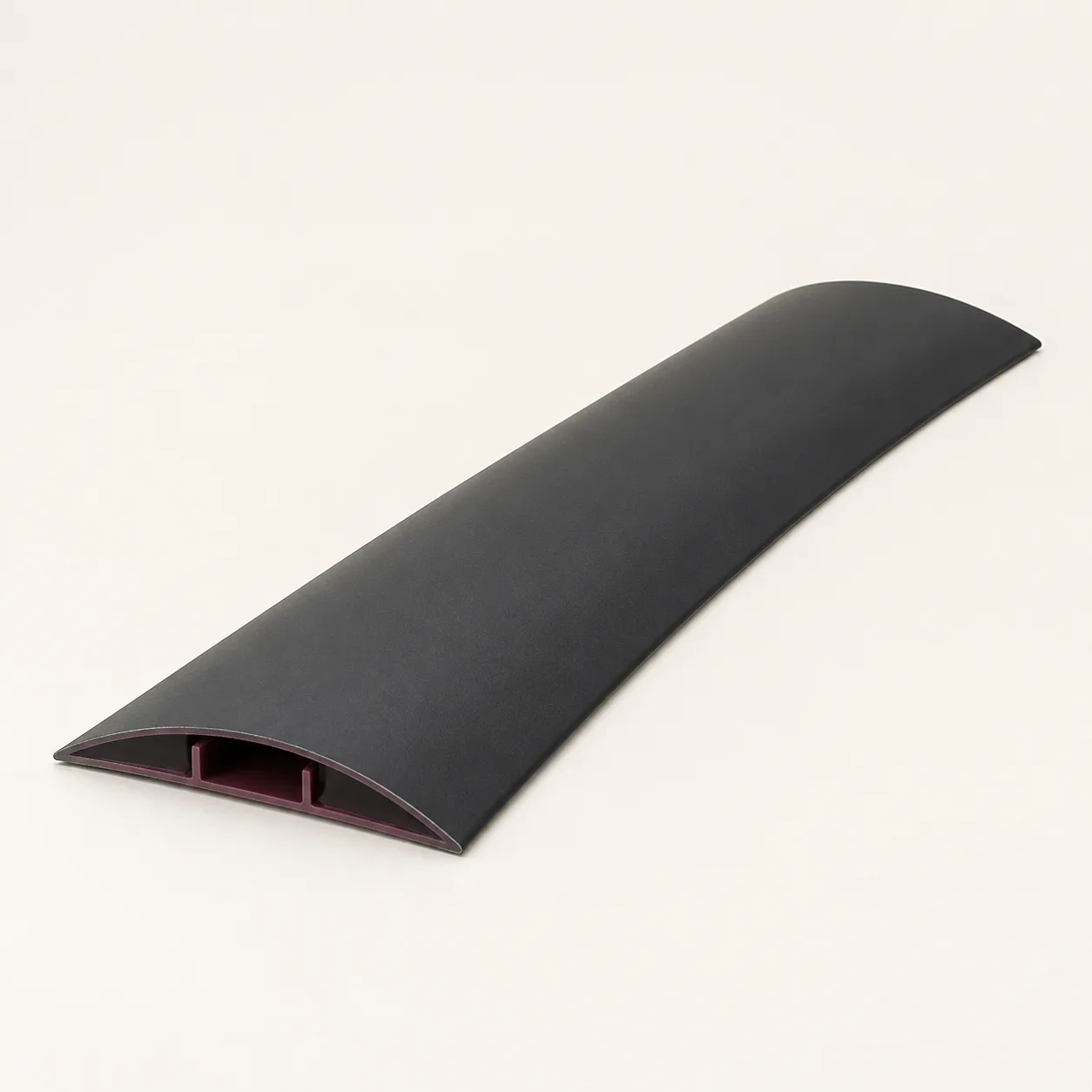
Low-Profile Care-Station Floor Cable Cover with Center Channel
A low-profile center-channel floor-cover concept for one documented stationary care-station cable route, with fit, floor, heat and circulation checks.
19,99 $
200 in stock
A floor cover can contain one verified cable route visually
This care station floor cable cover concept places a low rounded profile over a central cable channel. It is planned only for a documented stationary cord route near an adult-care preparation area after the cable, floor and circulation pattern have been assessed.

A cover changes the floor surface and can itself become an obstacle; it does not make a route trip-free, crush-proof or electrically safe.
First ask whether the cord can leave the floor entirely
Relocating equipment, adding an approved fixed outlet or routing through qualified wall or furniture management may avoid a floor crossing. Review those options with the appropriate electrical or facilities professional before introducing another raised surface.
Use a floor cover only where the planned route and equipment instructions permit it.
The rendering establishes no polymer or protective rating
The image shows a charcoal arch and plum channel profile for catalog visualization. It does not confirm rubber, PVC, recycled content, electrical insulation, flame behavior, load capacity, slip resistance, wheel compatibility or indoor environmental suitability.
Approve the production specification and sample rather than inferring properties from color or shape.
Measure the cable before selecting a channel
Record the largest connector, jacket diameter, required bend radius, number of conductors and distance between strain-relief points. The cord must fit without flattening, tight bends, stacked layers or pressure at either end.
Do not cut a product or cable until the supplier confirms the intended cutting method and finished-end requirements.
Keep the route outside transfer and walking lines
Map chair movement, bed access, door swing, cleaning paths and any route used by feet, wheels or mobility equipment. A low profile is still a change in level and needs location-specific review.
Do not place the cover where a person must step over it during a routine movement or emergency exit.
Inspect the cable before enclosing any section
Disconnect through the equipment manufacturer’s procedure, then examine the plug, connector, strain relief and full jacket for heat marks, cuts, crushing, swelling, exposed conductors or unusual odor. Check that the cable type is approved for the proposed routing.
Never hide a damaged, warm, coiled, overloaded or unsuitable cord under the cover.
Trial the empty cover on the exact clean floor
Lay the uncut sample in the proposed position without a cable and inspect both long edges and ends from floor level. Check rocking, curl, gaps, surface marking, color transfer and movement under the light test method approved for that floor.
Results from tile do not establish behavior on timber, carpet, laminate or resilient surfaces.
Seat the cable without compression or forced bends
Open the confirmed channel using the supplier method, place one compatible cable along its natural path and close the profile evenly. Keep connectors and strain-relief sections outside the channel unless their instructions explicitly allow enclosure.
If the cover bulges, twists or refuses to lie evenly, stop rather than forcing a larger fill.
Check both ends and ramps after installation
Inspect the entry and exit points for exposed edges, pinch pressure and abrupt direction changes. Confirm the tapered sides sit consistently and that the cover cannot slide into a doorway, heater, wet area or furniture foot.
The assessment must include ordinary room lighting because low contrast can affect visibility.
Monitor heat and equipment behavior at first use
Follow the cable and equipment maker’s ventilation and temperature guidance. During a controlled initial period, check the cover, cable entry points, plug and equipment for warmth, odor, discoloration, noise or interrupted operation.
Disconnect and investigate any change; the cover must not be treated as a remedy for an electrical fault.
Control every route change with a fresh review
Document which cable, equipment position, channel fill and floor location were approved. If furniture moves, a new cable is introduced or the station changes sides, remove the cover and repeat measurement, floor and circulation checks.
Do not tuck additional cords into spare-looking space without a new compatibility decision.
Clean the surrounding floor and cover separately
Disconnect the routed equipment, remove the cable and lift the cover using the confirmed handling method. Clean the floor and product with their separately approved agents, cloths and contact times.
Do not flood the channel, trap cleaner against the cable jacket or reinstall over a damp floor.
Dry the underside, channel and cable before placement
Support the empty cover so air reaches the channel, side cavities, ends and underside. Inspect the cable jacket independently and wait until every surface passes the documented dryness check.
Moisture hidden below a dark profile may not be visible from standing height.
Make edge lift and deformation part of every check
Before each use period, look along both edges for curl, cracking, hardening, tackiness, compression, channel opening or floor residue. Confirm the cable remains unpinched and the cover has not migrated.
Withdraw the cover after edge lift, sliding, surface damage, cable marking, persistent odor, heat, color transfer or any unexplained change in equipment operation.
Sourcing requires exact cross-section and packed-length data
A Taizhou Xipeng Traffic Facilities Co., Ltd. one-channel indoor drop-over cord-cover listing shows USD 2.20-3.20 per piece with MOQ 2. That reference does not confirm this planned charcoal-and-plum profile, dimensions, materials, cable fill, floor compatibility, friction, load, heat or flame behavior.
The procurement reference supports inquiry only. The EUR 19.99 plan allows for China-origin length-sensitive freight, profile and edge inspection, cable-fit and bend checks, exact-floor trials, heat monitoring, cleaning tests, protective packing and discreet fulfillment; supplied and packed length, mass, freight, duty, tax, insurance, payment fees and destination terms remain pending.
Frequently asked questions
Does the cover eliminate tripping risk?
No. It changes the floor profile and needs route, visibility and user-specific assessment.
Can several cords share the channel?
Only a supplier-approved fill and cable combination may be considered; the planned default is one verified cable.
Can a damaged extension cord be hidden inside?
No. Damaged, warm, coiled, overloaded or unsuitable cords must not be enclosed.
Is it safe for wheelchair or walker traffic?
No such compatibility is confirmed. Keep it outside mobility routes unless an appropriate professional and sample test establish otherwise.
May it be installed on carpet?
Floor compatibility remains pending and must be checked on the exact surface.
When should the cover be withdrawn?
Withdraw it after edge lift, cracks, hardening, sliding, deformation, cable marking, floor damage, persistent odor, heat or changed equipment behavior.
Reviews
There are no reviews yet.