


Compact Combination-Lock Care-Supply Box
August 14, 2026
Tapered Inflatable Anal Plug with Bulb Pump and Release Valve
August 14, 2026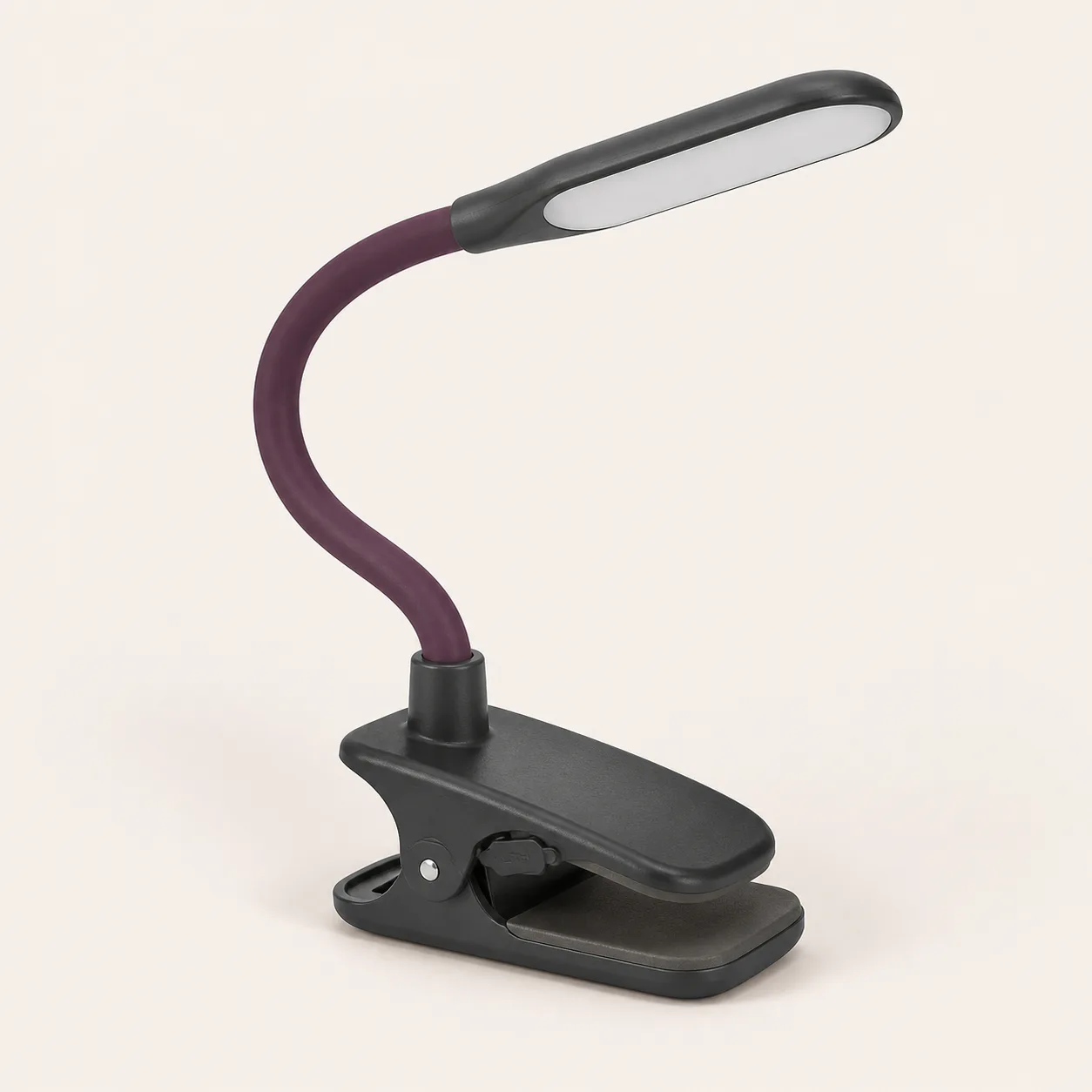
Rechargeable Clip-On Care Inspection Light with Flexible Neck
A rechargeable clip-on visible task light with a flexible neck for clearer inspection of dry product-care surfaces.
18,99 $
200 in stock
Directed task light can reveal a care surface more clearly
The clip-on care inspection light concept positions a small diffused lamp above a dry product-care workstation. A flexible neck lets the user aim light across seams, controls and surface texture, while a broad padded clip keeps the base away from the item under inspection.

Better visibility supports observation; it does not prove that a surface is clean or undamaged.
This is an illumination aid, not a sanitizing device
The planned lamp uses ordinary visible task lighting and makes no ultraviolet, germicidal, disinfection or material-curing claim. Never infer cleanliness from brightness, fluorescence, shadow or a color change seen under the lamp.
Cleaning decisions must still follow the product maker’s instructions and an appropriate validated care process.
Inspect the complete light before bringing it to the workspace
Check the diffuser, head, neck covering, clip hinge, spring, jaw pads, housing and port cover. Do not use a unit with a crack, loose lens, exposed wire, swollen body, chemical odor, corrosion, sticky surface, excessive heat or a neck that will not hold position.
Operate the switch once in a dry area and quarantine any erratic or flickering unit.
Clamp only to a stable compatible support
Choose a rigid shelf edge or dedicated stand that can tolerate the verified clip force and pad material. Test an inconspicuous area for marking, then open the jaws by the designed grips rather than pulling the lamp head.
Do not attach the clip to the toy, its cable, a soft pouch, glass edge, unstable tray or valuable finished furniture.
Keep the base and charging port outside the wet zone
Position the support beyond the secondary tray and any possible splash path. The neck should extend light toward the task without placing the clip beneath an open bottle or above liquid that could run down the covering.
No water or dust resistance is claimed until the selected construction has verified ratings.
Aim the switched-off head before starting care
Set the tray, product and approved tools first, then bend the neck with broad curves while the lamp is off. Avoid repeated sharp kinks at the head or clip joint because internal conductors can fatigue even when the outer covering looks intact.
The neck must hold its angle without drifting into the product’s working space.
Use the lowest adequate setting after qualification
If the final model offers brightness choices, begin with the least intense setting that makes the target area visible. Excess glare can hide fine scratches, flatten surface texture and create eye discomfort at close range.
Output levels, beam shape, color temperature, color rendering and flicker remain pending and require measurement.
Move reflections away from the viewer’s eyes
A glossy product or clear tray can reflect the lamp directly. Adjust the head to cast light across the surface at a shallow angle and change the viewing position rather than increasing brightness.
Do not stare into the diffuser, point it toward another person or use it around anyone sensitive to flicker without appropriate guidance.
Never clamp the light to a person or intimate product
Spring jaws can pinch skin, compress soft materials and damage coatings. The flexible neck and lamp head are not handles, restraints, body-worn equipment or product attachments.
Keep hair, loose clothing and fingers clear of the hinge whenever the clip is opened or moved.
Pause care before repositioning the lamp
Close cleaner, set tools down safely and switch the lamp off before changing the clip location or neck angle. Moving it during a wet step can knock the tray, drag a cable or bring the base into contact with residue.
After repositioning, confirm stability and clearance again before work resumes.
Charge only in a separate dry supervised area
Follow the final supplier instructions for connector, input, cable, charger and indicator behavior. Place the light on a nonflammable surface away from bedding, direct sun, chemicals and the product-care station.
Do not charge through a wet, dirty, damaged or loose port, and do not operate the lamp while charging unless the verified manual explicitly allows it.
Battery changes require immediate isolation
Stop using and charging the light if its housing swells, splits, hisses, leaks, smells unusual or becomes hotter than its confirmed limit. Move people away and follow local battery emergency guidance without touching leaked material.
The cell chemistry, protection circuit, capacity, transport documentation and approved disposal route remain pending.
Clean the exterior without flooding seams
Switch off, disconnect charging and let the unit cool. Use only the confirmed method for the housing, diffuser, jaw pads and neck covering, keeping moisture away from openings, hinge cavities and the port.
Never spray cleaner directly onto the lamp or soak any part of it.
Store with the neck relaxed and the clip unloaded
After the exterior is dry, form a wide gentle curve and place the light in a ventilated private cabinet where nothing presses the switch, lamp head or jaws. Keep it away from heat, freezing conditions, metal debris and volatile cleaner storage.
Follow the final battery guide for storage charge and periodic inspection.
The sourcing reference is for sample evaluation
An Alibaba Type-C rechargeable clip-light listing from Shenzhen Frio Technology shows USD 0.79-1.53 per piece with MOQ 2 pieces. Connector, output, optics, battery, runtime, clip force, certifications and included accessories require written confirmation.
The procurement reference supports sample inquiry only. The EUR 18.99 plan allows for China-origin freight, electrical and battery review, output and clip inspection, protective packing and discreet fulfillment; packed mass, freight, duty, tax, insurance, payment fees and destination terms remain pending.
Frequently asked questions
Does this light sanitize products?
No. It is a visible task-light concept with no ultraviolet or germicidal claim.
Can the clip attach directly to a toy?
No. Clamp it only to a stable compatible support outside the care zone.
Is the lamp waterproof?
No water-resistance claim is made until the selected model has verified documentation and testing.
Can it stay on while charging?
Only if the final manual explicitly permits operation during charging; otherwise keep it switched off.
Why should the neck use broad curves?
Sharp repeated bends can fatigue internal conductors and make the head drift or fail.
When should the light be removed from service?
Stop after a crack, loose lens, exposed wire, swelling, corrosion, abnormal heat, odor, flicker, port damage or unstable clip.
Reviews
There are no reviews yet.