


Rechargeable Clip-On Care Inspection Light with Flexible Neck
August 14, 2026
Three-Arch Phase-Indexed Automatic Stroker
August 14, 2026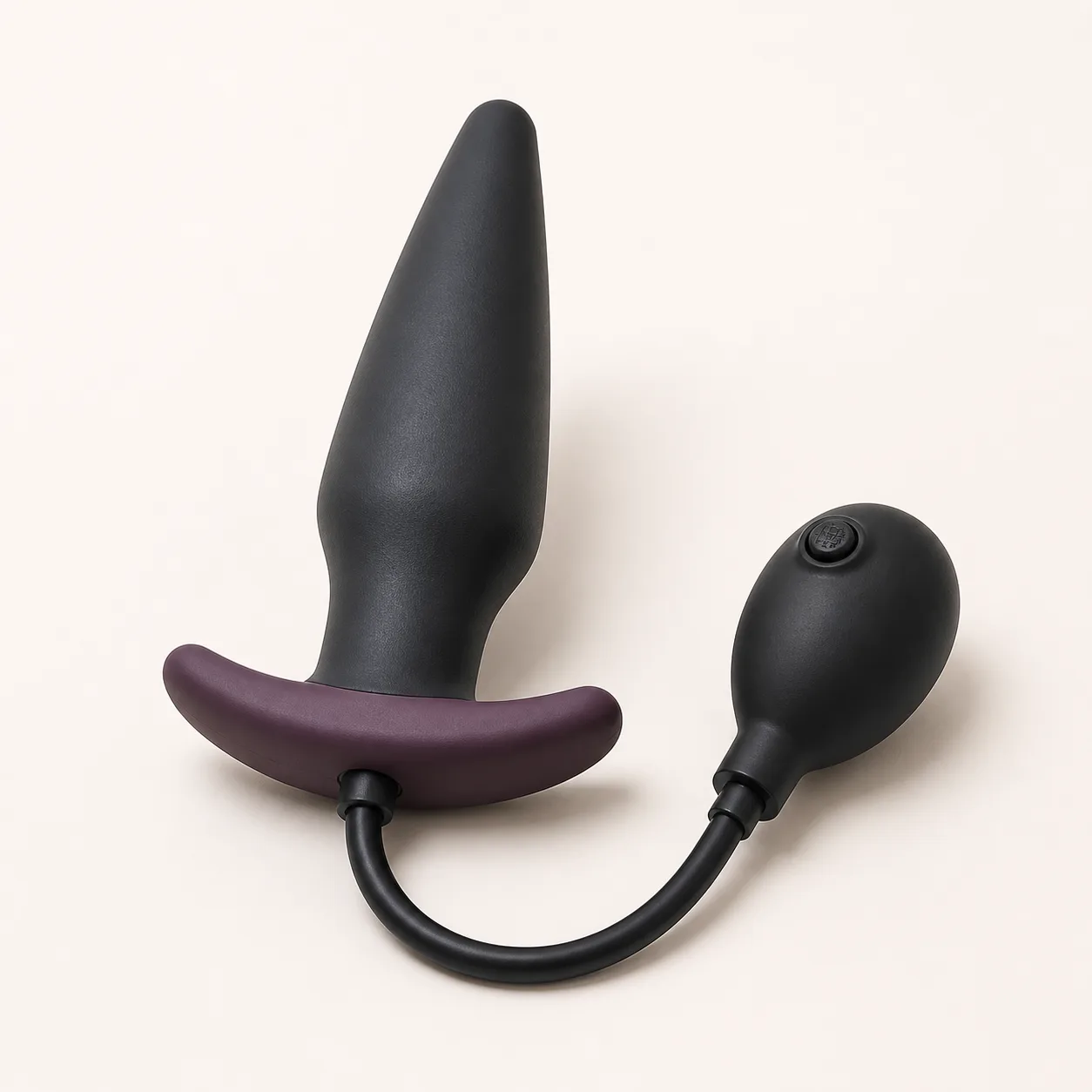
Tapered Inflatable Anal Plug with Bulb Pump and Release Valve
A tapered inflatable anal plug concept with wide external base, flexible hose, squeeze-bulb pump and release valve for documented expansion and pressure checks.
24,99 $
200 in stock
Inflation adds a changing diameter to anal plug fit
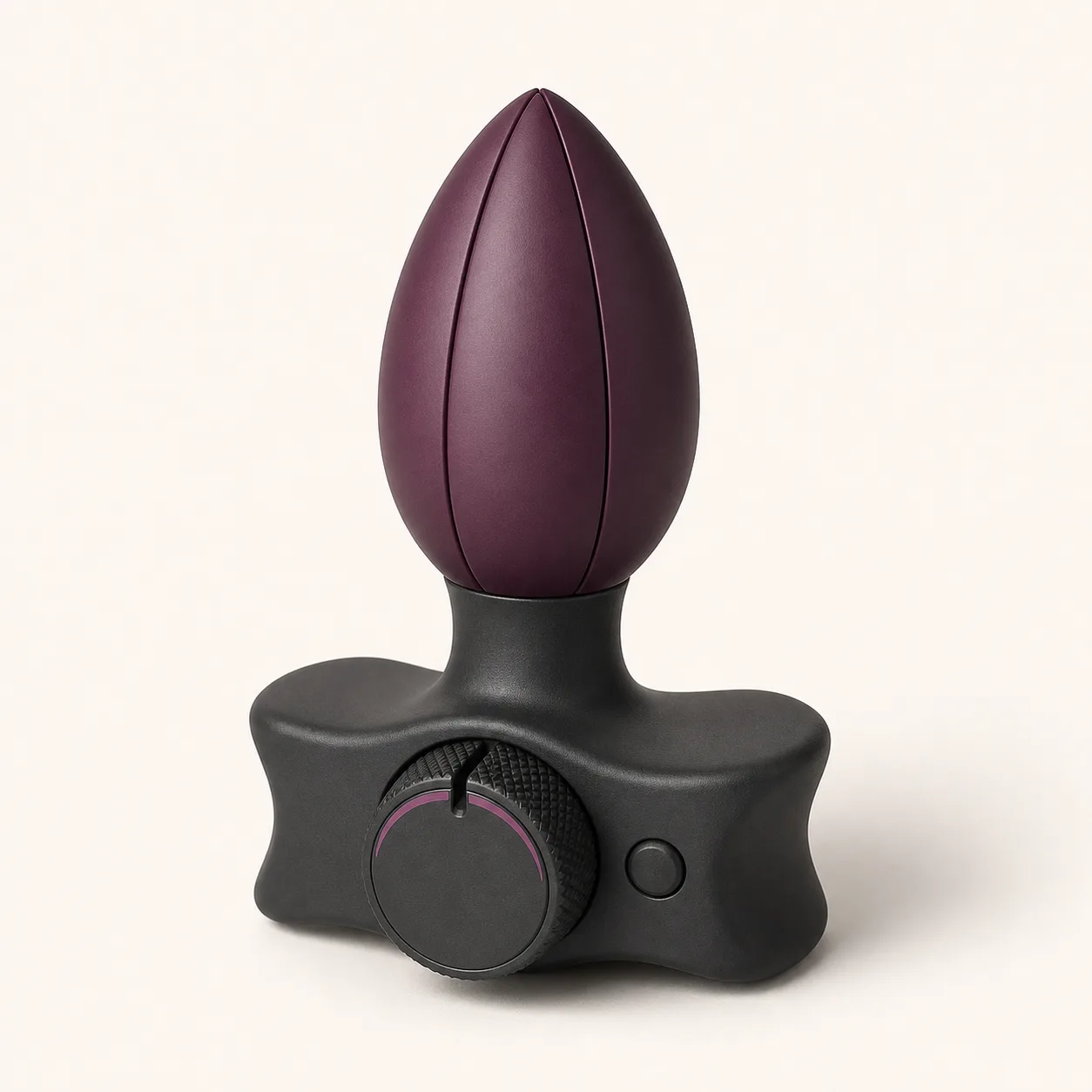
This inflatable anal plug with pump concept starts as a tapered charcoal body connected through a short hose to a squeeze bulb and release control. Its wide plum base is intended to stay fully external while measured air input changes the supported body profile.

The image does not prove that the body expands uniformly, that the button releases pressure quickly, or that any pictured color or component matches a production set.
Record the completely deflated geometry first
Measure total length, insertable length, tip diameter, widest body diameter, neck diameter, base span, base thickness, hose length and complete mass with all air released. Confirm that the body stays soft rather than holding a residual shape from a closed valve.
The deflated profile is the only appropriate starting reference; a marketplace maximum-size claim cannot define initial fit.
Map expansion by measured volume and pressure
Connect a calibrated low-pressure gauge and known-volume source during sample testing. At small staged inputs, photograph the front, side and cross-section silhouette while logging maximum width, asymmetry, pressure and time.
Stop well below failure and below the supplier’s written ceiling; do not estimate size by counting casual bulb squeezes.
The external base must remain wider than every tested body profile
Compare base span and rigidity with the largest approved inflated width, then flex the base on a padded fixture. The base should resist folding through the neck while keeping the hose path outside and accessible.
A decorative flare, narrow disk or base that curls under light load is not accepted as a reliable stop.
Inspect the bladder wall and every bonded seam
Under bright diffuse light, check the tip, expanding body, neck, base junction and hose port for thin translucent areas, bubbles, cuts, tack, ridges, wrinkles or adhesive squeeze-out. Repeat after each approved inflation cycle and after full deflation.
Permanent bulges, whitening, wall thinning, delamination or a seam that shifts retire the sample from further testing.
Test the hose connection against pull, twist and kinks
Measure connector insertion depth and inspect any clamp or molded strain relief. Apply only the specified low pull and twist loads while watching for air loss, port movement and new cracks.
Route the hose without a sharp bend, trapped loop or position where body movement can pull directly on the plug.
Calibrate the squeeze bulb and one-way valve
Measure approximate air displacement per complete bulb stroke and check whether partial strokes are repeatable. After each input, observe whether the bulb reinflates normally and whether the check valve prevents reverse flow.
A bulb that sticks flat, pumps unpredictably or allows pressure to rise without a clear count needs replacement or rejection before use.
Time the release valve under conservative test pressure
At several approved low pressures, activate the release control and log time to complete deflation. Repeat with the hose straight, gently curved and in the intended hand position, but never deliberately kinked.
The user must be able to keep the release control in hand and should not depend on disconnecting a pressurized hose.
Perform a dry leak test before every use cycle
Inflate the sample on a bench only to the planned low test point, close the input and log pressure and diameter over a fixed interval. Inspect the bulb, valve, hose, connector, seams and body for audible or measured loss.
Unexpected pressure decline, continued expansion after pumping stops or a valve that cannot hold and release predictably ends the test.
Choose lubricant only after material confirmation
Apply a lubricant documented as compatible with the bladder and base materials, covering the tapered body without flooding the hose port. Patch-test the exact formulation on a retained sample for swelling, tack, softening or discoloration.
Do not use unverified oil, solvent, numbing agent or improvised household liquid.
Insert only while fully deflated
Confirm zero residual pressure, keep the broad base and entire hose connection outside, and begin slowly with the smallest tip at a relaxed angle. Never use inflation to force advancement or compensate for an uncomfortable deflated diameter.
Stop after pain, tearing sensation, bleeding, numbness, unusual pressure or any tendency of the base to fold inward.
Add air in small documented steps with long pauses
Use partial measured bulb strokes rather than continuous pumping, then pause for sensation, circulation and valve checks. The user controls the bulb and release valve directly and keeps the planned maximum below the verified sample limit.
Do not chase a visual size target, use under intoxication, sleep with the plug inserted or allow another person to inflate without immediate communication.
Release all pressure before movement or removal
Hold the base, activate the valve until the body reaches its verified fully deflated dimensions and confirm softness by gentle external touch. Wait for muscle relaxation before slow removal along the insertion path.
Never pull by the hose, pump, connector or one side of the base, and never attempt removal while the bladder retains pressure.
Clean the non-detachable air path conservatively
Wash the body and base with the confirmed cleaner, water temperature and contact time while protecting any air opening according to the manufacturer’s procedure. Wipe the hose, bulb and valve separately and keep liquid from being drawn into the pneumatic path.
Dry the body, base junction, hose port, tubing and valve completely before storing fully deflated without folds or load.
Sourcing requires pressure data and valve samples
An Alibaba China results page lists Shenzhen Blue Rabbit Technology Co., Ltd. for an inflatable anal plug with pump and pressure-release valve at USD 1.00-1.60 with MOQ 100 sets. Legal supplier identity, exact model, current quote, materials, pressure data and all marketplace claims remain pending.
The procurement reference supports inquiry only. The EUR 24.99 plan allows for China-origin freight, deflated and staged-inflation measurement, wall and base inspection, hose testing, pump calibration, check-valve and release timing, leak logging, pressure-limit review, lubricant and cleaning trials, protective packing and discreet fulfillment; packed size, weight, freight, duty, tax, insurance, payment fees and destination terms remain pending.
Frequently asked questions
How many bulb squeezes are safe?
No universal number exists. Bulb displacement, pressure and expansion must be calibrated for the exact sample, with a conservative verified ceiling.
Can it be inserted partially inflated?
No. This concept requires complete deflation before insertion, movement and removal.
What if the valve releases slowly?
Stop using the sample. Release time and full deflation need verification before body contact.
Is a large body enough to prevent full insertion?
No. Only the verified wide external base serves as the stop, and it must remain outside at all times.
Can the pump hose be detached while pressurized?
Not unless a model-specific procedure explicitly permits it; use the controlled release valve and verify zero pressure first.
When should the plug be withdrawn from service?
After leaks, permanent bulges, wall thinning, tack, cracks, seam movement, base folding, hose damage, check-valve drift, slow release or any loss of pressure control.
Reviews
There are no reviews yet.