


Alternating Twin-Belt Automatic Stroker with Split-Service Sleeve Cassette
August 14, 2026
Tri-Fold Tabletop Care-Workspace Privacy Screen
August 14, 2026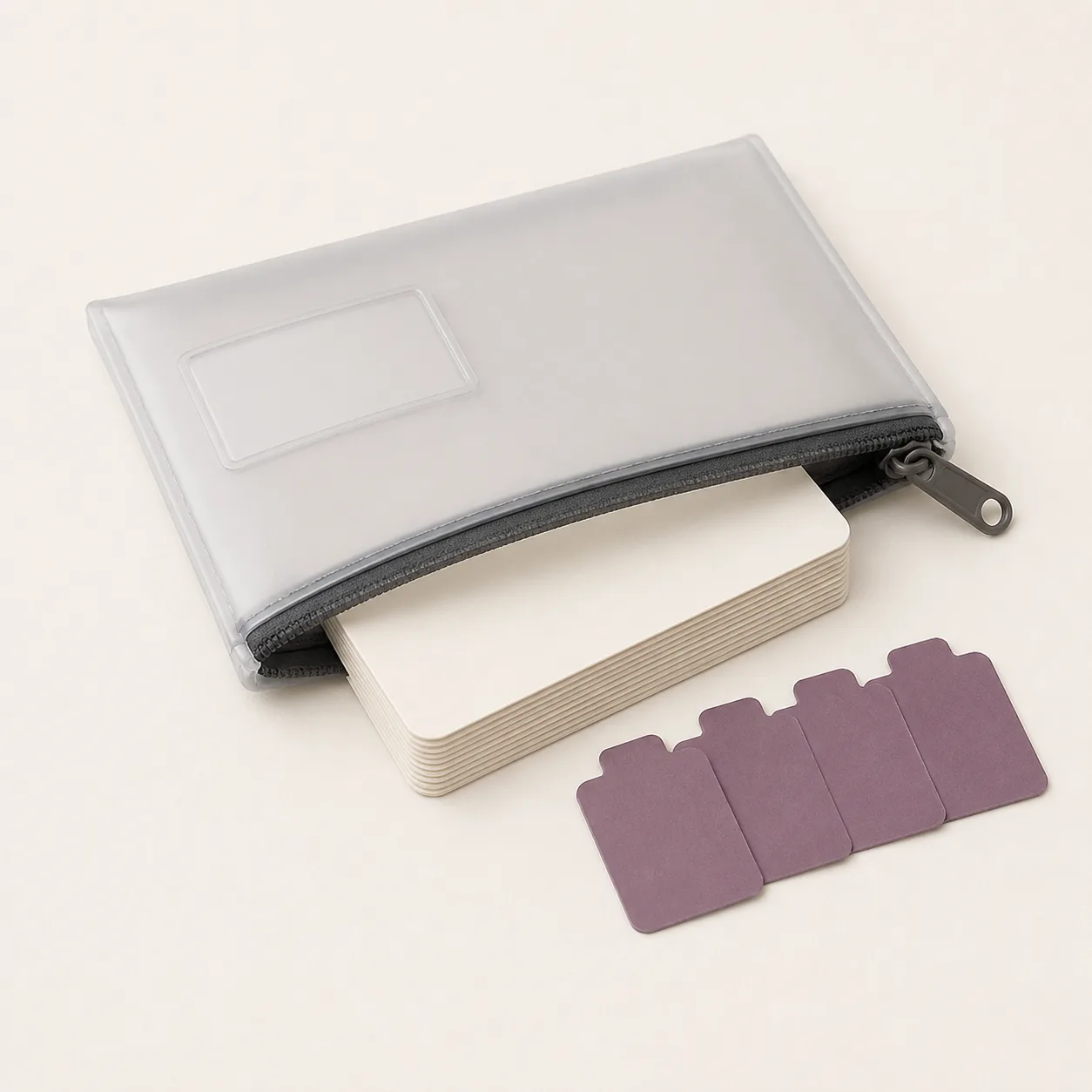
Frosted A6 Care-Log Pouch with Index Card Set
A compact frosted A6 record pouch concept with blank index cards, divider tabs, clear code window and cautious splash-aware guidance.
7,99 $
200 in stock
A small paper system can make product care less dependent on memory
The A6 care log pouch concept keeps compact instruction extracts, inspection cards and neutral reference tabs together in a frosted zipper envelope. Its clear front window identifies a private container code without exposing a list of intimate contents.

It organizes paper; it does not verify that a cleaning task was completed correctly.
Copy only information that remains useful away from the full manual
Record the maker’s approved cleaner, water limits, drying interval, charging rule and storage temperature in concise language. Keep the complete manual accessible elsewhere so the card never becomes the sole authority.
Update the card whenever the manufacturer revises its guidance.
Use neutral identifiers instead of explicit product names
A short code can connect the pouch to a private inventory without revealing what is stored nearby. Avoid names, addresses, passwords, purchase-account details or descriptions that would embarrass the owner if the card were seen.
The label window should show only the minimum code needed.
Separate permanent facts from session notes
Place stable specifications on one card and dated cleaning, charging or inspection observations on another. Divider tabs can distinguish instructions, maintenance history, supplier questions and open issues.
Do not overwrite an unresolved warning with a new entry.
Write unknown details as pending
If material, certification, compatible cleaner or water resistance has not been verified, say so directly. A blank field is easy to misread as approval, while a pending note preserves the need for evidence.
Record the source and date when a specification is confirmed.
Paper must be dry before it enters the pouch
Keep cards away from sinks, wet toys and open cleaner containers. Allow fresh ink to dry, then slide the stack in without bending the zipper tape or scraping the window.
The pouch is not a drying chamber for damp paperwork.
Frosted plastic supports discretion, not secrecy
The translucent body can soften the view of card text at a glance, but close inspection may still reveal shapes or writing. Store the pouch inside a controlled cabinet or locked container when records are private.
Do not treat visual frosting as access control.
Splash wording needs measured evidence
The source category uses waterproof language, yet zipper ends and seams can admit liquid. Until the final pouch is tested, keep it outside wet zones and never place it under running water.
Important records should also exist in a secure backup form.
The zipper should move without pulling the seams
Lay the pouch flat, align the card stack below the track and guide the slider with light pressure. Stop if paper catches, the tape waves or the slider requires force.
Overfilling can open gaps at the ends and shorten seam life.
Capacity is limited by closure shape, not just paper size
A6 cards may fit in outline while a thick stack prevents the zipper from lying flat. Set a verified maximum card count after measuring the usable interior and closing samples repeatedly.
Do not store rigid tools, batteries, cables or liquid sachets with the paper.
Clean the exterior without soaking the records
Remove the cards to a dry secure place, close the empty pouch and wipe it using a supplier-approved method. Pay attention to the slider pull, window edge and zipper ends, then dry the pouch open before refilling.
Solvent, alcohol and heat compatibility remain pending.
Review the log on a scheduled cycle
Set a monthly or quarterly check based on product use. Retire obsolete cards, preserve unresolved questions and confirm that every current instruction still matches the maker’s published care guidance.
A concise current record is safer than a thick archive of conflicting notes.
Store the pouch apart from chemicals and heat
Choose a cool dry shelf away from direct sun, ozone sources, fragrance concentrates and cleaner bottles. Flexible plastics can absorb odor, stiffen or discolor when stored beside incompatible materials.
Keep the pouch flat so the window and zipper are not creased.
Incoming inspection should include paper and privacy checks
Measure usable dimensions, seam width, window size, zipper travel and card capacity. Test abrasion, controlled splashes, print visibility through the frosted panel, odor and repeated opening cycles.
Quarantine sharp edges, tacky surfaces, cloudy residue, color transfer, broken sliders, open seams or windows that expose more text than planned.
The source product is a general stationery pouch
An Alibaba listing from Shantou Chaonan District Lugang Shangyi Stationery Factory displays an A6 PVC mesh zipper pouch at USD 0.13-0.20 with MOQ 200 pieces. Polymer, plasticizers, seams, splash behavior and all card components remain pending.
The procurement reference supports sample inquiry only. The EUR 7.99 plan allows for China-origin freight, cards, divider tabs, zipper cycling, splash checks and packaging; packed mass, freight, duty, tax, insurance, payment fees and destination terms remain pending.
Frequently asked questions
Is the pouch waterproof?
No verified claim is made; keep it away from wet zones until seams and zipper ends are tested.
What should I write on the front label?
Use a neutral container code that does not reveal intimate contents or personal data.
Can I store cleaner sachets inside?
No. Keep liquids, chemicals and damp items separate from the paper record.
How many cards fit?
Usable capacity remains pending and must be set by closure and seam testing.
Can the pouch replace the product manual?
No. Cards are concise prompts; keep the complete current manual available elsewhere.
When should the pouch be discarded?
Stop using it after open seams, a failed zipper, tackiness, strong odor, color transfer, brittle edges or a damaged window.

Reviews
There are no reviews yet.