


Slim Flexible Silicone Impact Paddle
August 14, 2026
Octopus-Arm Wrap External Male Vibrator
August 14, 2026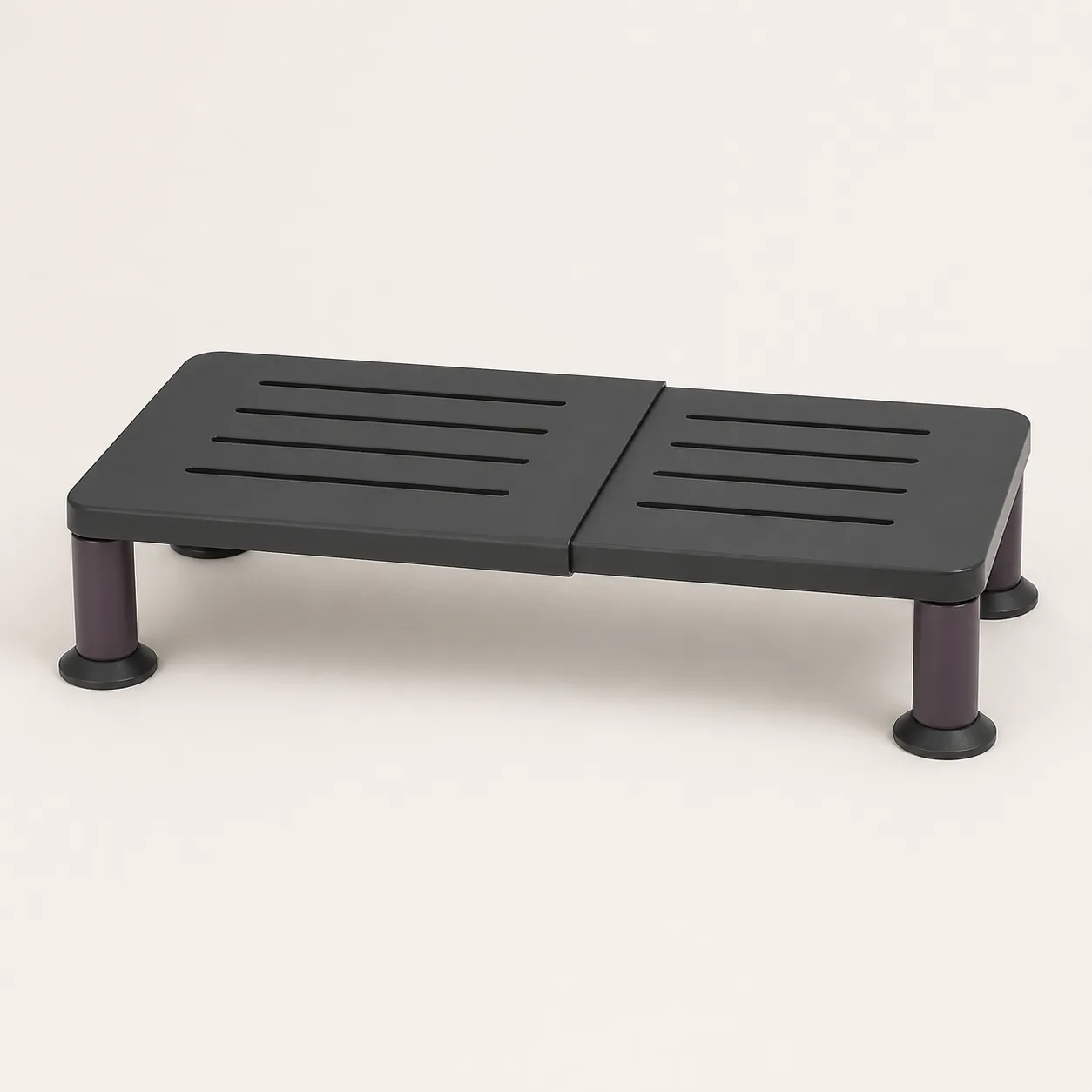
Expandable Care-Supply Cabinet Shelf Riser with Slotted Top
An expandable single-tier cabinet riser concept for organizing light closed dry adult-care supplies across measured upper and lower storage levels.
29,99 $
200 in stock
An expandable riser can divide one cabinet bay vertically
This expandable care supply shelf riser concept uses two overlapping slotted top panels and four short legs to form an upper platform above a lower access space. It is planned for closed dry adult-care supplies inside one measured cabinet.

It is not furniture, a seat, step, body support, drawer mechanism or substitute for the cabinet maker’s shelf-load limit.
Calculate usable clearance above and below
Measure cabinet width, depth, door hardware, hinges and the vertical space between fixed shelves. Subtract the riser height and planned package clearance to confirm both levels can be reached without tilting containers.
Include the operator’s hand height rather than using package dimensions alone.
The rendering establishes no metal or supported mass
The charcoal panels, plum legs and slots are visual elements only. They do not confirm steel, polymer, coating, non-slip feet, locking mechanism, deflection limit, corrosion resistance or load rating.
Approve the component schedule and production sample before defining shelf use.
Inspect sliding halves, legs and foot pads separately
Turn the empty riser over and check panel edges, overlap tracks, slots, leg joints, fasteners and each foot for cracks, burrs, distortion, coating loss or loose parts. Compare all four leg lengths on a verified flat reference surface.
Withdraw the sample if a foot sits unevenly or the overlap catches.
Set the width while the riser is empty
Place both hands at the approved adjustment points, keep fingers outside the overlap and extend slowly to the measured width. Follow the supplier method for any latch, screw or friction setting without improvising a stop.
The telescoping seam can create a pinch point and should never be adjusted under load.
Confirm four-foot contact before cabinet placement
On a clean level counter, check that every pad contacts the surface through the full planned width range. Observe rocking, twist and panel height at the center seam.
Do not correct an uneven frame with paper, loose pads or unrelated packing material.
Trial the empty riser inside the exact cabinet
Clear the bay and place the riser without scraping walls, shelf finish, hinges or door hardware. Open and close the cabinet slowly to confirm clearance, then inspect the base shelf for marks or movement.
All four feet must remain fully supported without overhang.
Use inert blocks for a staged load check
Apply the supplier-approved test method with clean inert blocks, beginning near the legs and adding small documented increments. Measure deflection, overlap movement, foot slide and cabinet-shelf response.
Stop before any supplier limit and remove the riser after sound, bowing, separation or changing foot contact.
Reserve the upper level for light closed supplies
Place only packages included in the approved load map, distributed over both top panels and away from the outer edges. Keep the center overlap visible and do not bridge a heavy object across a moving seam unless the test plan permits it.
Open liquids, charging devices and heat-producing equipment belong elsewhere.
Keep the lower bay reachable without striking the top
Arrange lower supplies so one closed item can be removed with a full-hand grip. Leave clearance below the slotted panel and around the legs rather than filling every gap.
If access requires lifting the riser or pushing against a leg, redesign the layout.
Do not stack risers or add suspended loads
Use one verified unit on the designated cabinet shelf. Do not place another riser on top, hang bags from the slots or attach hooks, baskets or cords to the legs.
Those changes alter the load path and stability beyond the planned configuration.
Unload both levels before changing width
Move every closed supply to a fixed preparation surface, confirm the riser is empty and remove it from the cabinet. Adjust only on the cleared level counter through the documented hand positions.
Never pull one panel sideways while the feet remain trapped between stored items.
Clean the panels, seam and feet methodically
Retract or separate components only as the supplier permits, then use the verified cleaner, cloth and contact time. Address slot edges, panel undersides, the overlap path, leg joints and foot pads without flooding the mechanism.
Do not immerse, machine-wash or heat the riser unless the production specification allows it.
Dry the overlap before resetting the cabinet bay
Position the empty riser so air reaches both panels, slots, slide surfaces, leg sockets and feet. Inspect for moisture, residue, corrosion, swelling, tackiness, cracking, color transfer or odor.
Repeat the empty four-foot and width-setting checks before reloading.
Sourcing needs extended-width load and volume data
A Yiwu Youge Daily Necessities Factory expandable cabinet shelf-organizer listing shows USD 2.40-3.10 per piece with MOQ 100. That reference does not confirm this planned slotted design, dimensions, materials, width setting, feet, overlap, load, deflection or cabinet compatibility.
The procurement reference supports inquiry only. The EUR 29.99 plan accounts for China-origin volumetric freight, panel and leg inspection, minimum and maximum width checks, cabinet-fit trials, staged-load and deflection tests, foot-surface and cleaning checks, protective packing and discreet fulfillment; packed size, mass, freight, duty, tax, insurance, payment fees and destination terms remain pending.
Frequently asked questions
How much weight can the riser hold?
No load is confirmed until the exact production sample and cabinet setup pass the documented test.
Can the width be changed while supplies are on it?
No. Unload both levels, remove the riser and adjust it on a cleared level counter.
May two risers be stacked?
No. The planned configuration uses one unit on one fully supporting cabinet shelf.
Do the slots provide guaranteed ventilation?
No. They are a visible design feature and do not establish airflow or moisture-control performance.
Can feet overhang the cabinet shelf?
No. All four feet require full support inside the measured bay.
When should the riser be withdrawn?
Withdraw it after cracks, burrs, rocking, loose legs, foot damage, overlap binding, deflection, corrosion, color transfer or persistent odor.
Reviews
There are no reviews yet.