


Four-Shutter Three-Aperture Palm Vibrator
August 14, 2026
Coral Three-Function Cup Stimulator with Rose-Gold Curved Tail
August 14, 2026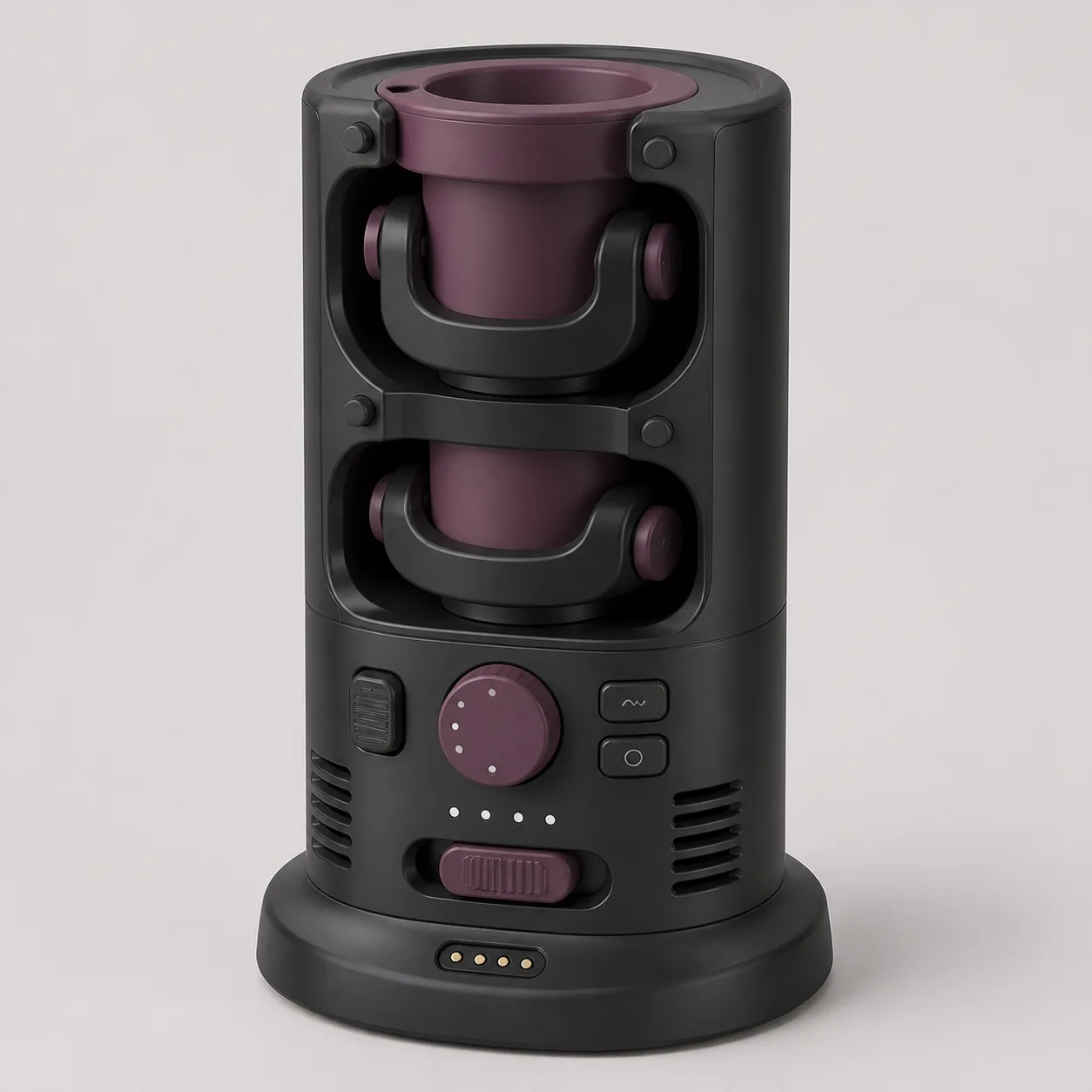
Twin-Cradle Differential-Rock Automatic Stroker with Captive Liner Carrier
An automatic stroker concept with a removable open-end liner carrier captured by two stacked rocker cradles and a local three-stop path dial.
88,99 $
200 in stock
Capture one liner carrier across two rocker cradles
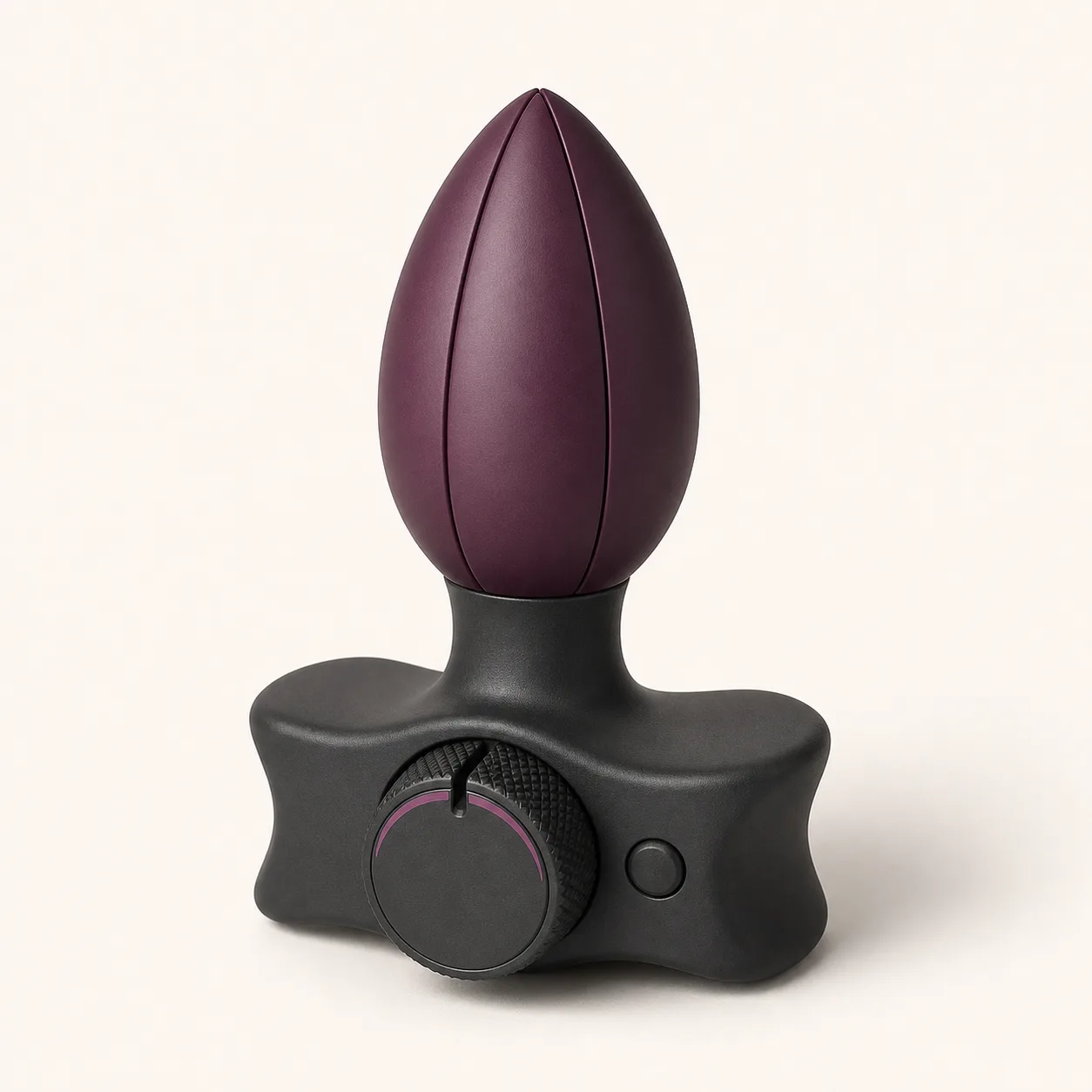
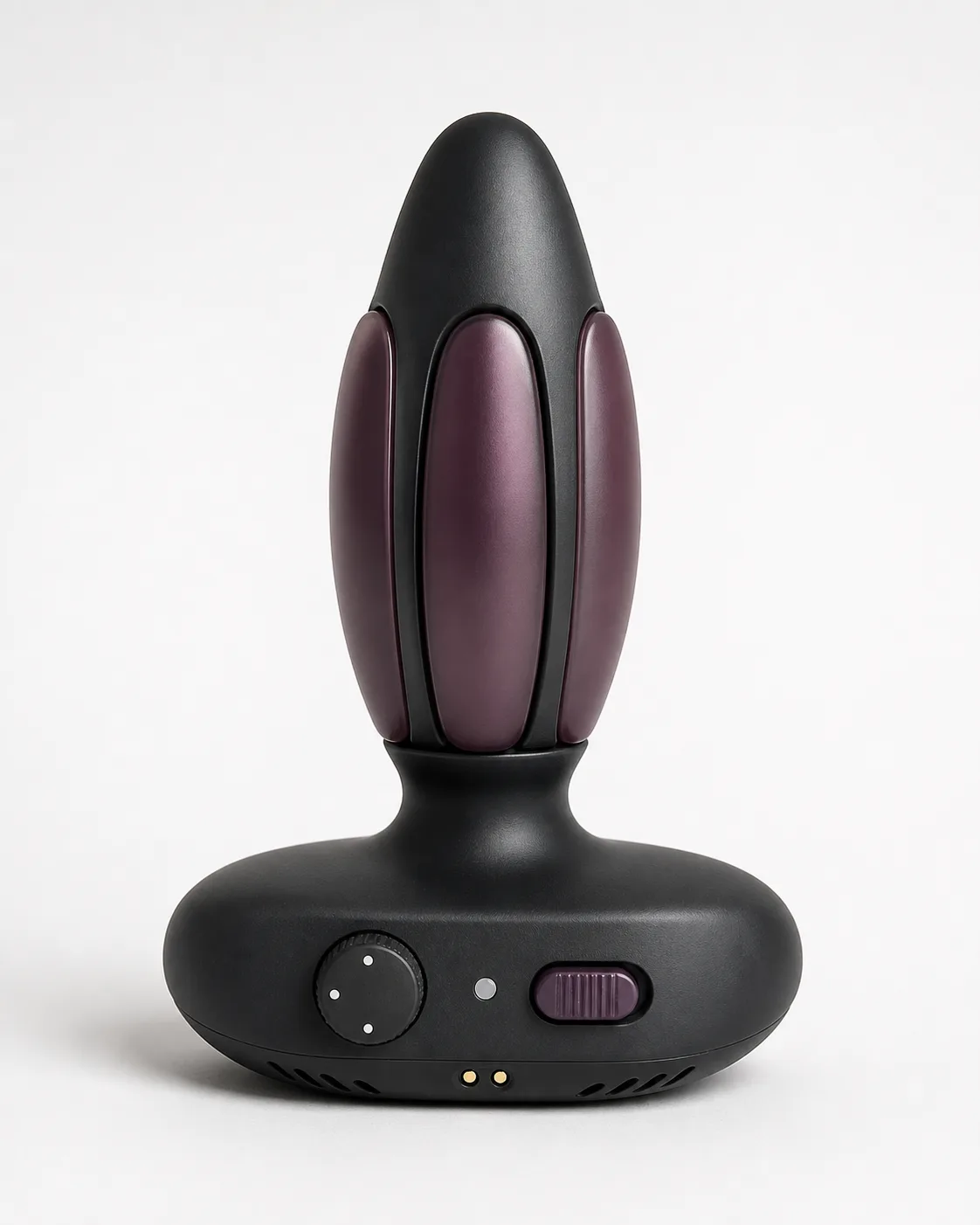
This twin-cradle differential-rock automatic stroker concept holds one neutral open-end plum liner carrier inside exactly two stacked charcoal U-shaped cradles. Guarded service windows expose pivot stations for inspection, while a three-stop dial is intended to alter the combined rocking envelope.

The image does not prove cradle axes, differential motion, path shape, liner retention, pressure, dimensions, materials, electrical safety, sealing or production availability.
Inventory carrier cradle and drive assemblies
Request an exploded bill of materials for liner, rim, carrier, upper and lower cradles, pivot pins, bushings, caps, guards, hard stops, drive links, cams or cranks, actuators, counterweights, sensors, frame, dial, detents, lock tab, controls, emergency slider, controller, cell, contacts, vents, conductors, seals, shell, pigments, lubricants and adhesives.
Trace every shared drive and support path before describing the cradles as independent channels.
Measure housing carrier and base geometry
Record shell height and diameter, base footprint, opening diameter, liner depth, carrier dimensions, window area, cradle station heights, pivot coordinates, dial and control positions, vent area, contact recess, mass and center of gravity.
Measure shell verticality, base flatness, carrier centering and opening runout before and after bounded motion cycles.
Verify removable liner and collar retention
Document liner insertion, rim seating, carrier engagement, rotational keying, detent or latch action, axial play, twist play, extraction force and false-seat cues. Inspect the full channel for folds, thin walls and hidden carrier edges.
Confirm that removal for cleaning does not expose sharp hardware, energized contacts, loose retainers or inaccessible residue pockets.
Characterize the upper rocker cradle
Measure upper cradle span, arm symmetry, pivot runout, bushing drag, side play, tilt, stop angles, unloaded neutral position and repeatability. Track carrier coordinates and cradle strain through the full confirmed arc.
Repeat under centered and asymmetric compliant loads, stopping before deformation or guard contact.
Characterize the lower rocker cradle
Repeat the complete geometry, friction, play, angle, neutral and strain map for the lower cradle. Record whether it supports, drives or merely guides the carrier.
Compare upper and lower resonance, backlash, stop timing and drift rather than assuming matched components behave identically.
Resolve axes path phase and carrier twist
Use optical tracking and synchronized sensors to map carrier translation, pitch, roll, yaw, velocity, acceleration, dwell, reversal and phase at every confirmed dial state. Establish the real relation between the two pivot axes.
Measure unintended axial rotation and liner torsion; reject paths that create progressive twist, carrier binding or collision with window guards.
Calibrate the three-stop amplitude dial and lock
Record dial angle, detent torque, lock-tab force, backlash, indication, response latency and actual path envelope at each stop approached from both directions. Check dry and damp operation.
A position is invalid if partial seating produces ambiguous motion, the lock can drift or a setting reduces collision margin below the accepted limit.
Verify emergency stop coast and neutral release
Measure emergency-slider force, travel, response time, coast distance, carrier parking and reset sequence at every path and load. Test the local controls separately from the emergency circuit.
After power loss, controller reset, jam detection or low voltage, the system must enter a documented state that permits safe fixture release without an unexpected restart.
Map liner displacement pressure shear and airflow
Use a compliant instrumented mandrel to record depth-resolved channel displacement, circumference, peak pressure, axial and circumferential shear, folding, migration and extraction resistance for each confirmed path. State mandrel geometry and preload.
Measure airflow and internal pressure with the opening clear and conservatively occluded; suction performance and safe limits remain unconfirmed.
Screen pivots windows gaps and interlocks
Use articulated probes and soft film around cradle arms, pivot caps, hard stops, service-window edges, carrier, liner rim, dial, lock and emergency slider throughout motion and release. Map minimum clearance under asymmetric load.
If service covers are removable, verify latch state, tool requirement and a validated interlock that prevents drive motion while hazardous parts are accessible.
Log airflow current sound and heat
Measure cooling airflow, motor and controller current, A-weighted sound and temperatures at liner, carrier, pivots, bushings, drives, frame, shell, controls, cell, contacts and vents for every confirmed path. Repeat under representative compliant load.
Investigate pivot chatter, rising drag, current imbalance, vent restriction, local hot spots or a sound signature that precedes stop contact.
Verify battery charging and power transitions
Confirm cell chemistry and capacity, specified input, charging polarity, alignment and retention, protection circuits, charge time, runtime, low-voltage threshold, charging interlock and transport requirements. Inspect conductors routed across or near moving cradles.
Challenge plug-in, disconnect, brownout and full power loss while tracking motion, braking, indication and restart inhibition.
Challenge faults then cycle clean and inspect materials
In protected fixtures, immobilize one cradle, increase one bushing’s drag, bias the carrier, block a stop, obstruct a vent and create a liner false seat. Stop before damage and quarantine samples with uncontrolled motion, delayed stop, cap migration, exposed parts, abnormal heat or cell change.
Cycle liner installation, both cradle motions, dial and lock, emergency stop, bounded load, charging, specified cleaning, measured drying and storage. Recheck play, path, pressure, twist, gaps, current, sound, heat and odor. Exact material, restricted-substance and certification evidence remains pending.
Build landed price after twin-cradle proof
An Alibaba automatic-stroker page currently shows a motorized suction-category example at USD 30.00-32.00 with MOQ one. It is a benchmark only and does not confirm this twin-cradle carrier, differential rocking path or an approved supplier.
The procurement reference supports an EUR 88.99 planning price after allowing for China-origin freight, exact-sample sourcing, liner and carrier metrology, two-cradle pivot mapping, path and phase capture, dial calibration, pressure, shear, airflow, gap and interlock review, emergency stop, charging, current, sound, heat, protected faults, cycle work, protective packing and discreet fulfillment. Exact quotation, MOQ, materials, battery, packed size, weight, freight, duty, tax, insurance, payment fees, certifications and delivery terms remain pending.
Frequently asked questions
Do the two cradles move on different axes?
The intended axes require optical path and pivot measurement; the render alone does not prove orthogonality or independent motion.
Is the liner removable?
The concept shows a removable carrier, but seating, retention, extraction and cleaning access require exact-sample confirmation.
Does the dial set a precise stroke?
No stroke value is confirmed; each detent must be correlated with the measured three-dimensional carrier envelope.
Can the service windows expose moving parts?
Window guards, covers, latch states, interlocks and minimum clearances must be verified throughout motion and release.
Is suction included?
No suction or pressure claim is made; airflow and internal pressure need instrumented testing with controlled occlusion.
Which faults require retirement?
Cracked cradles, growing pivot play, loose caps, carrier binding, liner damage, failed stop or interlock, exposed wiring, abnormal sound or heat, cell swelling or persistent residue.
Reviews
There are no reviews yet.