


Waist-Anchored Arm Positioning Harness
August 14, 2026
KRSJJ M696 White/Silver Heated-Base Thrusting Suction Stroker
August 14, 2026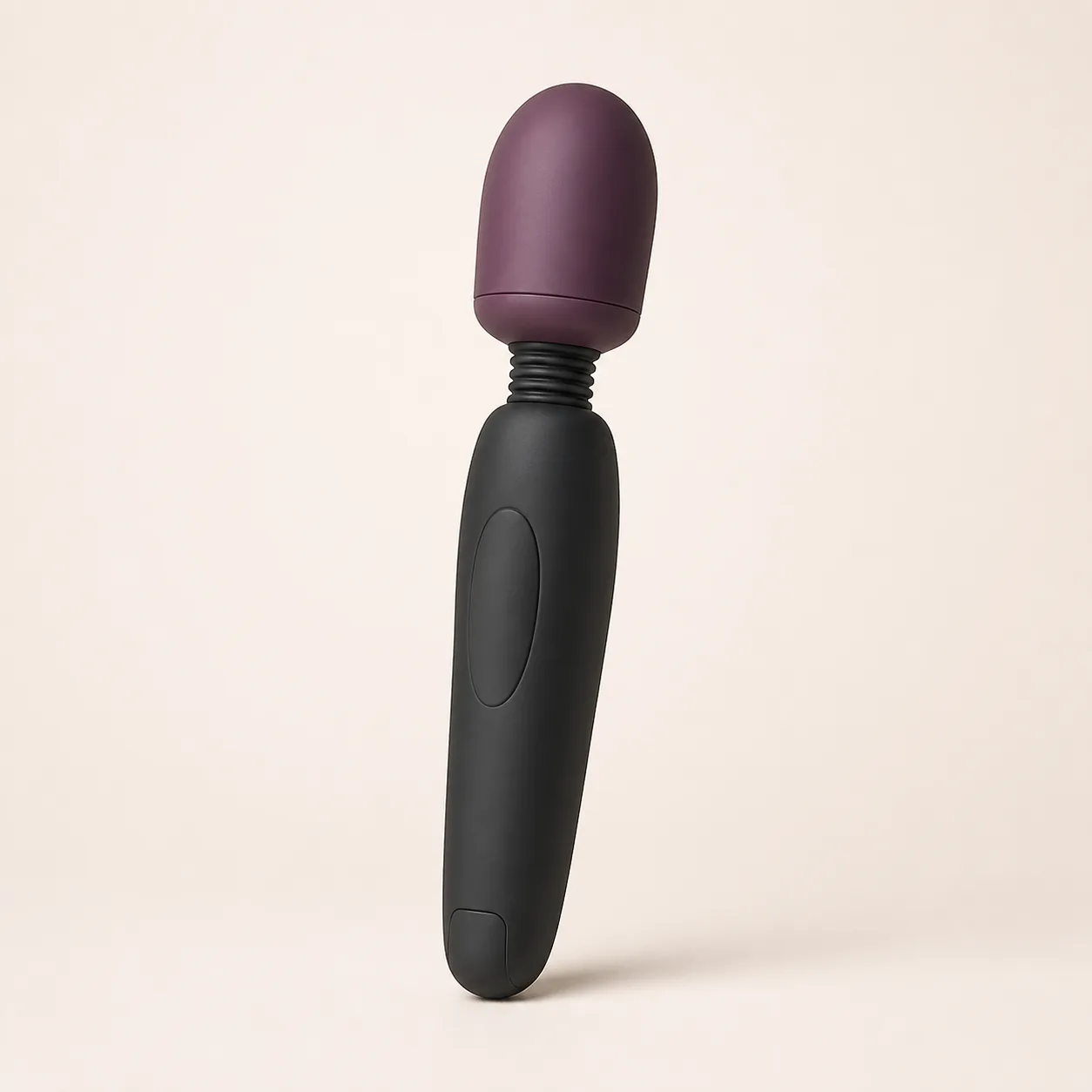
Palm-Control Rechargeable Wand with Removable Head Cap
A rechargeable external wand concept with an incremental palm-control surface, flexible neck and removable head cap for documented fit and response checks.
59,99 $
200 in stock
Palm control changes how intensity is selected
This palm control wand vibrator concept combines a rechargeable handle, broad external massage head, removable cap and an icon-free grip control area. Its planned point of difference is incremental adjustment under the hand rather than dependence on a row of small mode buttons.

The image does not prove sensor technology, output, material, waterproofing or internal safety construction.
The supplier feature statement needs an exact-sample map
The source listing describes one-touch incremental speed, a removable cap and palm technology. Those words do not reveal whether the control senses pressure, contact area, sliding position or another input.
Before sale, document every control state from power-off through maximum output, including wet-hand behavior, accidental contact and the action needed to reduce intensity immediately.
Measure the wand, head and reach before choosing it
Confirm total length, handle circumference, head length and width, neck range, component mass and balance point. Compare the grip and reach with the intended external-use position while keeping the wrist neutral.
Catalog proportions cannot establish fit, portability or whether the head is too broad for a preferred contact area.
Charge only through the verified electrical specification
Match the supplied lead and permitted power source to the confirmed input voltage and current. Place the clean dry wand on a non-combustible surface with the port visible and disconnect it after the documented charge cycle.
Do not charge under bedding, inside a closed bag, near water or while the product is operating.
Inspect the removable cap and flexible neck first
Check the cap edge, attachment feature, head shell, neck folds, handle seam, control inset and charging cover for cracks, lifting, distortion, residue or sharpness. Gently test cap retention using the approved pull direction.
Withdraw the wand from service if the cap rotates unexpectedly, the neck develops a split or any internal part becomes visible.
Seat the cap through a repeatable alignment check
Install the clean dry cap according to the confirmed orientation, then verify that its edge sits evenly around the head. Record the visual or tactile cue that proves full engagement.
Never improvise with adhesive, tape, lubricant or force to hold a loose cap. A removable cover must remain secure during the full planned motion range.
Map the palm control before body contact
Hold the wand over a padded test surface and activate the lowest state. Explore the control slowly with dry hands, noting the response to grip pressure, finger position, sliding and release.
Confirm how to lock, pause and power off without crossing a higher setting. Repeat the map after every firmware, model or production revision.
Begin externally at the lowest confirmed output
Apply the capped head to an external area with light pressure and let the motor movement do the work. Increase one step at a time only after checking comfort, grip stability and heat.
The wand head and handle are not intended for insertion. Do not use the flexible neck as a penetration stop.
Keep fingers clear of the moving neck and cap seam
Hold the designated grip zone, not the neck or cap edge. Avoid bending the head beyond its verified range, trapping skin at the seam or pressing the motor against a hard surface.
Reposition by lifting the head away first rather than dragging it under high pressure.
Use a neutral wrist and a clear power-off path
Support the forearm, keep the lead-free charging area away from the hand and choose a position that does not depend on gripping harder to maintain control. The off action must remain accessible throughout use.
If the palm surface causes unintended changes, stop and reassess the control map rather than compensating with a tighter grip.
Monitor temperature, sound and vibration consistency
During staged bench and body-contact trials, log head, neck and handle temperature at fixed intervals. Listen for new rattling, scraping or pitch changes and watch for falling output or control lag.
Power off after unusual heat, odor, swelling, noise, intermittent operation or an unexpected intensity jump.
Keep charging hardware away from cleaning water
Water resistance must be supported by model-specific evidence and a confirmed port-seal design. Until then, treat the handle as splash-sensitive and clean it with a controlled damp-cloth process only.
Never connect a charging lead to a wet port or assume that a removable cap makes the full wand immersible.
Clean the cap separately only when permitted
Power off and detach the cap through the approved method. Apply the confirmed cleaner and contact time to the cap surface, rim, head interface, neck, handle and control inset without flooding joints.
Do not boil, bleach, soak, machine-wash or use abrasive tools unless the exact production specification expressly permits the process.
Dry the attachment interface before reassembly
Air-dry the cap rim, head surface, neck folds, handle seams, control inset and closed charging cover completely. Inspect for trapped moisture, tack, odor, pigment transfer, swelling or a changed fit.
Store the cap seated only after both parts are dry, with the device locked off and protected from compression, heat and direct sunlight.
Sourcing must verify the control and cap as one system
Guangzhou Quaige Wellness Technology Co., Ltd. lists a wand described with incremental speed control, a removable cap and palm technology at USD 19.90-22.90 with MOQ 3. Supplier identity appears on the source page, but the exact model, specification and commercial relationship remain pending.
The procurement reference supports inquiry only. The EUR 59.99 plan allows for China-origin freight, exact-sample measurement, cap retention and cycle checks, palm-response mapping, electrical and battery inspection, temperature logging, cleaner tests, protective packing and discreet fulfillment; packed size, mass, freight, duty, tax, insurance, payment fees and destination terms remain pending.
Frequently asked questions
Does palm control mean pressure sensing?
Not necessarily. The sensor type and response curve must be verified on the exact production sample.
Can the removable cap be used loose?
No. It must be fully seated and pass the confirmed retention check before operation.
Is the wand intended for insertion?
No. This plan is for external use only.
Can the complete wand be submerged?
Not without model-specific water-resistance evidence and verified port-seal instructions.
May the wand be used while charging?
No. Disconnect it from every charging source before operation.
When should the device be withdrawn from service?
After cap looseness, neck damage, cracks, swelling, unusual heat or odor, charging faults, control lag, intermittent operation or unexpected intensity changes.
Reviews
There are no reviews yet.