



S-HANDE SHD-S217-2 Pink Dual-Motor Remote Finger Vibrator
August 14, 2026
Tri-Lobe Counter-Phase Wand Massager with Floating Isolation Collar
August 14, 2026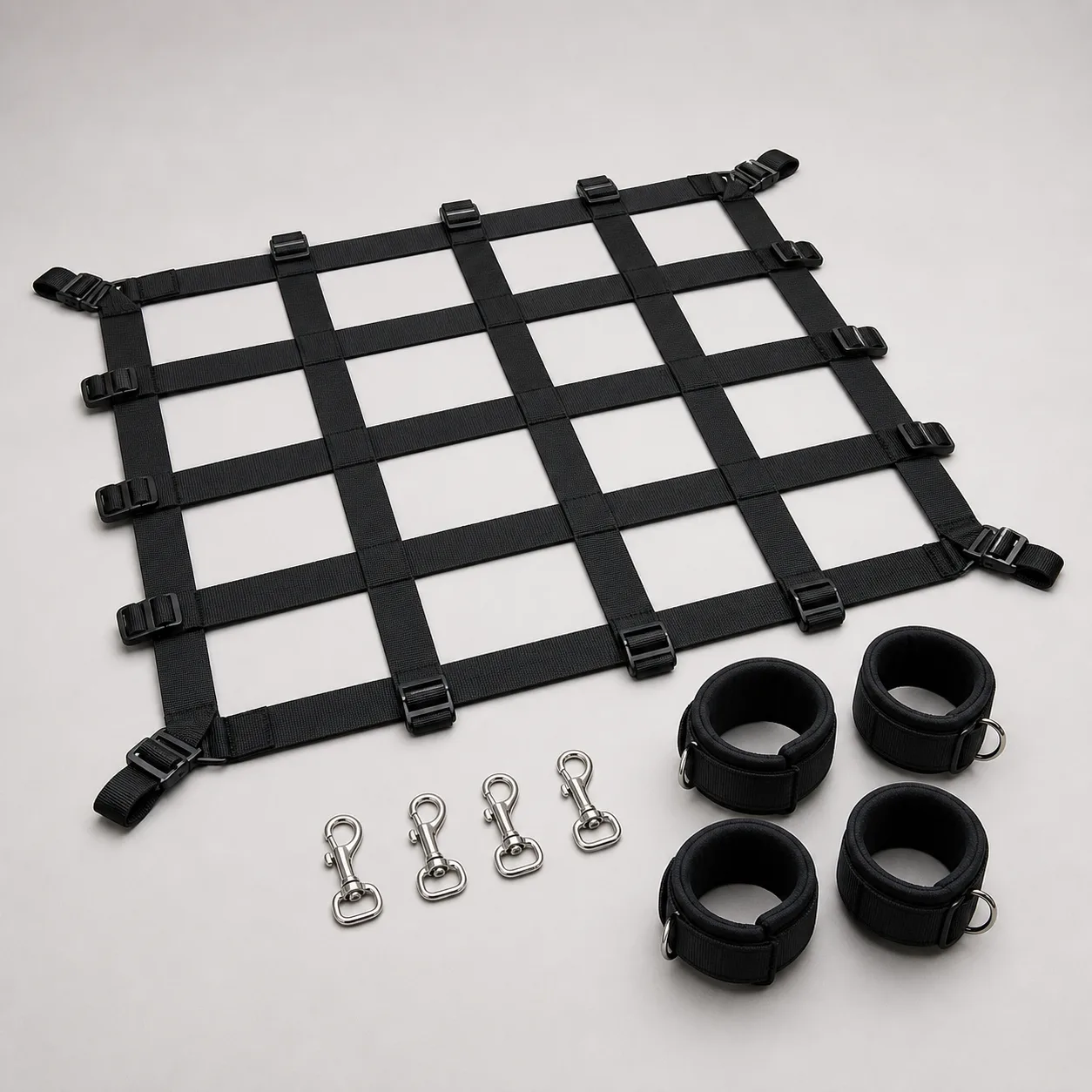
Adjustable Matrix-Web Bed Restraint System
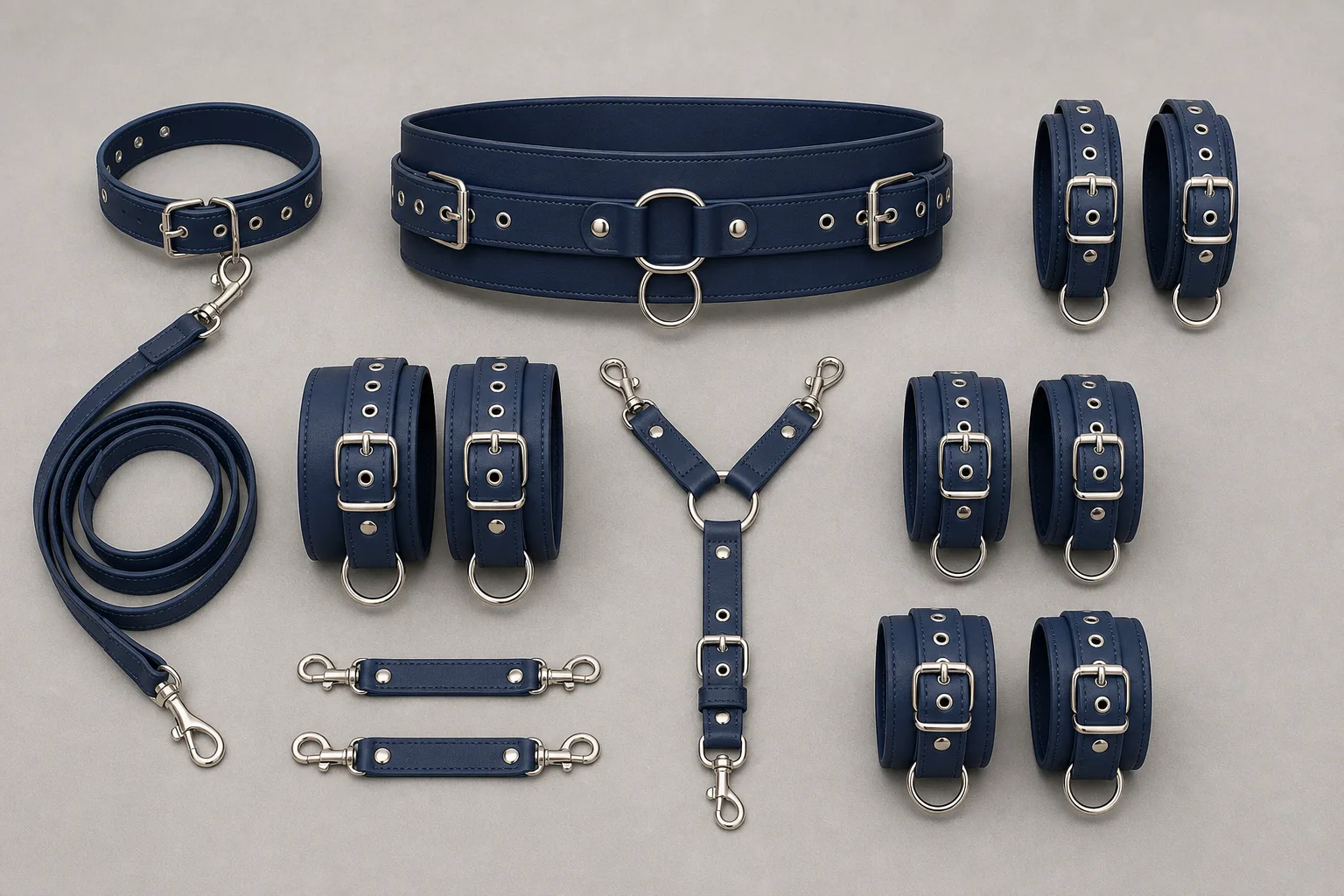
A modular black bed-restraint lattice concept with multiple adjustment zones, four padded cuffs and four swivel clips.
49,99 $
200 in stock
A full lattice creates movable connection zones
The adjustable matrix-web bed restraint system concept uses intersecting black straps to create many potential connection points across a mattress-sized field. Four padded cuffs and four swivel clips form a compact modular kit rather than a fixed furniture installation.

This is consensual adult restraint equipment, not medical or security equipment.
Mattress fit begins with a measured perimeter
Publish minimum and maximum lattice length, width, corner-tail range and strap width. Mattress depth, rounded corners, toppers and platform edges can change whether the web stays flat or migrates under load.
Do not use the system on a lightweight mattress that can lift, fold or slide.
Corner tails should tension without creating hard ridges
Each perimeter tail needs enough travel for setup while keeping buckle stacks away from pressure zones. Inspect tail capture, buckle orientation and loose-end management so hardware cannot drift beneath a user.
Recheck tension after the first movement cycle because woven straps may settle.
Every crossing needs verified stitch architecture
Record whether intersections are box-stitched, bar-tacked, woven through or merely overlaid. Test seam construction in multiple directions because a square grid can receive diagonal and peeling loads, not just straight pull.
Retire the lattice if stitches lift, webbing narrows or a crossing begins to rotate.
Padded cuffs need independent sizing data
Measure internal circumference range, closure overlap, padding thickness, edge binding and D-ring position for all four cuffs. A wrist and ankle may need different adjustments even when the cuffs look identical.
Two fingers should fit beneath each cuff, and closures must stay reachable for immediate release.
Swivel clips should align without accidental gate pressure
Confirm clip length, gate opening, spring force, swivel freedom and working-load limit. The gate should face away from skin, bedding and strap edges that could press it open.
Never substitute decorative clips or connect a cuff directly to an unknown bed-frame fitting.
Adjustment logic should be visible before use
Lay out the empty system and mark which buckles control perimeter fit versus limb position. A consistent sequence reduces crossed straps, hidden tails and confusing adjustments once a participant is attached.
Complete a no-load release rehearsal from every planned position.
Consent includes a release plan that never depends on strength
Agree on boundaries, a safeword and a nonverbal stop signal before attachment. Keep all buckles, clips and cuff closures accessible to the supervising adult, with safety shears available for textile emergency release.
Never leave a restrained person alone, asleep, intoxicated or unable to communicate clearly.
Circulation checks continue throughout the session
Watch skin color, temperature, swelling, sensation and normal movement beyond each cuff. Reassess after any position change because strap angle can concentrate pressure even when closure tightness did not change.
Release immediately for numbness, tingling, cold skin, discoloration, breathing difficulty, panic or pain.
Dynamic movement creates higher loads than a static fit test
Validate the complete load path from cuff stitching through clip, grid intersection, perimeter buckle and mattress edge. Pull tests should include short controlled pulses and off-axis loading without using a person as the test mass.
This system is not for suspension, body-weight support, standing restraint or attachment above floor level.
Textile and hardware identities require exact-model records
Identify webbing fiber, dyes, thread, cuff shell, padding, hook-and-loop material, buckle resin, D-ring metal and clip alloy. Request colorfastness, corrosion and restricted-substance evidence linked to the offered production lot.
Marketplace nylon, steel or skin-friendly wording is not treated as proof.
Cleaning must reach the grid intersections
Detach the cuffs and clips, then clean each component only within verified material limits. Open the lattice fully so moisture, lint and residue do not remain trapped beneath crossings, folded tails or cuff binding.
Air-dry completely before storage and avoid bleach, solvents or machine heat unless the supplier validates them.
Assembly inspection belongs in every setup
Count four cuffs and four compatible clips, then check each buckle, seam, gate, swivel and D-ring. Confirm the web lies flat, tails are captured and no metal part can contact a sharp frame edge.
Keep a written inspection date and isolate any component with rust, deformation, fraying or weakened closure grip.
The supplier page is a purchasing lead, not a specification sheet
The Alibaba showroom displays USD 19.70-26.80 with MOQ 1 for a spider-web bed restraint listing. Supplier identity, exact unbranded variant, lattice dimensions, webbing, cuff construction, hardware, load ratings, mattress fit, included parts and certifications remain pending.
The procurement reference supports sample inquiry only; generated marketplace claims are not approved specifications.
The EUR 49.99 plan includes textile and load-path validation
The planned price accounts for China-origin freight, a full sample, dimensional mapping, stitch and webbing inspection, buckle and clip testing, cuff pressure review, dynamic pull checks, colorfastness, cleaning assessment and packaging reconciliation. Freight, duty, tax, insurance, payment fees and destination terms remain pending.
The stock setting of 200 is a catalog planning quantity only.
Frequently asked questions
Which mattress sizes will it fit?
No fit range is approved yet. Minimum and maximum lattice dimensions, corner-tail travel and mattress-depth limits require sample measurement.
Are four cuffs and four clips included?
That is the planned configuration, but exact pack contents must be confirmed against the supplier invoice and received sample.
Can it support body weight?
No. It is not designed for suspension, lifting, standing restraint or any setup where failure could cause a fall.
How tight should the cuffs be?
Two fingers should fit beneath each cuff, with frequent circulation and sensation checks throughout use.
Can one person use it alone?
No. Continuous supervision and immediate access to every release point are essential.
What are the straps made from?
Webbing fiber, thread, dyes, cuff fabrics, buckle resin and metal alloys remain unconfirmed pending lot-linked documentation.
Reviews
There are no reviews yet.