


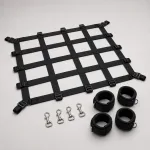
Adjustable Matrix-Web Bed Restraint System
August 14, 2026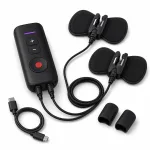
Dual-Clip Adjustable Pulse Controller Set
August 14, 2026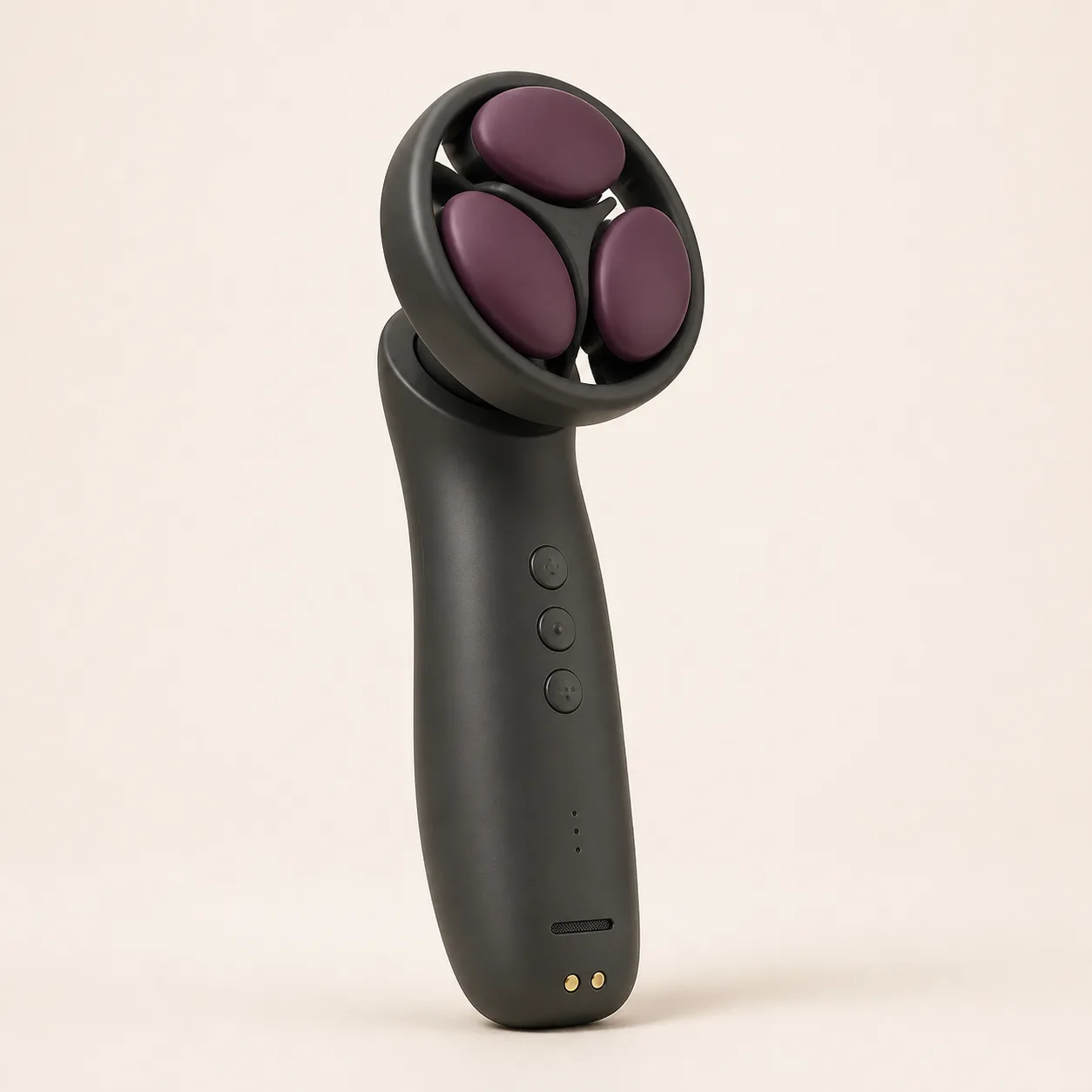
Tri-Lobe Counter-Phase Wand Massager with Floating Isolation Collar
A curved wand massager concept with three oval rocker lobes proposed to tilt in counter-phase inside a broad floating isolation collar.
46,99 $
200 in stock
Split the wand head into three counter-phase lobes
This tri lobe wand massager concept replaces one continuous cap with three shallow oval contact lobes arranged around a recessed center hub. Radial rocker mounts are proposed to tilt neighboring lobes in opposite phase while a broad floating collar isolates the head assembly from the handle.

The image does not prove independent actuators, phase accuracy, collar suspension, output, heat, ingress protection, runtime, materials or supplier approval.
Inventory every head and drive component
Request an exploded drawing and bill of materials for all three lobe skins, carriers, radial mounts, axles, pins, bushings, stops, guards, hub, collar, suspension points, frame, actuators, counterweights, sensors, controller, handle shell, buttons, indicators, vent, cell, contacts, conductors, seals, pigments, lubricants and adhesives.
Identify shared shafts, cams or links that could couple nominally separate lobes.
Measure the complete head geometry
Record head diameter, collar width and depth, lobe length, width, projection, angular spacing, hub clearance, mount radius, neutral tilt, guarded gaps, neck angle, handle dimensions, button positions, vent area, contact spacing, mass and center of gravity.
Compare all three stations around the circumference rather than treating the head as rotationally symmetric.
Characterize the floating collar
Measure axial, radial and angular collar travel, suspension stiffness, damping, preload, hard-stop clearance and permanent set. Apply controlled forces at twelve clock positions and through the handle axis.
Inspect whether the collar contacts a moving lobe, hides a damaged mount or shifts enough to expose an edge.
Map each radial rocker mount
Track inward and outward tilt, axle play, stop engagement, face displacement, actuation force, hysteresis and neutral-position error for each lobe. Repeat under no load and standardized compliant preload.
Reject a station that binds, rocks off-axis or parks against only one side of its guard.
Verify counter-phase timing
Record startup, peak tilt, crossover, dwell, decay and neutral parking for every lobe pair. Measure phase separation across levels, programs, battery states, temperature and compliant loads.
Log drift, skipped movement, asymmetric overlap and any transition that makes all three lobes strike a hard stop together.
Measure vibration and rocking separately
At each station record three-axis acceleration, dominant frequency, harmonics, rocker angle, sound, current and transfer into the collar and handle. Compare single-lobe, paired and all-lobe operation where supported.
Do not label visible tilting as vibration until both motions have been instrumented independently.
Map contact pressure around the clover head
Use an instrumented compliant surface to record contact footprint, peak and edge pressure, shear, rocking and migration as the handle angle changes. Repeat with centered, one-lobe and two-lobe loading.
Define limits from local peaks at lobe edges and collar junctions rather than averaged head force.
Probe every guarded head gap
Measure lobe-to-lobe, lobe-to-hub, lobe-to-collar, mount-to-guard and collar-to-neck clearances through full travel, suspension movement and loading. Use articulated probes from all directions.
Guards must block pinch access without trapping residue, creating sharp rims or preventing inspection of a loose mount.
Balance the curved handle under load
Record wrist moment, grip friction, center-of-pressure shift and control reach at multiple head angles and compliant loads. Test dry and damp hands without forcing the floating collar as a grip point.
Measure transmitted vibration in the handle and any change when one lobe is obstructed.
Document every control state
Verify startup hold, intensity changes, motion selection, phase direction if present, pause, immediate stop, memory, lockout and low-charge indication. Confirm a head fault cannot be cleared by cycling a program without inspection.
The three buttons and three dots require a tested map; their visible count proves no program total.
Verify battery and charging behavior
Confirm cell chemistry, capacity, protection, charger input, contact polarity, charge time, runtime method, storage voltage, charging interlock and transport paperwork. Inspect conductor routing through the angled neck and floating suspension.
Test contaminated or misaligned contacts and document safe fault indication.
Test heat, stall and drop faults
Log temperature at each lobe, mount, hub, collar, neck, handle, controls, vent, contacts, actuator zone and cell. Obstruct one lobe and then one lobe plus the collar using protected fixtures.
Verify current limiting, shutdown, neutral release, cool-down and restart behavior after stall, low voltage and representative drops.
Cycle the head with cleaning and storage
Run repeated counter-phase programs, compliant loading, collar deflection, immediate stops, charging, cleaning, measured drying and storage. At checkpoints repeat geometry, suspension travel, rocker play, phase, output, pressure, gaps, sound, current and temperature.
Validate access beneath all lobe edges, around the hub, within guarded gaps, under the collar rim, at the neck, controls, vent and contacts.
Price after three-station validation
An Alibaba magic-wand-vibrator showroom currently displays a rechargeable portable wand category example at USD 1.49-1.99 with MOQ three. It is a sourcing benchmark only and does not confirm this tri-lobe rocker head, counter-phase drive or floating collar.
The procurement reference supports an EUR 46.99 planning price after allowing for China-origin freight, exact-model sourcing, teardown, head metrology, collar suspension tests, rocker kinematics, phase analysis, station output, pressure maps, gap inspection, handle transmission, controls, battery, thermal and stall review, combined cycle life, material evidence, cleaning validation, protective packing and discreet fulfillment. Exact quotation, MOQ, packed size, weight, freight, duty, tax, insurance, payment fees and delivery terms remain pending.
Frequently asked questions
Do the three lobes have separate motors?
That remains pending teardown, per-station current and isolation measurements.
What does counter-phase mean here?
The proposal has neighboring lobes tilting oppositely, but actual phase must be measured under load.
Does the collar float in every direction?
Axial, radial and angular travel, stiffness and hard stops require fixture testing.
Can residue enter the head gaps?
Yes. Cleanability and measured drying must cover every lobe, hub, mount and collar interface.
Is this wand waterproof?
No ingress claim is made for a head with multiple moving and suspended joints.
Which faults require retirement?
A loose lobe, seized mount, closing gap, cracked collar, exposed edge, failed stop, grinding, erratic phase, swollen cell or abnormal heat.
Reviews
There are no reviews yet.