


Six-Strut Parallel-Platform Wand Massager with Tilt-Limit Collar
August 14, 2026
Four-Channel Cross-Hub Under-Mattress Restraint with Padded Cuffs
August 14, 2026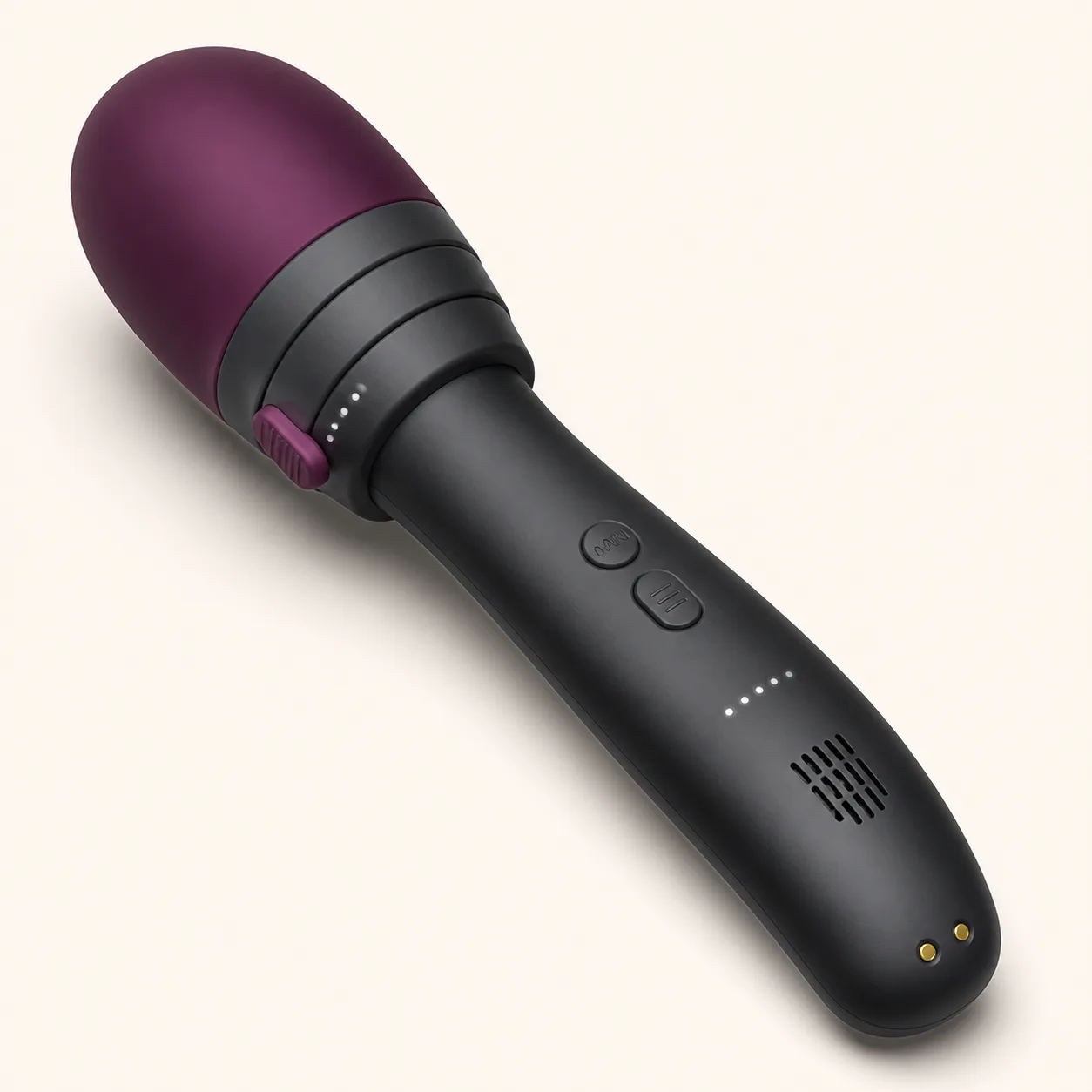
Three-Stop Cam-Compression Wand Massager with Adjustable Head Collar
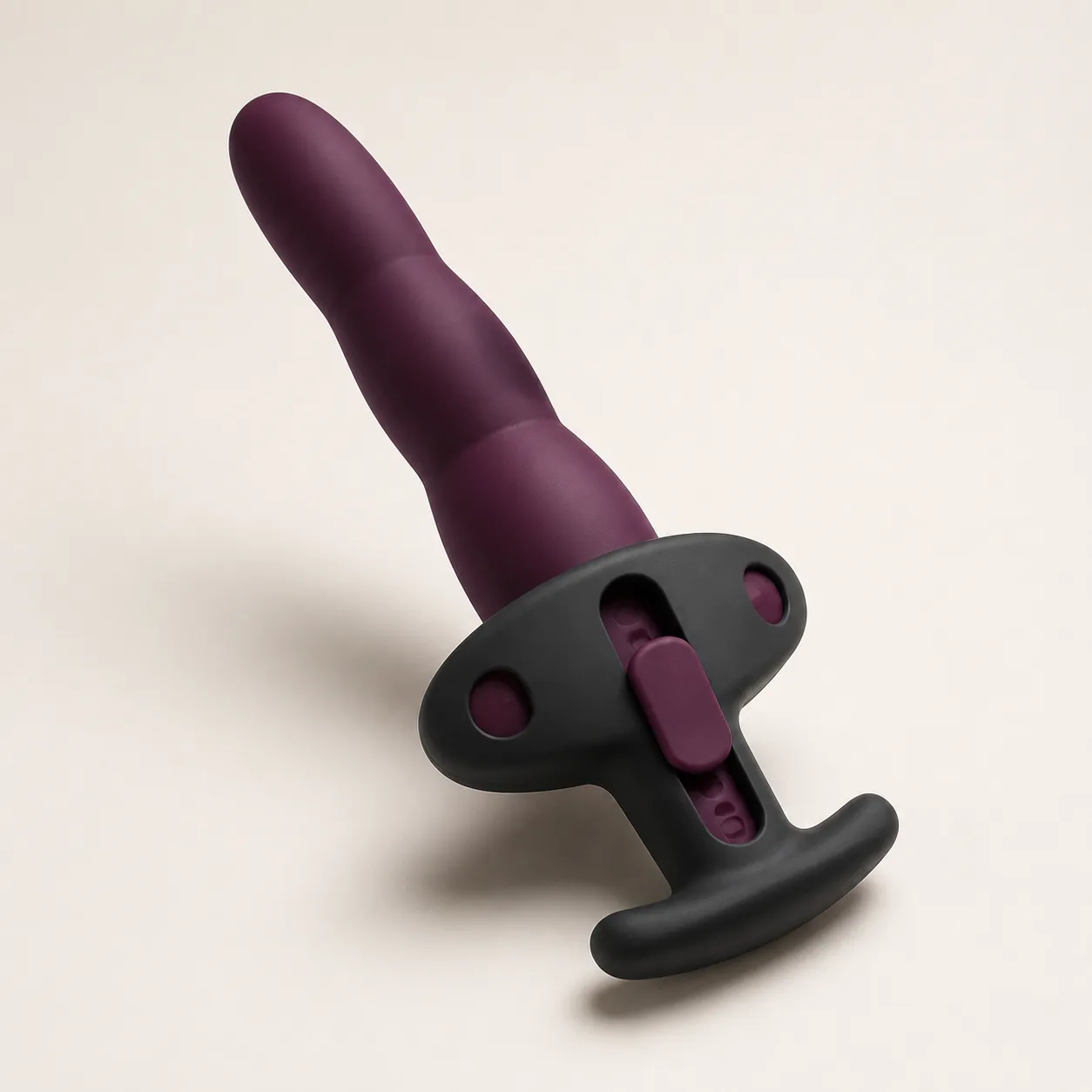
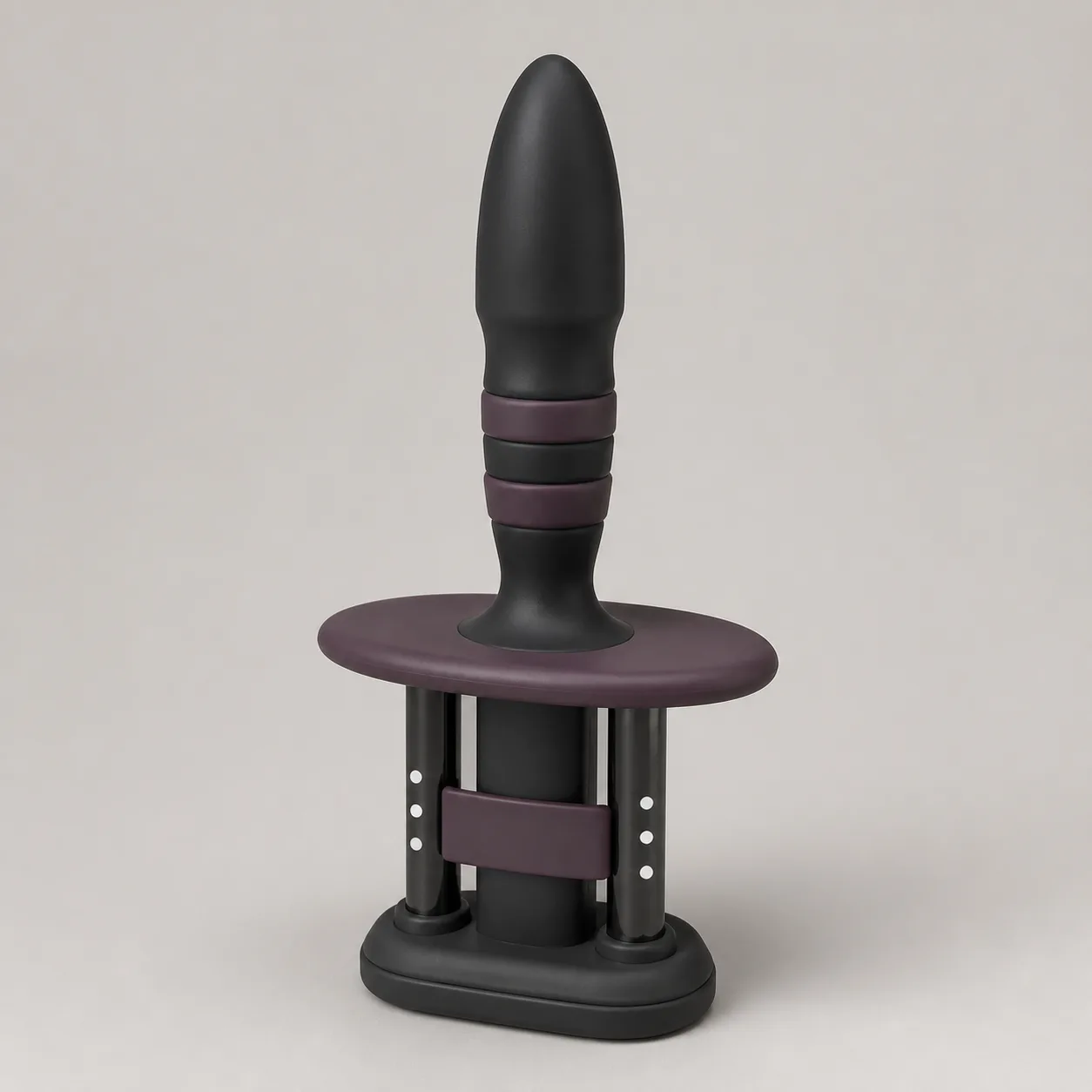
A rechargeable wand concept with a broad dome head and a three-band cam-adjusted collar proposed to vary head support stiffness.
49,99 $
200 in stock
Adjust proposed head support without swapping parts
This adjustable stiffness wand massager concept places three overlapping compression bands beneath one broad domed head. A guarded cam lever and three visible reference dots are intended to change how firmly the head is supported while leaving the electronic vibration program under separate buttons.

The image does not prove collar travel, three distinct stiffness levels, head composition, output, programs, ingress resistance, runtime or supplier approval.
Inventory the cam and collar stack
Request an exploded drawing and bill of materials for the dome skin, head core, support cup, three collar bands, overlap guides, cam, axle, lever, guard, detents, stops, neck, motor, counterweight, bearings, frame, controls, indicators, vent, cell, contacts, seals, pigments, lubricants and adhesives.
Identify which band moves at each lever position and whether the mechanism compresses, supports or merely masks the head joint.
Measure head and collar geometry
Record dome length, width, crown height, profile, wall thickness, neck diameter, collar diameter, band width, overlap, seam steps, lever projection, stop spacing, handle dimensions, mass and center of gravity.
Repeat at all three lever positions under no load and a standardized preload to capture shape change and collar creep.
Calibrate lever force and detents
Measure lever angle, actuation force, detent force, engagement depth, backlash and accidental movement resistance at every proposed stop. Approach each point from both directions and across temperature conditions.
Reject a state where the lever appears seated while a cam or band remains between supported positions.
Quantify head stiffness directly
Apply controlled displacement at the dome center, shoulders and long-axis ends while measuring force, recovery, hysteresis and permanent set. Repeat for all settings with the motor off.
Plot full curves rather than labeling the positions soft, medium or firm from hand feel alone.
Map contact footprint under load
Use pressure film or an instrumented compliant pad to record contact area, peak pressure, edge engagement and rocking at multiple applied forces. Test the long and short axes in every collar state.
A tighter collar can reduce contact area or move pressure toward the dome perimeter even if the center feels more stable.
Measure vibration transfer at each setting
With identical electronic programs, record three-axis acceleration, dominant frequency, harmonics, rise time, decay and transmitted force at the dome center and edges. Monitor collar motion simultaneously.
Determine whether a setting changes amplitude, direction, resonance or only structural support; do not assume a simple strength progression.
Keep electronic programs independently documented
Record startup hold, initial level, program order, increase and decrease behavior, pause, immediate stop, memory, lockout and low-charge indication. Repeat after mechanical adjustment while powered and unpowered.
Verify collar movement cannot restart the motor, alter the selected program or block immediate stop.
Test neck loads and band retention
Apply controlled axial, lateral, bending and torsional loads through fixtures while tracking neck deflection, collar migration, band lift, overlap changes, lever position and housing gaps.
Stop for a shifting band, rising seam, exposed support edge, lever release, neck crack or permanent deformation.
Evaluate grip and control separation
Measure dry and damp grip force, handle balance, one-handed button access and unintended contact with the cam lever. Test controls without visual guidance and with the head oriented in different directions.
The lever guard should prevent casual movement without becoming a hard pressure point or obstructing deliberate adjustment.
Validate battery, charging and heat
Confirm cell chemistry, capacity, protection, charger input, contact polarity, charge time, runtime method, storage guidance and transport paperwork. Verify whether operation is blocked during charging.
Log temperature at the dome, collar bands, cam, neck, grip, controls, vent, contacts, motor zone and cell for every collar state and representative program.
Separate motor sound from collar chatter
Measure airborne and structure-borne sound at fixed distance under free and compliant loading. Compare all settings for clicks, band buzz, lever rattle, neck knocks and vent whistle.
Sound changes can expose loose overlaps or cam wear before displacement tests show a large difference.
Challenge ingress, drops and fault states
Ingress claims require exact evidence for the dome seam, collar overlaps, cam axle, buttons, indicators, vent and contacts. After controlled drop and transit vibration tests, repeat geometry, lever, stiffness, output, stop and charging checks.
Use protected fixtures for a jammed cam, displaced band, stalled motor, obstructed vent and low-voltage cutoff. Do not energize a hot, cracked or rattling sample again.
Cycle adjustment, loading and cleaning together
Run repeated lever traversal, detent seating, dome preload, program selection, vibration, immediate stop, charging, cleaning, drying and storage cycles. At checkpoints repeat stiffness, footprint, acceleration, sound, heat, band overlap and lever-force measurements.
Retire a sample after stiffness drift, collar creep, band lift, lost detent, loose cam, torn dome, cracked neck, opening seam, exposed conductor, swollen cell or abnormal heat.
Price after the collar effect is demonstrated
An Alibaba rechargeable wand-massager listing currently shows a category example at USD 5.88-6.18 with MOQ one. It is a category benchmark only and does not confirm this three-band compression collar, cam lever or adjustable support system.
The procurement reference supports an EUR 49.99 planning price after allowing for China-origin freight, exact-model sourcing, teardown, head and collar metrology, lever calibration, stiffness curves, pressure footprints, vibration-transfer maps, neck loading, grip, battery, thermal, acoustic and fault review, cycle life, material evidence, cleaning validation, protective packing and discreet fulfillment. Exact quotation, packed size, weight, freight, duty, tax, insurance, payment fees and delivery terms remain pending.
Frequently asked questions
Are there three verified firmness levels?
No. The three visible references require force-displacement curves and repeatability testing before any stiffness claim.
Does the collar change vibration intensity?
It may alter support, resonance or transfer; three-axis output must be measured separately from electronic programs.
Can the lever be moved while powered?
The approved sequence and any interlock remain pending exact instructions and fault testing.
Is the head removable?
No removable-head feature is proposed; teardown and cleaning access require exact-sample documentation.
Can the collar be submerged?
No ingress claim is made, especially around overlapping bands and the cam axle.
Which faults require retirement?
A lifted band, lost detent, loose lever, torn dome, cracked neck, opening seam, exposed conductor, swollen cell or abnormal heat.
Reviews
There are no reviews yet.