


Removable Weighted-Core Anal Plug with Self-Leveling Crescent Base
August 14, 2026
Twin-Lock Fold-Out Wing Anal Plug with Fixed Tapered Shaft
August 14, 2026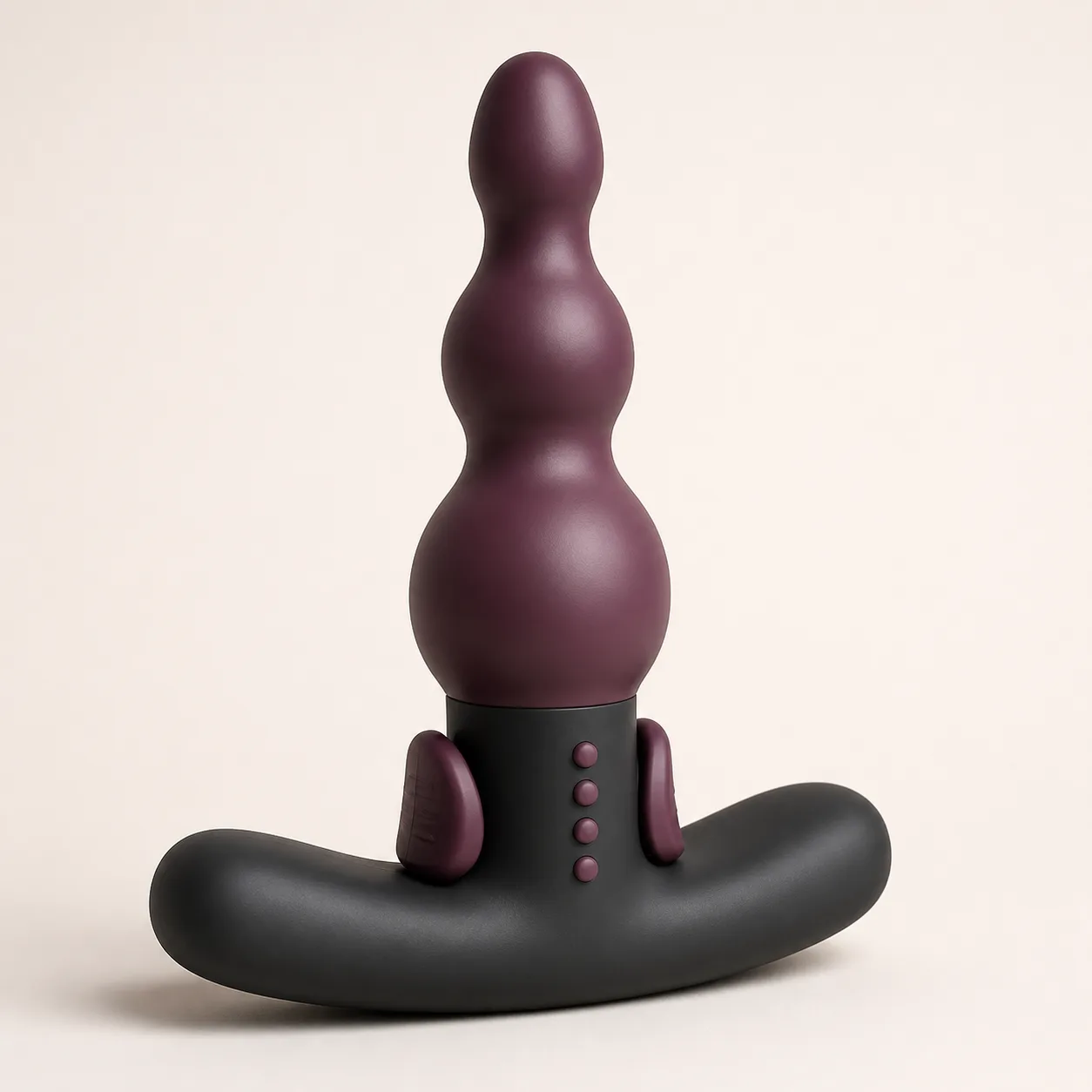
Twin-Latch Variable-Depth Three-Bulb Anal Trainer with Wide T-Base
A non-powered three-bulb anal trainer concept with four indexed extension positions, opposing squeeze latches and a permanently broad rounded T-base.
34,99 $
200 in stock
Four locked extensions change one trainer’s available depth
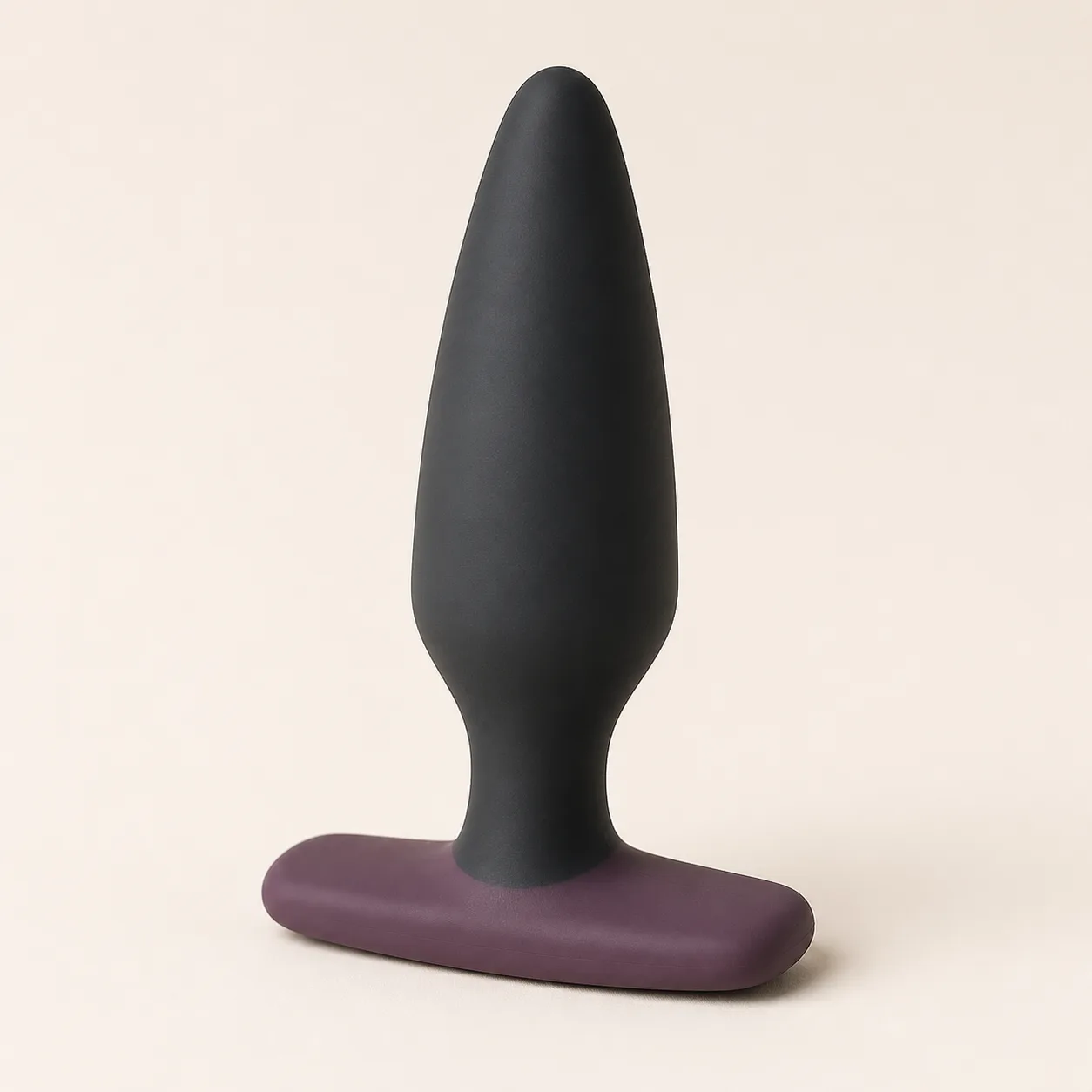
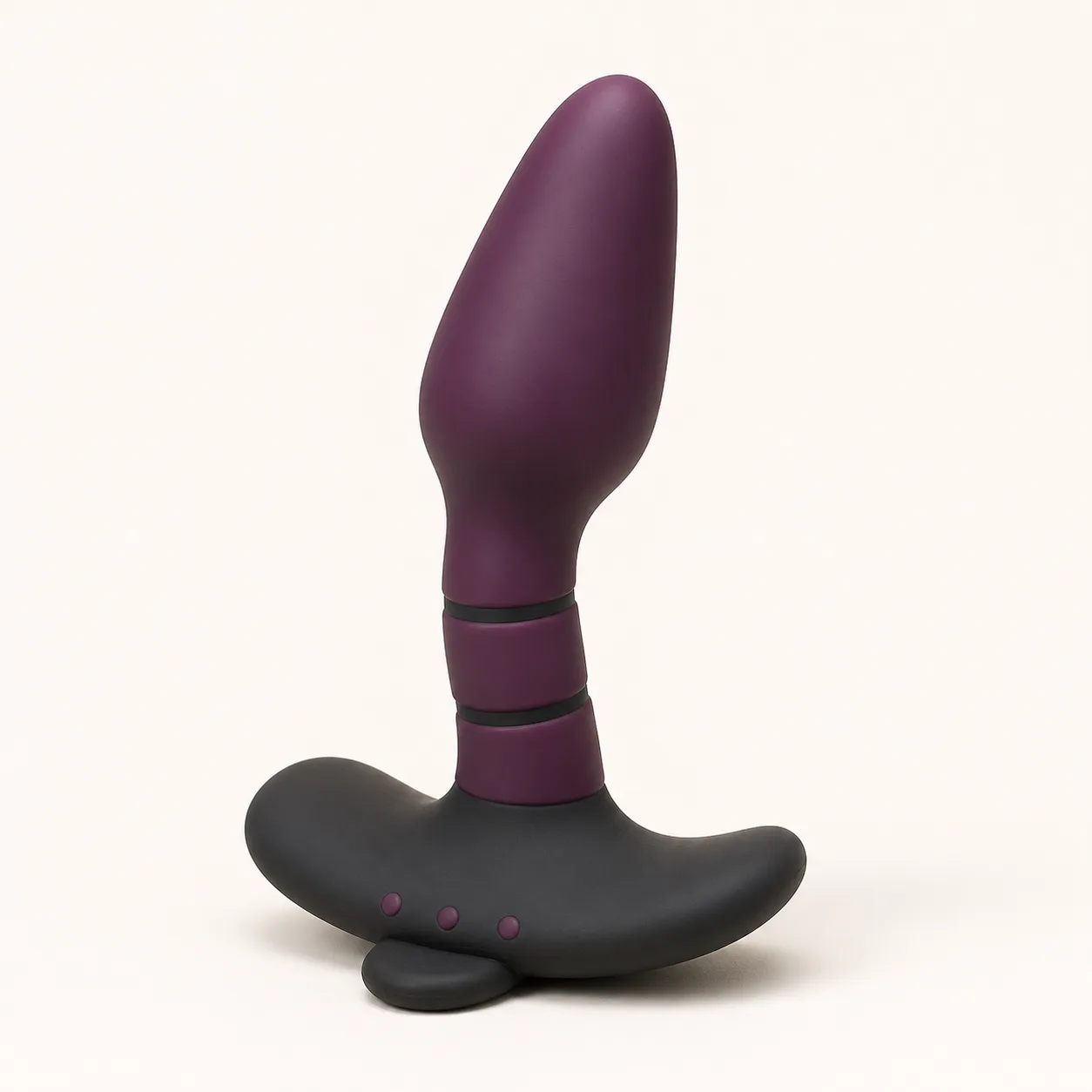
This variable-depth anal trainer concept places a smooth three-bulb shaft above an exceptionally wide charcoal T-base. A short indexed guide spine retracts through the base, while two opposing plum squeeze latches must be pressed together to change between four proposed extension positions.

The mechanism adjusts exposed length, not bulb diameter. Every setting requires positive lock and external retention testing.
Inventory the shaft, guide and concealed retainers
Confirm the one-piece three-bulb contact shaft, indexed guide spine, fixed wide base, left and right latch tabs and all internal stops. Ask the supplier to disclose hidden pins, springs, teeth, sleeves, stiffeners, seals, fasteners and adhesives.
No removable internal part or substitute guide revision should be accepted.
Measure the complete geometry at every position
Record total height, shaft diameters at all three bulbs, neck diameters, transition lengths, tip radius and base-to-shaft seam. At each dot, measure exposed length, proposed insertable boundary, base span, base depth, wing thickness and minimum neck-centerline-to-edge distance.
The fixed base must remain clearly wider than the largest bulb in every usable position.
Map the four detents without assuming equal spacing
With the product clean and dry on a fixture, press both tabs, move the guide to each dot and release them fully. Record travel distance, audible or tactile engagement, tab rebound and the visible index after locking.
A dot is only a location cue; it is not proof that both internal teeth are engaged.
Prove both latches share the lock
Measure release force on the left tab, right tab and both together. Attempt low-force movement with only one tab pressed to confirm that neither side can unlock the shaft independently or remain half-engaged.
Asymmetric wear, delayed rebound or a tab that sits lower than its partner fails qualification.
Challenge axial retention outside the body
Mount the broad base on a padded fixture and apply controlled pull, push and twist loads to the shaft below written supplier limits at all four positions. Watch for guide creep, skipped dots, tab movement and internal clicking.
Any uncommanded extension or collapse is a critical fault.
Test the base against off-center loading
Apply low controlled loads above each bulb and toward both rounded base wings. Measure base lift, roll angle, guide skew, neck flex and the remaining external span at the most extended position.
A wing that folds edge-first or allows the base to align with the shaft cannot be approved.
Inspect every bulb transition under bending
Use a compliant fixture to bend the shaft gently within documented limits at each neck while the base is fixed. Inspect surface whitening, crease formation, hard internal edges, permanent set and changes in bulb alignment.
Training progression must not depend on forcing a sharp transition or levering against the base.
Treat the guide seam as a contamination boundary
Apply visible test soil around the shaft-to-base junction and cycle the clean sample through all positions. Disassemble only if the production instructions expressly allow it, then check whether residue enters an inaccessible sleeve or latch cavity.
A moving seam that cannot be inspected, cleaned and fully dried requires redesign or rejection.
Begin at the shortest positively locked position
Before use, verify that both tabs sit flush, the first dot is aligned and the shaft resists a gentle external pull. Apply abundant compatible lubricant and progress only through comfortable bulb transitions while the entire T-base remains outside the body.
Length progression is optional and should never override comfort, control or verified geometry.
Change depth only after complete removal
Remove the whole product, clean and dry the base area, then press both tabs on a stable surface. Select one verified detent, release both tabs and perform the external lock check again.
Never squeeze the latches, telescope the guide or test a setting while any part of the shaft is inserted.
Use pain, bleeding and lost control as hard stops
Stop for sharp pain, bleeding, numbness, unusual pressure, surface damage, base folding, latch movement, guide creep or difficult removal. Do not use on injured or inflamed tissue, and do not share without a verified barrier and cleaning protocol.
If the product becomes retained, do not use tools; seek prompt qualified medical help.
Verify contact and mechanism materials separately
Request composition for the shaft surface and core, guide spine, base, latch tabs, internal teeth, springs, seals, pigments and adhesives. Review hardness, porosity, restricted-substance and skin-contact evidence for the exact revision.
Lubricant, cleaner and barrier compatibility cannot be inferred from the matte appearance.
Clean at the shortest setting and dry the sleeve
Follow confirmed mild-cleaning instructions with the shaft positively locked at the specified service position. Wash approved contact surfaces, then use a soft swab around the base seam, tab edges and guide dots without forcing debris inward.
Dry the hidden sleeve path completely before storage; boiling, soaking, bleach, alcohol, dishwasher use and forced disassembly are not approved without exact evidence.
Price the indexed mechanism above a fixed set
An Alibaba anal-trainer showroom lists a soft graduated trainer set at USD 4.19-4.49 with a one-set minimum. It is a category benchmark only and does not establish this retracting shaft, twin-latch lock, permanent wide base, a legal supplier or a production quotation.
The procurement reference supports an EUR 34.99 planning price after allowing for China-origin freight, exact-model quotation, component disclosure, four-position geometry, twin-latch engagement, axial and off-center retention, bending, moving-seam hygiene, materials, compatibility, cleaning validation, protective packing and discreet fulfillment. Packed size, weight, freight, duty, tax, insurance, payment fees and destination terms require confirmation.
Frequently asked questions
Do the four dots represent four sizes?
No. The same three bulb diameters remain; the dots indicate proposed exposed-length positions.
Can one latch change the depth?
No. Both opposing tabs should require deliberate simultaneous pressure, which must be verified.
May the depth be changed during use?
No. Remove the complete product before operating or inspecting the latches.
Does the shaft detach from the base?
No detachable shaft is proposed; any separation from the permanent base is a critical fault.
Which position should be tried first?
Use only the shortest positively locked position after measurements, lock testing and compatibility checks.
Which faults require retirement?
A skipped detent, uneven latch, guide creep, folded base wing, exposed hard edge, torn surface, sticky material, trapped residue or sleeve that cannot dry.
Reviews
There are no reviews yet.