


Elastic-Deck Dual-Rail Positioning Chair
August 14, 2026
Open-Lattice Vibrating Sleeve with Removable Side Bullet
August 14, 2026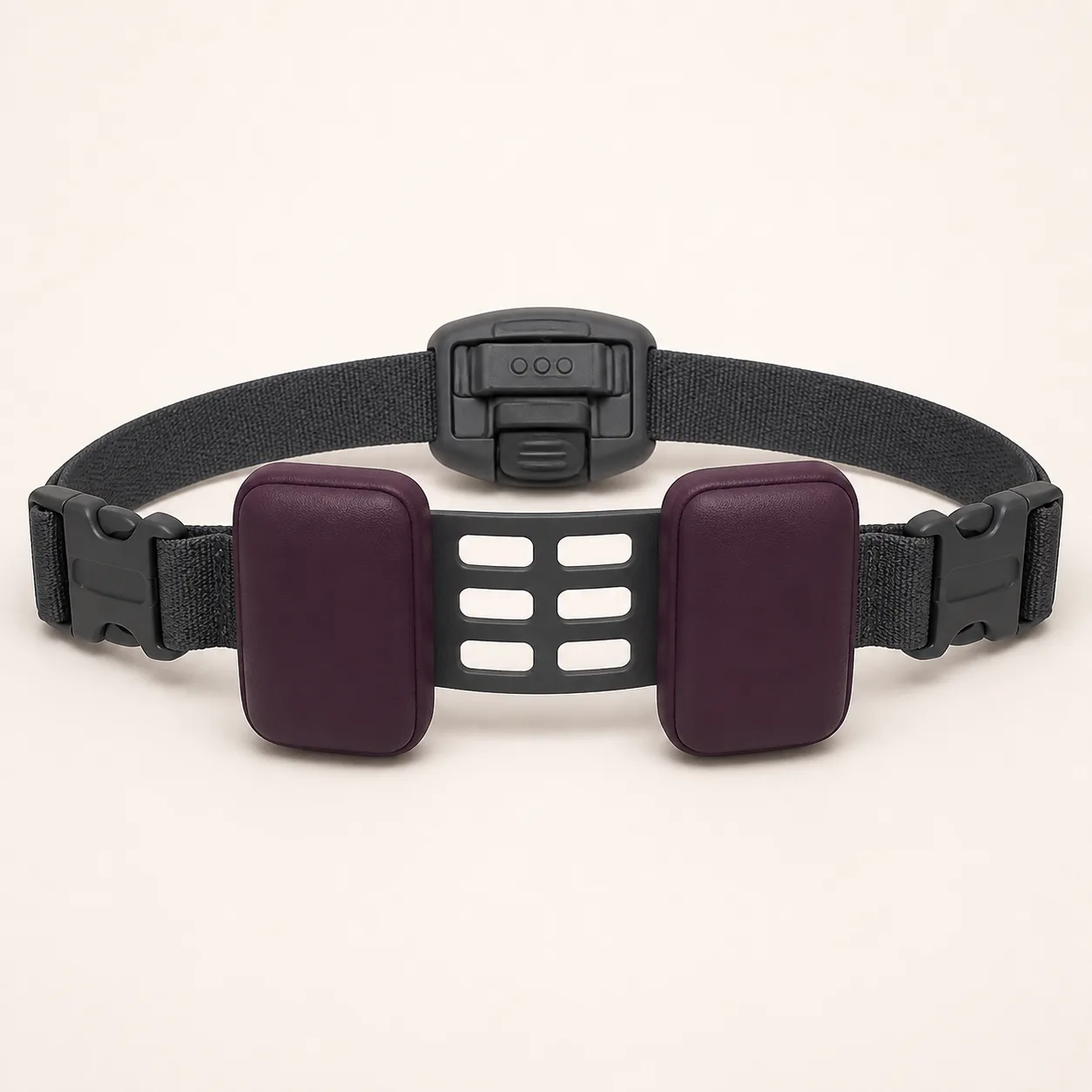
Three-Stop Split-Pad Vent Gag with Guarded Width Slider
A split-pad restraint gag concept with a slotted center bridge, guarded three-stop width slider, broad adjustable straps and two quick-release buckles.
32,99 $
200 in stock
Separate the bite pads around a vented bridge
This adjustable split pad gag concept replaces one continuous mouthpiece with two cushioned pads positioned on either side of a slotted central bridge. A guarded three-stop slider is proposed to alter pad spacing while broad straps and two low-profile side buckles manage restraint.

The image does not prove width range, bite suitability, ventilation, load capacity, fit, materials, cleanability or supplier approval.
Inventory every component and interface
Request an exploded drawing and bill of materials for both pad covers, pad cores, vent bridge, carrier, slider, detents, stop walls, release tab, guards, strap anchors, webbing, adjusters, side buckles, stitching, edge binding, pigments, coatings, adhesives and any reinforcement.
Trace the load path from each strap through the carrier to both pads without assuming the bridge is structural.
Measure the two pad geometries independently
Record pad height, width, thickness, corner radius, edge profile, separation, front projection, rear projection, core compression and cover movement. Compare left and right parts across the sample lot.
Check that no seam, insert or hard support becomes prominent after repeated compression.
Calibrate the three width stops
Measure clear pad spacing, slider travel, detent engagement, actuation force, backlash and repeatability at every proposed stop. Approach each position from both directions with the straps unloaded and under controlled tension.
Reject any state that looks locked while the carrier remains between stops.
Verify the guarded slider and release tab
Map finger access, accidental actuation force, deliberate release force and obstruction from webbing or padding. The release must remain identifiable by touch and reachable by the supervising partner.
Test whether a twisted strap, compressed pad or displaced guard can jam the slider.
Map compression across both bite pads
Use instrumented opposing fixtures to measure initial softness, peak compression, permanent set, edge stiffness and recovery after dwell. Repeat with small offsets and unequal force between sides.
Define conservative retirement limits for torn covers, exposed cores, hard spots, loose inserts, opening seams or permanent distortion.
Measure usable airflow through the vent bridge
Record open area, pressure drop and blockage sensitivity for every slot before and after cleaning cycles. Test partial obstruction by displaced padding, strap twist and fixture contact.
Vent openings are not a substitute for unrestricted breathing, active supervision, a clear stop signal or immediate release access.
Fit the strap system without over-tightening
Measure webbing width, usable circumference, tail length, adjuster slip, anchor angle and contact pressure on standardized head forms. Confirm the hardware does not force the carrier to rotate as tension rises.
The planned width setting and strap setting must be documented separately.
Test both quick-release buckles
Measure opening force with dry, damp and gloved hands, then repeat under straight, angled and asymmetric strap loads. Verify either side can create prompt slack without needing the central slider.
Do not approve hardware that false-latches, opens from minor brushing, locks under load or hides beneath an inaccessible strap fold.
Inspect every oral-facing edge and junction
Check pad perimeters, vent-slot rims, bridge corners, carrier steps and slider guards with magnification and compliant probes. Repeat after drops, cleaning, heat exposure and compression cycles.
Any burr, crack, sharp transition, loose fragment or exposed reinforcement disqualifies the sample.
Map pinch and snag zones
Inspect the slider track, detent windows, pad-to-bridge junctions, strap anchors, adjusters and buckle hinges throughout adjustment and release. Use articulated probes rather than fingers during mechanism testing.
Guards must prevent access without trapping residue or blocking deliberate release.
Verify material and cleaner compatibility
Obtain exact material declarations and restricted-substance evidence for every oral-facing and skin-contact part. Record color transfer, odor, swelling, tack, cracking, delamination and stiffness change after the proposed cleaner and drying process.
Silicone, foam, polymer, textile, dye, adhesive, latex-free and certification claims remain pending exact supplier documents and sample tests.
Cycle width changes, loading and release
Run repeated slider traversal, detent seating, pad compression, strap loading, buckle opening, cleaning, drying and storage cycles. At checkpoints repeat spacing, actuation, backlash, airflow, compression, strap slip, release force and edge inspection.
Include asymmetric loads because two independent pads and two buckles can wear differently.
Clean, dry and store the complete assembly
Validate a method that reaches pad seams, every vent slot, the carrier recess, slider track, strap anchors, buckle cavities and webbing. Measure drying at hidden interfaces before closing the product into storage.
Retire a sample with persistent odor, residue, corrosion, frayed webbing, sticky hardware, torn padding or a release action that differs from its baseline.
Price only after sample and landed-cost checks
An Alibaba adjustable-mouth-gag showroom currently displays a category example at USD 7.00-9.70 with MOQ three. It is a sourcing benchmark only and does not confirm this split-pad construction, three-stop slider, exact materials or production terms.
The procurement reference supports an EUR 32.99 planning price after allowing for China-origin freight, exact-model sourcing, teardown, pad metrology, width-stop calibration, airflow measurement, compression maps, strap and buckle tests, edge and pinch inspection, material evidence, cycle life, cleaning validation, protective packing and discreet fulfillment. Exact quotation, MOQ, packed size, weight, freight, duty, tax, insurance, payment fees and delivery terms remain pending.
Frequently asked questions
Do the three dots prove three verified widths?
No. Each stop needs measured spacing, engagement depth, repeatability and load testing.
Do the vent slots make breathing safe?
No. Never rely on a gag for airflow; maintain unrestricted breathing, continuous supervision and immediate release access.
Can the central slider be the only release?
No. Both side buckles and the central mechanism require separate deliberate-release testing.
Are the plum pads confirmed silicone?
No. Exact covers, cores, adhesives, pigments and restricted-substance evidence remain pending.
How should the assembly be cleaned?
Only by the verified supplier method after compatibility and measured-drying tests cover pads, slots, tracks, buckles and webbing.
Which faults require retirement?
A false detent, jammed release, torn pad, exposed core, sharp edge, cracked bridge, frayed strap, slipping adjuster or abnormal material change.
Reviews
There are no reviews yet.