


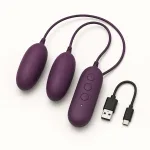
Dual-Egg Wired Controller Vibrator
August 14, 2026
Compact Analog Storage Climate Monitor
August 14, 2026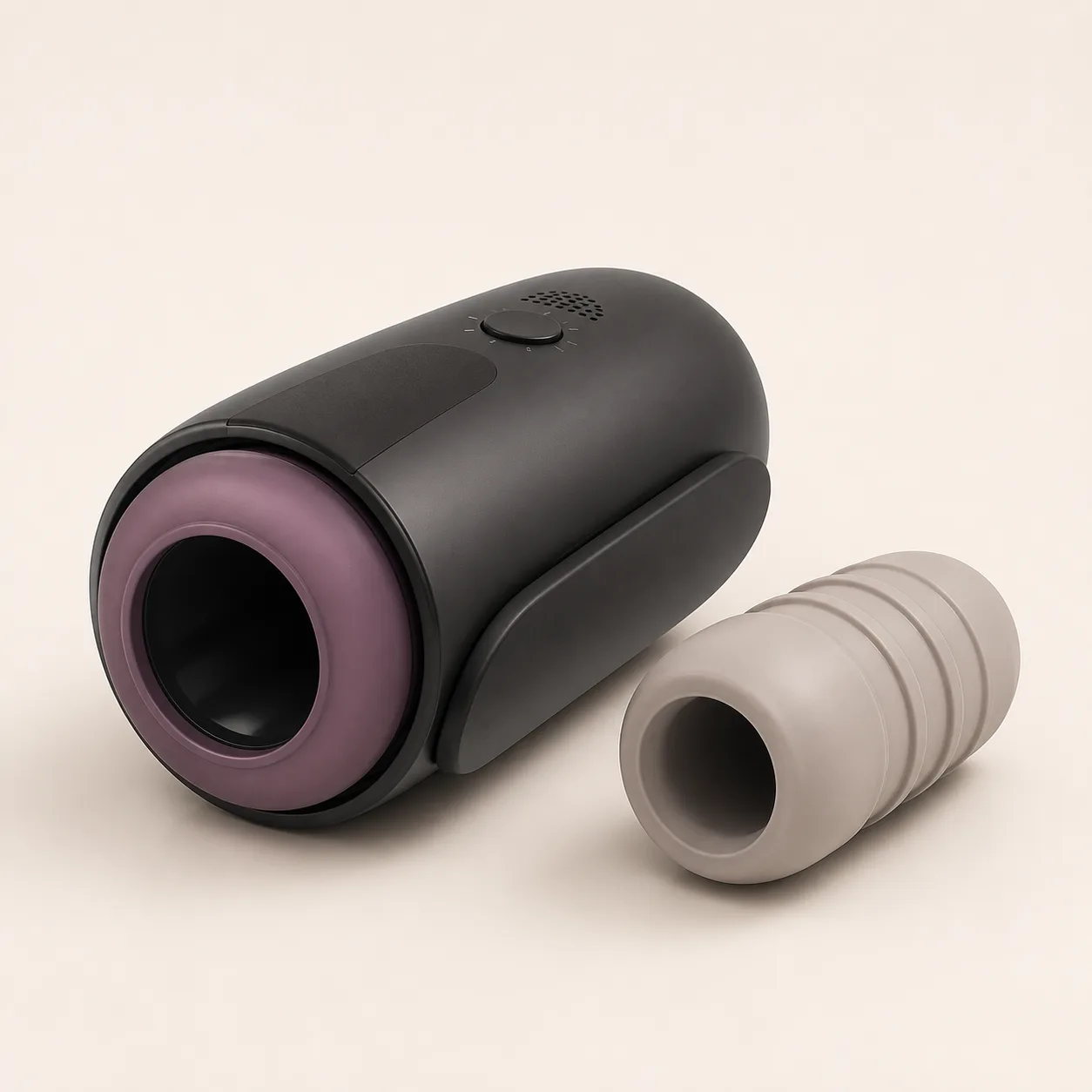
Audio-Reactive Dual-Grip Automatic Stroker with Removable Liner
A dual-grip automatic stroker concept with physical dial, audio-response sensor and removable liner for documented trigger, mechanism and cleaning checks.
69,99 $
200 in stock
Audio response turns ambient input into a control variable
This audio reactive automatic stroker concept combines a compact horizontal shell, two side grips, a top adjustment dial, a sensor grille and a removable liner. Its defining question is not how many modes are claimed, but exactly which sound level or rhythm changes movement and how quickly the user can disable that response.

The illustration does not prove that the grille contains a microphone, that the dial controls intensity, or that the liner and device are supplied together.
Measure the enclosure, opening and usable cavity
Record total length, width across the grips, body diameter, opening diameter, collar depth, control clearance and complete mass. Measure the removable liner outside the shell as well as the supported cavity length and minimum internal width after correct installation.
Marketing dimensions may describe packaging rather than the working path, so both the free liner and assembled device need a signed inspection sheet.
Verify the liner as a replaceable mechanical component
Inspect the rim, outer locking features, internal channel, closed end and extraction tabs for tears, thin areas, flash, tack, bubbles or trapped particles. Install it only by the confirmed orientation and check that the collar sits evenly without bunching.
A liner that creeps, twists or lifts at low bench speed can enter the mechanism and must not progress to body contact.
Map every physical control before enabling audio mode
With the device empty on a stable surface, identify power-on, manual speed or stroke control, audio-response selection, immediate stop and any travel lock. Confirm whether a long press, dial movement or separate button exits reactive mode.
The device needs a local off action that works without a phone, network, voice command or continued sound input.
Characterize the trigger threshold in a quiet room
Use calibrated test tones and logged background levels to find the lowest input that causes a response. Repeat at different frequencies and distances while recording delay, movement size and whether one brief sound starts a continuing cycle.
Do not infer a safe trigger from a decorative grille or one informal clap test.
Challenge the sensor with false triggers
Test speech, music, doors, ventilation, a dropped object, the device’s own motor and vibration from a nearby surface. Any self-trigger loop or response to common household noise must be documented and bounded.
Reactive operation is unsuitable where another person or machine can create unpredictable sound and the user cannot stop motion immediately.
Confirm that audio is processed locally
Request a data-flow statement explaining whether the sensor merely controls local electronics or records, stores, transmits or pairs with an app. If software is involved, document permissions, account requirements, update policy and offline behavior.
Do not grant microphone, contact, media or location access unless each permission is technically necessary and accepted by the user.
Bench-test travel, pressure and stall behavior
Mount the empty device in a padded fixture, then measure speed, stroke or rotation at each manual setting and at controlled audio inputs. Apply only the approved resistance fixture while observing current, stop time, restart behavior and protective cutoff.
Repeated stalls, sudden direction changes, gear clicking or a mechanism that restarts after obstruction end the test.
Use both grips without blocking ventilation
Confirm which surfaces are intended for the hands and whether the grille or any seam also serves airflow. Hold the device with relaxed wrists and enough clearance to reach the dial and stop control throughout the motion range.
Do not brace it under body weight, clamp it to furniture or cover the shell with bedding.
Prepare the liner with a measured lubricant amount
Use only lubricant shown compatible with the confirmed liner material. Coat the entrance and initial channel evenly, then verify that liquid cannot migrate behind the collar or into a motor, sensor or charging compartment.
Excess lubricant can reduce liner retention and hide rising pressure, so more is not automatically safer.
Begin in manual mode at the lowest verified motion
Keep audio response off during initial fit, use the shortest or slowest confirmed setting and maintain direct access to the stop control. Add depth only within the measured supported cavity and without forcing the closed end.
Stop after pain, numbness, pinching, swelling, color change, loss of sensation, liner movement or any inability to withdraw easily.
Introduce reactive control through a bounded test pattern
After manual use is understood, select a narrow sound range that produces small predictable changes. Keep the source close enough to control and avoid playlists, calls or environmental noise that can create unplanned peaks.
A partner controlling sound must follow an agreed ceiling, check-in interval and immediate stop word while the user retains the physical off control.
Monitor heat, current draw and enclosure noise
Log temperatures at the collar, grips, control area, sensor grille and charging zone during fixed bench intervals. Compare reactive mode with manual operation for changes in motor pitch, vibration, battery decline and liner movement.
Power off after unusual heat, odor, swelling, rattling, grinding, intermittent control or a mode that cannot be reduced promptly.
Remove and clean the liner away from electronics
Disconnect charging equipment, release the collar and withdraw the liner by its intended extraction surface rather than pulling a thin wall. Wash only the removable part using the confirmed cleaner, water temperature and contact time.
Wipe the enclosure by its verified ingress limit; do not rinse through the grille, dial, seam or charging port without model-specific evidence.
Sourcing must verify sound behavior rather than repeat labels
An Alibaba supplier comparison associates DKK Tech app-controlled voice-mode strokers with a USD 20-45 range and MOQ 100. The exact legal supplier, model, quote, audio logic, app behavior, material claims and every performance statement remain pending.
The procurement reference supports inquiry only. The EUR 69.99 plan allows for China-origin freight, exact-sample measurement, trigger and false-activation mapping, privacy review, mechanism and stall testing, liner inspection, grip and enclosure checks, battery and charge review, heat and noise logging, cleaning validation, protective packing and discreet fulfillment; packed size, weight, freight, duty, tax, insurance, payment fees and destination terms remain pending.
Frequently asked questions
Does every sound change the motion?
That cannot be assumed. Threshold, frequency response, delay and fallback behavior need controlled measurement on the exact sample.
Can it operate without a phone?
Manual control and local stop should work independently, but that must be verified before purchase or use.
Is the sensor always listening?
Sensor state and data handling are pending; confirm a clear off state and whether processing stays on the device.
Can the liner be installed in either direction?
Only if the manufacturer documents bidirectional fit. Otherwise follow the locking feature and collar orientation.
Is the complete enclosure washable?
Not without exact ingress evidence. Remove and wash the liner separately while keeping electronics within their confirmed limits.
When should the device be withdrawn from service?
After liner tears, collar slip, false triggering, control lag, repeated stalls, gear noise, swelling, unusual heat or odor, charge faults, seam gaps or failure of the immediate stop action.
Reviews
There are no reviews yet.