


Side-to-Side Swing-Head Vibrator
August 14, 2026
S-Curve Dual-Ball Metal Pleasure Wand
August 14, 2026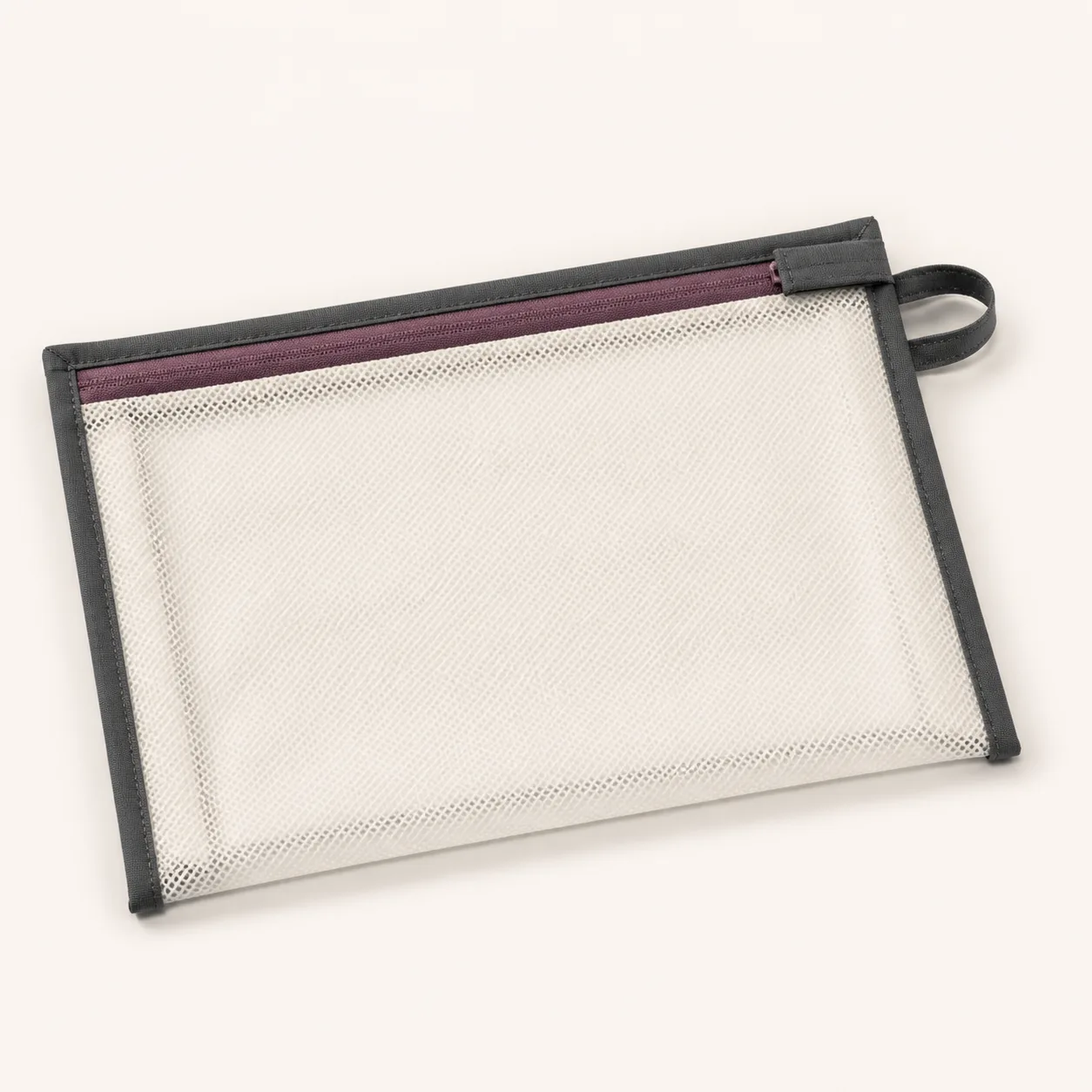
Fine-Mesh Care-Cloth Wash Bag with Covered Zipper
A fine-mesh wash bag with reinforced edges and a covered zipper for reusable care cloths whose makers permit machine washing.
7,99 $
200 in stock
A dedicated wash bag can keep care cloths together
The care cloth wash bag concept creates one visible container for reusable cloths whose makers allow machine washing. Fine mesh lets wash water move around the load, while charcoal binding defines the edges and a covered zipper keeps the pull from hanging loose during an approved cycle.

The bag organizes a permitted wash; it does not sanitize cloths or correct an unsuitable laundry process.
Use it only for washable product-care textiles
Do not place toys, chargers, batteries, motors, bottles, caps, loose hardware, disposable wipes or body-contact items in the bag. The planned load is a small set of reusable care cloths that have compatible washing instructions.
Do not use the same bag for underwear, household cleaning rags, pet textiles or general clothing.
Read every cloth label before combining a load
Confirm allowed water temperature, detergent, agitation, spin and drying method for each cloth. Cloths that differ in fiber, coating, colorfastness or residue may need separate care even when their size looks similar.
If the maker specifies hand washing or disposal after use, the mesh bag does not override that instruction.
Inspect the mesh panel against a contrasting surface
Before loading, spread the empty bag flat and look for holes, stretched openings, broken yarn, stains, embedded debris, rough repairs or discoloration. Run a clean fingertip along the outside binding only to find exposed thread ends or hard seam points.
Quarantine a bag with an opening large enough to release a cloth corner or catch another item.
Check the zipper track and protective cover separately
Open and close the empty zipper once without forcing it. The pull should travel smoothly, the teeth should align, and the pull should fit completely under the cover at the closed end.
Do not use pliers, lubricant or household oil on a resistant zipper; those additions can stain the mesh and contaminate the next cloth load.
Sort cloths by task before they enter the bag
Keep cloths used with different cleaner formulas, product materials or contamination zones in separate wash processes unless every relevant instruction confirms they may be combined. Color coding is an organizational cue, not chemical compatibility.
Any cloth exposed to battery leakage, blood, uncontrolled bodily fluid, mold or an unknown substance needs the specific disposal or decontamination route for that exposure.
Remove loose residue by the approved pre-wash method
A mesh bag should not carry clumps, labels, hair, grit or pooled formula into the washer. Follow the cloth and cleaner makers’ guidance for safe pre-rinsing or wiping, wearing the required protection and containing runoff appropriately.
Never shake a soiled cloth indoors to free particles into the air.
Load loosely enough for each cloth to move
Lay cloths in the bag without tight rolling or compact knots. Leave visible free area so water can circulate and the zipper line is not stretched by a packed load.
The safe cloth count depends on bag dimensions, cloth size, wet mass and machine action; no universal capacity is claimed until load testing is complete.
Close the zipper and park the pull under its cover
Hold the binding rather than the mesh while guiding the pull to the end stop. Confirm that no cloth edge, care label or loose thread sits in the teeth, then tuck the pull fully into the fabric cover.
Do not tie the hanging loop to the washer drum or add a separate pin, clip or cable tie.
Choose a cycle from the textile instructions
Water level, temperature, detergent, agitation and spin must satisfy the most restrictive approved cloth instruction as well as the bag’s tested limits. A delicate cycle name alone does not establish safe mechanical action.
Wash the care-cloth bag separately from bulky towels, hooked garments, shoes and hardware that could compress or abrade it.
Watch for dye and detergent interactions during qualification
Colored binding, zipper tape, thread and mesh can bleed or retain fragrance, brightener and surfactant. Before sale, test repeated approved cycles with white witness cloths and inspect for color transfer, odor, residue and changes in surface feel.
No hypoallergenic, fragrance-free or residue-filtering property is claimed.
Unload promptly and inspect before touching clean cloth faces
After the cycle ends, use clean dry hands to lift the bag by its binding. Check that the zipper stayed closed and the mesh did not split, then open it on a clean care surface.
If a cloth escaped, the bag tore or another laundry item entered the load, treat the cleanliness outcome as unconfirmed and repeat the approved process as needed.
Dry the bag and cloths by their own instructions
Remove every cloth so air reaches the empty mesh panels and binding. Hang the bag from its loop only when the loop has passed wet-load testing, or lay it open on an approved drying rack.
Do not place it in a dryer, on a radiator or in direct sun unless the selected construction has a confirmed limit for that method.
Store the empty bag open, clean and completely dry
Inspect seams and the zipper after drying, then keep the empty bag in a ventilated private cabinet away from used cloths, open cleaner, humidity and floor dust. Do not treat the mesh as a clean-storage barrier for finished cloths.
A separate closed container may be required after the cloths have dried and passed inspection.
The supplier category needs product-specific verification
An Alibaba listing from Wuxi Sasson International Trading shows small zippered mesh laundry bags at USD 0.50-1.20 per piece with MOQ 100 pieces. Exact fibers, dimensions, mesh opening, zipper cover, binding and wash limits require written confirmation.
The procurement reference supports sample inquiry only. The EUR 7.99 plan allows for China-origin freight, mesh and seam inspection, repeated-cycle screening and discreet packing; packed mass, freight, duty, tax, insurance, payment fees and destination terms remain pending.
Frequently asked questions
Does the mesh sanitize care cloths?
No. Cleaning performance depends on the validated textile process, detergent, temperature, time and handling.
How many cloths fit inside?
Capacity remains pending and must be defined through size and wet-load testing.
Can toys or small parts go in the bag?
No. The concept is only for compatible reusable product-care cloths.
May I mix cloth colors and cleaner residues?
Only when every cloth and cleaner instruction permits the same process and qualification confirms no transfer.
Can clean cloths stay inside after drying?
The mesh is not a storage barrier; move inspected dry cloths to their approved clean container.
When should the bag be removed from service?
Stop using it after a hole, stretched mesh, broken seam, rough edge, zipper fault, color transfer, persistent odor or failed wash test.
Reviews
There are no reviews yet.