



Sound-Reactive Curved Palm Vibrator
August 14, 2026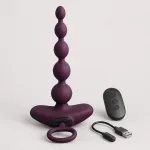
Remote Retractable Expanding Anal Bead Massager
August 14, 2026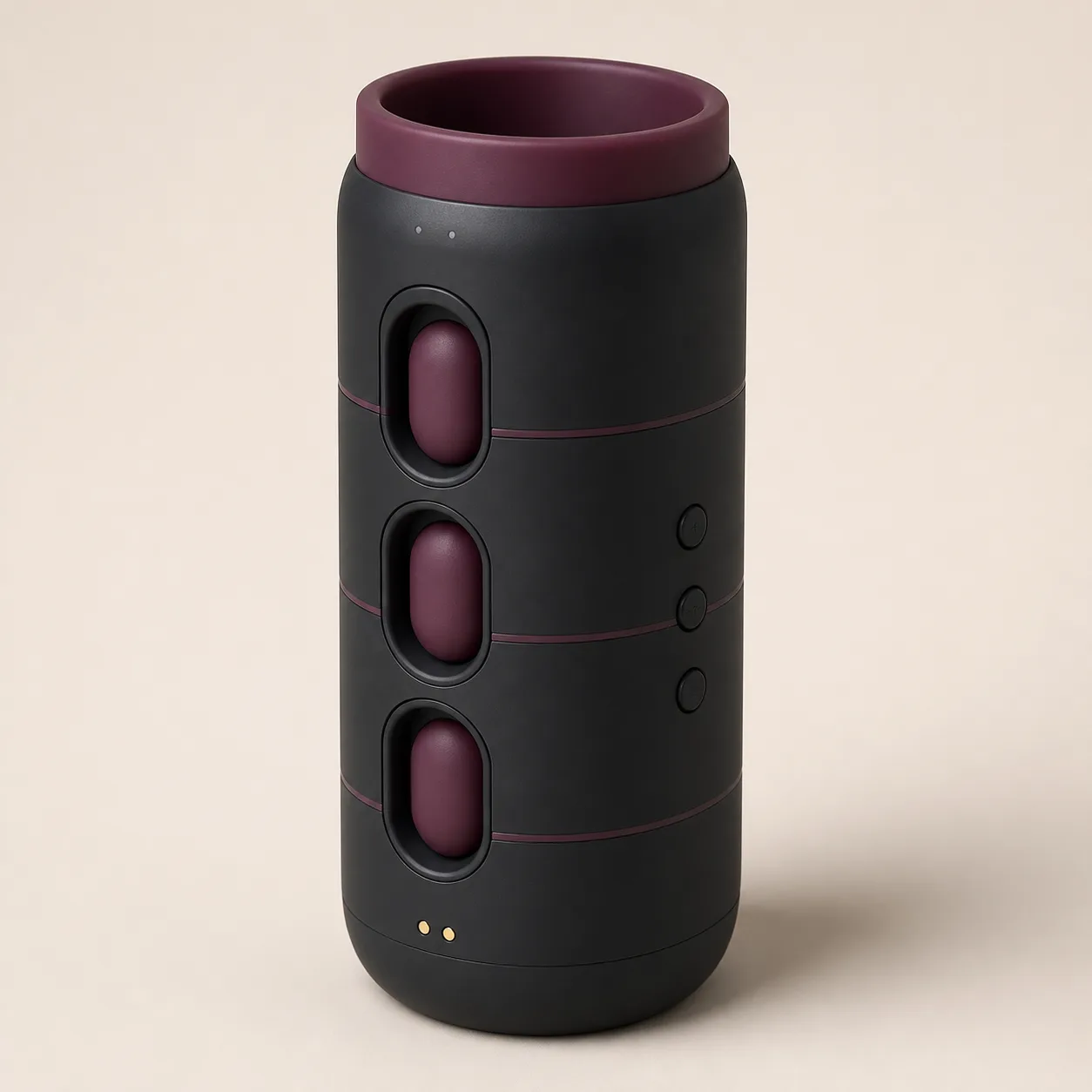
Tri-Chamber Sequential-Compression Automatic Stroker with Removable Open-End Liner
A compact automatic stroker concept using three sequential pneumatic compression zones around a removable open-end liner, with local controls and emergency venting.
89,99 $
200 in stock
Three chambers create a compression sequence without a moving carriage
This sequential compression automatic stroker concept uses three vertically arranged pneumatic zones around a removable open-end liner. The charcoal shell shows one diaphragm window per zone, while deep-plum seam bands identify chamber boundaries and a simple liner collar locks at the top.

No telescoping, rotation, heating, app or remote function is proposed. Qualification centers on controlled pressure, rapid venting and complete liner removal.
Inventory the pneumatic path before powering the unit
Confirm the shell, base, removable liner, locking collar, three bladders, pump, manifold, valves, pressure sensor, controller, buttons, battery and charging contacts. Request disclosure of hidden tubing, filters, relief valves, seals, fasteners and adhesives.
A shared manifold can make one damaged chamber affect all three zones.
Measure housing, opening and liner boundaries
Record device height, diameter, mass, base stability, entrance diameter, collar height, internal tunnel length and minimum wall thickness. Measure the liner uninstalled and seated, including flange overlap, open-end diameter and any internal texture dimensions.
Usable fit limits must come from the exact production liner and verified operating pressure.
Identify each chamber independently
Label upper, middle and lower zones by fixed housing position, then confirm which window, valve and control signal belongs to each. Use low-pressure instrumentation to map individual inflation and vent paths with an empty test liner.
Cross-connected tubing, reversed labels or an unidentifiable zone fails the inspection.
Map sequence timing rather than counting modes
Record inflation start, peak, hold, overlap and vent timing for every verified program. Compare the order over repeated cycles and after partial battery depletion.
A mode name does not explain whether adjacent chambers overlap, pause or release fully.
Verify pressure limits and the passive relief path
Use a compliant instrumented mandrel to measure pressure in all three zones at every setting. Block one control command at a time to confirm independent electronic shutdown and a passive mechanical relief route below the documented limit.
Any sustained overpressure, sealed fault state or sensor-only safety claim is unacceptable.
Watch the diaphragm windows for asymmetry
At low verified pressure, compare the visible rise of all three plum diaphragms with sensor readings. Inspect for wrinkling, delayed collapse, rubbing against the window frame and residual inflation after shutdown.
The windows are observation points, not finger controls or manual pump buttons.
Challenge the quarter-turn liner collar
With power off and all chambers vented, align the two index dots, seat the liner flange and rotate to the confirmed stop. Measure engagement angle, latch overlap, flushness and pull-out resistance on a padded fixture.
A collar that backs off during cycling or traps the liner unevenly requires rejection.
Test liner stretch under chamber loading
Mount the liner around a compliant calibrated mandrel within supplier limits and cycle each zone separately and in sequence. Inspect flange creep, wall thinning, folding, texture distortion and contact with hard internal edges.
The liner must remain supported without being pinched by the collar or drawn into a valve opening.
Make vent and local shutdown the fastest controls
Identify power, pattern and immediate vent functions by position rather than assumed icons. Measure long-press timing, accidental activation force, emergency vent time, restart state and behavior after a stalled pump or depleted battery.
Loss of power should not leave the three chambers pressurized.
Begin with a fully vented liner and minimal compression
Apply abundant compatible lubricant, confirm the open end is unobstructed and begin only at the lowest measured setting. Keep the device supported, the entrance visible and the vent control reachable throughout use.
Stop for pain, numbness, coldness, discoloration, swelling, excessive suction, trapped skin, liner folding, unusual noise, odor, heat or delayed venting.
Validate battery, pump load and thermal behavior
Request cell chemistry, capacity, charge input, cable specification, runtime, pump current, protection circuits and transport documents. Log temperature at the battery, pump, valves, manifold, controls and liner wall during the longest approved sequence.
Do not operate while charging unless exact production instructions expressly permit it.
Verify materials across air and contact circuits
Obtain composition for liner, flange, pigments, bladder films, tubing, manifold, valves, seals, shell, window diaphragms, lubricants and adhesives. Review hardness, porosity, plasticizer migration, restricted-substance and skin-contact evidence for the exact revision.
Cleaner and lubricant compatibility must cover both the removable liner and any air-path part exposed to moisture.
Remove the liner and dry every vented cavity
Power off, trigger full venting, unlock the collar and remove the liner without pulling on its thin wall. Follow confirmed mild-cleaning instructions, rinse approved contact surfaces and use a soft swab around the flange and collar recess.
Dry the liner inside and out and leave the verified air path open to dry; no soaking, boiling, bleach, alcohol or dishwasher use is approved without exact evidence.
Price pneumatic qualification into the plan
An Alibaba listing describes an automatic male masturbator with suction, thrusting and heating at USD 37.80-46.80 with a two-piece minimum. It is a powered-category benchmark only and does not establish this three-chamber sequential-compression design, a legal supplier or a production quotation.
The procurement reference supports an EUR 89.99 planning price after allowing for China-origin freight, exact-model quotation, complete pneumatic inventory, dimensions, chamber mapping, sequence timing, pressure and relief tests, diaphragm observation, collar retention, liner deformation, emergency vent, battery and thermal validation, materials, air-path hygiene, protective packing and discreet fulfillment. Packed size, weight, freight, duty, tax, insurance, payment fees and destination terms require confirmation.
Frequently asked questions
Does this stroker thrust or rotate?
No. The concept uses three air-compression zones around a stationary removable liner.
Are the visible diaphragms controls?
No. They are proposed observation windows and should never be pressed during operation.
What should happen if power is lost?
All chambers should vent to a documented safe state through a verified relief path.
Can the liner be removed while a chamber is inflated?
No. Switch off, complete the emergency vent and confirm zero residual pressure first.
Is heat part of the design?
No heating function is proposed, and surface temperature still requires pump and battery testing.
Which faults require retirement?
A delayed vent, pressure drift, swollen chamber, cracked window, loose collar, folded or torn liner, leaking manifold, battery swelling, abnormal heat or trapped residue.
Reviews
There are no reviews yet.