


Captive Sliding-Guard Curved Anal Wand with Four Depth Detents
August 14, 2026
Twin-Rocker Wide-Base Prostate Vibrator with Guarded Flex Stem
August 14, 2026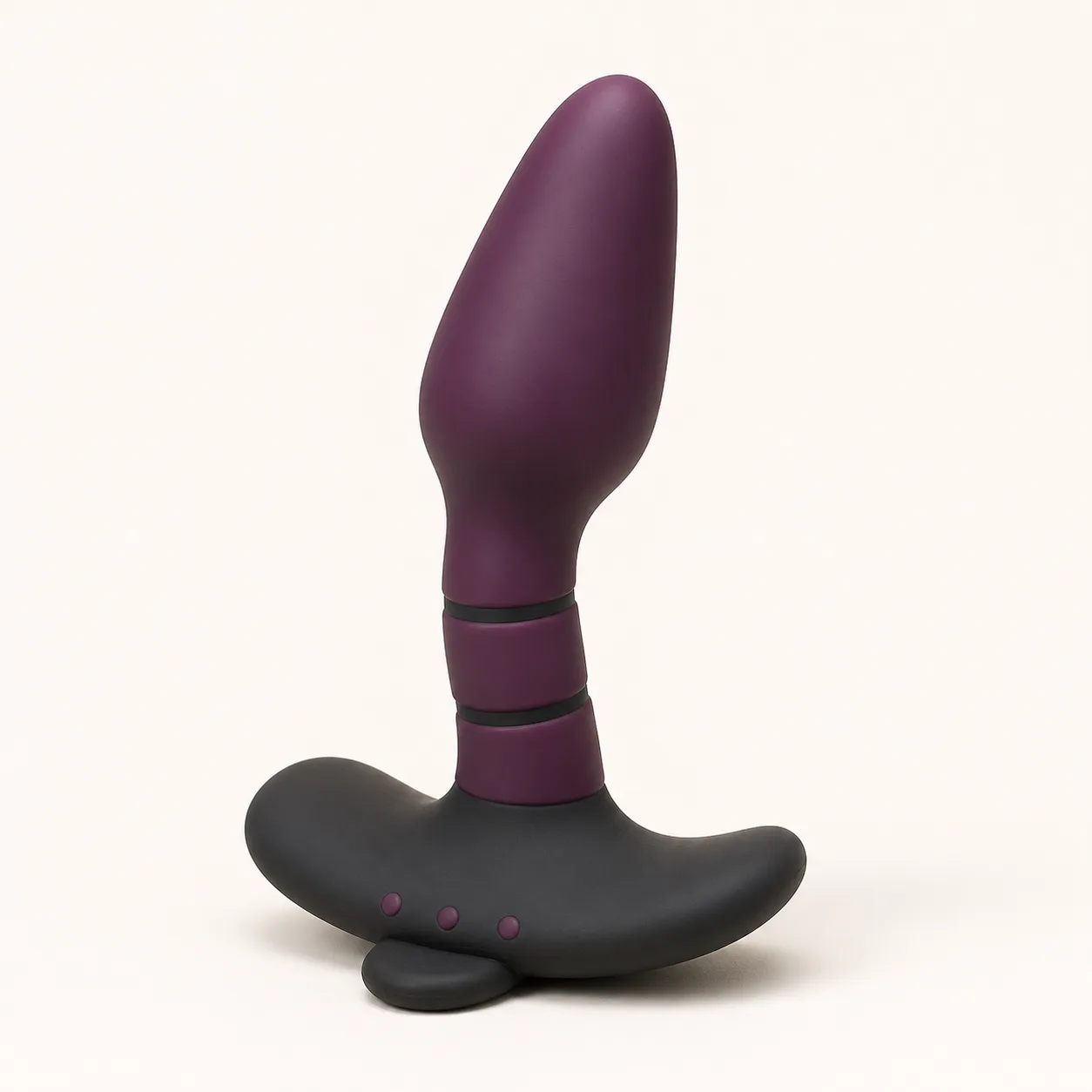
Three-Zone Flex-Neck Anal Plug with Broad Crescent Safety Base
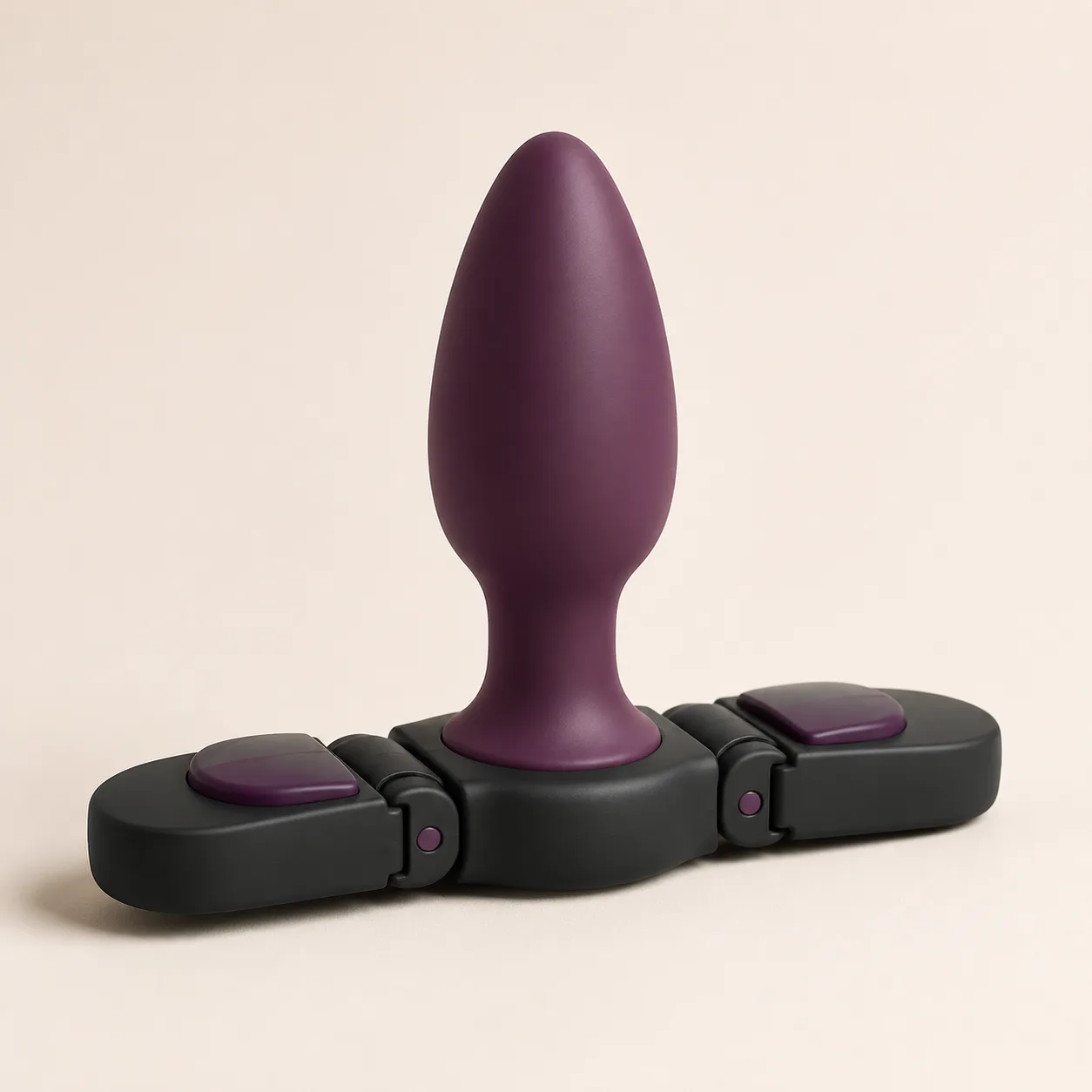
A fixed non-powered anal plug concept with a tapered head, three measurable neck zones and a broad crescent base designed for visible external retention.
24,99 $
200 in stock
A segmented neck makes bend behavior measurable
This flex neck anal plug concept uses two shallow gauge bands to divide the neck into three short observation zones. The markers help a buyer describe where bending begins, how it spreads and whether the neck recovers, while the broad crescent base remains the primary external retention feature.

The rendering does not establish dimensions, flexibility, body-contact material, safe fit, approved duration, waterproofing or supplier approval.
Verify that the body, neck and base are one controlled assembly
Request drawings and a bill of materials for the head, all three neck zones, both bands, internal core if present, base, dots, pull tab, pigments, coatings, lubricants and adhesives. Confirm whether the bands are molded markers, separate rings or exposed structural joints.
Reject hidden detachable parts or undocumented cavities in a product intended to remain intact.
Measure head taper, neck clearance and base reach
Record total length, insertable length, tip radius, head diameter at regular stations, widest-point location, neck diameter in each zone, band height and width, base span, base depth, pull-tab projection and mass.
Measure the left and right wings from the neck centerline so asymmetry cannot be hidden by a single base-width value.
Characterize the upper neck zone near the head
Use a guarded fixture to apply small documented lateral loads to the upper zone. Record bend angle, force, surface strain, head displacement and recovery time without exceeding supplier limits.
Inspect the head-to-neck transition for whitening, creases, cracks, tack changes or internal-core outlines.
Characterize the middle zone between both bands
Repeat the force and recovery measurements with the load centered between the two markers. Observe whether either band concentrates strain or slides relative to the neck surface.
Compare bending in two perpendicular planes rather than assuming circular geometry behaves uniformly.
Characterize the lower zone above the base
Measure lower-zone flexure while the crescent base is supported at defined points. Track whether the base tilts, folds or transfers stress into the neck root.
A soft-looking lower section still needs limits for force, angle and repeated recovery.
Map combined bending across all three zones
Use synchronized side and front views to measure curvature when the head is displaced through a series of low verified positions. Record which zone moves first, maximum local angle and any residual set after unloading.
Do not publish a bend range until samples remain stable across production tolerances and temperatures.
Inspect both gauge bands as possible stress points
Magnify band edges, seams and adjacent surfaces before and after flex testing. Probe gently for lifted edges, hard inserts, gaps, adhesive squeeze-out or recesses that trap residue.
Markers must stay smooth and should not be described as adjustment rings unless they actually adjust a verified mechanism.
Prove the crescent base remains broad and external
Measure clear wing span, effective stop area, wing thickness, edge radius and deformation under low axial and off-axis loads. Compare the smallest verified base reach with the largest neck section rather than relying on appearance.
The base must remain fully external, visible and accessible. This product is not for unattended, prolonged or sleep use unless exact-model instructions explicitly say otherwise.
Keep the pull tab and orientation dots accessible
Confirm the low tab can be located and grasped without folding a base wing. Document whether the three dots are visual orientation marks only or correspond to a tested alignment feature.
Never use dots as depth marks or settings unless the final instructions define them.
Test deformation and recovery under controlled support
Place the product in standardized fixtures that support the base without simulating a person. Apply low approved compression, lateral and torsional loads, then log immediate and delayed recovery at the head, each zone and both base wings.
Stop for permanent lean, neck buckling, band displacement, base curling or a change in surface finish.
Cycle flexure without hiding cumulative damage
Run repeated low-angle bends in both principal planes with scheduled visual, dimensional and force checks. Include pull-tab flexing and base-wing compression as separate cycles.
Track stiffness drift, residual angle, cracks, seam opening, whitening, tack, odor and pigment transfer at every checkpoint.
Verify contact materials and any internal core
Obtain exact formulations for every surface and structural component plus restricted-substance and skin-contact evidence tied to the production revision. If a rigid or flexible core exists, confirm encapsulation thickness and end geometry.
Silicone, body-safe, medical-grade, hypoallergenic, phthalate-free and waterproof claims remain unconfirmed until exact-model documents and sample tests support them.
Clean around both bands, the base root and tab
Power-free construction does not remove hygiene requirements. Wipe the head, all neck surfaces, both marker bands, base root, wing undersides, dots and pull-tab edges using the confirmed method.
Use only compatible cleaner and water exposure. Boiling, dishwasher use, alcohol, bleach, abrasive brushes, powders and oils require explicit evidence. Dry every band edge and the base root before storage.
Price flexibility only after geometry and freight checks
An Alibaba silicone anal trainer listing currently shows USD 0.51-2.99 with an MOQ of one piece. It is a category benchmark only and does not confirm this three-zone neck, crescent base or an approved supplier.
The procurement reference supports an EUR 24.99 planning price after allowing for China-origin freight, exact-part inventory, dimensional inspection, three-zone force mapping, multi-plane recovery, band-edge review, base-retention tests, pull-tab access, cycle life, material documentation, cleaning validation, protective packing and discreet fulfillment. Exact quotation, packed dimensions, weight, freight, duty, tax, insurance, payment fees and delivery terms remain pending.
Frequently asked questions
Do the two dark bands change the size?
No adjustment is confirmed. They are evaluation markers unless production documentation proves another function.
Why divide the neck into three zones?
The divisions support repeatable bend and recovery measurements at distinct locations instead of one vague flexibility claim.
Is the crescent base wide enough?
That requires exact dimensions, deformation tests and comparison with the largest neck section on production samples.
Can the product remain in place for a long period?
No duration should be assumed; follow exact-model instructions and stop immediately for discomfort, numbness, pressure, bleeding or difficulty removing it.
Does the pull tab replace the base?
No. The broad base is the retention feature; the tab only supports access and handling if verified.
Which faults require retirement?
A torn surface, displaced band, exposed core, permanent bend, cracked base, curled wing, loose tab, tack change, swelling or any area that cannot be cleaned and dried.
Reviews
There are no reviews yet.