


Washable Care-Preparation Chair Armrest Protectors, Pair
August 14, 2026
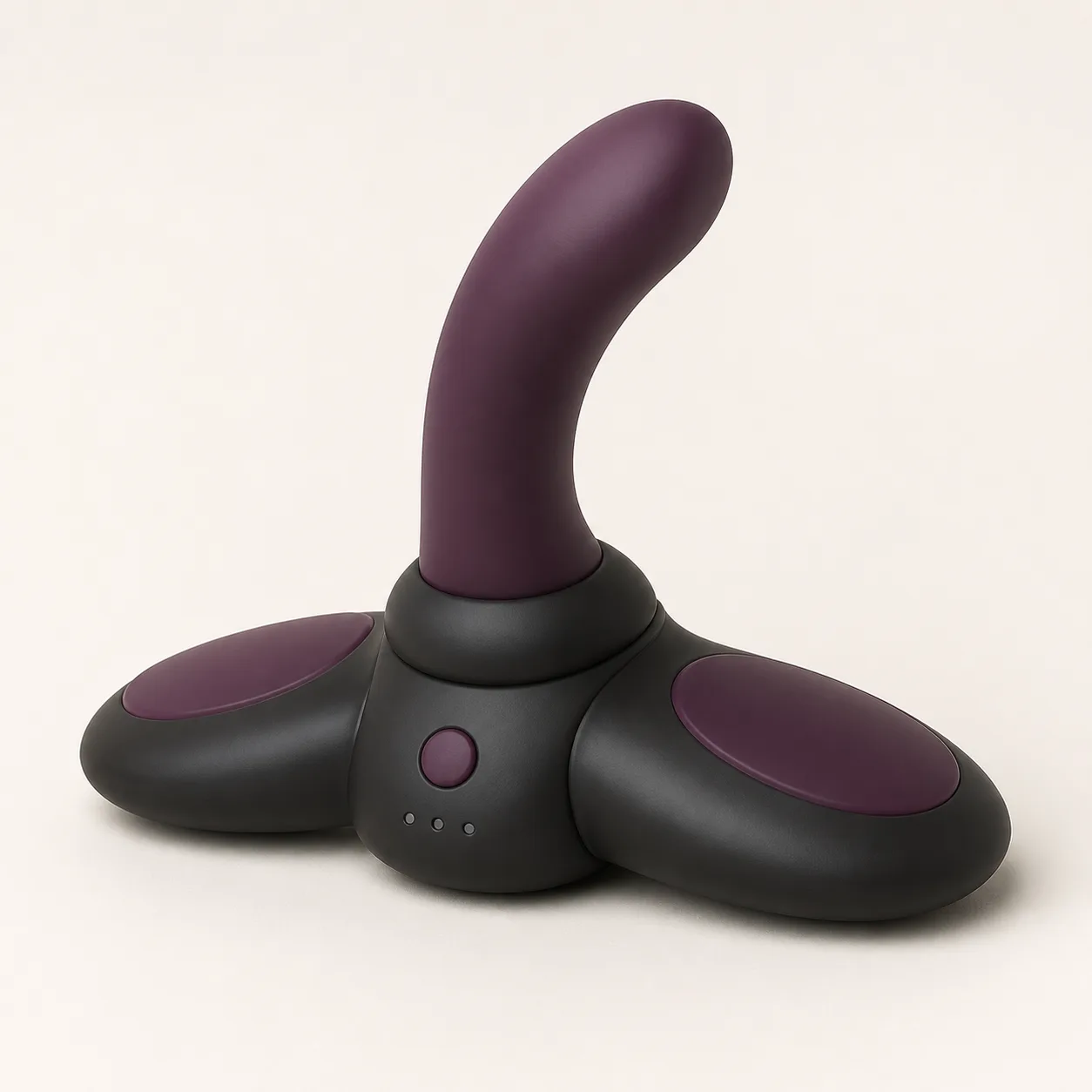
Three-Dome Sequential-Pulse Palm Vibrator with Isolation Channels
August 14, 2026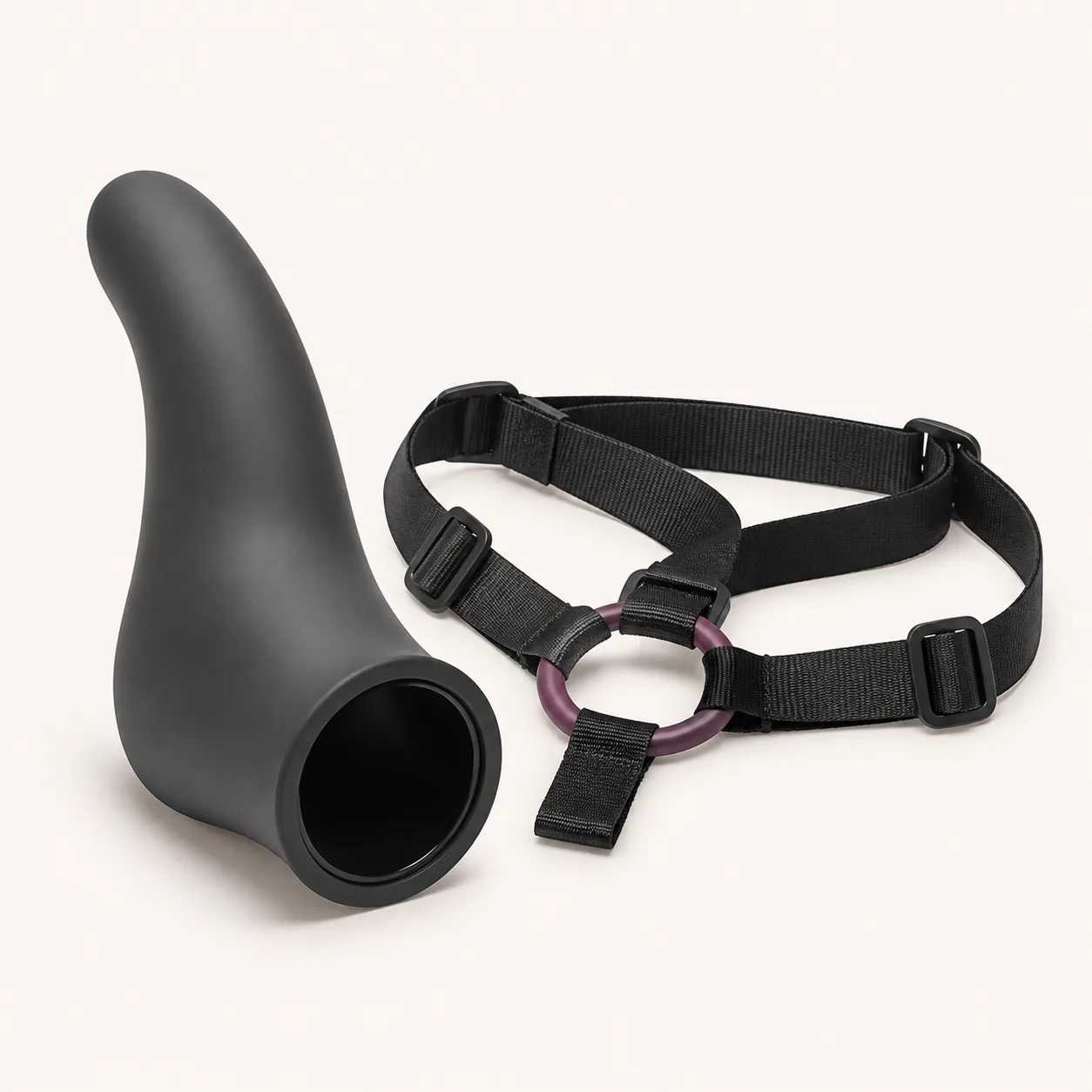
Adjustable Hollow Strap-On Harness Set with Reinforced Socket Sleeve
An adjustable webbing harness set paired with a smooth hollow socket sleeve and separate retention ring for documented fit, assembly and cleaning checks.
39,99 $
200 in stock
A hollow sleeve and harness solve two different fit problems
This hollow strap-on harness set concept pairs a tapered charcoal socket sleeve with an adjustable webbing frame and a separate retention ring. The sleeve needs an internal cavity that matches the intended wearer or adapter, while the harness must spread tension without letting the base rotate.

The visualization does not prove anatomy fit, material identity, load strength, waterproofing or that every shown component is included in the supplier package.
Confirm every part before treating the listing as a set
Request a written packing list for the hollow sleeve, retention ring, waist straps, lower support straps, buckles, sliders and any adapter. Count parts at receiving and compare their colors, openings and attachment paths with the approved sample.
A product title alone does not establish that the harness and sleeve are compatible or supplied together.
Measure the sleeve outside and inside
Record overall length, usable external length, maximum external width, tip radius, curve offset, base diameter, base thickness and mass. Then measure cavity entrance diameter, internal depth, minimum internal width, rim thickness and wall thickness at several points.
These dimensions determine whether the cavity bottoms out, grips unevenly, folds at the base or leaves the external profile unsupported.
The cavity rim needs a separate comfort inspection
Examine the entire socket entrance for flash, sharp edges, collapsed sections, tack, bubbles, thin spots and abrupt hardness changes. Compress the rim lightly on a padded gauge and verify that it recovers without whitening, cracking or curling inward.
Do not wear the sleeve when the rim pinches, scrapes or concentrates pressure during a dry fit over clothing.
Material identity and wall strength remain open questions
Obtain supplier documentation for the sleeve body, reinforced base, retention ring, webbing, thread, buckle and slider. “Silicone,” “ABS” or “nylon” wording on a marketplace page is not a substitute for exact-part evidence, hardness data or restricted-substance review.
Section a non-sale sample to check wall consistency and reinforcement only through an approved destructive inspection plan.
Map the harness before putting it on
Lay the webbing flat and identify the waist path, lower support paths, front junction, each buckle and the loose end of every strap. Photograph the correct routing and mark the adjustment direction so a twisted segment is easy to spot.
No strap should cross a buckle at an angle or hide a frayed edge beneath a slider.
Fit the harness over clothing first
Start with all straps loosened, center the ring on the intended support point and tighten in small alternating steps. The frame should stay level while allowing normal breathing, hip movement and immediate access to every release point.
Stop if any strap rolls, cuts into skin, traps tissue, restricts circulation or requires a knot to remain secure.
Match the base and ring without forcing either part
Measure the relaxed ring opening and its approved stretch range, then compare those values with the sleeve base neck and flange. Feed the sleeve through only by the documented method, keeping the base flat against the front support.
An overstretched ring, folded flange or improvised smaller opening can damage the parts and reduce retention.
Bench-test pull-off and twist resistance
Mount the assembled set on a padded form and apply low, measured axial and rotational loads below the supplier’s confirmed limit. Watch the ring, base, front junction, seams, sliders and buckles while logging displacement after each step.
Unverified equipment must not be treated as load-bearing or used for suspension, restraint, towing or impact.
Conduct a clothed movement check before direct contact
Walk, sit, kneel and change hip angle slowly while a partner observes whether the ring tilts or straps loosen. Recenter the set before any further trial and note which adjustment changed stability.
A harness that migrates during a clothed check needs a different fit, ring size or construction rather than tighter force.
Prepare the hollow cavity with conservative lubrication
Use only a lubricant confirmed for the sleeve material and apply a small amount evenly around the cavity entrance and internal wall. Excess liquid can increase slip, hide pressure feedback and collect inside the socket.
Patch-test the exact lubricant on a retained sample and inspect after the documented contact interval for swelling, tack or discoloration.
Keep pressure, angle and communication under local control
Agree on maximum depth, pace, angle, check-in signal and an immediate stop word. Begin with short movements and a supported neutral angle while both partners can reach the harness release.
Stop after numbness, pain, tearing sensation, unusual pressure, discoloration, breathing restriction, strap shift or loss of control.
Disassemble without pulling on the sleeve body
Stabilize the reinforced base, release harness tension and remove the ring according to the verified sequence. Avoid stretching the cavity, dragging the rim across hardware or using the tapered section as a lever.
Inspect the neck and flange immediately for elongation, cuts, delamination or a new permanent tilt.
Clean and dry the cavity as a separate zone
Separate compatible parts and use the confirmed cleaner, water temperature and contact time for each material. Reach the full cavity depth with a soft non-scratching tool, rinse only where permitted and drain with the opening downward.
Air-dry the socket until no moisture remains at the closed end; do not store it mounted on the harness or sealed while damp.
Sourcing must include assembly evidence and landed cost
An Alibaba product-introduction page shows a wearable hollow dildo with harness at USD 8.98 for 1-9 pieces, USD 8.58 for 10-99, USD 7.99 for 100-499 and USD 7.89 at 500 or more. Supplier identity, current quote, exact set contents, specifications and marketplace claims remain pending.
The procurement reference supports inquiry only. The EUR 39.99 plan allows for China-origin freight, sample measurement, cavity and wall inspection, webbing and buckle checks, ring retention testing, padded-form fit trials, material review, cleaning trials, protective packing and discreet fulfillment; packed size, weight, freight, duty, tax, insurance, payment fees and destination terms remain pending.
Frequently asked questions
Is the hollow sleeve suitable for every wearer?
No. Cavity diameter, depth, rim shape and wall response must match the individual and be confirmed with a conservative clothed fit check.
Can another ring be substituted?
Only when its material, opening, stretch range and retention performance are verified with the exact sleeve base and harness.
How tight should the straps be?
Tight enough to keep the ring centered without rolling, pinching, restricting breathing or circulation, or hiding the release points.
Can the harness carry body weight?
No load-bearing use is assumed. This catalog concept excludes suspension, restraint and any unsupported load.
How is the deep cavity dried?
Drain it opening-down, air-dry fully and inspect the closed end with adequate light before unmounted storage.
When should a component be withdrawn from service?
After cuts, thinning, tack, permanent stretch, rim collapse, base delamination, cracked hardware, frayed webbing, loose seams, buckle slip or failed ring retention.
Reviews
There are no reviews yet.