



Twelve-Fall Alternating-Width Sensory Flogger with Braided Grip and Rounded End Knob
August 14, 2026
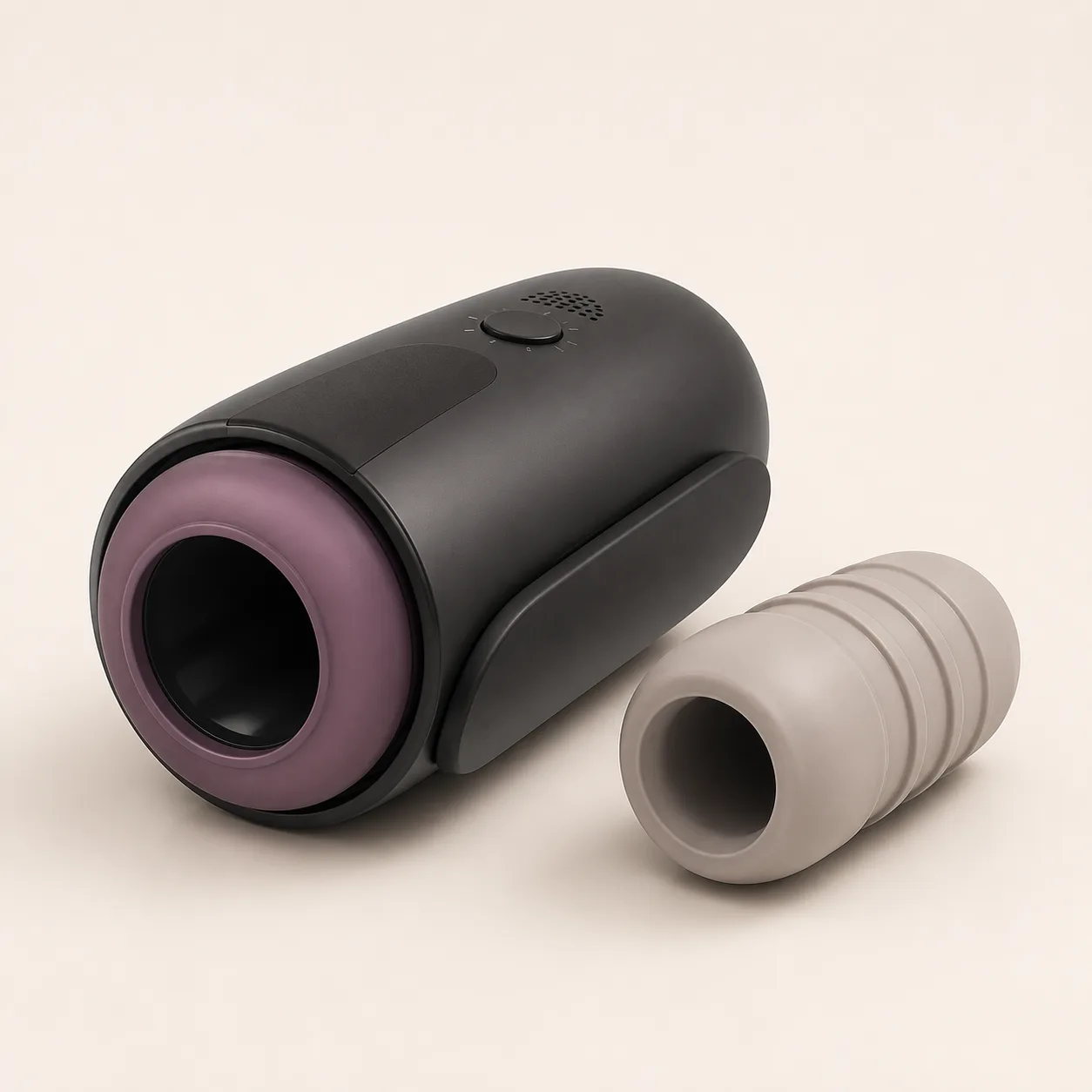
Four-Window Phase-Shift Manual Stroker with Twin Indexed Collars
August 14, 2026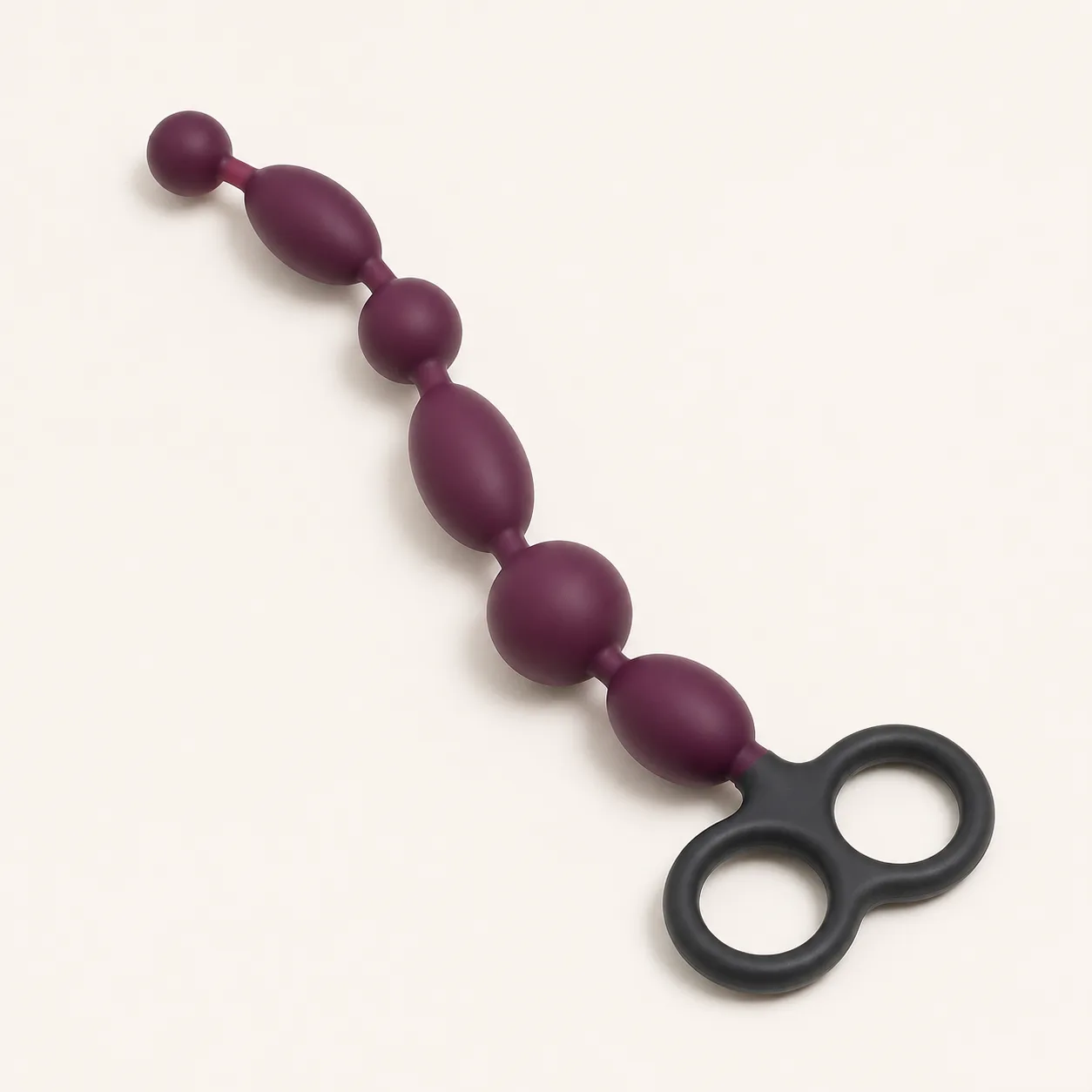
Alternating-Profile Anal Bead Strand with Twin-Loop Base
A non-powered six-profile anal bead strand concept with alternating round and oval stages, flexible necks and an oversized twin-loop external base.
24,99 $
200 in stock
Alternating profiles create a readable sequence
This alternating-profile anal bead strand concept uses six connected forms: three rounded beads and three longer oval sections arranged from a small lead profile toward a broader final profile. Narrow connector necks separate each change, while a charcoal twin-loop base remains outside the body.

The visual establishes the planned geometry only. It does not verify flexibility, surface chemistry, load capacity, hygiene performance or suitability for any user.
Confirm the count on the production sample
Inspect every received unit against a numbered profile map before labeling or photography. Count six insertable forms, six neck transitions and one uninterrupted external base, then reject molded bridges, fused gaps or a missing profile.
Supplier photographs may represent another mold, so the physical sample controls the final specification.
Measure round and oval forms separately
Record maximum diameter, axial length and circumference for profiles one through six. The oval sections need both their widest point and their taper length; a single overall diameter cannot explain the change in feel or fit.
Add total length, planned insertable length and mass only after measurement with calibrated tools.
Inspect every connector neck under light tension
Bend each neck in four directions and examine it with magnification for whitening, pits, sharp flash, thin spots or surface splitting. Repeat after cleaning cycles because fatigue can appear where a narrow connector meets a larger profile.
Any damaged neck disqualifies the unit from further evaluation.
Map flexibility instead of calling the strand soft
Support the strand at fixed points and record deflection under a small documented load. Repeat at the first, middle and final connectors so buyers can compare steering behavior without an undefined softness claim.
Temperature, age and repeated bending can alter the result; all test conditions belong in the quality record.
The twin-loop base is the external safety stop
Measure the full width and height of the figure-eight base and compare both dimensions with the largest insertable profile. Inspect the junction for tearing and verify that either loop can be gripped with dry and lightly damp fingers.
The entire base must stay outside the body. Do not use a unit whose base folds, cracks or can pass through the largest sizing gauge selected for qualification.
Review the surface profile by profile
Use raking light and a lint-free swab to find seams, tacky areas, pinholes, embedded debris and color variation. Pay special attention to the narrow valleys beside every connector because those areas are harder to inspect and clean.
Material identity, pigments and skin-contact evidence are pending until supplier documents and independent checks agree.
Build a progression map before use
Assign each profile a measured diameter and stop point, then begin only with the smallest comfortable stage. Movement should be slow, voluntary and easy to reverse; pain, numbness, bleeding or unexpected resistance means stop immediately.
This graduated layout is not a promise that all six profiles will suit every person or session.
Plan removal before advancing
Keep both external loops accessible and maintain a relaxed, controlled path. Remove one profile at a time without jerking the strand or pulling from a connector neck.
If the product cannot be removed gently, stop and seek qualified medical help rather than using tools or excessive force.
Use only a verified compatible lubricant
Test the intended lubricant on a retained sample for swelling, tack, discoloration, softening and loss of surface gloss. Water-based lubricant is a conservative planning choice, but compatibility still depends on the confirmed material.
Reapply as needed and stop if friction increases; oil and silicone formulations need explicit supplier and sample evidence.
Set a no-sharing hygiene rule
Assign the strand to one person. If sharing is contemplated, use a new compatible barrier for each person and body area, and perform the confirmed cleaning process between changes.
A barrier does not excuse inspection of necks, valleys or the base after every session.
Clean the narrow transitions deliberately
Follow the verified material instructions with mild compatible cleaner and warm water unless a different method is documented. Flex each connector gently so water reaches the shoulders beside adjacent profiles, then rinse until no cleaner remains.
Boiling, dishwashers, bleach, alcohol, abrasive brushes and immersion are not approved without model-specific evidence.
Dry every valley before storage
Pat the surface with a clean lint-free cloth and air-dry the strand in an open dust-controlled area. Rotate it once so moisture cannot remain under a bead, beside a connector or inside either base loop.
Store the fully dry item alone in a ventilated pouch away from heat, sunlight, sharp objects and unknown plastics.
Use an inspection-led service life
Before and after each session, compare the strand with its original condition under bright light. Discontinue it after tears, stretched necks, permanent bends, tackiness, odor change, stains, cracks or a weakened base junction.
No fixed lifetime is assigned until aging, repeated-flex and cleaner-compatibility data are available.
Price the geometry and validation together
An Alibaba listing for a six-ball anal chain shows USD 2.99-4.10 at MOQ 10. It is a sourcing benchmark, not proof that the displayed item matches this alternating round-and-oval design; legal supplier identity, exact mold, materials, dimensions and commercial terms remain pending.
The procurement reference supports an EUR 24.99 plan after allowing for China-origin freight, profile measurement, neck-fatigue screening, base-width and pull checks, surface review, cleaner and lubricant trials, protective packing and discreet fulfillment. Packed size, mass, freight, duty, tax, insurance, payment fees and destination conditions require confirmation.
Frequently asked questions
How many insertable profiles are planned?
The concept shows six alternating forms, but production count and dimensions must be confirmed on the received sample.
Why alternate round and oval sections?
The sequence makes each stage visually and measurably distinct without adding powered parts.
Can the whole strand be inserted?
The twin-loop base must always remain external, and no user should advance beyond a comfortable measured stage.
Is the material silicone?
No material claim is confirmed; composition, pigments and supporting evidence are pending.
How should the connector valleys be cleaned?
Use the verified mild-cleaning method, flex each transition gently, rinse completely and dry every recessed area.
Which faults mean the product should be discarded?
Tears, whitening, stretched necks, sharp seams, tackiness, odor change, permanent deformation or damage at the twin-loop junction.

Reviews
There are no reviews yet.